Tonight, the DART spacecraft from NASA ended its mission and successfully hit an asteroid. The 540-foot (165-meter) wide asteroid moon Dimorphos was the intended target of the DART probe’s autonomous navigation system. The force of the collision should have been enough to decrease the fragment’s orbital period around Didymos by around 1 percent. As of this moment, only telescope observations can confirm or deny this theory.
This is only a practice run before the big thing: If an asteroid ever threatened Earth, the most promising solution would be a kinetic deflector, which would involve deflecting the asteroid with a massive unmanned space probe. However, it has to strike its target early enough, fast enough, and at the appropriate angle for its impact pulse to send the asteroid far enough out of its orbit for it to miss Earth.
DART’s approach and successful impact
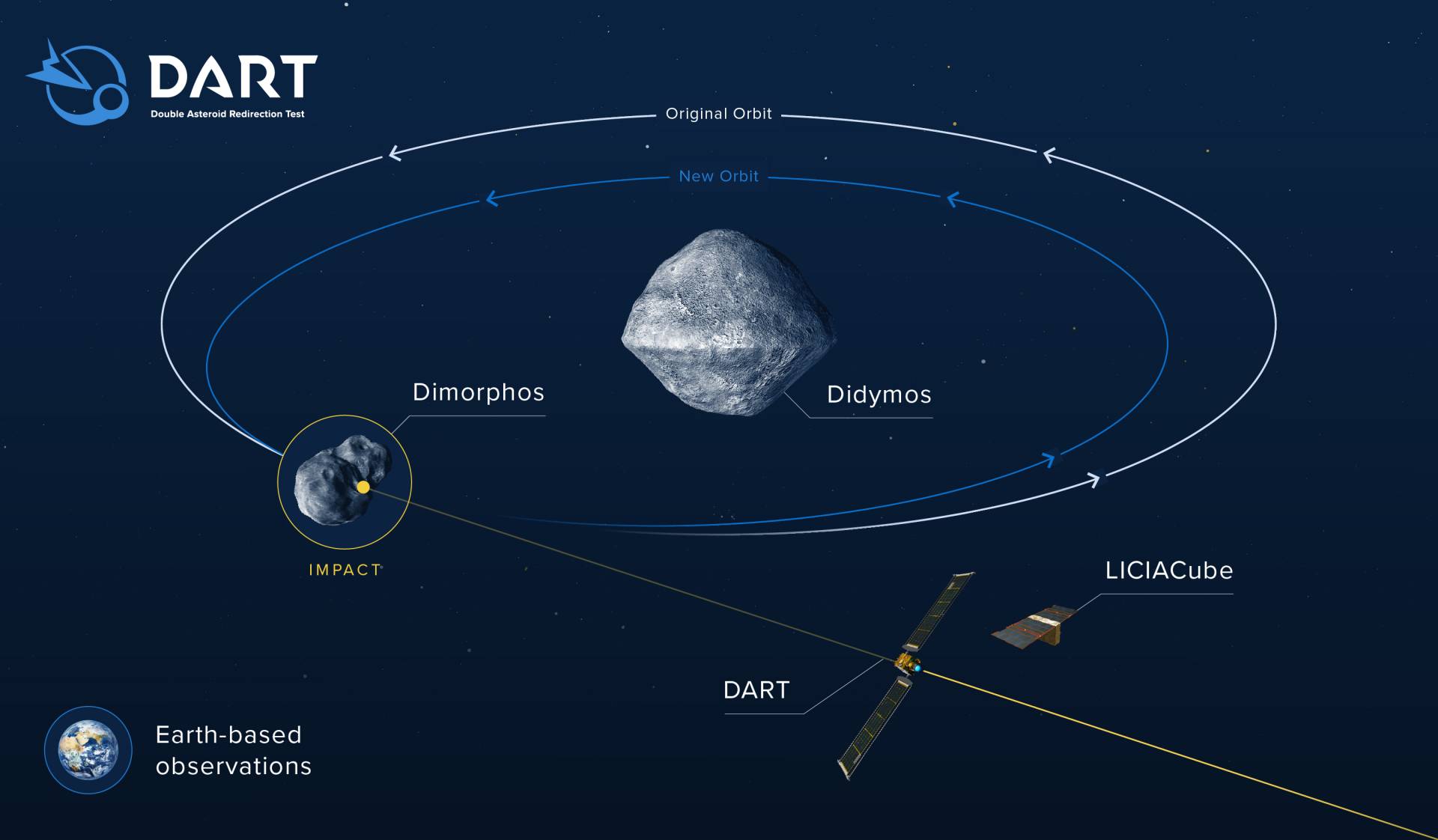
NASA’s DART mission has now demonstrated that this is possible, even when the asteroid in question is 6.8 million miles (11 million kilometers) from Earth and cannot be seen with ground telescopes. DART arrived Friday night at the 2560-foot (780-meter) asteroid Didymos and its 540-foot (165-meter) moon Dimorphos after a ten-month journey. When the spacecraft was 56,000 miles (90,000 kilometers) from its target, the photos taken by DART’s onboard camera were analyzed by the probe’s autonomous navigation system, which distinguished the two asteroids from each other and headed for the actual target, Dimorphos.
Just after midnight, the moment had come: The DART spacecraft sped at an estimated 14,000 miles (22,500 kilometers) per hour toward its target asteroid and slammed into it. The navigation camera captured the last moments before the DART crashed into Dimorphos, revealing a close-up picture of the asteroid’s surface littered with gritty rubble. NASA scientists now know that they can successfully bring a spacecraft to collide with a rather minor celestial body with precision.
Dimorphos was deflected by how much?
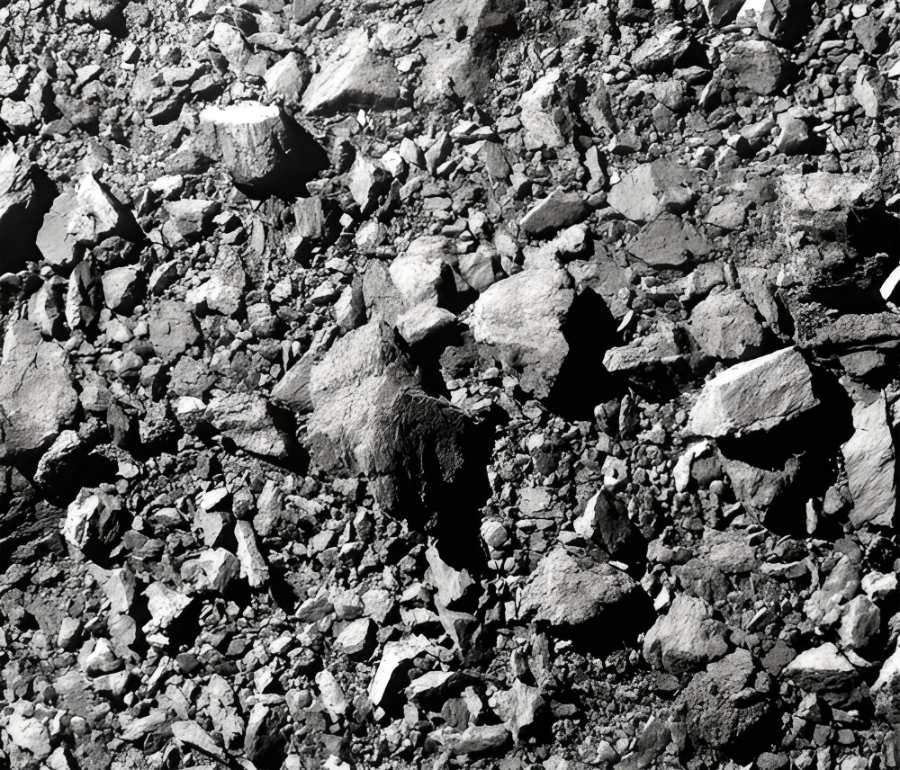
Even though the DART spacecraft is only around 1,260 pounds (570 kilograms) in weight and the asteroid Dimorphos weighs roughly five billion kilograms, the velocity of the collision and the rebound of the ejected rock should be enough to nudge the asteroid slightly off of its orbit. An asteroid’s course can be drastically altered with even a little increase or decrease in its speed.
Telescopic studies over the next several weeks will indicate whether or not the collision of DART altered the course of the asteroid Dimorphos. The orbital period of Dimorphos can be tracked from Earth by observing the pair’s brightness as Dimorphos passes in front of its bigger parent asteroid. Based on the simulations, the collision between Dimorphos and DART should have shortened its orbit by 1%, which would have shortened its orbital period by 10 minutes.
Compact chunk or porous pile of rubble
The degree to which the rammed asteroid’s trajectory was altered is an important indicator of both the efficacy of kinetic deflection and the composition of the target asteroid. But, the stability and compactness of the target object have a significant impact on the outcome of a deflection operation. Too much porosity allows impact energy to evaporate without an influence, rendering the deflection useless, which would be critical in a crisis situation.
The LICIACube mini-satellite will provide valuable data about the DART-Dimorphos collision. LICIACube is part of the DART mission and positioned itself 15 days before the impact to photograph the crash and its immediate aftermath. This is because the asteroid’s interior may be revealed by factors like the crater’s size and composition and the kind of material that was ejected. However, it will take many weeks to receive all of the photographs due to the tiny CubeSat’s (LICIACube) restricted communication capabilities.
The European space probe HERA will revisit the asteroids in four years to investigate them further.
Validation for the actual test
The critical part of the DART mission has been accomplished with the successful “ramming test” of the asteroid Dimorphos. According to NASA’s first-ever Planetary Defense Officer Lindley Johnson, “DART’s success provides a significant addition to the essential toolbox we must have to protect Earth from a devastating impact by an asteroid.” DART has demonstrated that “we are no longer powerless to prevent this type of natural disaster.”