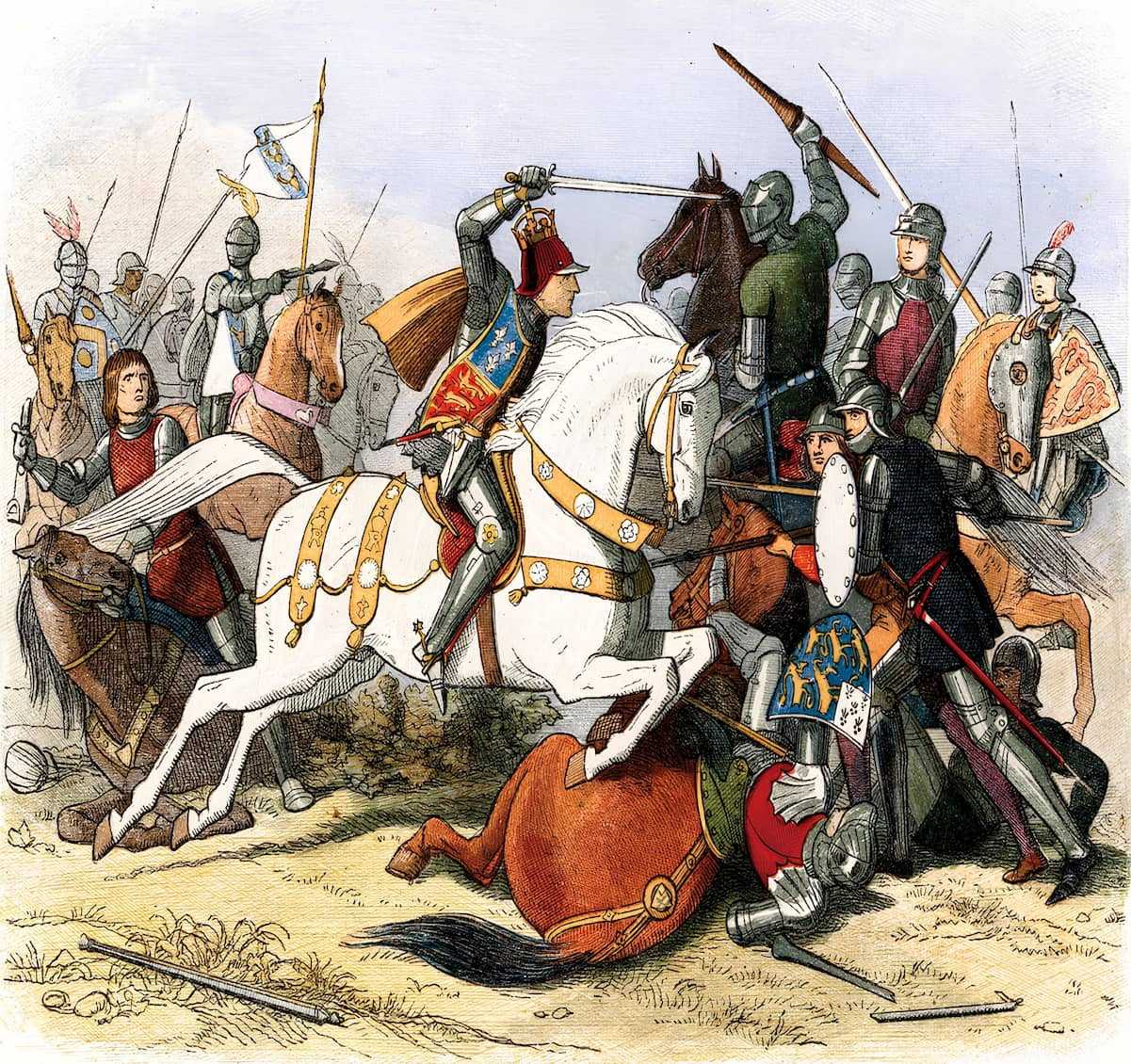
On September 13 and 14, 1515, in northern Italy, Francis I famously defeated an army of Swiss mercenaries in the Battle of Marignano. The young king of France, who had been knighted by the lord of Bayard on the battlefield, would gain much favor and a heroic reputation as a result of this military victory. One of the most often mentioned years in French historical discussions was 1515, to which Marignano was occasionally added. However, this conflict ought to be better remembered and placed back into its context, which was also too poorly known: the Italian wars. A monumental work that introduced France to the beauty of the Italian Renaissance.
Battle of Marignano in the context of the Italian Wars
Rich from the beginning of the Renaissance, the Italian peninsula was wanted by the European nations, notably the sovereigns of France. The peninsula was economically powerful and culturally dominant, but its political stability was precarious due to the presence of numerous competing principalities. The most significant of these were the Papal States, the Kingdom of Naples, the Duchy of Milan, and the Republics of Venice and Florence. This meant that the Italian Wars were the focal point of European conflict in the first part of the sixteenth century and the stage upon which territorial aspirations were played out.
Without going back to the Angevin monarchs of Naples, we can claim that Charles VIII, who was only king of Naples for a few months in 1495, was the one who first involved France in the Italian wars. Louis XII was pivotal in the expansion of the French monarchy into Italy. In 1499, the monarch captured Milan; in 1501, he assaulted Genoa and the Regno. However, if he were successful in rapidly removing Ludovico Maria Sforza (Ludovico il Moro), he would need the support of not just the pope and the Aragonese but also powerful peninsular lords like Cesare Borgia. For a while, Louis XII was able to use alliances to his advantage, joining forces with Florence and the Duchy of Milan to take on Venice. But his sway starts to annoy the Italian princes, beginning with Pope Julius II, and this twists the alliances against France.
A solution was made in 1504: France abandoned Naples to the King of Aragon but preserved Milan. This was just a temporary fix since Pope Julius II, in an effort to consolidate his power across Italy, formed a new “Holy League” to fight France, which included Venice, Aragon, Switzerland, and England. After another loss in 1513 at Ravenna, Louis XII finally left Italy and never returned. Although Francis I was just twenty years old at the time of the king’s death in 1515, he was widely recognized as his heir by European courts, especially in Italy. King Francis I, as he was most often known, shared the Italian aspirations of his ancestors. To help him reclaim what he believed was rightfully his, Louis XII had also assembled a brand new army.
Francis I was on his way to Milan
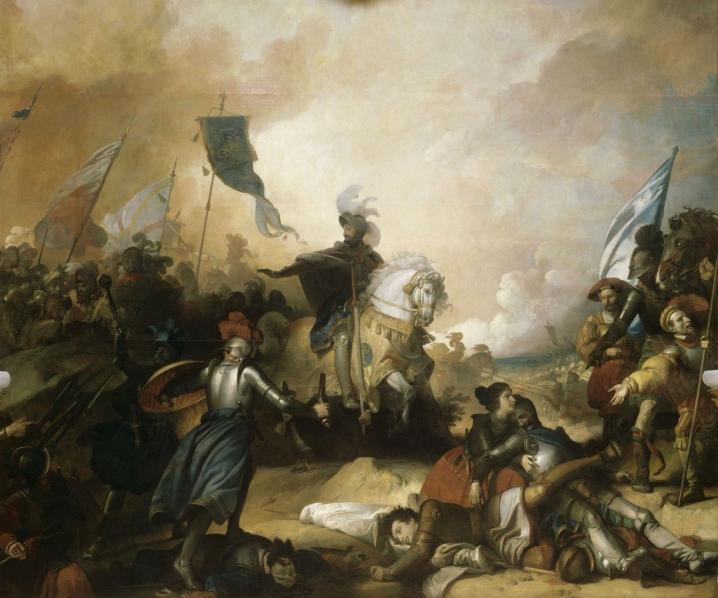
The newly crowned monarch wasted no time in seeking revenge for France’s recent military setbacks by attempting to retake Milan. The force collected by Francis I was substantial for the time: roughly 10,000 horses, 30,000 infantrymen, and 70 cannons. Bayard, the Charles III, Duke of Bourbon (Also known as the Constable of Bourbon), the Duke of Lorraine, the Count of Guise, and Marshal Trivulce were only some of the numerous knights that participated in the mission. Yes, the nobility’s duty was to “preserve the state via guns” in return for special rights and perks. The Swiss were waiting for the French troops, so the Alps crossing was looking more challenging than expected. Nonetheless, François I showed his first signs of bravery by choosing the pass of Larche, which was far more treacherous than the passes of Montgenèvre or Mont-Cenis. Parallels to Hannibal were being drawn already… The French made camp in Turin after they crossed the Alps.
The French monarch planned to negotiate, using his strike force as leverage. The Swiss promised to return Milan to Maximilian Sforza in exchange for one million crown (ecus – French coins) and the duchy of Nemours. Francis I continued on his voyage after accepting the conditions of the agreement. On September 10, he set up camp at Marignan, a dozen kilometers from Milan; in truth, he had little faith in the Swiss and also understood the woes of the Duke of Milan, who was trying to pay his mercenaries. This told him that his opponents were weaker and more disorganized than they had been.
The king’s fears were realized when the bishop of Sion, Matthäus Schiner, gained control of the Swiss camp. As many as 20,000 Swiss fled Milan on September 13, 1515, bound for Marignano.
Battle of Marignano
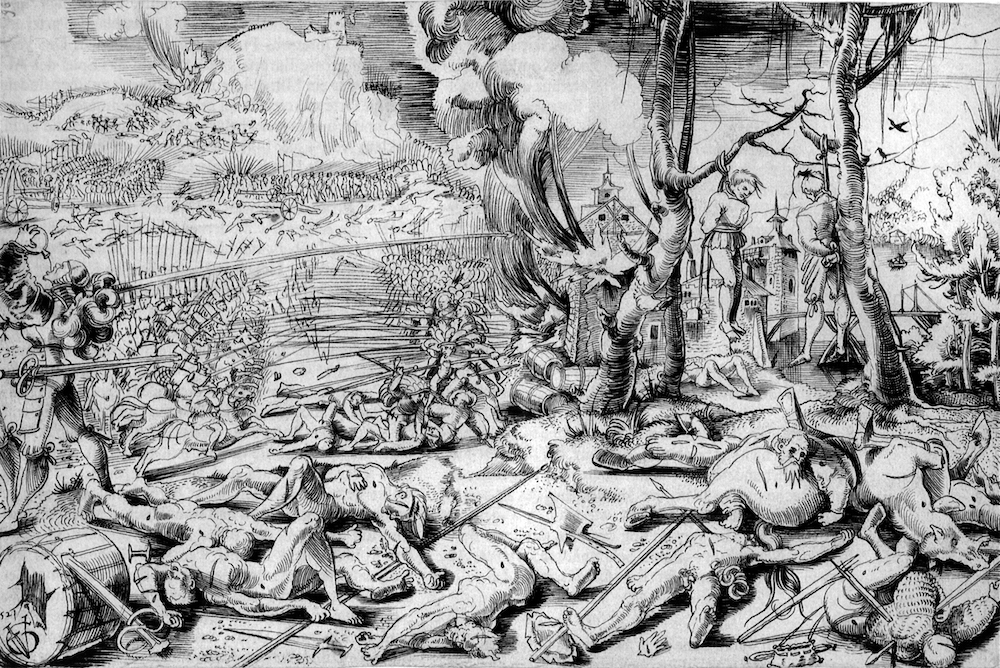
Within the French army, the vanguard was committed to the Constable of Bourbon and contained the artillery and its 72-guns. Francis I personally led the main body of the army, while his brother-in-law Charles IV, Duke of Alençon commanded the rearguard, which consisted of the cavalry.

Around 4 p.m., the Swiss mercenaries and the French came into initial contact when the Swiss advanced in three squares of pikemen, totaling 7,000 men. The Charles III, Duke of Bourbon (Also known as the Constable of Bourbon) was having trouble, but the King of France came to his aid by leading a charge, and the two sides fought extremely violently till late that night. French artillery was largely responsible for the enemy’s predicament; the Swiss were forced to relinquish their grip on the situation three times. Francis I was well-known for sleeping with his armor on; his reputation was on the rise. During the night, King of France reorganized his army by arranging his troops in a wider, more lethal line. The King took up residence in the middle, with the Duke of Alençon to his left and the Constable of Bourbon to his right.
The Swiss rallied the following day, September 14, 1515, and made another attack. They opted to assault the middle of the French position, which was commanded by the king, but their 5,000 men were subsequently defeated by the French pikemen and arquebusiers, reinforced by artillery. When the Swiss attempted to flank the French position and infiltrate their way to the guns, they too failed to make it through the center.
By afternoon, another army led by Bartolomeo d’Alviano, captain of Venice, had arrived to reinforce Francis I and had turned the tables on the Swiss. As the Swiss began to escape, the French opened fire with their guns. When the Swiss tried to escape, the cavalry ambushed them and caused great slaughter. In the face of overwhelming odds, the Swiss were able to withdraw permanently. The French, exhausted by the struggle, abandoned their pursuit of the defeated. It was “a fight of giants,” according to the elderly marshal Trivulce, who had fought in 18 major engagements during his life.
The Swiss suffered at least 10,000 casualties, while the French only suffered approximately 5,000, but the victory was decisive. At the tender age of twenty, the young king of France had already achieved a magnificent victory that brought him tremendous renown among his countrymen and foreign sovereigns. Francis I was knighted by Pierre Terrail (seigneur de Bayard) “who was worth an army of his own,” on the evening of the fight.
The results of the Battle of Marignano
There was now access to Milan. Francis I, a virtuous prince, negotiated Maximilian Sforza’s surrender and received a pardon from Pope Leo X. On October 11th, he walked into Milan with solemnity. One year later, on August 18, 1516, King Francis I and Pope Leo X signed the Concordat of Bologna. The latter established clear boundaries for the roles of the king, the clergy, and the people in governing the French Church, allowing the monarch to make key appointments and choose who received the church’s most prestigious honors.
Thus, the young king’s first significant triumph was at Marignano. It was not just a game-changer for the Italian situation but also for his reputation throughout the Italian peninsula and Europe. In the Treaty of Fribourg, Francis I was able to make the Swiss “perpetual allies” of France. The Crown was guaranteed the ability to recruit Swiss mercenary warriors, but the Swiss were forbidden to fight on the side of any nation at war with France as a result of this nonaggression deal. Since 1792, the Swiss cantons have not broken this “perpetual peace.”
But the Battle of Marignano was first and foremost a battle; despite its savagery, it was one of the last to be considered “chivalrous,” and this was especially true according to royal propaganda. The French artillery was the true victor at Marignano, proving itself for the first time in a pitched combat as well as in sieges (like Constantinople or Granada). Despite his victory, the king was unable to celebrate fully. With a certain Leonardo da Vinci in his suitcase, he was forced to go back to France. A decade after Marignano, in 1525, Charles V and his followers began an intense conflict that resulted in the fall of Pavia. Because he was captured, France’s monarch abandoned Italy. Following the signing of the Treaty of Cateau-Cambrésis between Henry II and Charles V in 1559, all French claims to Italy were formally abandoned.
Bibliography:
- Alfred S. Bradford (2014). War: Antiquity and Its Legacy Ancients and moderns series. I.B.Tauris. p. 61. ISBN 9781848859357.
- Francesco Guicciardini, Storia d’Italia, Lib. XII, cap. 12
- Dean, S. (2012). A blow to Swiss ambitions: The Battle of Marignano, 13-14 September 1515. Medieval Warfare, 2(5), 26-32. Retrieved August 28, 2021, from https://www.jstor.org/stable/48578039, pg. 28