This is the hollow on Tisenjoch where the well-known glacial mummy Ötzi was discovered. His location is shown by the red pinpoint. But the question is, how did Ötzi get there? A recent review of the discoveries and data reveals that the widely held theories around the renowned glacial mummy Ötzi are only partly right. The Copper Age man, according to popular belief, did not die at the location where he was discovered; rather, he slid into this depression on the Tisenjoch a few short months later. Furthermore, his mummy did not spend the whole period frozen in place under the glacial ice. Instead, it repeatedly thawed and was carried by meltwater to other locations.
The ice mummy Ötzi, found in the Austrian Alps in 1991, is one of the most well-known and well investigated discoveries in the field of glacial archaeology. Archaeologists have learned a great deal about the life and death of this Copper Age man because to his remarkably well-preserved body, DNA, and artifacts. Everything about his life, from his place of origin to the illnesses he contracted and ultimately his cause of death, is pretty much transparent. Even the origins of the materials used to craft his clothing and weapons are now known.
Differences that stand out
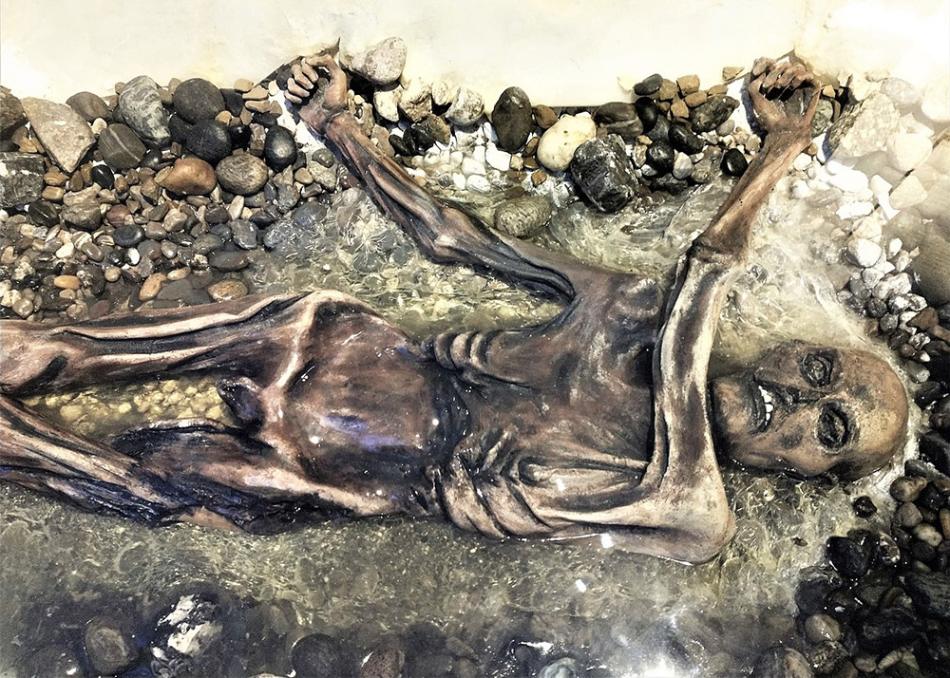
While most of the tale around Ötzi has been well established, there are still some murky spots. The most pressing of them is how the man’s body was frozen in the ice and how the corpse got to be in the Tisenjoch. The initial story of Ötzi’s death, which was established soon after his discovery, had him dying in the fall after having fled to the highlands to escape his foes. The snow and ice rapidly encased and protected him when he fell into a dip near the Tisenjoch.
The Norwegian Cultural Heritage Office’s Lars Pilø believes the narrative of Ötzi’s preservation via a sequence of lucky situations is appealing and thrilling. But this idea is at odds with modern knowledge gleaned from glacial artifacts discovered in archaeological digs. They didn’t usually freeze solid like Ötzi, and being preserved in ice so quickly is even more remarkable than that. In addition, the pollen found on the glacier mummy has been analyzed, and the results show that Ötzi died in the spring or summer, not the autumn.

As a result, Pilø and his team have looked more closely at the tools and conditions surrounding Ötzi’s discovery. They did this by comparing their findings to those of previous glacier discoveries, as well as meteorological and glaciological data, and publications on the topic from the last 30 years. In several ways, the findings proved that the standard explanation was wrong.
Above the depression
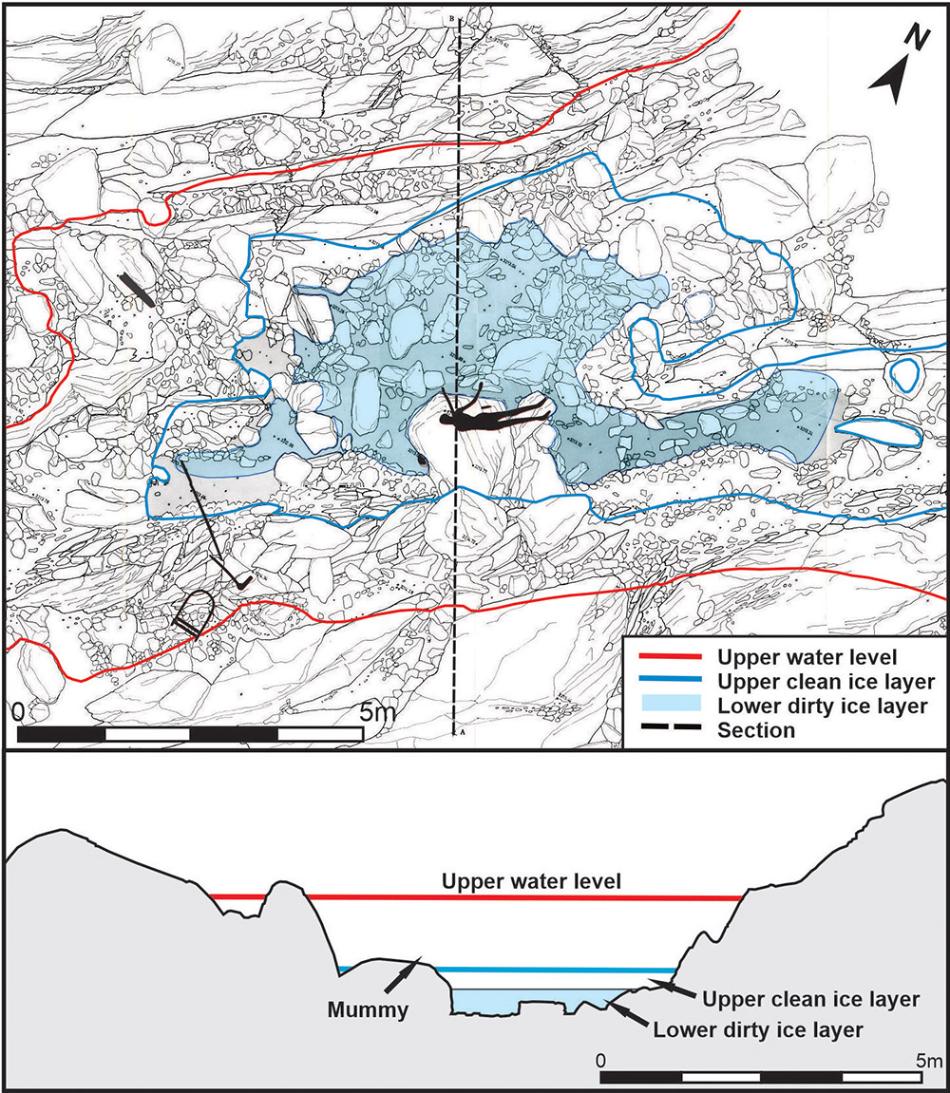
Ötzi did not die in the hollow where he was discovered 5,300 years ago. The snow on the Tisenjoch hadn’t melted at the time of his death in May or June. Therefore, 3.3 feet (1 meter) of snow must have remained above the depression. Ötzi could not have fallen into the depression when he died, therefore his body must have lain on the snow at first. It wasn’t until the snow melted in the summer that his corpse and most of his gear were swept into the depression.
According to Pilø and his associates, this suggests that Ötzi perished outside of or above the depression. Evidence for this includes the discovery of tools belonging to Ötzi in locations other than the depression. The pattern of decomposed grass on his corpse also indicates that it drifted in water before coming to rest on top of the body.
A time capsule
Furthermore, the standard Ötzi myth has another flaw. The glacier mummy, legend has it, spent its whole existence frozen in a Himalayan glacier. However, Pilø and his colleagues point out that such a time capsule in the ice is quite unique in the field of glacial archaeology. This is because glaciological locations tend to amass their material over time, rather than retaining a discrete occurrence.

Moreover, radiocarbon dating of site material reveals that the depression on Tisenjoch was ice-free on many occasions, allowing fresh material to be washed in. Additionally, climatological evidence supports this. This suggests that Ötzi was often exposed to the elements and interstitial exposure. The harm to his body and equipment may be attributed to these melting stages as well. Notwithstanding, Ötzi was able to stay mummified and mostly intact because to the high mountain environment’s icy temperatures.
When it comes to ice-related archaeological discoveries, Ötzi has always been the most significant. Pilø and his coworkers claim that the circumstances of his discovery and preservation were not as unusual as previously believed. Since glaciers are melting, scientists predict that additional mummies preserved in ice may be discovered in the future. This includes the Ötztal Alps.