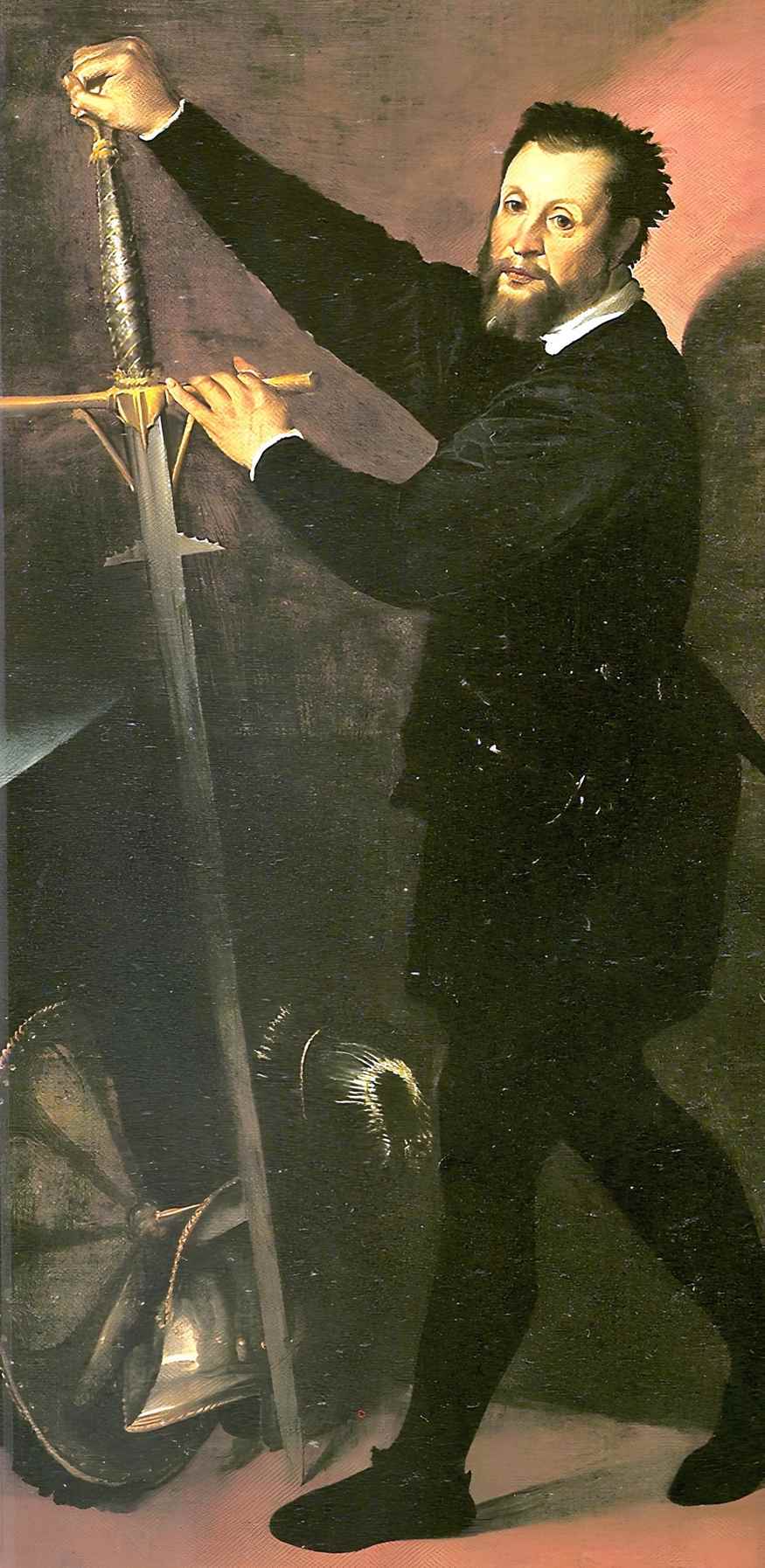
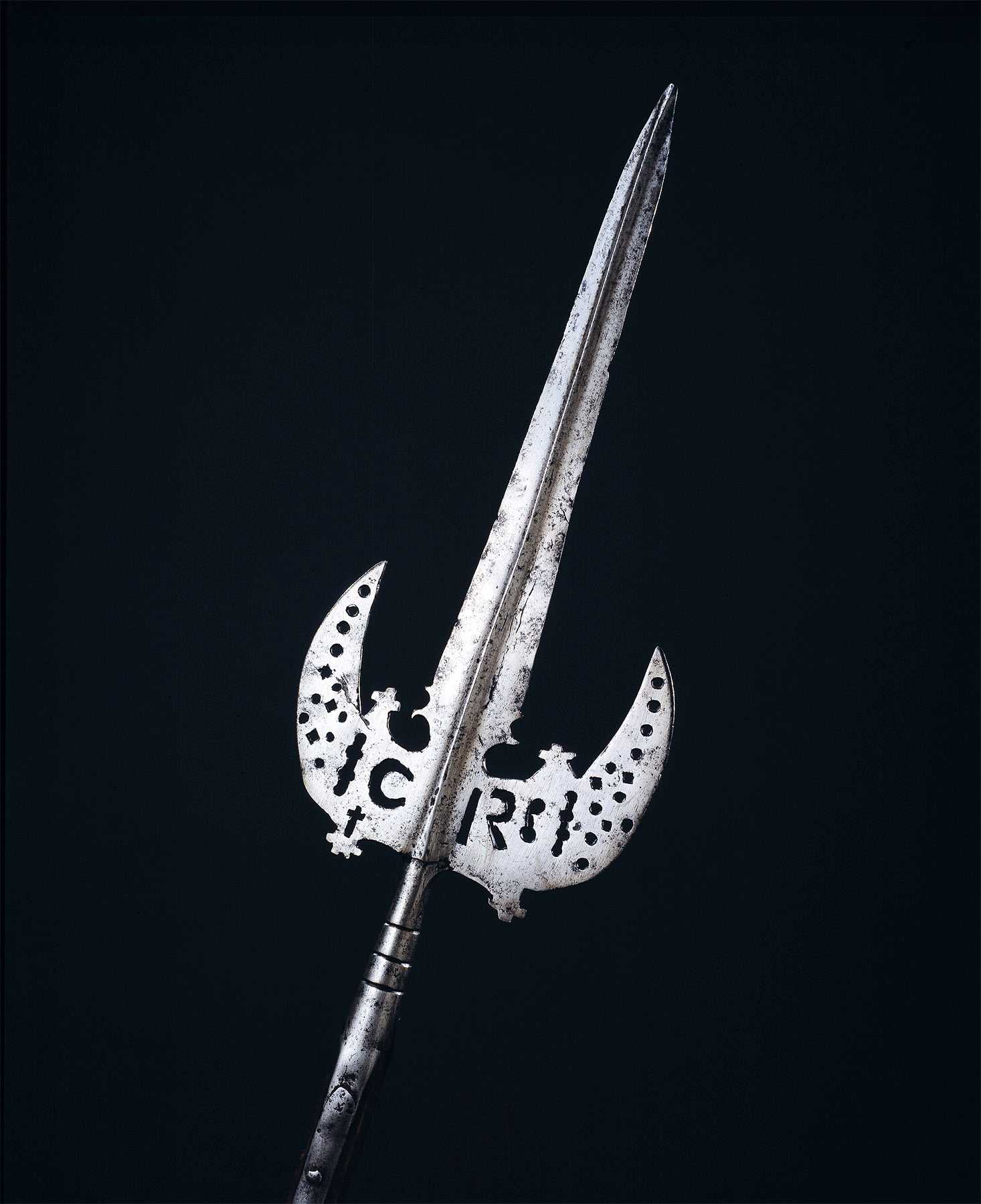
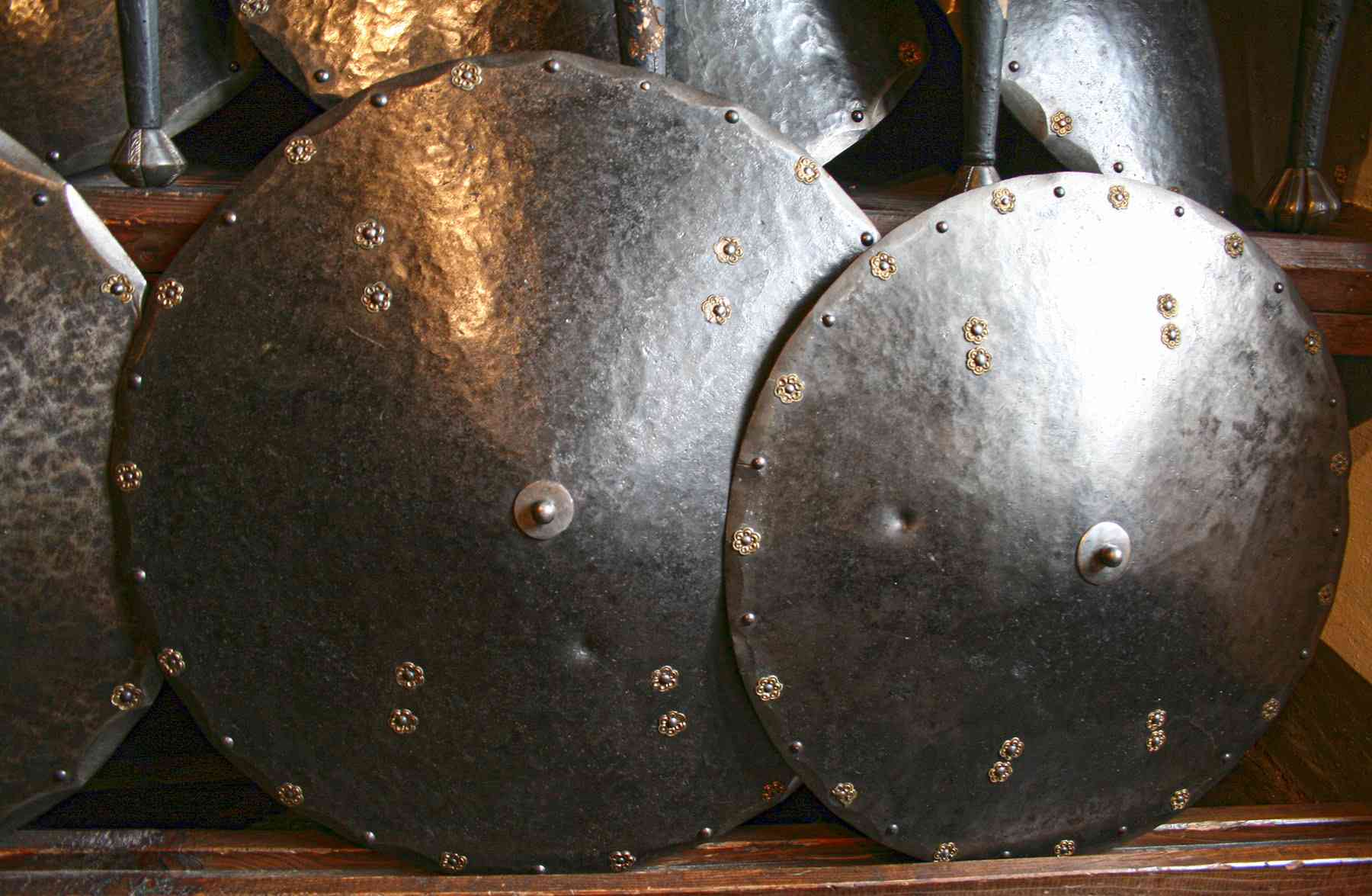
Julius Caesar’s sword Crocea Mors, or “Yellow Death” (the origin of the name is explained below), appears to be closely connected with the legend of King Arthur’s sword Excalibur. The Romans first invaded Britain in 55–54 BC, led by Julius Caesar, and their legacy continued to be remembered by the Celtic people who lived in Britain even after the invasion. The story of the Britannic kings includes the Caliburn sword and the Crocea Mors, a sword associated with Caesar that was believed to have special powers.
The name of the sword was Crocea Mors (Yellow Death), as being mortal to every body that was wounded with it.
Geoffrey of Monmouth’s History of the Kings of Britain, Book IV, Chapter IV, [PDF]
According to a medieval chronicler Geoffrey of Monmouth’s History of the Kings of Britain, Julius Caesar was known for wielding a sword, perhaps a golden one (more on that later), that could kill anyone it struck. The British saw the power of this weapon firsthand when their warrior leader, Nennius of Britain, challenged Caesar to a duel and lost. When Caesar and his army invaded Britain, the British leaders gathered to discuss their options, and some suggested launching a counteroffensive right away. They believed that if they didn’t act quickly, the Romans would take control of their coastal fortresses.
Caesar’s Sword Crocea Mors and Its Rise to Fame
The armies of the British leaders approached the shore where Julius Caesar had set up camp, and they lined up to begin the battle. Bows and swords were used during the fight. Nennius and Androgeus, leading the citizens of Canterbury and Trinovantum, encountered the group in which Julius Caesar was present and nearly defeated them in close combat.
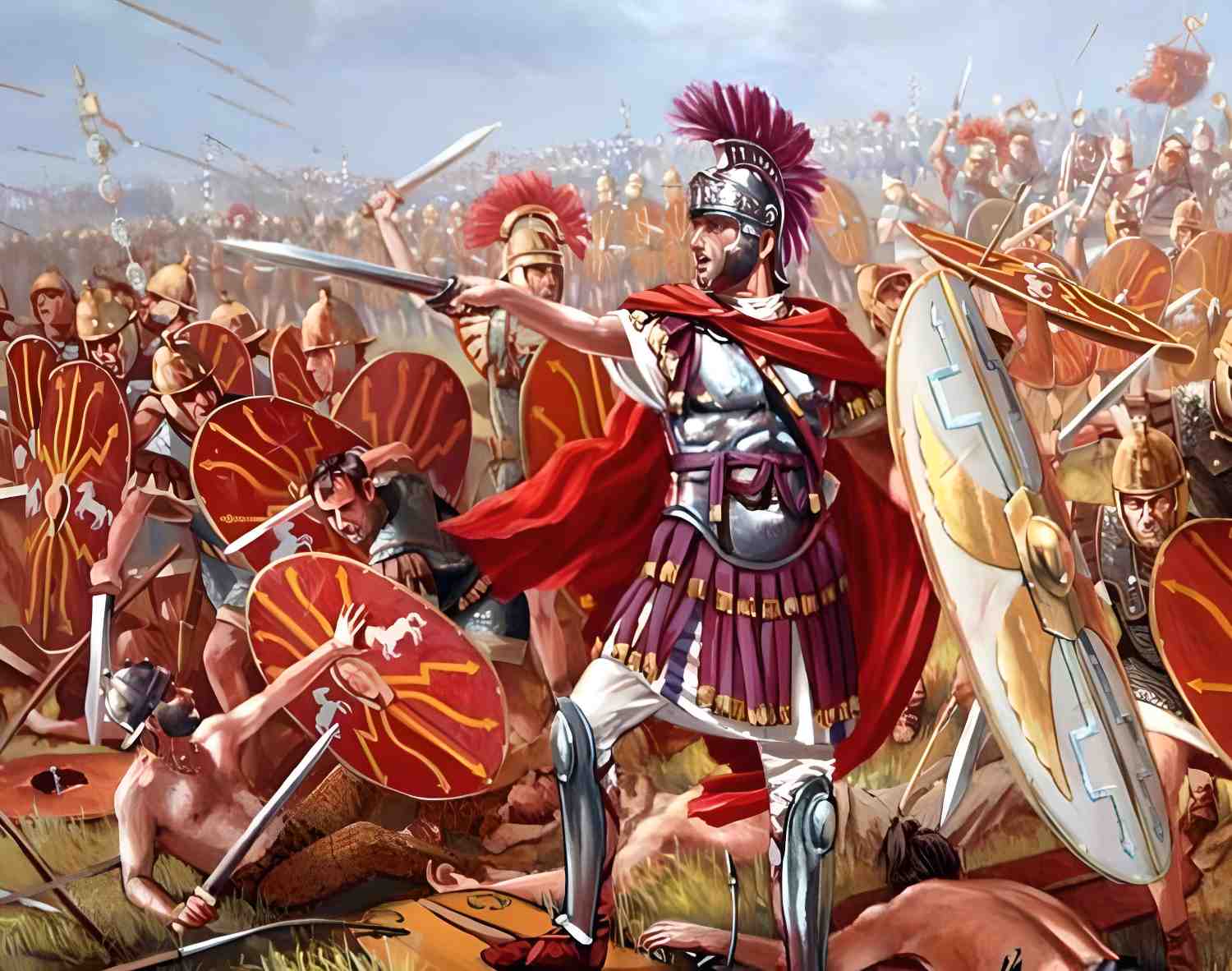
The Celtic army of Britain fought against the Roman army on the banks of the Thames in a battle that was so violent that the ground was covered in blood. The British warrior leaders fought bravely and managed to reach the center of the Roman formation, where Caesar was fighting with his cohort. Nennius had the chance to face off against Caesar, but he did not know that he was about to be killed by one of the most famous “legendary” swords in history, Crocea Mors.
During a battle, Nennius had the chance to face Caesar in combat. Excited at the opportunity to strike a blow against such a famous person, Nennius approached Caesar, who was ready and raised his shield to block Caesar’s attack. Caesar then tried to strike Nennius’ head with his drawn sword, but the blow was so powerful that the sword became stuck in the shield.
While the two were separated by their troops, Caesar was unable to remove the sword from Nennius’ shield. Nennius then threw away his own sword and used Caesar’s, the Crocea Mors, to attack the enemy. Any person he struck with Crocea Mors either had their head cut off or was left with a serious wound. But he couldn’t utilize Crocea Mors for very long.
Crocea Mors Was Buried Alongside Nennius
The Celts emerged victorious from the conflict. By day’s end, the Romans had been whittled down to a mere few, and so they retreated to their ships and set off for Gaul. Many of Caesar’s advisors pleaded with him to end the invasion, and he finally agreed, declaring that he would never step foot on the island again. Struck by Caesar’s sword Crocea Mors, Nennius was on his deathbed a week later.
Caesar had inflicted a wound on Nennius during the battle that turned out to be incurable, and only 15 days after the battle, Nennius died and was buried at Trinovantum (today’s London), near the North Gate. His funeral was held with great ceremony, and Caesar’s sword Crocea Mors was placed in his tomb, which Nennius had been holding during the fight after it was struck into his shield. The Crocea Mors, a legendary and mysterious sword, has not been mentioned since.
Why Was Crocea Mors Called “Yellow Death”?
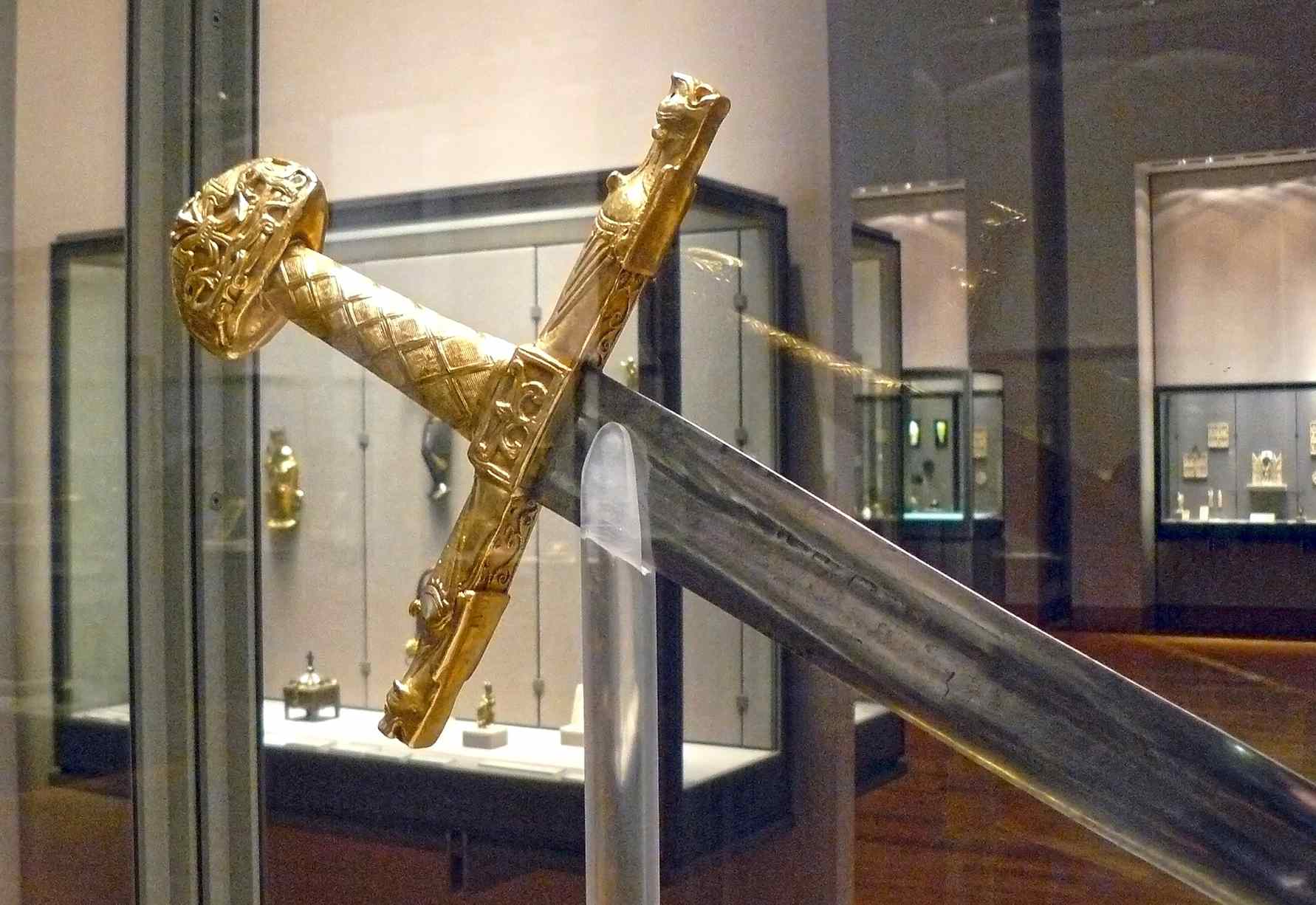
Crocea Mors that Caesar carried was most likely a bronze gladius at that time. But there are many explanations for why Caesar’s sword, Crocea Mors, was called “Yellow Death.” Angau Coch (“Red Death”) or Agheu Glas (“Grey Death”) are the names given to it in Middle Welsh translations.
One of the challenges with steel has always been how to harden it and create high-carbon steel. Without the right furnaces, people had to use other methods based on the inclusions in the metal. If there is silicon present, which makes the steel hard but flexible, the color will turn yellow when it is heated during the forging process. A sword that is very hard can also have a sharp and durable cutting edge, and those obtained from Civitavecchia (also known as “Port of Rome”) had a hardness of 80 HRC. Even today, a wire with a hardness of 67 is considered very hard.
A yellow-colored sword is exceptional and can easily cut and pierce through armor without being damaged. So, the yellow color of Crocea Mors indicated its exceptional strength and durability, and its ability to easily cut through everything on the battlefield.
Is Excalibur Related to Crocea Mors?
There is a theory, as described in Valerio Massimo Manfredi’s novel “The Last Legion,” that a group of loyal Roman soldiers helped the last Roman emperor, Romulus Augustus, who was deposed in 476 AD, flee to safety in Britain. Romulus Augustus, who became king under the name Pendragon and had a son named Arthur, had a tutor named Merlinus Ambrosinus, who later became known as Merlin.
The theory suggests that Romulus Augustus brought a sword called Escalibur, which translates to “CAI.IUL.CAES.ENSIS CALIBURNUS” or the Calibian sword of Julius Caesar, with him to Britain. As a sign of peace, Romulus Augustus supposedly threw the sword far away and it ended up stuck in a rock, where it was exposed to the elements and only a few letters of the inscription were still readable: E S CALIBUR. The sword Excalibur is called Caliburnus in Latin. The two swords, Excalibur and Crocea Mors could very well have been forged by the same author, Geoffrey of Monmouth.
Did Crocea Mors Really Exist?
According to legend, Caesar’s sword Crocea Mors was lost in Britain and this is the only place it has been reported that Caesar had one. However, there is no record in Roman history that Caesar had a specific sword. The story that his sword was stolen from him comes from The History of the Kings of Britain by Geoffrey of Monmouth. This book also includes the legend of King Arthur, and according to this fact alone, there is a supposed connection between Arthur’s Excalibur and Caesar’s Crocea Mors.
Crocea Mors in Popular Media
Aside from books, Crocea Mors is also a popular sword in various video games. We see Crocea Mors in a popular Japanese video game called Final Fantasy XI. Another Japanese title, Type-Moon, includes the sword with a reference saying “Caesar doesn’t really like drawing this sword. He will never forget how he carelessly got it stuck in an enemy’s shield and lost it.” Texas-based Rooster Teeth Games’ RWBY: Grimm Eclipse includes a sword named Crocea Mors with the reference that “Both the sword and the shield are shown to be incredibly durable.“