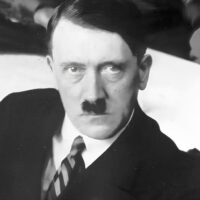
Adolf Hitler had a voracious reading habit. While still a young man, he would often read every book in the library. In Vienna, he spent much of his time reading. He read thousands of books, and he memorized large portions of his favorites. Odd enough, Hitler probably read more books than anybody else in history. Adolf Hitler even neglected Eva Braun because of his reading obsession. More than 16,000 books lined the shelves of the dictator’s personal library. In 2003, Timothy W. Ryback, a historian, analyzed the books Hitler read. Hitler read the writings of Karl May, Wilhelm Busch, Karl Marx, and many more.
Adolf Hitler was a bookworm. Even as a World War I soldier, he chose to spend what little money he had on books rather than on hookers and cigarettes. While stationed in the trenches, Hitler read the tract of an architectural critic who railed against the “over-alienation” of Berlin by non-Prussian structures.
Hitler, the mass murderer, was either unaware or unconcerned that this German nationalist architecture critic was Jewish. His reading binge had a meticulous quality to it; he read the books diligently, sometimes till the small hours of the morning. Even after Hitler became dictator of the German Reich, he continued to be a bookworm.
Hitler wasn’t concerned about illiteracy, which plays a major part in Bernhard Schlink‘s international blockbuster “The Reader.” Once, as Hitler was enjoying a cup of tea and some books in the “Berghof” in the Berchtesgadener Land, he was suddenly interrupted by Eva Braun. After he sent her out with a scathing monologue, Eva stumbled down the steps outside his room as her face flushed with anger.
After spending the night buried in a book, Hitler would come out the next morning and give a comprehensive explanation of what he had read. As a reader, Hitler favored books with reference sources and encyclopedias. As the story goes, there was a time when a debate arose about just how magnificent Napoleon Bonaparte really was as a leader. Hitler mysteriously walked into the next room, retrieved the “Großer Brockhaus,” and then returned with the right answer he was looking for.
Some of the books that Hitler is believed to have read:
- “The Protocols of the Elders of Zion”
- “The Will to Power” by Friedrich Nietzsche
- “The Decline of the West” by Oswald Spengler
- “The World as Will and Representation” by Arthur Schopenhauer
- “Thus Spoke Zarathustra” by Friedrich Nietzsche
- “The Foundations of the Nineteenth Century” by Houston Stewart Chamberlain.
How Many Books Did Hitler Have?
However, Hitler was not only an avid reader but also a collector. In 1935, Janet Flanner of the “New Yorker” reported that Hitler had 6,000 books in his personal collection. A decade later, there were 16,300 books in his library collection. In the end, only around 1,200 volumes were recovered from Hitler’s private collection that was dispersed among homes in Munich, Berlin, and Berchtesgaden. Hitler’s books are stored today at the Library of Congress in Washington, DC, on standard steel shelving.
Timothy W. Ryback, a historian, paid Hitler’s library a visit. He has cleaned off the book spines, combed through the pages for notes and drawings, and later written a literary biography of Hitler: “Hitler’s Private Library: The Books That Shaped His Life.“
We know from Dante that anybody attempting to go into the Inferno must be accompanied by a guide, a Cicerone. Timothy Ryback’s guide down into the monster’s head was a German-Jewish scholar named Walter Benjamin. He killed himself at Portbou, France, in 1940, with the Gestapo on his heels and an impassable border in front of him.
Even Hitler’s love of books couldn’t compete with that of German philosopher Walter Benjamin. He believed that someone’s personal library was like a window into her or his whole being, and a person’s personality could be “read” by the collection of books he or she amasses over the course of a lifetime.
But just as Hegel claims that the owl of Minerva doesn’t take to the air until nightfall, one can only accurately assess the spirit of a given era once it has passed into obsolescence, so too can the soul of a bookworm be understood only after he has passed away. And this is the case with Hitler.
In What Ways is Hitler Portrayed in the Books He Read?
Hitler read anything that caught his eye, which made him an extremely diverse reader. Unsurprisingly, there are a lot of mundane details too, including the fact that half of Hitler’s book was devoted to military books. It has also long been known that Hitler adored Karl May‘s Native American works. As the tides of battle turned against him, Hitler sought solace in May’s Wild West fancies, perhaps hoping that at the last minute, battalions of Old Shatterhands would rescue his Nazi Germany with a cunning plan of attack against the red Comanches and Yankee bombers.
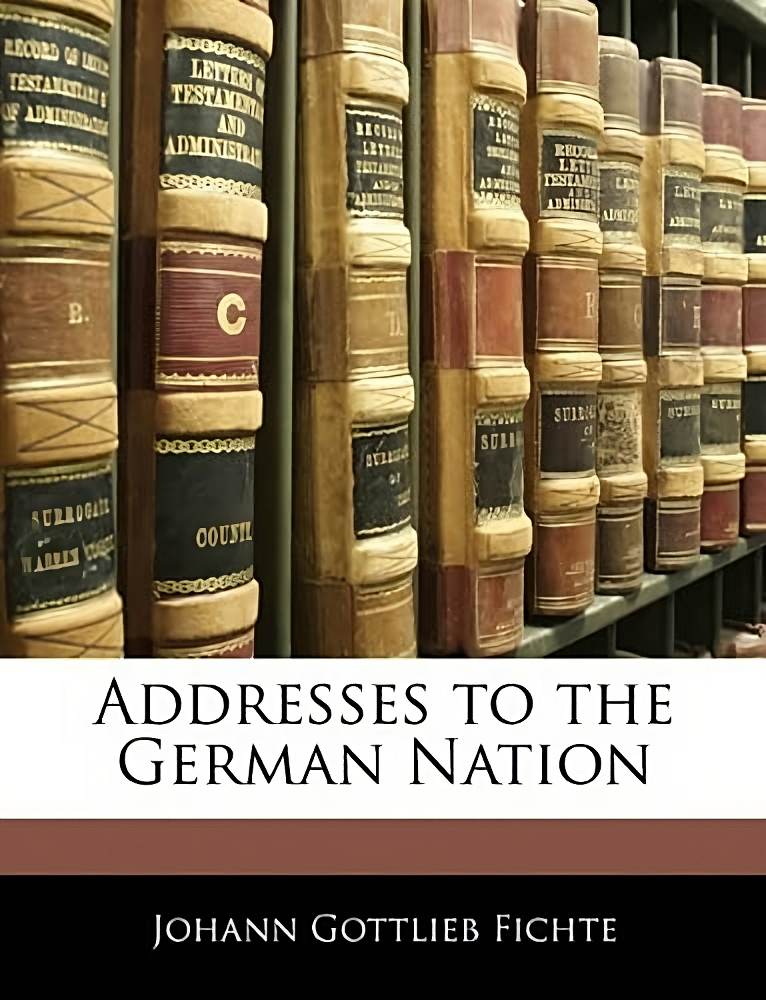
Adolf Hitler read the books of the Jew-hater Paul de Lagarde with great perseverance. The film director Leni Riefenstahl suggested to Hitler the philosopher Johann Gottlieb Fichte’s volume of books, who taught Völkisch socialism (a German ethno-nationalist movement) and was a fanatical Jew-hater. While the German philosopher Nietzsche was also more often linked with the Nazis, he was a Jewish critic but not a Jew-hater.
The book “Thus Spoke Zarathustra,” written by Nietzsche, enthralled Hitler immensely. The ideals of self-mastery, self-cultivation, self-direction, and self-overcoming, as well as the idea of the “Übermensch” or “superman,” inspired him in particular. Hitler was particularly taken by the book’s repeating themes of accepting one’s destiny by embracing all of life’s tragedies and joys and perpetual recurrence—the belief that all events in one’s life would happen again and again, indefinitely. Also, the book “God is Dead,” the prediction of the Übermensch, and another of his books, “The Will to Power,” which is essential to human nature, all inspired Hitler’s thoughts.
Among the books Hitler owned is a beautifully bound copy of the “Words of Christ,” but it is hard to interpret from this that Hitler was a devout Bible reader. He cherished the books, not only “Robinson Crusoe,” but also “Don Quixote” and “Gulliver’s Travels.” It’s true that Shakespeare was one of Hitler’s favorite authors, as he often quoted the poet. The 1925 edition of Shakespeare’s works, translated by Georg Müller, was found in his possession. Shakespeare was responsible for several turning points in his country’s history. On the other hand, the possible books of Goethe, Schiller, Dante, and Schopenhauer were probably destroyed during the Allied bombardment.
Hitler often recited lines from “Julius Caesar” and “Hamlet,” such as “Thou shalt see me at Philippi” or “To be, or not to be, that is the question.”
This all can be quite humiliating to find out. Because Adolf Hitler is not the kind of person you want to share a love of Shakespeare, Miguel de Cervantes, or even Jonathan Swift‘s Gulliver’s Travels with.
But Thomas Mann’s famous article “Bruder Hitler” is one antidote that does calm our annoyance about the books Hitler read and liked. Timothy Rybeck probably did not know about this article, otherwise he would certainly have cited it. Before World War II broke out, author Thomas Mann saw something of a kindred artist in Hitler, whom he both despised and was captivated by.
He writes, “It’s all there, in a shameful way: the difficulty, laziness, and miserable indefinability of childhood; the inability to be accommodated; the half-stupid vegetating in deepest social and mental bohemia; the fundamentally haughty; the fundamentally thinking oneself too good; the rejection of any reasonable and honorable activity.”
Many Obscure and Occult Writings
It is sad that this avid reader turned out to be a murderer. Many of the books in Hitler’s collection have esoteric or otherwise hard-to-find subjects. An obscure author called Ernst Schertel reflects Hitler’s mind better than Friedrich Nietzsche, Arthur Schopenhauer, or Gottlieb Fichte.
Riedel, in his work titled “The Law of the World: The Coming Religion,” criticizes the materialism and goal-orientedness of the average European by pointing out that they base their beliefs on facts rather than on anything internal to themselves. According to the book, the real genius is “ectropic” in the sense that it can create an entire universe from nothing via the application of its devilish will.
Hitler put several thick and passionate pencil notes of approval on the book. The “ectropic” was the term that defined his leadership.
Hitler’s ideas were influenced by an after theory from a cheap, sensationalized booklet rather than Martin Luther or German idealism. For years, it has been known that the “Ostara” series booklets, written by Austrian “racial theorist” Jörg Lanz von Liebenfels, had a significant impact on young Adolf Hitler. This information was revealed in Wilfried Daim’s book “Der Mann, der Hitler die Ideen gab,” (The Man Who Gave Hitler The Ideas) which also highlights the pornographic elements of these booklets.
At the end of reading Timothy Rybeck’s thorough investigation, one is left feeling unsatisfied. Even with Walter Benjamin as a guide, it is impossible to fully understand the mind of the mass murderer, and this is likely because there is no real mystery to uncover.
Hitler, in his core, was empty and void. Attempting to comprehend him leads to nothingness. He was a blank slate who enjoyed reading.