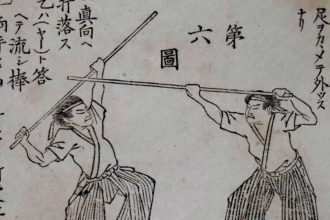
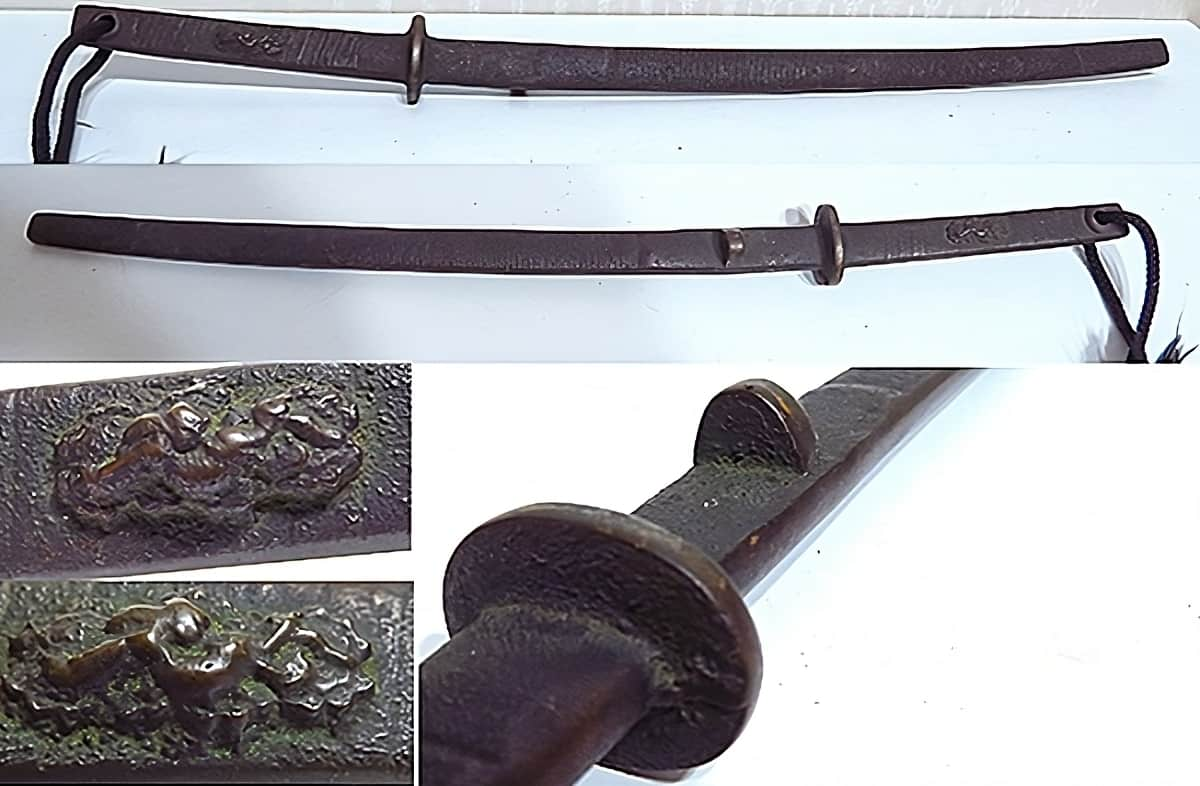
A tekkan (“iron pipe”, 鉄管) is a truncheon-type blunt iron weapon, instrument, or self-defense tool fashioned into the form of a sword without a blade. This is why the weapon is also known as tetsu-ken or tettō (鉄刀) which literally means “iron sword” in Japanese. The tekkan was designed to bring down an opponent without needlessly killing or wounding them. This was achieved by using swordsmanship techniques while withstanding all the blows from the opponent’s blade with the sheer durability of tekkan. Thus, tekkan was also an arresting tool used by Japanese officers.
Tekkan Was a Sword-Shaped Club Designed to Crush Armor
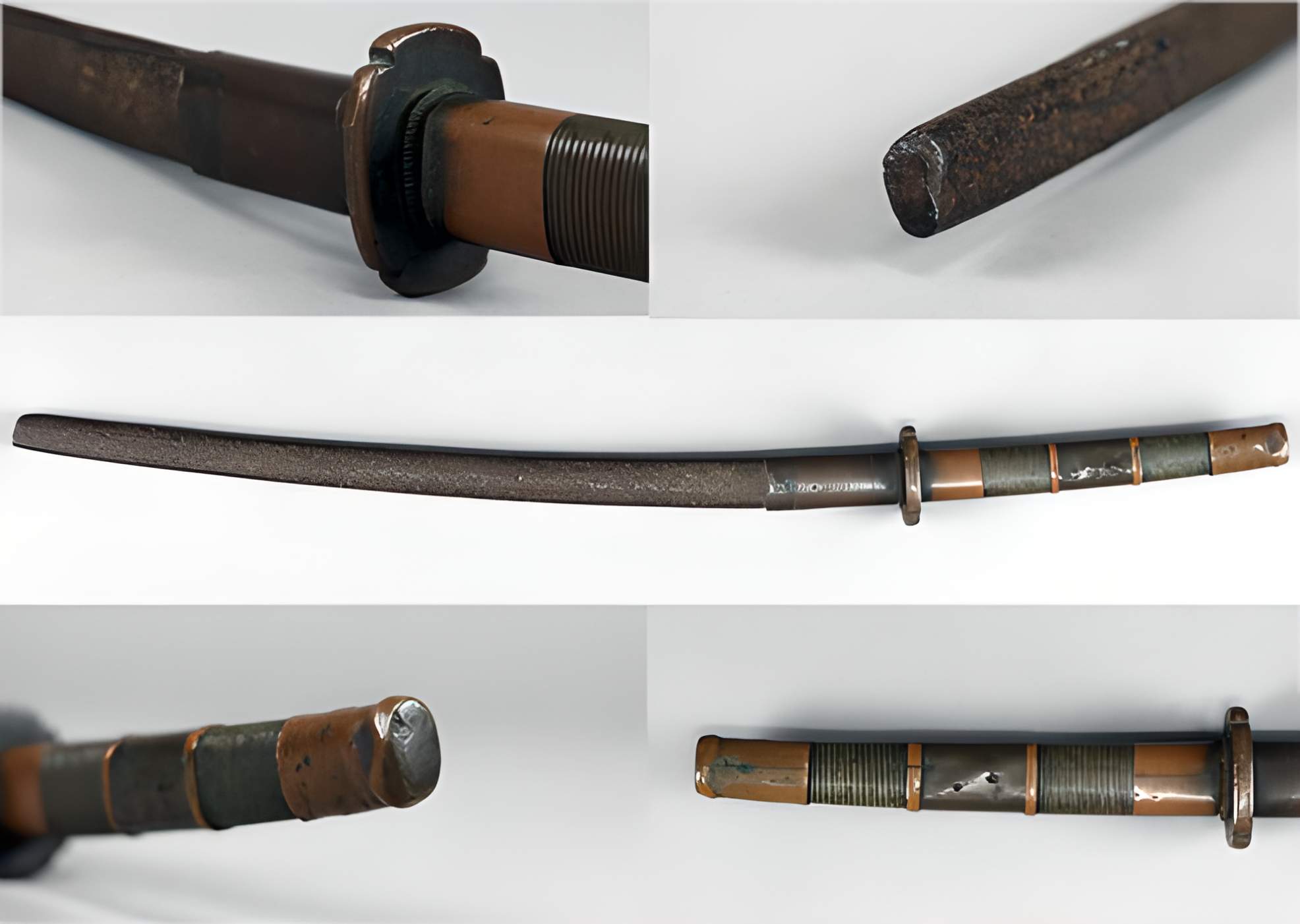
The iron blade of the tekkan is slightly curved, like a Turkish kilij (lit. “sword”). This is because curved swords are better for cutting strikes, as we have learned from the Turko-Mongol sabers as old as the 7th century.
Although the tekkan is fashioned like a blade, it is more like a thick and heavy iron rod intended mainly not to break. It was an iron club shaped like a Japanese sword. The weight is there to make the weapon durable. Even tekkans that are only a wakizashi’s length (17.7 in; 45 cm) can weigh as much as a typical sword at 2.2 lbs (1 kg).
Most tekkans were between one and two “shaku” (12–24 in; 30–60 cm). The strength of tekkan was superior to a sword, and it was considered an anti-armor weapon similar to the kanabō. It could still cause injuries and fractures even if it was hit inadequately.
The weapon is sometimes confused with a kabutowari (“helmet splitter”) when it is at least 24 inches (60 cm) in length. This is especially the case when referring to pieces in museums and private collections. Also known as hachiwari, a kabutowari looks like a tekkan with a hook. Another Japanese iron sword that is confused with tekkan and kabutowari is the habikito.
But why did the Japanese need an iron sword without a blade?
Purpose of Tekkan
The tekkan didn’t strive for lethal precision and slashing like the katana, but rather for complete neutralization by striking the opponent. It was originally designed to be used against opponents who were putting on armor. That is why the iron weapon was made heavy to be used against the armor’s most vulnerable spots, usually the gaps between the joints.
During the Tokugawa shogunate (1603–1868) of the Edo period, bladed weapons were made illegal in Japan in the 17th century. A variety of non-sword weapons, as well as blades of varying disguises, saw a rise in favor as a result of this ban. During the Edo Samurai period, wealthy merchants and farmers used this single-handed iron blade along with the samurai.
In the 19th century, swords were once again banned from public use with the Haitō Edict. This time, the ban also included the samurai class. The aim was to do away with the samurai’s long-held rights.
Having no sharpness, tekkans were considered legal to own. Similar to the jitte, the tekkan was not equipped with a blade but was still formidable and adaptable enough to be used as both a defensive and offensive weapon. Although tekkan was designed mainly for self-defense. When the Sword Abolishment Edict came into effect in 1876, all samurai began carrying tekkan as a dependable backup weapon.
Origin of Tekkan
There are many theories regarding the origin of tekkan. Just like many iron weapons without a blade, the tekkan most likely received its name in the Muromachi period (1336–1573). However, it is likely that the design of the weapon originated centuries before that.
Japan never had sufficient iron deposits. And they got most of their iron through iron sand (satetsu). The lack of iron deposits meant that the blacksmiths had to work much longer to refine the quality of their steel to produce reliable steel weapons (steel is made from iron and carbon).
In most cases, they achieved this by ensuring their steel contained a constant percentage of iron and carbon. However, this required too much time, and whenever a war broke out, the blacksmiths had to mass produce various iron weapons along with steel ones to compensate for the lack of weaponry.
This was the case with the civil wars between the samurai and ashigaru during Japan’s Age of Warring States from 1543 to 1575 in the Sengoku period. Blacksmiths often came up with creative iron weapons such as tekkan to supply their samurai and ashigaru. It was at this time that the blacksmiths had to rely on the iron ore purchased from Europeans to continue producing steel swords.
Bibliography
- Stephen Turnbull, 2019. Samurai Vs Ashigaru: Japan 1543–75. Google Books.
- Serge Mol, 2003. Classical Weaponry of Japan: Special Weapons and Tactics of the Martial Arts. Kodansha International.
- Don Cunningham. 2008. Samurai Weapons: Tools of the Warrior. Google Books.