Chigiriki (契木) is a kind of martial arts weapon characterized by a hardwood stick (oak, for example) with an iron chain and weight attached to its tip. Chigiriki-jutsu refers to the subset of Japanese budo (“martial way”) utilizing this weapon. In chigirikis, there are chains that are simply attached to the end of the stick, and other chains are housed in a cavity within the stick. In this version, the chain swings out, and the weapon works like a flail. This design is also known as a swinging cane. Weights can be used to strike an opponent or wrapped around an object to block motion.
What is Chigiriki?
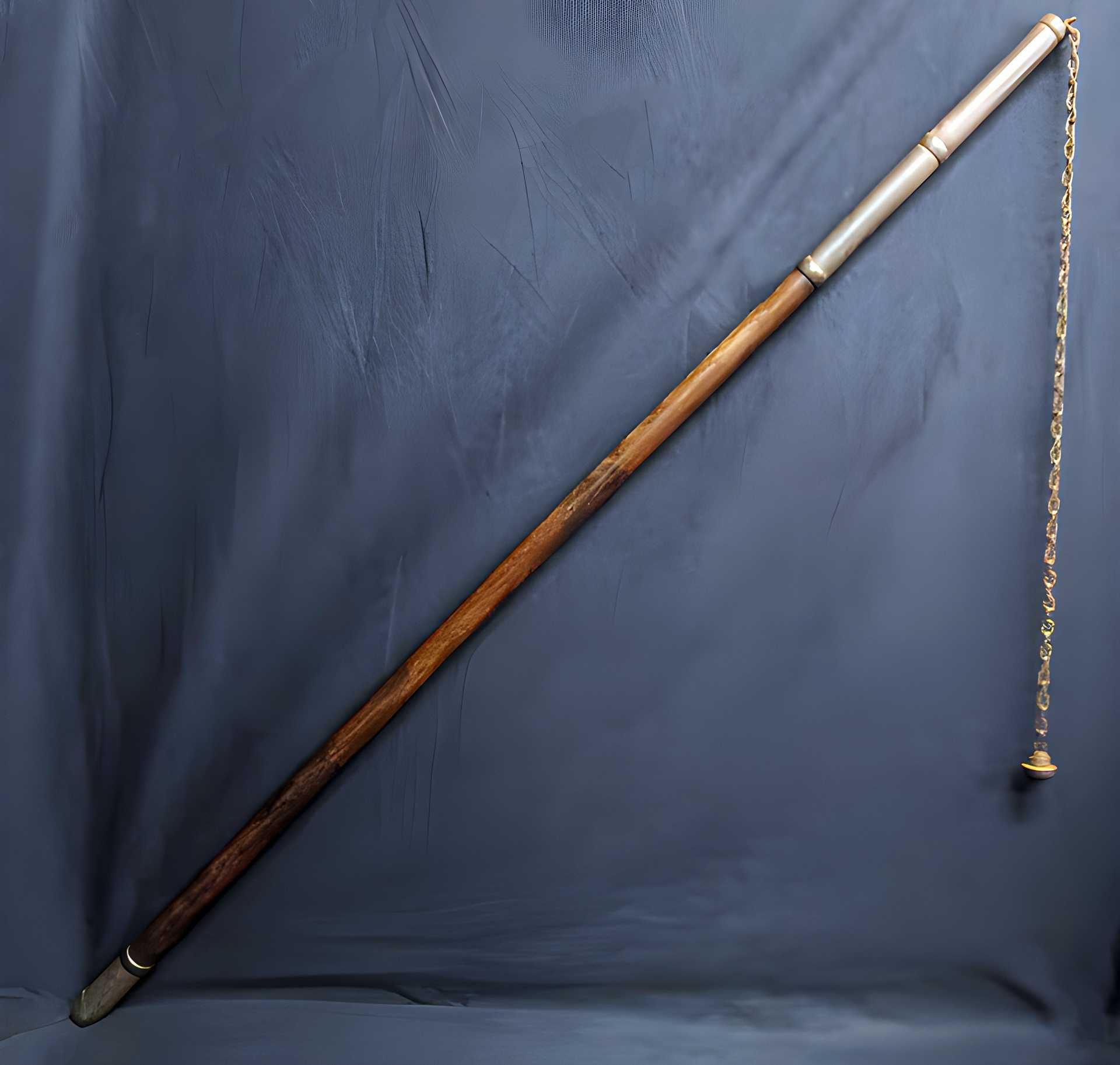
The chigiriki is one of the brandishing-stick (furi-zue) weapons in martial arts that has chained sticks. Also known as a shinobi-zue weapon, this cane is designed for stealth (shinobi means “ninja” in Chinese). You can use them as a blow gun, a breathing tube, or to conceal other weapons like shuriken.
The chigiriki was a weapon used in feudal Japan (1185–1603). It was similar to a jitte with a chain attached to a metal or wooden ball or weight. At one time, there was little distinction between police officers and ninjas, and both groups employed the chigiriki.
The weapon is also known as the “Japanese flail.”
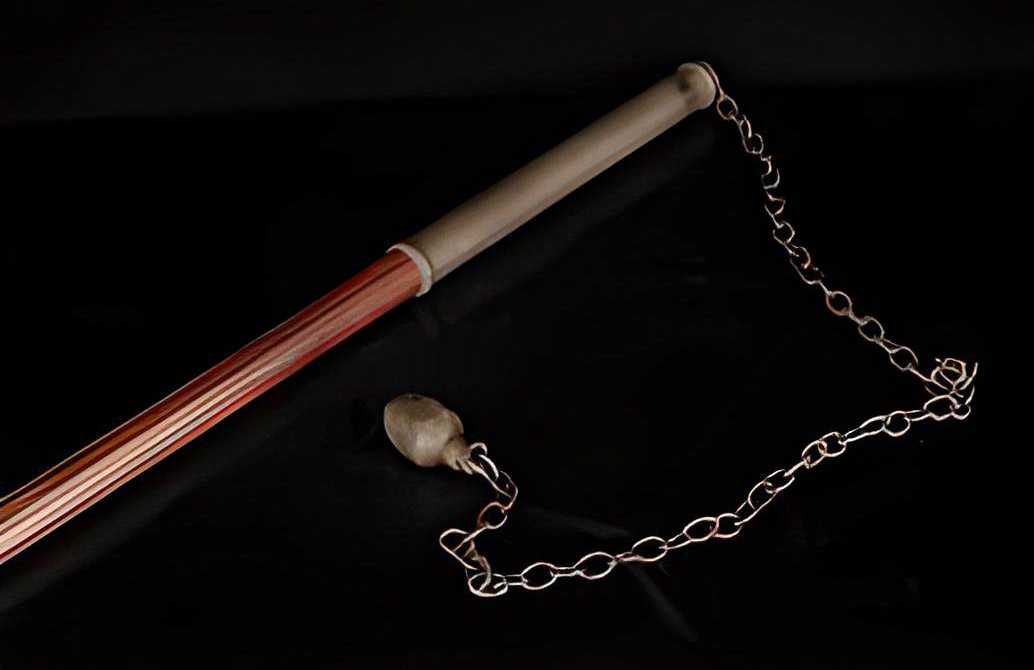
In all likelihood, the chigiriki was designed to take the place of either the sai or the jitte. Because of their limited effectiveness, these weapons were often used in pairs. Even if the opponent’s weapon became stuck in the chigiriki’s chains (“claws”), combat could still go on because the chain was so flexible.
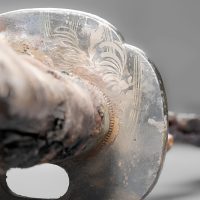
The Size of a Chigiriki
A chigiriki’s size changes depending on its user. This weapon typically measures about 2 feet (60 cm) in length, but it can also reach 4 feet (120 cm).
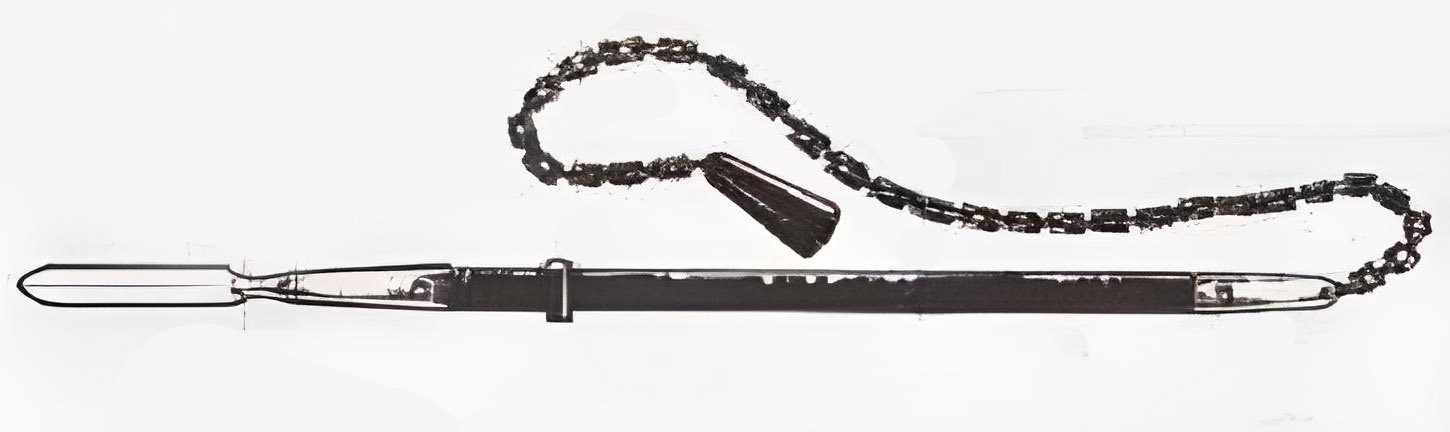
When it is 4 feet (4 shaku) in length, the weapon stands nearly chest-high. Hence the moniker, “Chikiriki,” which means something like “chest-cutting wood.”
When the weapon has a wooden handle that’s around 2 ft (60 cm) long, the metal chain is also 2–2.3 ft (60–70 cm) in length, and there is a spiked ball at the end of the chain.
Chigiriki was historically a typical weapon for fighting in rural communities alongside regular staff. This can be understood by the Japanese idiomatic expression “a chigiriki at the end of a fight.”
The chain can also be whatever length the user likes. Some are as long as the user’s forearm.
Origin of the Chigiriki Weapon
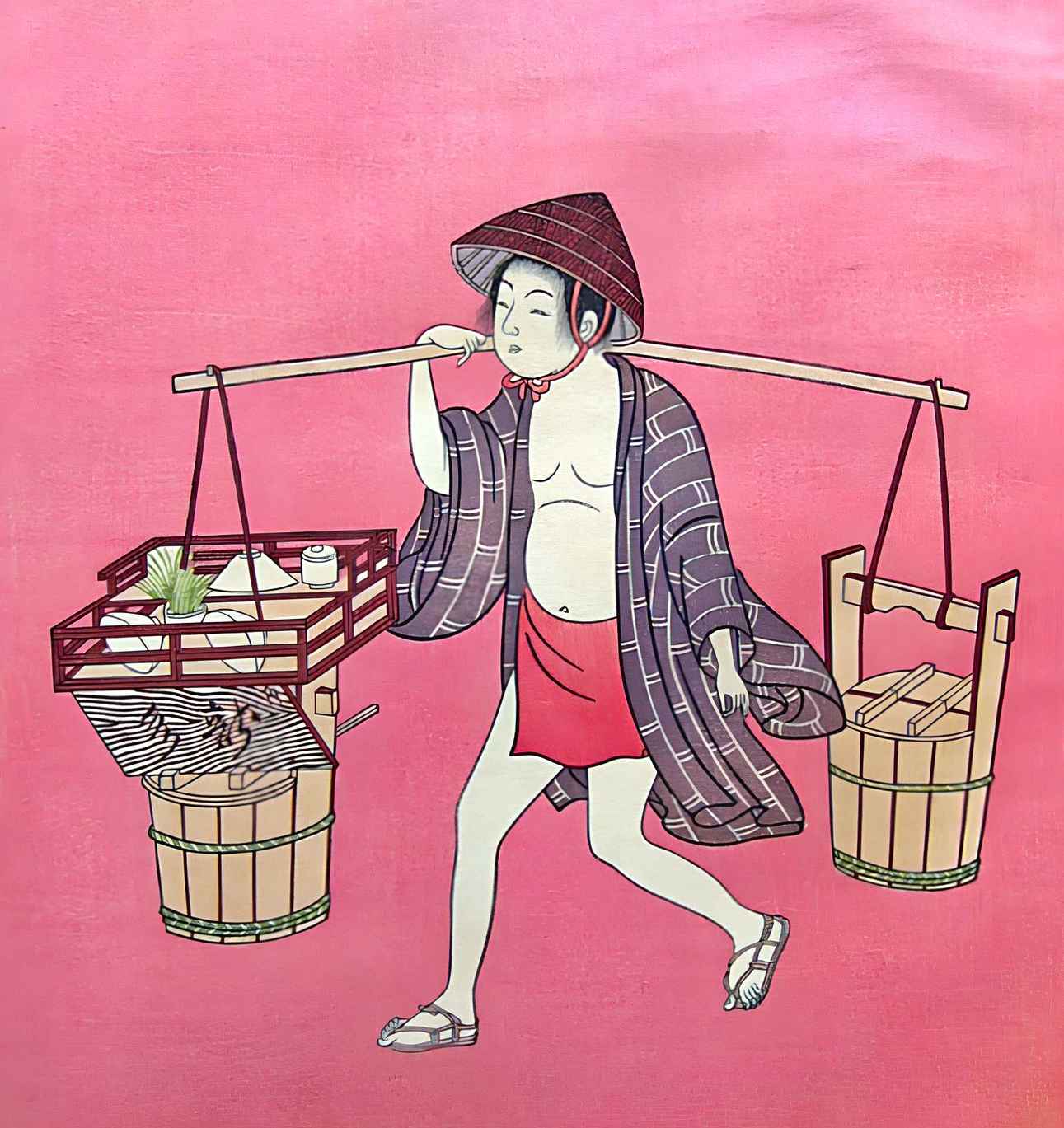
However, before the use of chigiriki as a fighting weapon, it was actually used for much more subtle purposes. In everyday life, the chigiriki with a chain weight attached was used to measure the weight of a carrying pole worn on the shoulder while transporting heavy objects. It was also used as a weighing scale to measure the weight of goods.
At some point, the tool was adapted for use in martial arts. This was probably a result of the lack of weapons available to the locals at the time. In cases of civil war, the Japanese people often improvised their daily tools into weapons.
This is actually the origin of many Japanese martial art weapons, which initially began as tools for everyday life, such as the bo staff or the tonfa.
Its Past is Murky
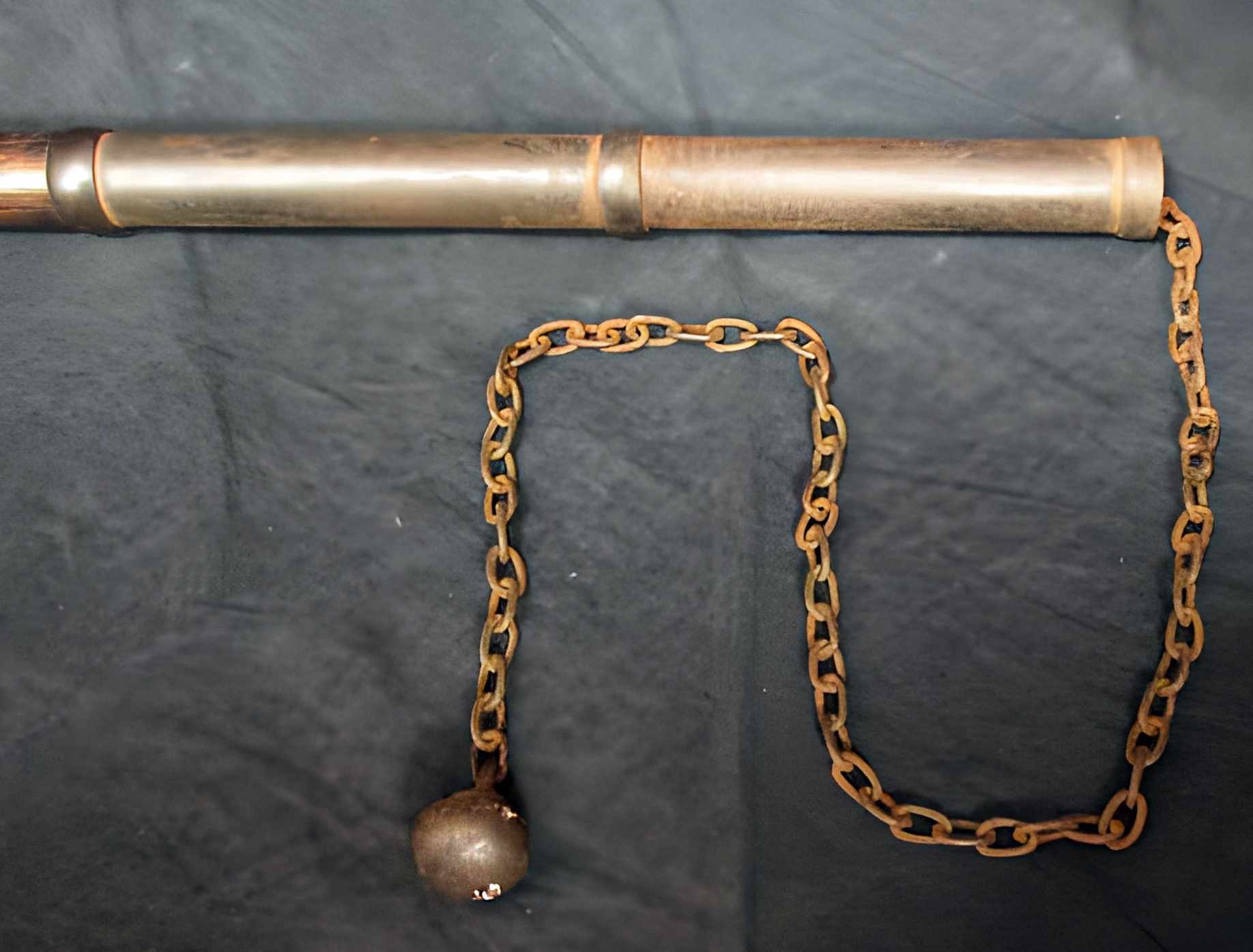
The chigiriki is a weapon used in a specific style of martial arts, although its roots in history are not certainly known. However, there is evidence to suggest that the weapon was first used in China around the 8th century.
The Heian period (794-1185) in Japan is when it was first recorded. The term “chigiriki-jutsu” was first used to describe its application in the 16th century.
Similar to the kusarigama (a chained kama weapon), this flail weapon never developed into its own separate school but rather became integrated into broader forms of martial arts. Its length varied depending on the practitioner, just like the jo staff.
In Combat
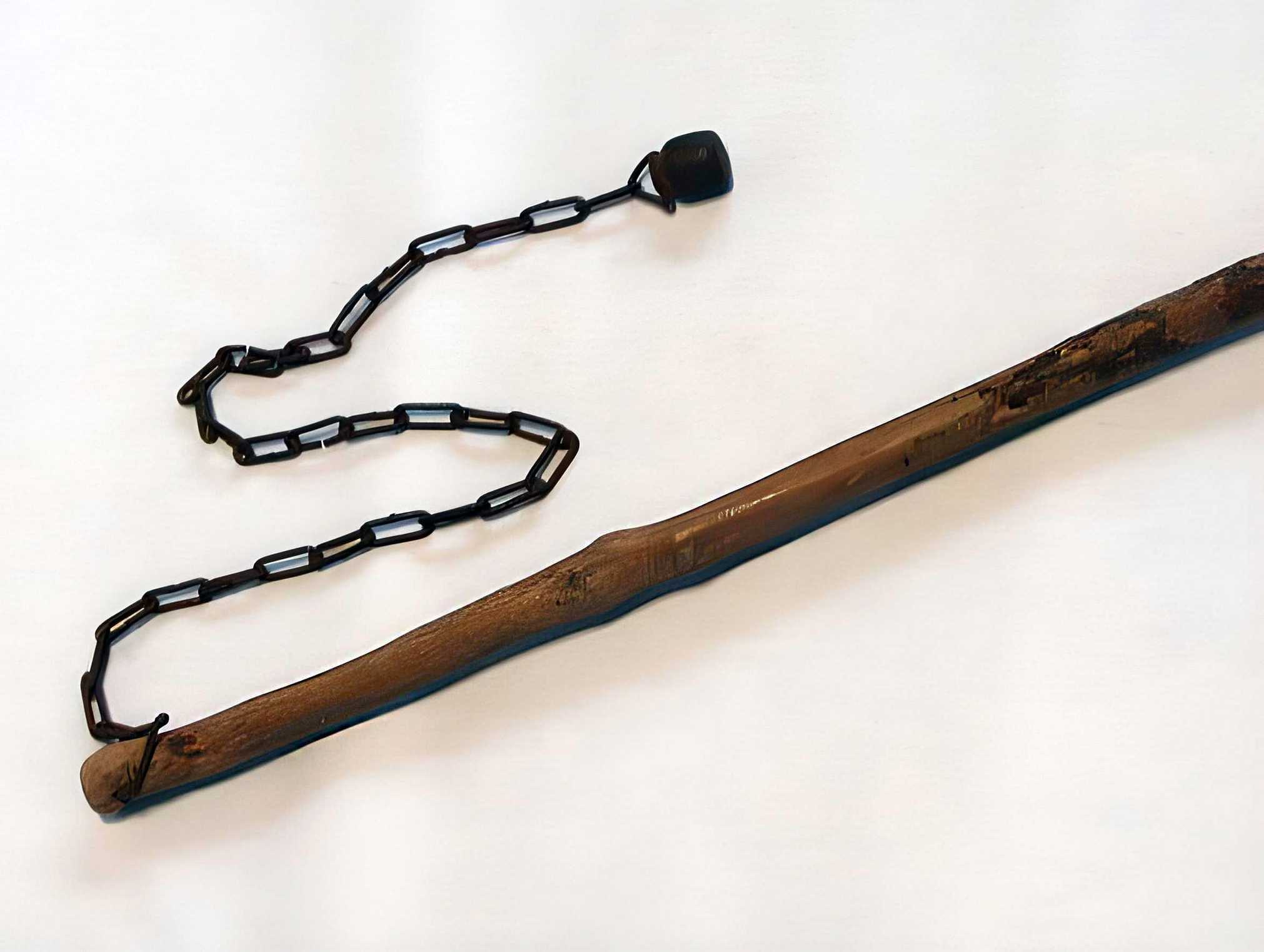
The use of chigiriki in battle allows for the following:
- Attacking or entangling an opponent (even from a distance of 10 ft, 3 m).
- Parrying blows.
- Capture or immobilize the opponent’s weapon.
When this weapon struck the target, it could kill or deafen the person.
What Does Chigiriki Mean?
Even though the word “chigiriki” is Japanese, its exact meaning is obscure today. The term may be a combination of two different Japanese words or have some other meaning in Japanese culture. Its literal meaning was probably lost at some point in history, suggesting that it was a tool of ancient times.
A Typical Chigiriki in Kiraku-ryu
| Rod length | 5 shaku 7 sun 2 bu | 5’7.7″ (1.72 m) |
|---|---|---|
| Chain length | 2 shaku 5 sun 4 bu | 2’5.9″ (76 cm) |
| Thickness | 1.3 bu | 1.57″ (4 cm) |
| Overall weight | 360 monme | 3 lb (1.35 kg) |
Schools of the Chigiriki Weapon
Numerous schools adopted the chigiriki weapon, including Araki-ryu, Kiraku-ryu, Sasako-ryu, Mubyoshi-ryu, Hatada-ryu, Tsutsumi Hōzan-ryu, Kagami Shinmeichi-ryu, Toda-ryu, and Hatsumi Kenrikata Ichi-ryu, to name a few. The weapon seems to have been especially common in the Nen-ryu and Chujo-ryu schools.
Araki-ryu (荒木流) koryu (古流) (ko – old, ryu – school) is an ancient martial art developed in the early 1570s by Araki Mujinsai Minamoto. Chigiriki-jutsu contains most of the techniques often used with this weapon.
References
- Old School – Essays on Japanese Martial Traditions by Ellis Amdur, 2014 – Google Books
- Classical Weaponry of Japan – Special Weapons and Tactics of the Martial Arts by Serge Mol, 2003 – Google Books
- Ancient Chinese Weapons A Martial Artist’s Guide by Jwing-Ming Yang – 1999 – Google Books