Why did the Storming of the Bastille start the French Revolution? During the tumultuous French Revolution, there was a particular building that became very famous and held significant political meaning at the time. This building was the Bastille, which had been a symbol of the feared monarchy for the people of Paris. For many years, the French people had hated the Bastille, much like they detested the feudal system. The taking of the Bastille on July 14, 1789 was a signal for the entire French national revolution due to the symbolic significance of the fortress. When discussing its storming, one must start with the convening of the Estates-General by King Louis XVI.
High Taxes Met With Opposition
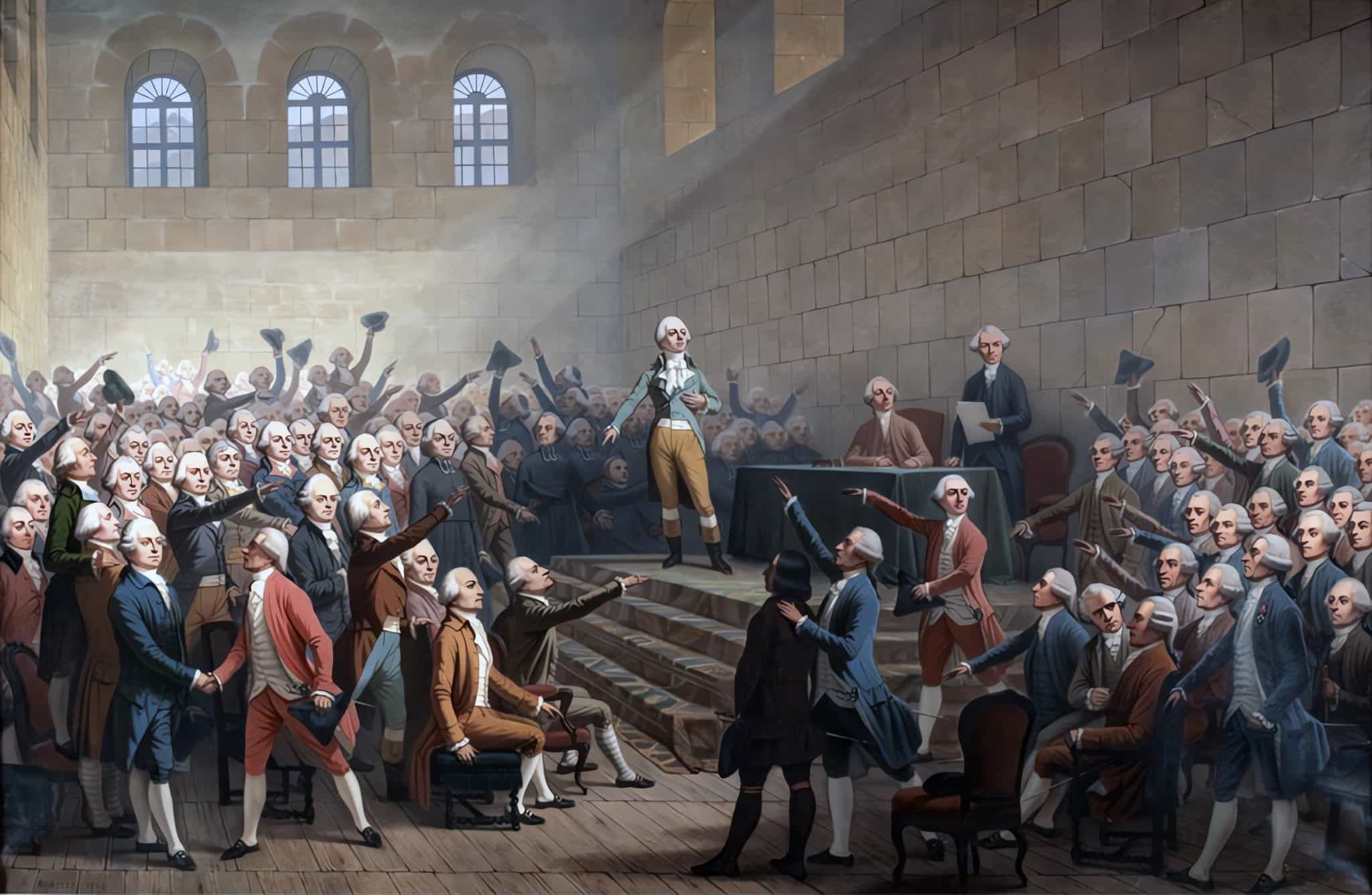
During the reign of King Louis XVI, France suffered from frequent natural disasters such as droughts and snowstorms, which caused food prices in many cities such as Paris to skyrocket, leading to frequent famines. Due to events such as the Seven Years’ War and backing American independence, the French government had spent a significant amount of money and incurred a massive debt equivalent to five years of France’s national budget. The officials were unable to provide significant disaster relief. Therefore, Louis XVI could only convene the “Estates-General” assembly which had not been held for 175 years, to raise taxes and fundraise.
The Estates-General was a meeting where representatives from the three estates of French society, namely the clergy, nobility, and everyone else, convened to discuss the country’s affairs. The first estate was made up of clergy members, the second estate of nobles, while everyone else was lumped into the third estate. At the time, the third estate (average citizens) made up about 98% of the French populace. On the other hand, the first two estates comprised only around 200,000 people, accounting for just 5% of the total population.
However, the idea of raising taxes was met with opposition from the vast majority, especially from the third estate. The nobles had tax exemptions, so the taxes would ultimately be paid by the third estate. Although some members of the third and second estates were not entirely opposed to raising taxes, they demanded a constitution before doing so.
The constitution would include everyone, including the king, queen, royal family, clergy, and nobles, who would all be required to adhere to it, much like the constitutional monarchy in the UK. Otherwise, they refused to pay any additional taxes.
Louis XVI to Dispatch His Soldiers
To Louis XVI’s complete surprise, not only did members of the third estate oppose the tax increase, but many members of the first and second estates also demanded a constitution. They formed the National Assembly and demanded a clear and executable constitution to protect their rights. Louis XVI was caught off guard by his “enemies” from all three estates, meaning that all classes were now his adversaries.
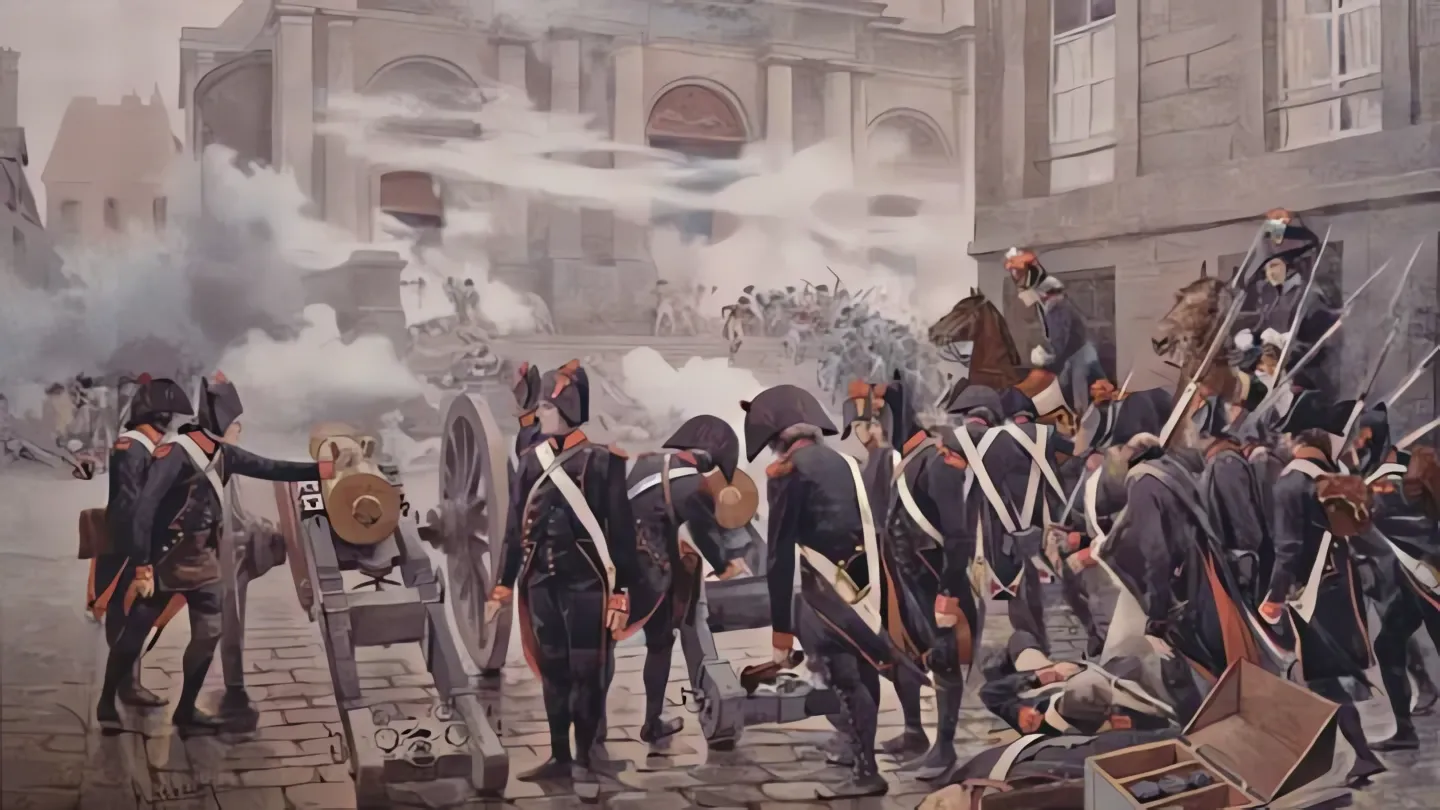
Facing this situation, Louis XVI could only make concessions, stating that he was willing to implement a constitutional monarchy while preparing to suppress all dissenters by mobilizing his army. At least 30,000 soldiers were secretly dispatched to the outskirts of Paris.
However, Louis XVI and his subordinates were very inept, and their military actions were not hidden from everyone. When insiders exposed the army’s movements, the National Assembly and the citizens of Paris became furious. They hated the king’s deception and demanded that he immediately withdraw his army and abandon his unfriendly attitude. Otherwise, they would continue to resist.
However, Louis XVI was determined to uphold his rights and disregarded the National Assembly and the people’s warnings, which led to the citizens of Paris beginning to revolt.
Parisians Wanted to Obtain Weapons
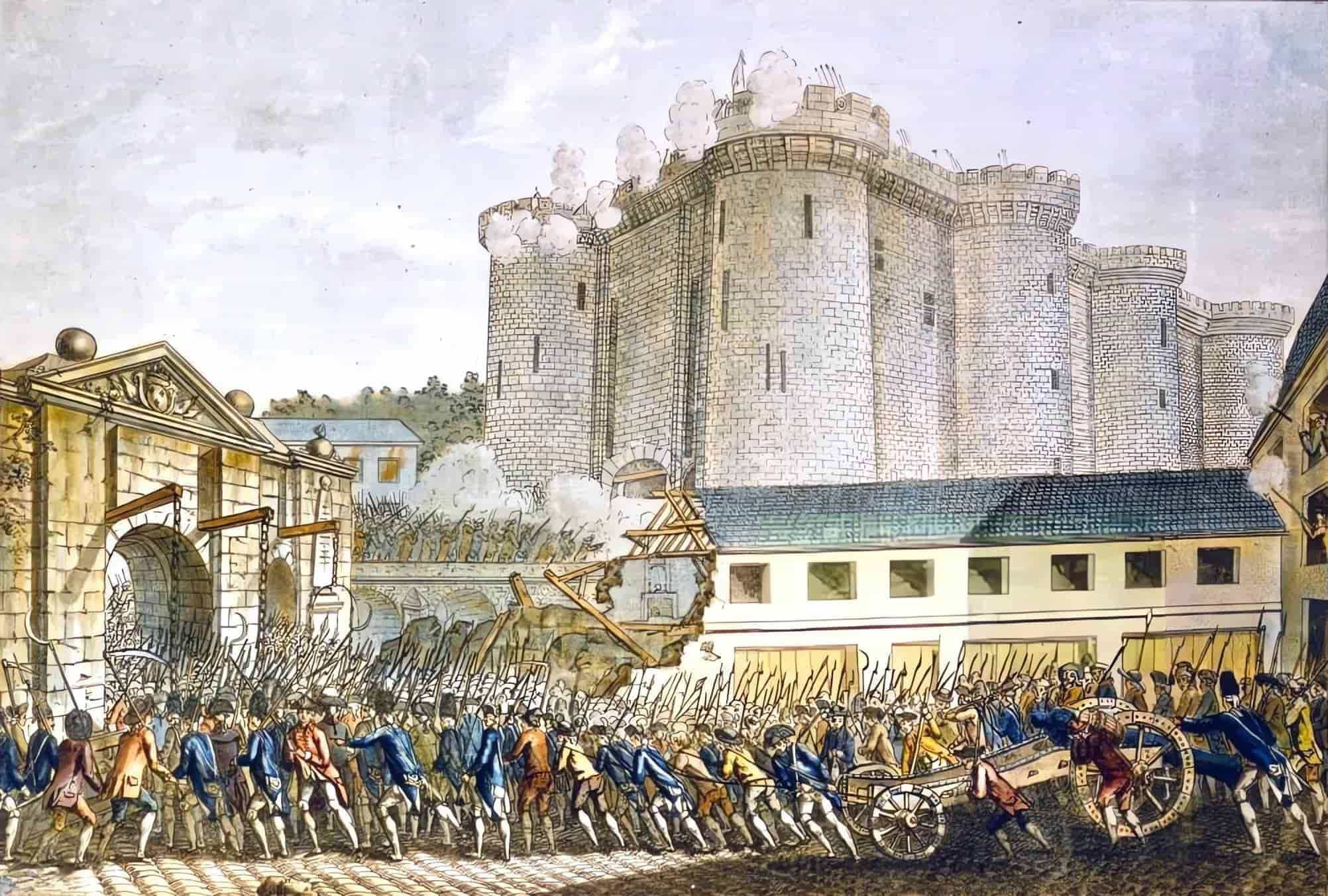
In 1789, the bells of Paris rang out as the city’s food supplies had been depleted, leaving the starving population, mainly composed of workers, artisans, and the urban poor, with no other option but to start a rebellion. In order to acquire enough weaponry, the rebels began constructing traditional street barricades in the streets of Paris and searching for swords and firearms to fight against the king’s army.
To this end, the rebels swept through the Hôtel des Invalides (“House of Invalids) and found a large cache of weapons, including up to 28,000 firearms and a dozen large cannons. With these weapons, the rebel citizens of Paris quickly armed themselves, but they faced a problem: They didn’t have enough gunpowder and bullets to fire their weapons. As they searched through the Hôtel des Invalides without success, some of the rebels thought of the Bastille and shouted, “Let’s go to the Bastille!“
The Importance of the Bastille Fortress
Originally called the “Bastille Fortress,” the Bastille was a very strong military fortress built during the Hundred Years’ War period, under the command of King Charles V (1338-1380) of France, to defend against the English invasion. The Bastille was located in front of the gates of Paris, and as the wars around Paris dwindled and the city expanded, it slowly became a building in the eastern part of the city, losing its role in defending against foreign enemies.
In the late 14th century, the French king gradually transformed the Bastille into a special royal prison, mainly used to detain political prisoners, including the writer Voltaire. The Bastille was always known for its strict security and was a symbol of French feudal monarchy and absolute monarchy, representing the supreme authority of the king and a high point of control over Paris, used to suppress all opposition and dissent.
At the time, the Bastille looked like an impregnable castle, with a total area of approximately 28,750 square feet (2,670 sq m), eight towers approximately 100 feet (30 meters) high, connected by walls 80 feet (24 meters) high and 10 feet (3 meters) wide, and 15 heavy cannons mounted on the walls.
The castle was surrounded by an 80-foot-wide (26-meter) and 26-foot-deep (8-meter) moat, with only one drawbridge connecting it to the outside world. The interior of the castle contained a large number of weapons and gunpowder.
But when the rebel army reached it, people realized that the Bastille Fortress was surprisingly fragile, just like the authority of Louis XVI. At that time, the Bastille was guarded by only 82 prison guards and a Swiss guard consisting of only 32 people, which was vastly outnumbered compared to the rebel forces.
A Revolt Turned Into a Revolution
On July 14, 1789, Louis XVI wrote “nothing” in his diary, unaware that the revolutionary army had appeared outside the gates of the Bastille with weapons and cannons. Their shouts were like thunder, striking fear into the hearts of every prison guard. Realizing that the rebels meant business and were preparing to bombard the Bastille, the guards surrendered without resistance. The revolutionaries got what they wanted, completing their full arming from material to thought.
Interestingly, at the time there were only seven prisoners in the Bastille, none of whom were political prisoners. One was the Marquis de Sade, imprisoned for “debauchery,” while two others were deemed to be mentally ill. The remaining four were forgers.
One would think that the Parisian uprising and the fall of the Bastille would have a great impact on Louis XVI, but he had no idea what had happened. Because the king had not received any notification of the incidents. Louis XVI was out hunting during the day and slept early at night.
Thus, he wrote “nothing” in his diary on July 14, and by the time he found out about the uprising, it was already midnight. When the Duke of La Rochefoucauld woke Louis XVI up and told him about the situation in Paris, it led to the famous dialogue:
Louis XVI, groggy and half-asleep, asked, “Is it a revolt?”
The Duke of La Rochefoucauld, panicked, replied, “No, sire, it’s a revolution!”
Why Did the Storming of the Bastille Start the French Revolution?
The fall of the Bastille had a tremendous impact on the outside world. It was not just the conquest of a fortress by the insurgents. The taking of the Bastille became a signal for the entire French national revolution. Major cities across France followed the lead of the Parisians, arming themselves, seizing municipal power, and establishing the National Guard. Even peasants attacked the manors of their lords and burned their leases.
The Storming of the Bastille started the French Revolution because the fall of the fortress represented the collapse of France’s feudal monarchy and absolutist dynasty in the face of the armed uprising.
The king’s authority seemed to evaporate in an instant. Louis XVI’s dream of turning the tide with the army collapsed with the fall of the fortress. Faced with the armed Parisian insurgents who had completed their militarization, Louis XVI could only withdraw his troops from Paris.
In the following period, Louis XVI agreed to all the demands of the National Assembly, including abolishing feudal privileges, cancelling royal pensions, revoking nobles’ tax exemption, seizing church property, abolishing the thousand-year-old tithe (tithes were charges collected by the Roman Catholic Church and exacted on the Third Estate or average citizens), and so on.
Later, the famous “Declaration of the Rights of Man and of the Citizen” was passed, establishing a series of principles that have had a profound impact on the progress of human civilization, such as natural human rights, freedom, equality, and the sanctity of private property.
At this moment, human political civilization opened a new chapter in history. The birth of the first modern republican system in human history followed, and all of this was achieved only after the Parisian people had stormed the Bastille and wrested it from the king’s grasp. This is why the Storming of the Bastille marked the beginning of the French Revolution.
Bibliography
- William Doyle. 1984. Origins of the French Revolution. JSTOR.
- Gregory Fremont-Barnes. 2011. The French Revolutionary Wars. Amazon.
- T.C.W. Blanning. 1996. The French Revolutionary Wars 1787–1802. Amazon.