Catholics commemorate the Day of the Dead on November 2, a day that is not to be confused with Halloween or All Saints’ Day. Under a usually dismal sky that heralds the start of winter, the living crowd the windswept lanes of cemeteries, and chrysanthemums decorate the graves. Even though every faith has its own perspective on the afterlife, Christianity’s emphasis on the immortality of the soul and the fellowship of saints was a profound spiritual breakthrough for its time. This holiday provides a perfect time to reflect on these key tenets of Christian belief and the origins of this office of the dead, which dates back to the High Middle Ages.
The principle of the communion of saints
The two events, celebrated on November 1 and 2, respectively, are connected by the Feast of All Saints. As a return to the notion of intercession within the framework of the communion of saints, the Feast of All Saints commemorates all the Christian saints, both known and unknown to the Church, and sets them up as an example for all the faithful. The Church celebrates the broad concept of the communion of saints on the Day of the Dead. All Christians, both alive and dead, are brought together in the communion of saints, a great community of solidarity that transcends place and time.
Catholics believe that the departed who have entered God’s kingdom (such as the saints commemorated the day before) may intercede on behalf of the living. However, the other way that Catholic solidarity might flow is from the living to the dead.
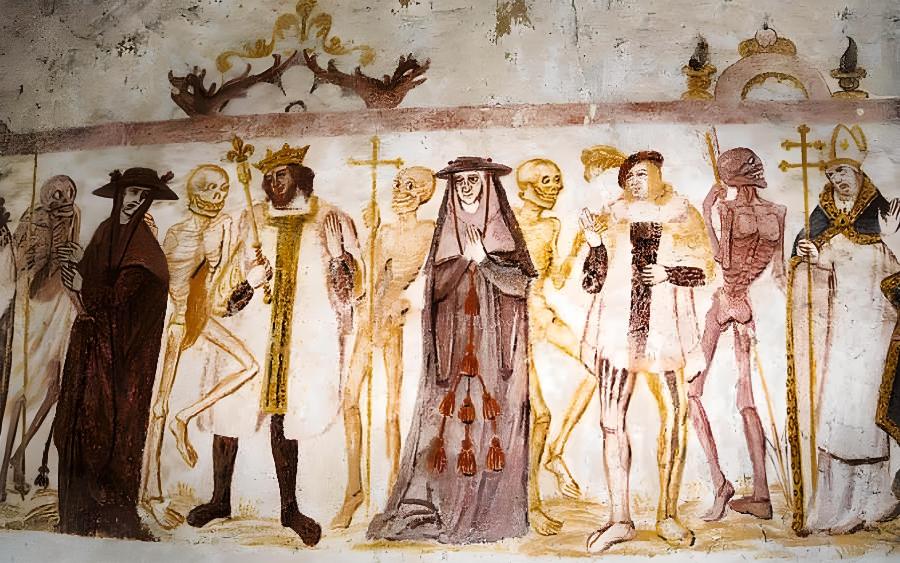
Some of the dead have to go through a mysterious purification process called purgatory before they may reach God’s kingdom. A lot of people, particularly in the Middle Ages and the Renaissance, had some very wild ideas about what happens in Purgatory. Some shady popes even sold “indulgences” to those hoping to reduce their own or a loved one’s time spent in purgatory. The monk Martin Luther, frustrated at being ignored, blamed this anomaly for the Church split that eventually gave rise to Protestantism.

These days, purgatory is seen more as a process of cleansing during which the prayers of the living might aid the souls of the recently departed. There is a tight connection between the concept of the communion of saints and the vision of the Church as the body of Christ made up of the baptized of all times. Therefore, the Day of the Dead is not a macabre celebration; rather, it serves as a reminder of the continuation of the people of the baptized beyond death, the preservation of unity, and the strengthening of connections of solidarity between those who are born on Earth and those who are born in Heaven.
The origins of the day
Christians have always prayed for the deceased because of their faith in the soul’s immortality, but special days were set aside to do so. It is very debatable whether or not Christians really “Christianized” ancient pagan celebrations like Samhain (Halloween). There is no denying that the Day of the Dead evolved from earlier commemorations of the dead.
Even more so, this universal inquiry and this fatality, which is death, are commemorated in at least one holiday across the board, across cultures, and across faiths. But for some people, especially in Roman culture, these festivals had a more sinister purpose: to ward off the spirits of the departed. To keep them where they belong, ceremonies are done and offerings are made. The world of the dead or afterlife’s limbo once had a hopeless reputation, but this has started to change slowly with the arrival of various cults.
The early Christians had a very different perspective on death; they saw it simply as a doorway into God’s kingdom and believed that a bond could be kept alive between the living and the dead. It’s no longer a matter of appeasing the dead, but of just carrying on with their presence in your life, and the reasoning shifts dramatically. Because of this, it appears more accurate to argue that the Christian celebration of the dead succeeded the pagan celebrations rather than inheriting them. Since the beginning of winter is often associated with the beginning of death in many cultures, the dates’ coincidence serves as symbolic proof.
A feast dedicated to the dead
Christians pray for the deceased on a regular basis, and very early on, a service was held just for them. Amalarius mentioned an office for the deceased as early as the year 820. Odilo of Cluny imposed the date of November 2, the day following All Saints’ Day, on all of his monasteries in 998, presumably invoking the same concept of communion of saints.
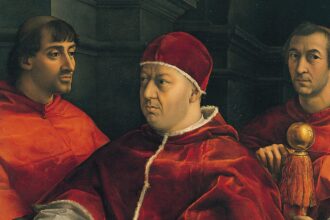
This day first sanctioned by Pope Leo IX (1049–1054) and became a fixture in the Christian calendar. In fact, it gained so much popularity that all of Christendom adopted November 2 as the official Day of the Dead in the 13th century (at least the ones dependent on Rome, the Armenians, for example, celebrate their dead at Easter).
Many European Christians traditionally visit cemeteries on the holiday of All Saints’ Day (which falls on November 1) to place flowers on the graves of the departed. In Mexico, the celebration is given special significance via a process of syncretism in which pre-Columbian practices of honoring the deceased are kept alive.