Attila, ruler of the Huns, led his terrifying hordes into Western Europe, and Gallo-Roman Gaul, formerly part of the Roman Empire, met each other at the Battle of the Catalaunian Plains (also called the Battle of the Campus Mauriacus, Battle of Châlons). Contrary to popular belief, the crucial fight did not occur at Châlons-en-Champagne but rather on the Campus Mauriacus, which was located close to Troyes. Most likely, the Hunnic army was much less significant and made up of many different groups than medieval historians have claimed for a long time, and the Catalaunian Plains are more of a founding myth than a real place.
What was the background to the Battle of the Catalaunian Plains
After destroying eastern Gaul in 451, Attila set his sights on Orleans. It looked like his terrifying armies were unstoppable by anything or anybody. On the other hand, Cenabum was where the Hunnic journey would conclude. The last Roman legions were largely stationed in northern Italy, under the protection of Ravenna and Emperor Valentinian III, while the Roman Empire was rapidly disintegrating.
Magister Flavius Aetius, master of the militia, decided to halt Attila’s assault with a small cavalry and several cohorts in Gaul. Because of the massive disparity in numbers between his field army and Attila’s, the “last Roman” had little choice but to make agreements with the barbarian kingdoms bordering Gallo-Roman territory. Flavius Aetius, a diplomat above and beyond the norm, was able to convince most of the barbarian chiefs to support his goal of preventing Attila from destroying Gallo-Roman Gaul.
Now that they were far into the summer of 451, a military force could finally restrain the ambitions of the Hunnic monarch. After many weeks of resistance, Attila sacked Orleans as the army of the generalissimo moved on the city, bolstered by thousands of more troops from around Europe and beyond. Attila, taken aback by the onslaught and the subsequent street battles, retreated eastward. Attila’s army was unable to outrun the allied army because they were slowed down by the convoy of the carts packed with the Orleanian booty. The two armies would have to confront one another once again after trailing each other for several days and many miles.
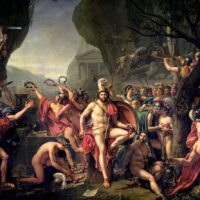
An expansive Champagne plain saw Attila’s massive army fighting with the alliance of Aetius at its rear. The “Gods” of this ultimate showdown had picked the location. The Gepids, who were on Attila’s side, had just recently fought against the Franks, who were on Aetius’s side, in a place named Campus Mauriacus. During the terrifying battles, the Salian soldiers slaughtered a huge portion of them. Franks and Gepids, who made it out of this misery together, populated the broad plain.
The great battle of the Catalaunian Plains
Each army’s soldiers had taken the time to strategically position themselves for the next battle, as no one expected either side to back down. The Roman general Aetius’s troops were stationed on a small incline, precisely like Attila’s close-knit force.
The left wing of the Hunnic army was commanded by the Ostrogoth kings and princes Theodomir, Walamir, and Widemir. The center was seized by Attila’s Hunnic armies and Gepid forces loyal to King Ardaric, who had suffered heavy casualties at the hands of the Huns at the Battle of Campus Mauriacus. Andagesian Vandal troops made up the right flank. The Marcomans, the Heruli, the Alamans, and the Thuringians were not the only peoples to join the Hunnic expedition; the vengeful Franks had also allied with Attila.
King Theodoric I of the Visigoths and his sons, princes Thorismond and Theodoric II, commanded the right wing of the allied army. Aetius positioned the Alains of Sangiban in the coalition’s epicenter. Meeting with the Alains were the Burgundians of King Gondioc and the Gallo-Romans. The famed army from the Soissonnais campaign was followed by the Sarmatians, who rode large horses and wore scale armor. This lethal apparatus was bolstered by elements of Laeti and Armorican warriors. Finally, the Franks of Mérovée provided a comforting presence towards the end of the left wing.
Thousands of warriors cover the plain
The Huns made their initial assault in the early afternoon. The steppe’s terrifying horsemen had their sights set on a hill. The surprise terrified both the Romans and the Visigoths. But eventually, the Huns were repelled by the combined forces of Thorismund and Aetius. Then the fighting spread to include all the warlike people: the Visigoths attacked the Ostrogoths, and the Alains’ strong cavalry engaged the Huns. The Romans fought against Attila’s other Germanic supporters. Swords clashed against blades; lassos and spears met blades; and the battles raged on.
The allies of Aetius were able to fool the Germanic and Hunnic crowd by dressing in Roman fashion.
The combat went on for a while after nightfall. With encouragement from their ruler Theodoric, the Visigoths repelled the Ostrogothic forces. Theodoric was then wounded by an enemy spear and taken to Walhalla. Then they let loose on their followers, and the Ostrogoth caved to their pressure. On its left side, which had been purged of its ostrogothic pillars, Attila ordered his men to construct a circular perimeter with their carts and saddles. Then, realizing the outcome of the war was already decided, he fortified himself here behind the debris.
Ready to put fire there and throw himself in the inferno, he understood then that the Visigoths were leaving the battlefield. For Attila, the departure of the principal allied people of Aetius was a relief. The fight was over, but his armies could still leave the scene of bloodshed.
Aetius: Victorious over Attila at the Catalaunian Plains
Thousands upon thousands of bodies were strewn across the plain. With the invaluable aid of the Visigoths, the Romans ultimately prevailed. After the Visigoths, led by Thorismund, son of Theodoric, had paid their respects to their late monarch, they set off towards Aquitaine.
Because Attila’s army was still sizable and posed a threat even after it reached the Rhine, Aetius’ primary objective now was to monitor the leader’s withdrawal toward the river. A few days later, the moment of truth had arrived: Attila and his dreaded armies were once again crossing the Rhine. All hope of a return of the Hunnic menace to Gaul was extinguished forever. Victorious Aetius would be given the honorific title of Patrice of the Romans before being murdered by Emperor Valentinian III, who feared losing support to the last of the Romans.
Bibliography:
- Hughes, Ian (2012). Aetius: Attila’s Nemesis. Barnsley, South Yorkshire: Pen & Sword Military. p. 159.
- Sidonius Apollinaris, Carmina, 7.332–56.
- Hughes, Ian (2012). Aetius: Attila’s Nemesis. Barnsley, South Yorkshire: Pen & Sword Military. pp. 160–61.
- Kim, Hyun Jin (2013). The Huns, Rome, and the Birth of Europe. Cambridge: Cambridge University Press. p. 80.