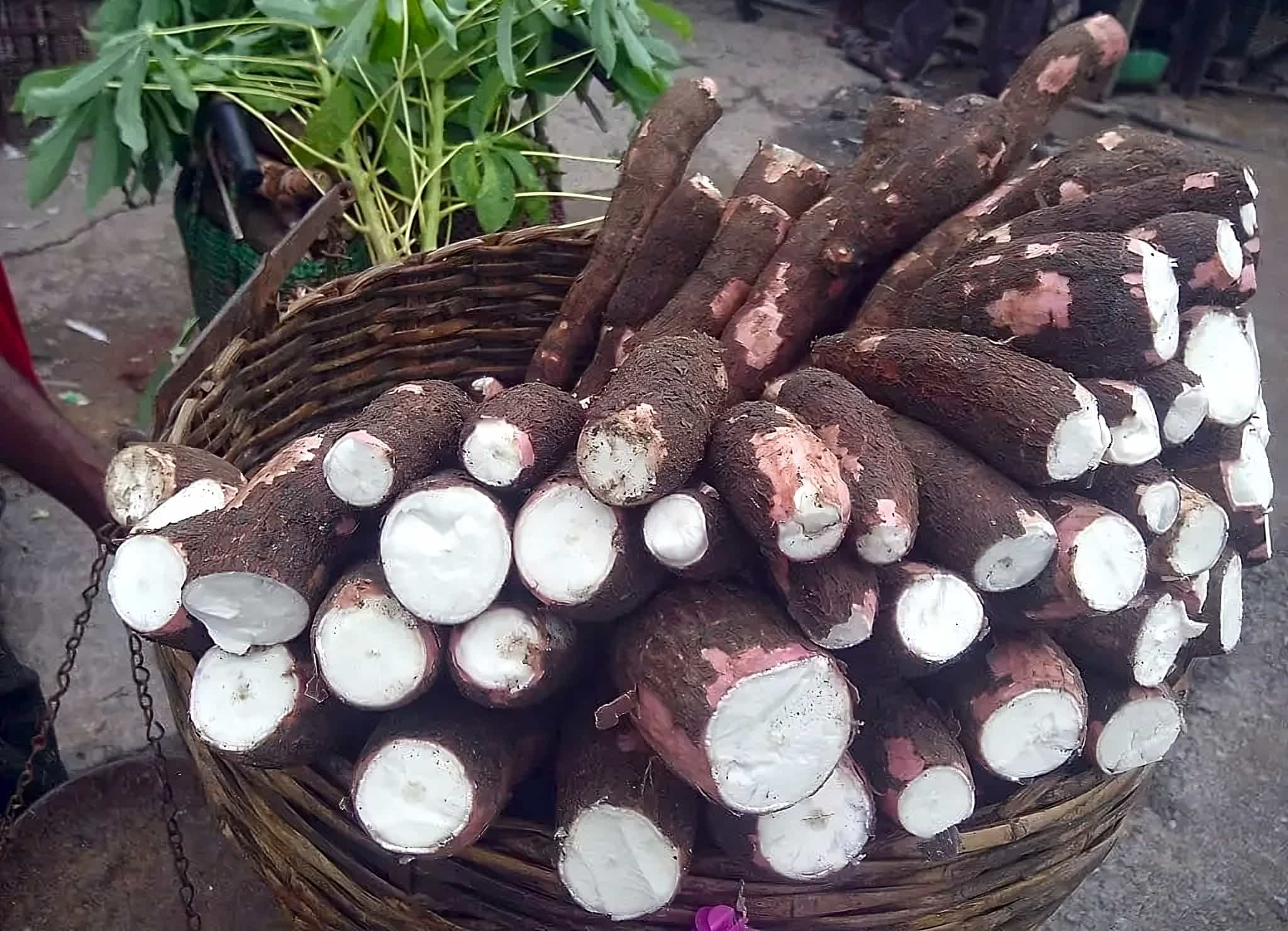
There is a plant in the Euphorbiaceae family called cassava (Manihot esculenta Crantz), which was a staple food for many Native Americans in Central and South America. The stem is upright and smooth, with white latex, and the leaves are alternate and deeply lobed, resembling castor oil (ricin) leaves. Cassava is also known as yuca, manioc, or Brazilian arrowroot. The root of this cassava plant is cylindrical and looks similar to yams. It is rich in starch and can be ground into cassava flour, which is then used to make bread and cakes, or fermented into a beverage. It is a common food for many people, but although cassava is delicious, it is also toxic.
What Makes Cassava Poisonous?
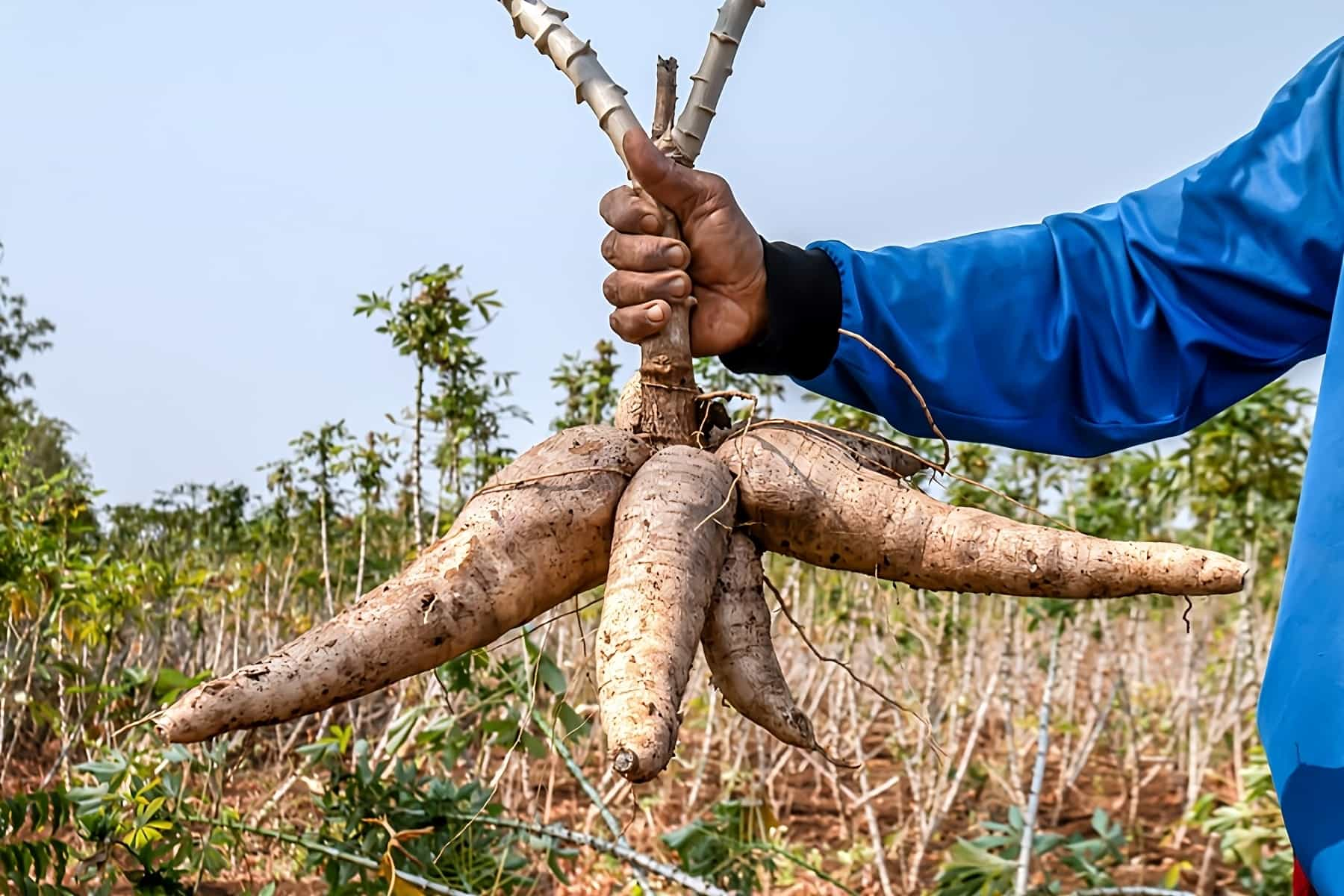
The juice of the root, stem, and leaves of the cassava plant contains a compound called linamarin, which is a cyanogenic glycoside that can release toxic hydrogen cyanide gas. If people eat cassava that has not been processed properly, these two substances combine and form a toxic compound that can poison the body.
However, not all cassava plants are toxic. The plant can be divided into two main categories: sweet cassava, which has only a small amount of toxin in its branches and leaves, and bitter cassava, which has more toxins and can be dangerous if consumed. For humans, the lethal dose of hydrogen cyanide is 1 mg/kg of body weight. Therefore, if a 110 lbs (50 kg) adult were to consume 0.33–0.66 lbs (150–300 gr) of untreated bitter cassava, it could be life-threatening.
After consuming a small amount of cassava, people may experience symptoms such as chest tightness, palpitations, rapid heart rate, headache, nausea, vomiting, and blurred vision. After consuming a larger amount, the person may become deeply comatose, with shallow breathing, convulsions, and even spasms, and may suffocate and die. There is enough lethal dosage in eating just two cassava roots.

Native Americans Used Various Methods to Extract Toxins From Cassava
Native Americans living in the Americas discovered the toxic properties of bitter cassava early on and used various methods to extract toxins from it. They made poison from the extracted toxin, which was then applied to weapons such as spears, bows, and blowpipes to increase their killing power.
When extracting cassava toxin, indigenous people would first dig up fresh cassava leaves and root blocks from the ground and clean them. Then, they would rub them on a rough wooden board or stone, or pound them in a container. After the cassava was processed into a paste, the poison maker would take the paste out and put it in a woven bag. Then, they would put it between two wooden boards made into a press and use the lever principle to squeeze out the juice from the paste.
Because the inner and outer skin of cassava contain much more toxins than the flesh, some indigenous people would only scrape the outer and inner skin of the plant to extract the juice and throw away the flesh.
In addition to grinding cassava into a paste, indigenous people would also wash it and cut it into small pieces, chop the leaves, and then put them in a container with water to soak for about 6 days. By doing this, about 70% of the “toxins” in cassava would penetrate into the water, turning it into “poison water“.
The Cassava Toxins Must Be Concentrated Before Use
However, no matter what method is used to collect the plant juice (poison) rich in cassava toxin, it must be filtered and concentrated before use.
The specific method is to take a leaf and roll it into a funnel shape, place it at the mouth of the container, and pour the juice into it for filtering, to remove impurities. Then, the filtered juice is put into a clay pot or shell and slowly boiled over low heat or exposed to the sun.
During this process, indigenous people would carefully control the heat and cooking time (several hours) to avoid boiling the juice completely, because although some of the toxicity contained in the cassava juice would become more active after cooking, boiling the cassava juice would also produce a large amount of pungent toxic gas (hydrogen cyanide), which would reduce its toxicity.
Matter of interest: Hydrogen cyanide can also be found in apples. The strange, slightly bitter taste you experience when biting into an apple seed is the taste of hydrogen cyanide.
When the excess water in cassava juice is evaporated and the remaining liquid becomes thick like syrup, the top layer of water is poured off. This concentrates the cassava toxin, making it more toxic and suitable for use in combat or hunting. When making the poison, the indigenous people of South America added onion juice to the cassava juice, making it even more viscous and easier to apply to arrowheads.
In the early 19th century, a German natural scientist explored the La Esmeralda region of tropical rainforests in South America and was lucky enough to witness an indigenous poison master making cassava poison. He recorded the entire process:
“We saw clay pots boiling plant juices at his (the indigenous person’s) place, and banana leaves rolled into cones were used to filter the liquid by utilizing their fibers and the larger surface area of shallow containers to evaporate steam. The thatched roof hut was converted into a chemical laboratory, and everything was neat and tidy. The indigenous ‘chemist’ had a stiff and formal expression and spoke in a dull and old-fashioned tone, resembling the European pharmacist that people had once ridiculed.”
Native Americans Choose Cassava Poison Over Firearms
Although the potency of cassava toxin is far lower than that of arrow poison frogs, venomous snakes, or insects, toxins extracted from animal venom cannot remain active for long periods, while poison extracted from cassava can be preserved for years without losing its toxicity. In addition, arrow poison frogs, venomous snakes, and insects are rare and difficult to find, while cassava is abundant and its toxins are easy to extract. Therefore, cassava toxin was widely used by Native Americans in their daily lives, for hunting, and in battles with enemy tribes.
In the 15th century, most Native Americans used weapons made of various types of wood or stone in battle, and only a few had access to bronze weapons. The inferiority of their weapons made Native Americans weak in battle, and the practice of using poisoned weapons helped to compensate for their weakness, greatly increasing the lethality of their weapons.
Even after European colonizers brought gunpowder and firearms, some Native Americans, especially those living in tropical rainforests, continued to use plant toxins like cassava for hunting. Many Native South American hunters even believed that their own toxins were better than guns and gunpowder, as firearms make a lot of noise and produce flashes when fired, which can scare away prey or enemies and are not ideal for hunting in the rainforest.
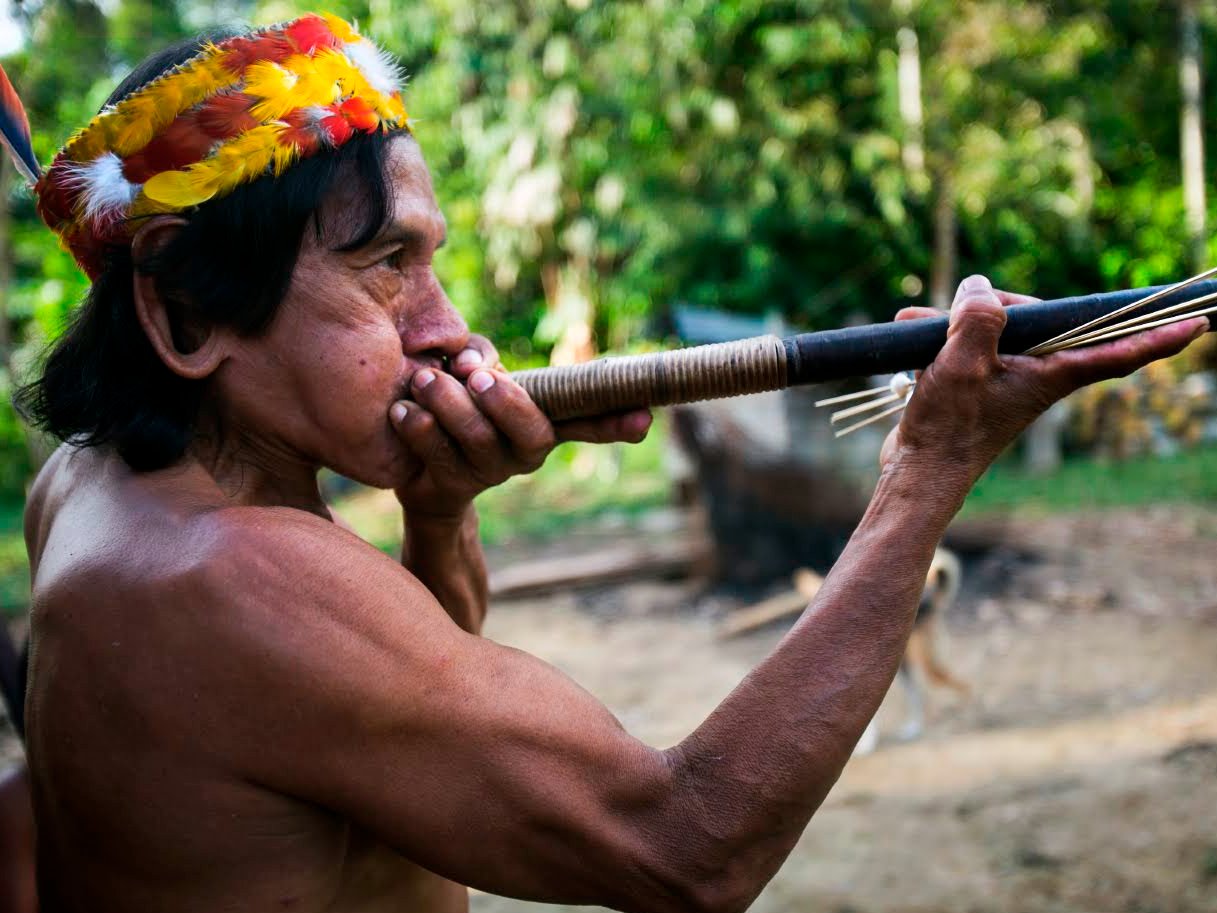
When applied to arrows or blow darts, the venom-coated weapons were silent during attacks, and even if they did not hit the target, they would not scare away the prey. Hunters could continue to aim and shoot until they hit the target.
In addition, the plants used to make the poison, such as cassava and toxic vines, grow in the forest and can be used on demand. On the other hand, the gunpowder used in firearms is not something that indigenous people living in the forest would know how to make, and the raw materials cannot be found in the forest either. They would have to spend money to purchase it from specific stores, which is inconvenient for those living in remote areas with limited access to transportation. Therefore, the Native Americans still take pride in showing off to visiting naturalists that their traditional methods of hunting with poison are superior to using firearms:
“The use of poison is something that our fathers teach their sons, passed down from generation to generation. It is much better than the things you produce. It comes from plant juice and can silently kill an enemy, and in the end, they don’t even know how they died.”
Eating Poisoned Animals
Even to this day, some indigenous people living in the tropical rainforests of South America still use blow darts and poison to hunt animals.
Many people wonder why humans don’t get poisoned when eating animals that died from being poisoned. Here’s an explanation: Although there may be some remaining toxins in the animal’s body, the amount of toxins in its limbs is relatively small. After cooking the animal over a high flame, the toxins lose their potency and become harmless. Therefore, humans do not get poisoned when consuming the meat of poisoned animals.
Indigenous people have no problem eating the meat of poisoned animals and even believe that it tastes better than the meat of animals killed in other ways. Therefore, when some Native South American people catch prey, they still choose to use poison to kill them before eating them to enhance the flavor of the food.