A group of female jazz musicians, The Ingenues, serenaded cows in a 1930 American barn. Was it because no one else was interested in hearing them? Regardless, the musicians had picked a captive audience that couldn’t just leave. In 1930, photographer Angus Boyd McVicar came upon them in a Madison, Wisconsin, cow barn.
The astonished cows
There are a lot of cows in Wisconsin. A lot. We now have 1.3 million dairy cows for every 6,000,000 people on the land. As a result, it is one of the top milk-producing states in the country. Only around 8,000 dairy farms remain now, compared to the 125,000 that existed in 1930. However, annual milk production has increased from 5 million to 14 million tons.
On August 8, 1930, the “Capital Times,” a local newspaper, told its readers the story of the barnyard serenade: Under the title “Twelve musicians play for a herd of cows,” the publication reported on a meeting between an “enthusiastic band of girls” and “astonished cows” at the University of Wisconsin–Madison for a social experiment. The goal of the experiment was to compare the milk production of a cow that had been exposed to the soothing sounds of a trombone with that of a cow that had been subjected to the monotony of daily life.
The university’s cowshed and dairy had served as a vital educational and research resource for the dairy industry since the turn of the 20th century. The purpose of the research was to increase milk production for dairy farmers and ranchers by optimizing cow-raising and feeding practices, eliminating illness, and artificially inseminating the herd.

Consequently, studying the effect of music on milk production made sense. More so since the jazz band The Ingenues had recently finished a three-night run at the Revue Theater in town. The name originated from the fact that naïve female performers used to be referred to as “ingenues,” a phrase that described a common kind of theme in musicals and plays.
They had performed in every civilized nation
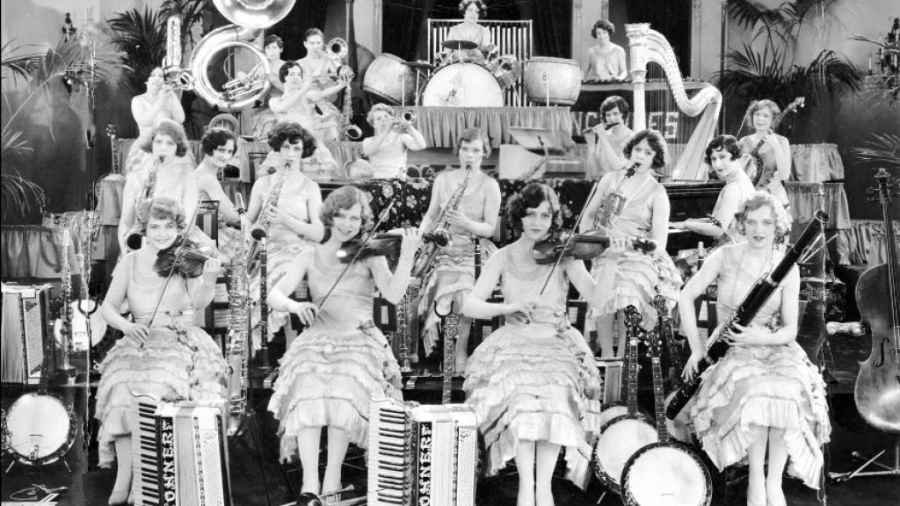
It wasn’t hard at all to find opportunities for performance for Chicago’s 25 young women in the orchestra. Among the many stops on their 60,000-mile voyage were Cairo, Melbourne, and London. The Ingenues were not afraid of difficulty, performing in every civilized nation and even in those regions that weren’t nearly as civilized.
The article said that the group’s tour manager’s peace was disrupted only by the energetic women’s need to purchase mementos. One time, he allegedly stopped them from spending their pooled funds on a white elephant in India.
It’s possible that the Madison varsity cattle concert was planned to help the musicians get over the loss of the elephant. There was no definitive outcome from the experiment because “the cows were too astonished by the unusual treat to respond in an anticipated way,” as reported by the newspaper. For reliable results, it was said that more thorough documentation over a longer time frame was required. The band members advocated for scientifically-minded bands to perform every day during milking time.
The idea that playing music to cows makes them produce more milk has survived into the modern day. An English farmer in 2009 hired an opera singer to perform for his cows with the help of an ice cream firm. The cows were uninterested, and they proceeded to eat in their usual stoic fashion. Additionally, there were also scientific experiments.
The increase in milk production
University of Leicester psychologists conducted the largest study to date in 2001. For nine weeks, they listened to the sounds of around a thousand animals every day for twelve hours. The udders were on average 3% fuller (or 0.73 liters) when slow music was played.
The British found that by playing soft music during milking, they were able to reduce the tension the animals felt throughout the process, resulting in increased production. They also made a playlist of barn songs, including “Perfect Day” by Lou Reed, “Everybody Hurts” by R.E.M., and “Symphony No. 6” by Beethoven, while “Space Cowboy” by Jamiroquai and “The Size of a Cow” by Wonderstuff were not well received by the cows.
Those who didn’t believe it still had their doubts. It was noted in 2014 by Canadian agricultural researcher Anne Marie de Passille that there had been no further large-scale tests to validate the findings. Such studies are both difficult and costly to carry out.
Nevertheless, many American dairy farms do play music, often of the Spanish or country kind, as reported by the U.S. magazine “Modern Farmer” in 2014. Some researchers attribute this to staff members’ individual tastes. According to De Passilles, “they are individuals, and we didn’t select them for their taste in music. […] Why would they all like the same music?”