Ortogh at a Glance
What is Ortogh?
Ortogh was a joint venture trading organization under the Mongol Empire made up of Muslim aristocratic merchants. It played a part in China’s political structure during the Mongol-led Yuan dynasty (1271–1368).
What was the origin of the Ortogh system?
The original security relationship between nomads and merchants served as the basis for the Ortogh system. Nomads provided protection for merchants while they established contacts, transacted business, and gathered intelligence in their capacity as intermediaries.
How did the Ortogh system help reduce the risk of caravans during the Mongol era?
The Ortogh system made it possible to pool resources, which reduced the risk of unsuccessful caravans and made long-distance trade possible at a much lower cost. Merchants pooled their resources to sponsor a single caravan, and even if a whole caravan perished, not a single trader would go out of business. When the caravans were successful, everyone involved would split the spoils.
Ortogh, which translates to “companion,” “friend,” or “partner” in Turkish (“Ortak”), was the name of a joint venture trading organization under the Mongol Empire. Ortogh or ortoq was made up of Muslim aristocratic merchants and played a part in China’s political structure during the Mongol-led Yuan dynasty (1271–1368). Ortogh was one of the unique commercial forms that existed from the late 13th century to the mid-14th century, during the time when the Mongol Empire generated significant wealth. The Chinese word for Ortogh, “Wotuo” reflects the pronunciation of this Turkish term.
- Ortogh at a Glance
- What is Ortogh?
- What was the origin of the Ortogh system?
- How did the Ortogh system help reduce the risk of caravans during the Mongol era?
- Origin of Ortogh
- History of Ortogh in the Mongol Empire
- Comprehension of the Economy by the Mongol Empire
- Negative Effects of Ortogh
- Hanseatic League vs. Ortogh
Merchants and moneylenders who worked with the Mongol Empire were referred to as ortogh.
Origin of Ortogh
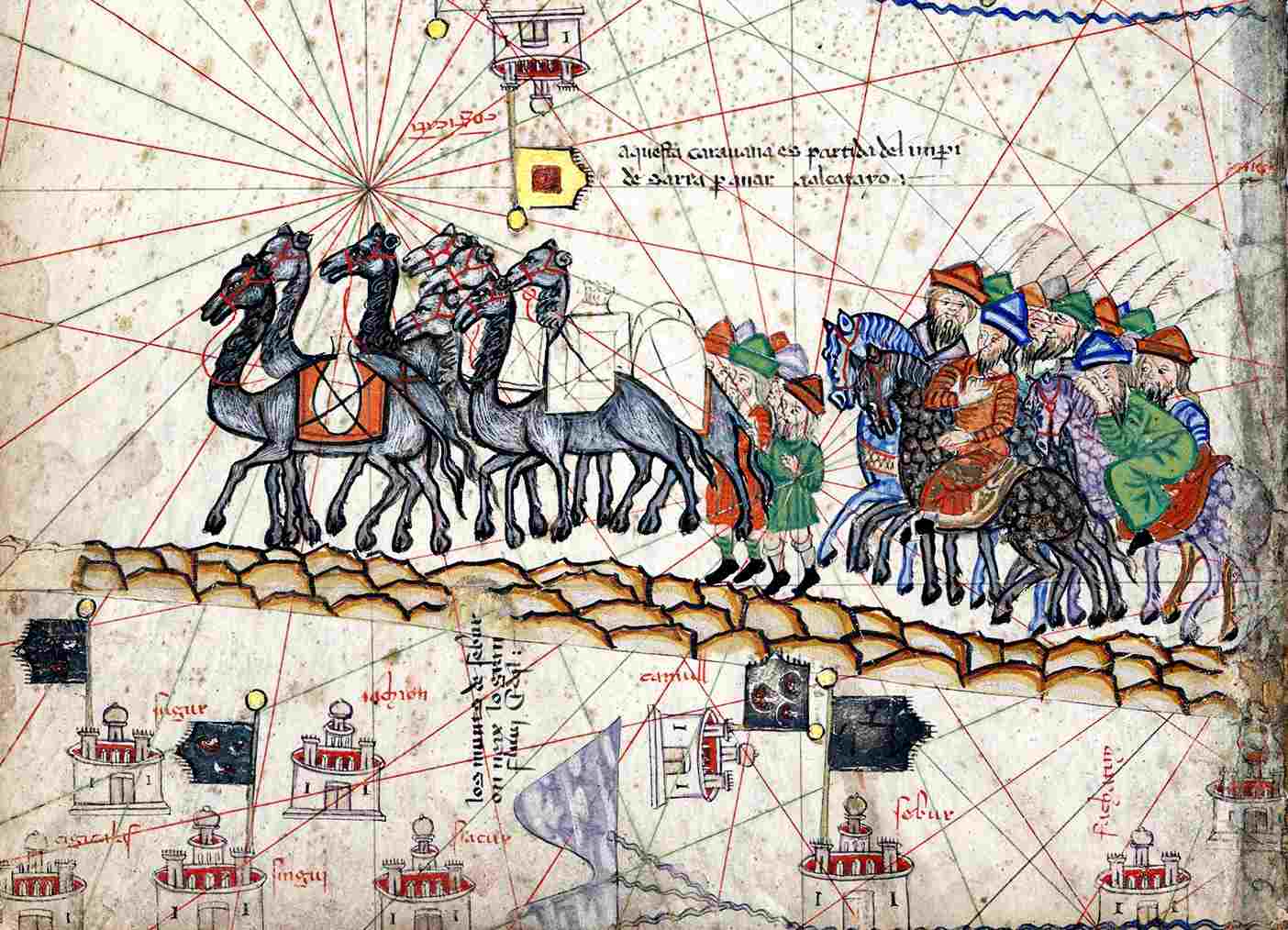
Due to their wealth but lack of business acumen, the Mongols opted to work with Semu (people from Central and West Asia) businesspeople in order to share risks and reduce the cost of trade.
In the Mongol Empire, a trader was called an ortogh if he worked with the Mongol state or nobility. The Ortogh system made it possible to pool resources, which reduced the risk of unsuccessful caravans and made long-distance trade possible at a much lower cost.
The risk of participating in caravan commerce during the Mongol era was quite high. Over the course of a protracted expedition, it was necessary to feed, pay, and outfit as many as a hundred people with supplies, including food, clothing, camels, horses, and so on.
Many caravans were in danger from things like natural calamities or robbery groups. Due to the high costs associated with such a catastrophe, a single failed caravan may completely wipe out a merchant’s wealth.
The Mongols devised the Ortogh system, wherein merchants pooled their resources to sponsor a single caravan to reduce the cost of failure.
It is believed that the original security relationship between nomads and merchants served as the basis for Ortogh. Nomads provided protection for merchants while they established contacts, transacted business, and gathered intelligence in their capacity as intermediaries.
In the Ortogh system, merchants pooled their resources to sponsor a single caravan. Even if a whole caravan perished, not a single trader would go out of business. When the caravans were successful, everyone involved would split the spoils.
Just like the word, the origin of the Ortogh system dates back to the Turkic tribes. Ibn Fadlan describes the relationship between the nomadic Oghuz Turks and Muslim traders under the Ortogh in his travelogue, which takes place in the 10th century.

History of Ortogh in the Mongol Empire
Genghis Khan created the practice of Ortogh by delegating authority over the distribution of gold and silver ingots for trade to members of his family and military leaders and suggesting they hire financial advisors from Muslims of Uyghur, and Central Asian Turkic.
Muslim businessmen led the way in establishing Ortogh, a joint investment organization that oversaw trade, transportation, banking, and tax collection.
Therefore, the ruling elite of the Mongol Empire relied on Muslim merchants who served as financial administrators due to their lack of expertise in areas like tax collection, which are essential to the administration of an agrarian society.
Muslim businessmen led the way in establishing Ortogh, a joint investment organization that oversaw trade, transportation, banking, and tax collection.
As long as the traders did not disrupt military operations, they were allowed generous commissions and access to official resting stations. Those stations were found every 20 to 30 miles with lodging, hot food, and rested horses.
If a business owner belonged to an Ortogh, the Mongols would lend them money at a cheap interest rate. The Mongols, who prized skill above ethnic background, typically held Muslim merchants in high regard who got in touch with the Mongol court through commerce, and they ultimately acquired the confidence of Mongol nobles and emperors.
Through Ortogh, traders from all across Asia and Europe, including Marco Polo’s family, partnered with the aristocracy of the Mongol Empire.
Ortogh (“Ortak/Partner”) is mentioned in writings before Möngke Khan’s time (grandson of Genghis Khan, r. 1251–1259).
See also: How Many Children Did Genghis Khan Have?
Comprehension of the Economy by the Mongol Empire
The Mongol Empire often possessed a thorough understanding of the dynamics of the economy. Mahmud Yalavach (d. 1254), the Muslim finance minister in the Mongol Empire, argued that currency had worth if supply and demand were in balance since it was a property.
To obtain silver, the international currency of the period, and to utilize it as an investment in commerce, the tax administration of the regions conquered by the Mongols specialized in collecting silver.
Members of Ortogh comprised mainly Muslim merchants but also Uyghur merchants, and even some Han Chinese and Christians.
The founder of the Yuan dynasty, Kublai Khan, had a diverse and multicultural staff that included Uyghurs, Khitans, Han Chinese, Jurchens, and others even before he became emperor in 1271.
After the Yuan Dynasty was established in China, the populace was split between the Mongols, Semu (mostly the speakers of Turkic languages), Han (northern Chinese, or Hanren), and Southerners (southern Chinese, or Nanren).
Among them, intelligent financiers were placed in control of the financial department, namely Muslim merchants. Members of Ortogh comprised mainly Muslim merchants but also Uyghur merchants, and even some Han Chinese and Christians.
Negative Effects of Ortogh
Kublai Khan (1215–1294) granted concessions to the administrators of the Ortogh, and they became an official part of the Yuan Dynasty’s government. In 1268, Kublai set up an administration for the monitoring of Ortogh to help the members there have access to low-interest loans.
In doing so, the members of the Ortogh frequently abused the local people economically through the imposition of commercial taxes and monopoly taxes, both of which went counter to the traditional Chinese understanding of banking and money in the Mongol-led Yuan Dynasty.
Additionally, “royal edicts”—which means to proclaim the words of the emperor—were provided to particular people from ortogh, as well as Buddhist and Taoist temples.
Those edicts were known as “protection imperatives” or “precise imperatives” and they were provided without going through the government. So, it became something that often messed with the system and broke laws.
Therefore, Chinese people thought poorly of Ortogh businesspeople because of the preferential treatment they received from authorities and the exorbitant interest rates they charged on loans.
Politician Wang Yun of the Han dynasty was not a fan of the ortogh’s unique rights, especially the ability to keep and carry weapons. By the time of the Ming dynasty (1368–1644), the name ortogh signified little more than “merchant.”
Hanseatic League vs. Ortogh
One may ask, how did the Hanseatic League compare to the Ortogh? The Hanseatic League and the Ortogh existed at relatively similar times but in different places.
North German cities and German commercial communities overseas formed an association called the Hanseatic League to look out for each other’s economic interests. Between the 13th and 15th centuries, the League controlled much of the trade in northern Europe.
In contrast, the Ortogh system consisted of traders who worked hand in hand with the Mongol empire and its many aristocratic citizens. Because merchants could combine their resources and lower the probability of unsuccessful caravans, long-distance commerce could expand and become much more cost-effective.
So, although both groups and systems engaged in commerce, their aims and natures diverged significantly. Ortogh was concerned with lowering the danger of failed caravans and boosting long-distance commerce inside the Mongol Empire, whereas the Hanseatic League was concerned with preserving the mutual commercial interests of north German cities and merchant communities overseas.
References
- Ibn Fadlan and the Land of Darkness: Arab Travellers in the Far North – Ibn Fadlan – Google Books
- The Travels of Ibn Batūta – Ibn Batūta – Google Books