Obuch was a form of edged weapon that resembled the horseman’s pick. At one end, it resembled a shoemaker’s hammer, and at the other, it had a curved iron beak. Several countries to the west of Ruthenia (Kievan Rus’) adopted this unique weapon, including the Polish-Lithuanian Commonwealth (1569–1795). In Poland during the 18th century, the horseman’s pick was transformed into a civilian weapon called the “obuch” (Polish for “head”). This was in response to a restriction on its use by the Polish aristocracy (szlachta, “nobility”) outside the battlefield during 1578, 1601, and 1620. The obuch had a curved beak for less killing potential.
| Obuch | |
|---|---|
| Type: | Melee weapon |
| Origin: | Polish |
| Utilization | Civilian |
| Length: | Around 30–40 inches (80–100 cm) |
| Weight: | 4–9 lb (1.5–4 kg) |
History of the Obuch
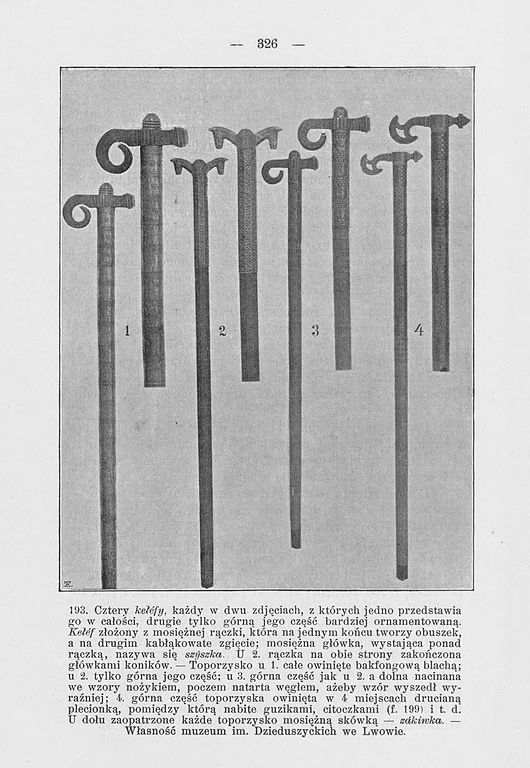
In the 18th century, a new sort of weapon known as the obuch (“head” in Polish) emerged in the Polish-Lithuanian Commonwealth as a result of the decline in combat usage of horseman’s picks and the frequent issue of appropriate regulations preventing their wielding by the civilian population as staffs or canes.
This is similar to the history of samurais (12th century–1870s), who ingeniously utilized the bo staff as a cane, concealing it as a covert weapon following the prohibition of bladed weaponry.
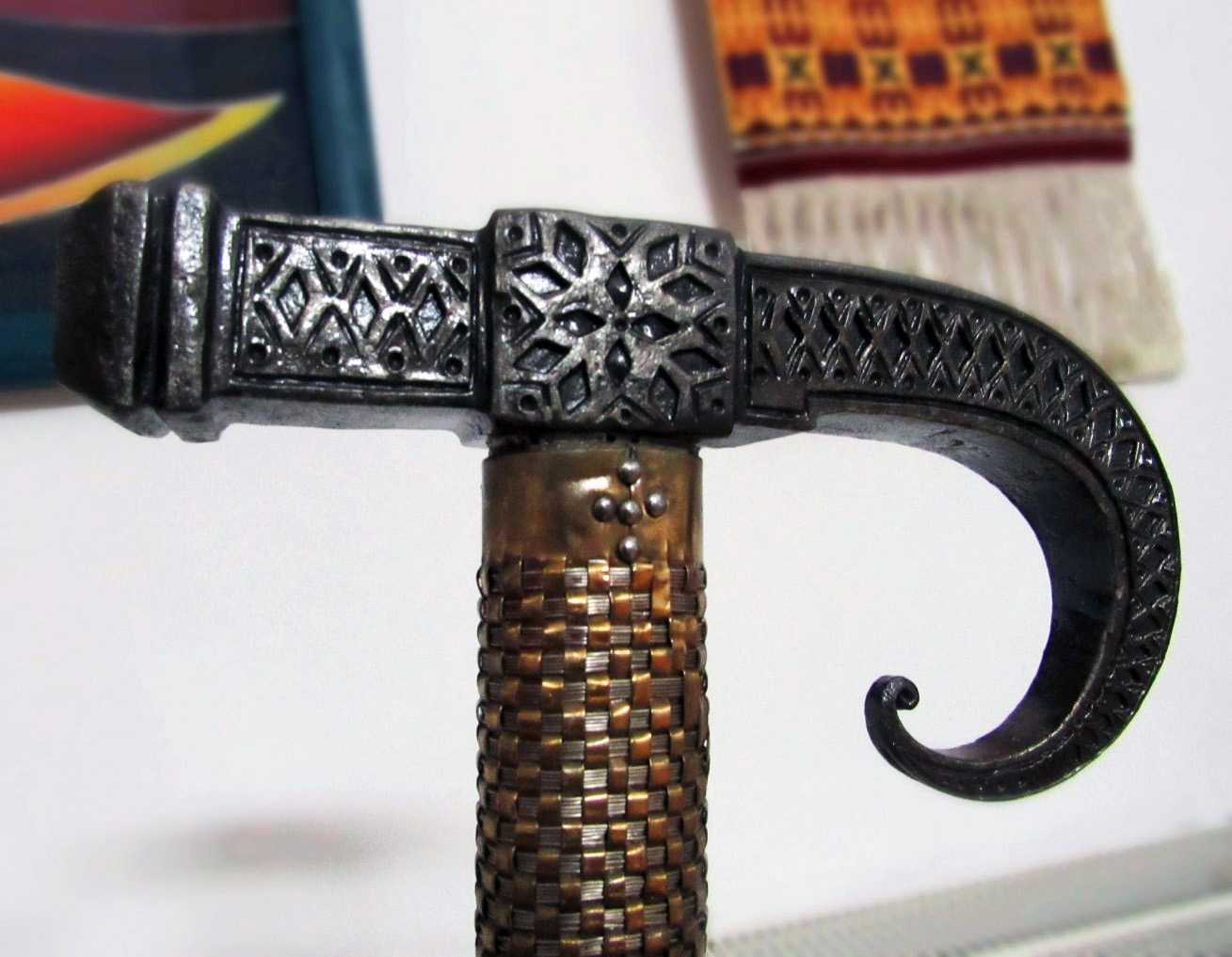
The gentry of Poland and Lithuania utilized the obuch as a civilian weapon for self-defense. The knob of the obuch could be worn either up or down.

The gentry of White Ruthenia (White Rus’) and the Hungarian nobles often carried weapons (nadziak and czekan) that resembled the horseman’s pick. The Carpathian highlanders (Rusyns) sometimes opted for a weapon (kelep) that resembled the obuch over a shepherd’s axe.
Why a Weapon with a Curved Blade
The obuch might be the only edged weapon in history that is specifically designed not to kill people.
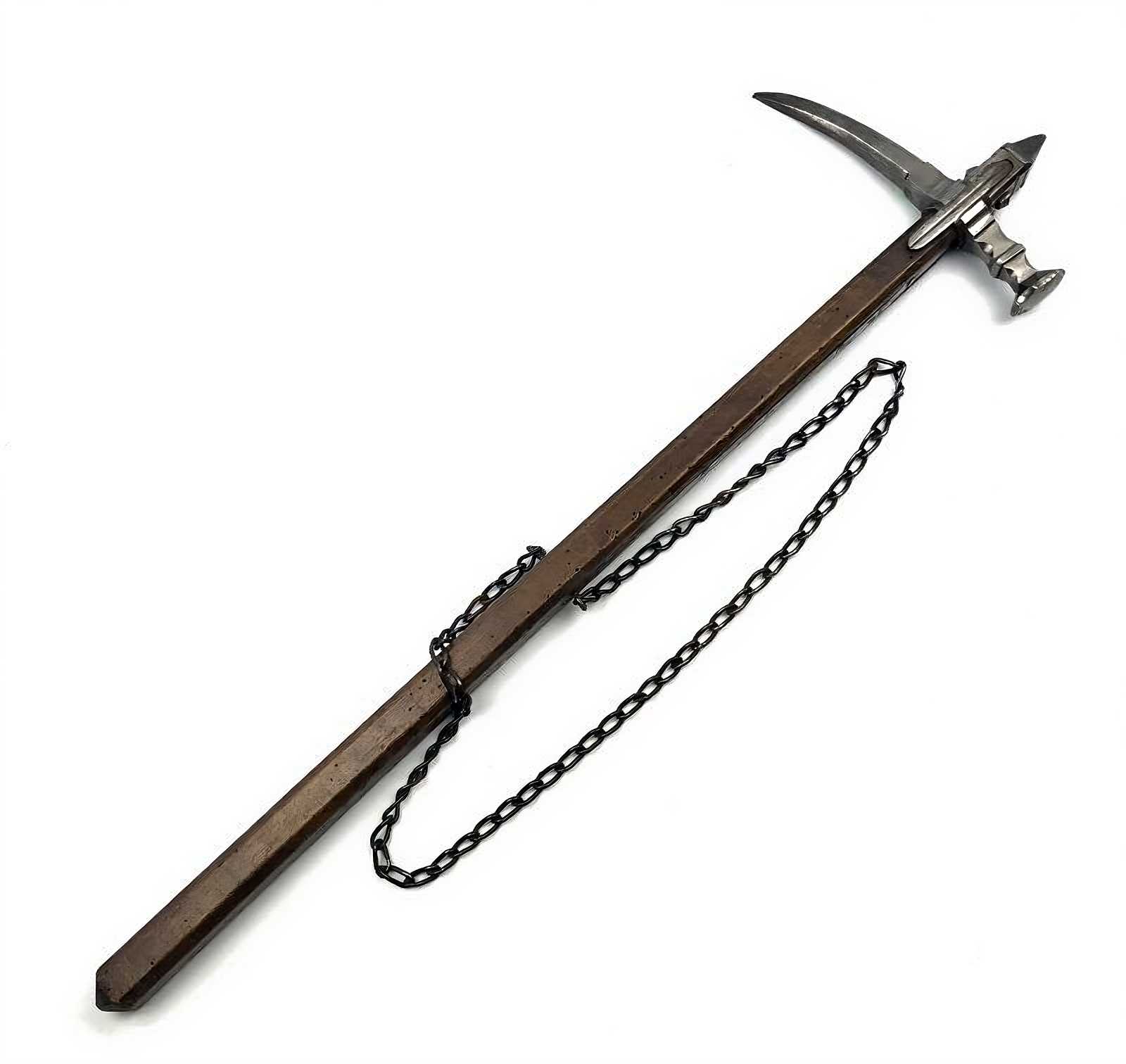
According to the historian Jedrzej Kitowicz, the horseman’s picks instilled fear in the hands of Polish warriors, especially during times of prevailing tensions and conflicts. While sabers (like karabela) could cut hands, slash the skin, and wound heads, the shedding of blood often pacified the combatants during a fight.
In contrast, the horseman’s pick frequently inflicted fatal wounds without the immediate sight of blood, leading to the delayed realization of the situation.
Consequently, the strikes grew more forceful, breaking ribs and shattering bones rather than merely injuring the skin. Nobles who wielded these weapons have been known to beat their servants to death.
The noblemen who wielded these horseman’s picks most often deprived their subjects of health and, at times, even life. Ultimately, the horseman’s pick was regarded as a tool of brigands, as a single strike to the temple with the pointed beak could instantly kill the victim.
Therefore, it was strictly forbidden to brandish the weapon during significant assemblies, gatherings, and tribunals since it truly evoked terror.
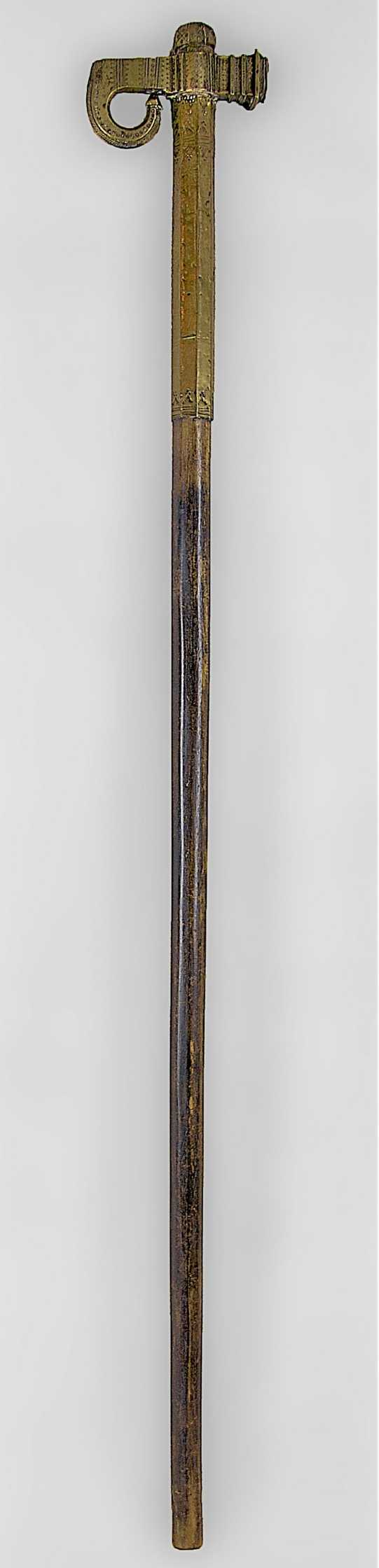
The obuch is believed to have been designed as a result of the prohibition of using horseman’s picks (and other similar weapons like czekan or nadziak). Its sharp, edged blade in the form of a pick was curved down in a circle so that it could no longer deal fatal damage during gatherings.
Obuch’s Design
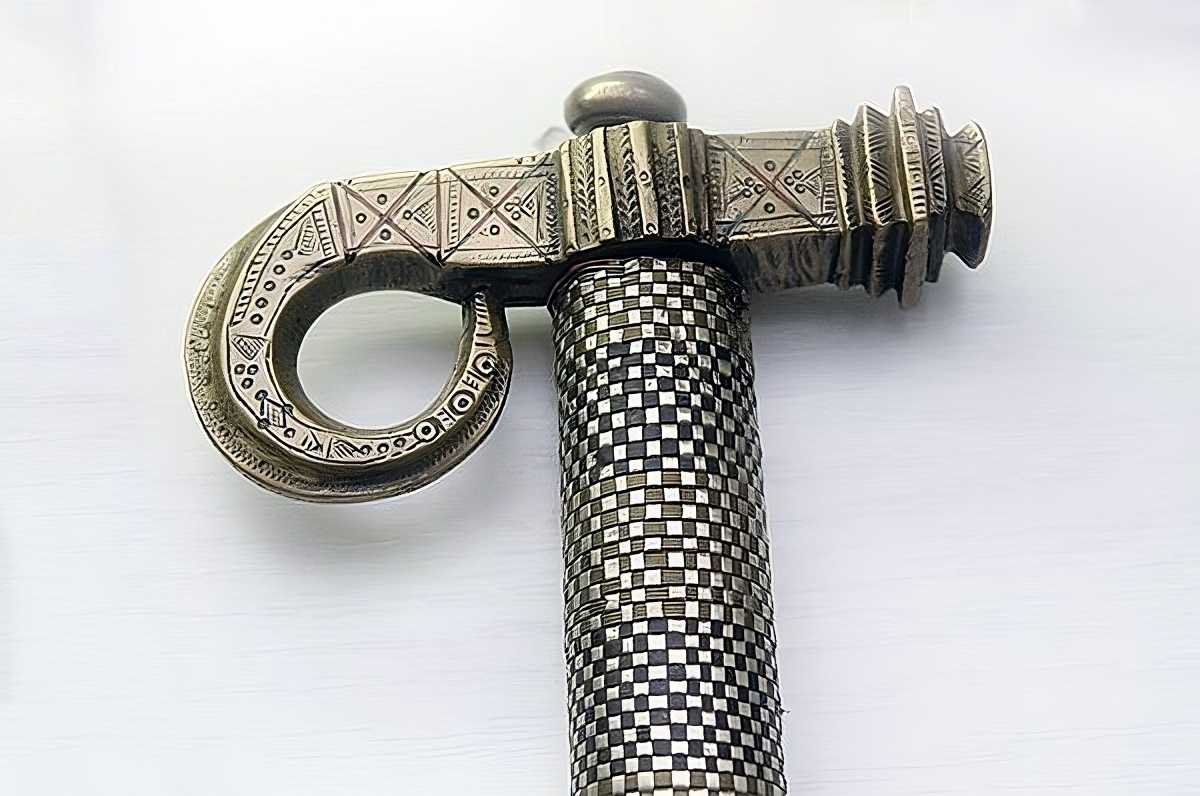
The iron, brass, or silver beak that curves is the signature sign of an obuch. The beak often takes the shape of a ring or is curved in a semicircle so that it points toward the shaft. In fewer cases, the bend is limited to the very tip or takes on a more atypical form. The opposite end of the 30–40 inches (80–100 cm) long shaft is also bent.
This edged weapon was of a distinct kind and relevance to the military establishment in central Russia and it was also primarily associated with the Polish nobility. The hilt of the mace was shaped like a cuboctahedron, or a cube with its edges rounded off.
This prestigious cold weapon was crafted with meticulous attention to detail, utilizing a combination of stone, bulat steel, and embellishments of gold and steel. It was then slotted (or grooved) and mounted on a hardwood shaft frequently covered in velvet (a tufted fabric) and adorned with gold threading.
Distinguishing the Obuch from Other Weapons
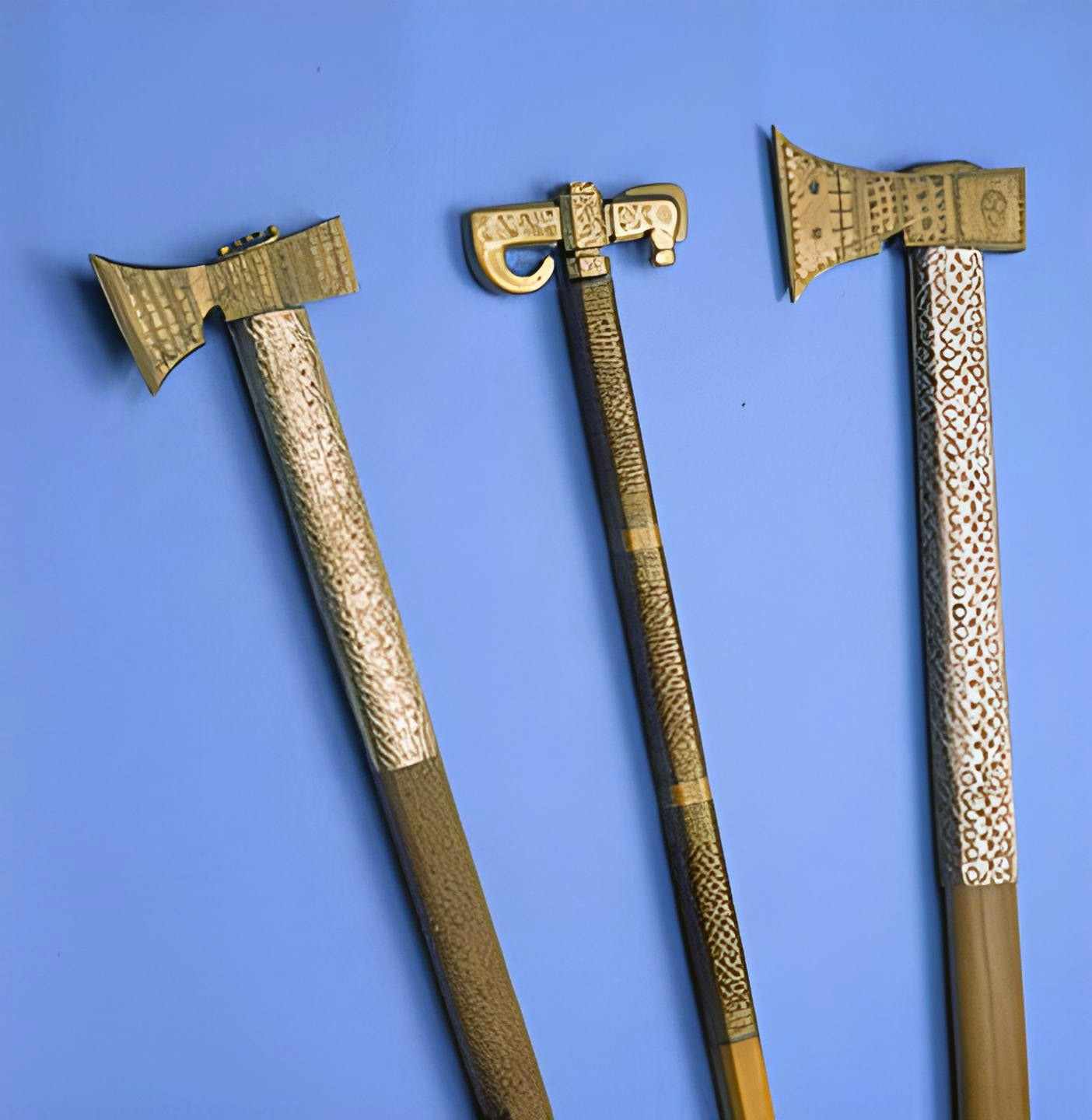
The obuch accompanied most Polish noblemen when they left their homes. This formidable weapon consisted of a thick shaft, reaching the waist of a person, with a cylindrical pommel at one end, held by hand. This pommel could be elongated and made of silver, silver-plated, or brass.
Firmly attached to the other end of the shaft was a hammerhead, either iron, brass, or even silver. If the weapon was equipped with an axe head, it was called a “czekan,” while a weapon with a larger and slightly curved beak was called a horseman’s pick. However, if the pick curled into a ring-like shape, it was called an obuch.
In Culture

- In the game Age of Empires II, the Polish civilization utilizes a weapon known as the “obuch” within one of their units.
References
- The Medieval Warrior – Weapons, Technology and Fighting Techniques: AD 1000 – 1500 by Martin Dougherty, 2011 – Google Books
- Firearms A Global History to 1700 – by Kenneth Warren Chase, 2003 – Google Books