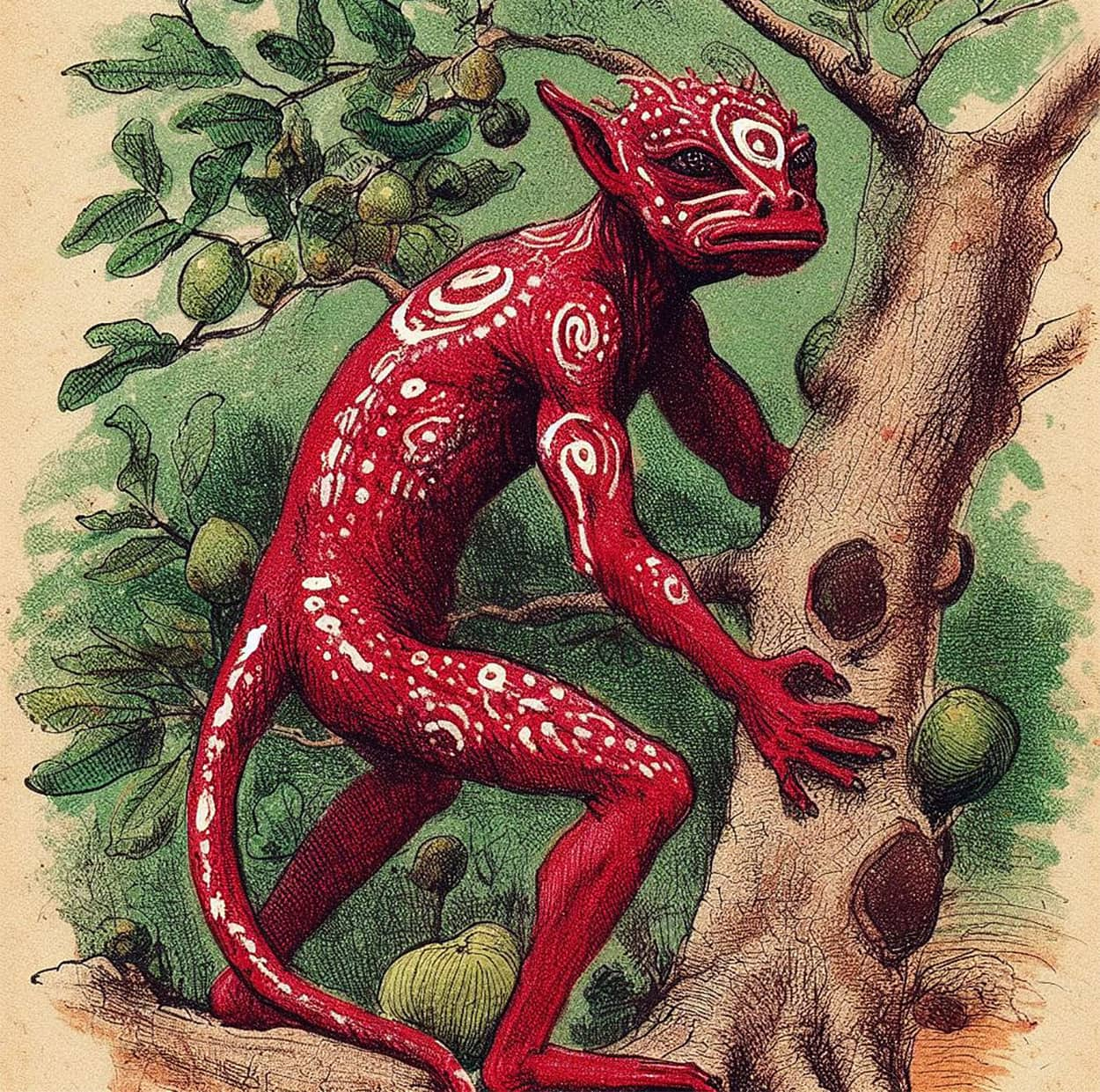
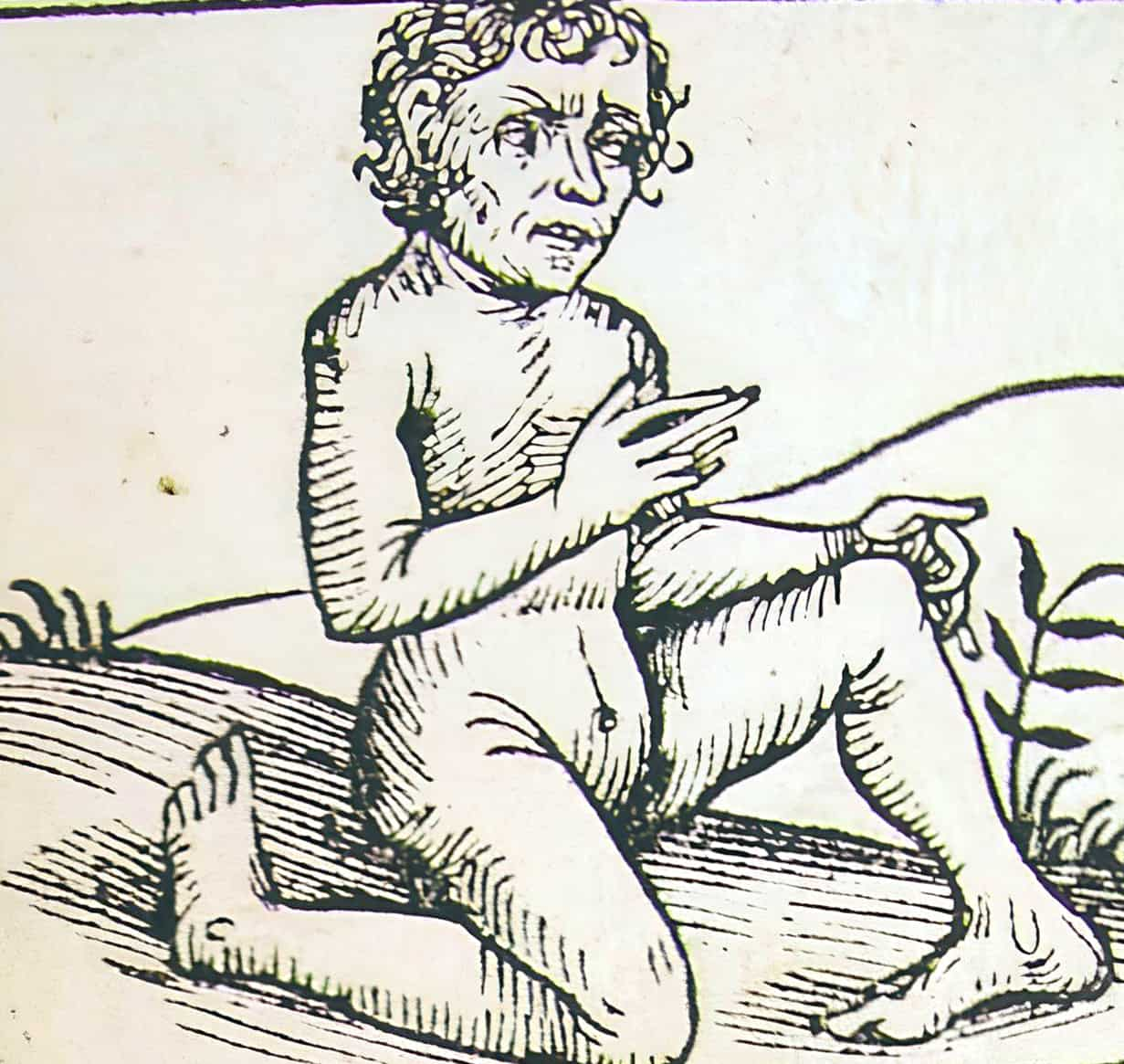
- The Abarimon or antipodes were a race of humans from ancient mythology.
- They walked around with their feet pointed in the other direction.
Roman legend attributes the name Abarimon to a mutant people from the country of the same name. Even though they walk with their feet backward, they can still travel at high speeds. This is similar to the story of Nasnas, a one-legged evil being faster than a horse, and Fachan, an evil dwarf in Scottish folklore. Abarimons were always surrounded by wild creatures, none of which they could ever tame. The reason for their backward feet could be due to a condition today called genu recurvatum.
Living in a Valley with a Unique Air
As a people of Mount Imaus (the Himalayas), they made their home in a spacious valley unlike any other. Leaving the valley was deadly for the Abarimons since the air there was so unique that it would kill you if you inhaled it for even a short period of time.
According to ancient sources, the Abarimons were an indigenous Indian people. Scythia’s valley in the Imaus Mountains, which may be the same as the Hindu Kush, was the setting this people lived in. Their myth is similar to the ancient myth of the Astomi (Astomoi), ancient Indian breatharians who didn’t eat or drink but breathed plants and fruits.
Historical References
Pliny
A Roman writer and naturalist who lived in the 1st century AD, Pliny the Elder wrote about the Abarimons in his book Natural History. Most of what we know about Abarimons originates from this book:
There is a country called Abarimon, situate in a certain great valley of Mount Imaus, the inhabitants of which are a savage race, whose feet are turned backwards, relatively to their legs: they possess wonderful velocity, and wander about indiscriminately with the wild beasts. We learn from Bæton [Baiton], whose duty it was to take the measurements of the routes of Alexander the Great, that this people cannot breathe in any climate except their own, for which reason it is impossible to take them before any of the neighbouring kings; nor could any of them be brought before Alexander himself.
Pliny the Elder, Natural History
According to the bematist Baiton of Alexander the Great, the people of the Abarimon area could only survive in the air of their own valley and could not be brought to the palaces of other kings or the great Macedonian conqueror, contrary to the normal anatomy of other humans.
Maybe it’s an overly dramatic account of an old, savage Himalayan people.
Gellius
In Book IX of his Attic Nights (Noctes Atticae), Aulus Gellius tells a tale about the Abarimon people that is very similar:
That there are also in the same region other men, of marvellous swiftness, whose feet are turned backwards and do not point forward, as in the rest of mankind.
Gellius • Attic Nights — Book IX (uchicago.edu)
People of Tartary
A people group again known as the Abarimon is mentioned in a 1565 passage in the English poet Thomas Cooper’s Thesaurus Linguae Romanae Et Britannicae. According to Cooper, they lived in the nation of Tartary. This was a large region of Asia defined by the northern boundaries of China, India, and Persia, the southern end of the Pacific Ocean, and the Caspian Sea.
Abarimon as a Monstrous People
Some Middle Ages mapmakers, following a common heliocentric perspective, created monsters in the shape of the Abarimon people and put them at the edge of the globe in their detailed world maps. Abarimons were considered monstrous people, just like the Astomis, the Cyclops, or the Arimaspis from the same period. So, in that sense, they were used by the ancients as a symbol of the overthrow of the world.
Bonus: Nuli
The Nuli, Nuloi, or Nouloi, mentioned in Greek writings, were a legendary people residing on Mount Nulus in India. They had eight-toed, backward-facing feet, according to historian Megasthenes. They were likely the same as the Abarimon people.