The Prague coup d’état of February 1948 was an important political event with consequences not only in Czechoslovakia but also internationally. The appointment of Communist police commissioners in Prague led to clashes with Democratic ministers. Democrat ministers eventually resigned, while the Communists fanned the flames of protest. Under pressure from the Czechoslovak Communist Party, the President agreed to form a new government.
But the elections were undemocratic and the Communists seized power. Thus, an authoritarian regime took over and the Third Republic gave way to a Communist regime.
Czechoslovakia gained its independence from communist rule during the Velvet Revolution of 1989. This peaceful revolution led to the end of the communist regime and the division of Czechoslovakia into the Czech Republic and Slovakia in 1993.
Causes of the Prague Coup
After World War II, Czechoslovakia was one of the few countries under Soviet occupation with a genuine tradition of democracy. But a coup ended the Third Republic and replaced it with a Communist regime. The Prague coup saw the Czechoslovak Communist Party take control of the country’s institutions. The Democrats resigned, showing their powerlessness in the face of adversity.
The causes of the Prague coup were manifold. The Soviet Union wanted to strengthen its influence in Central Europe without any interference from the Red Army. The main reason put forward by the Czechoslovak Communist Party was the rejection of the Marshall Plan. After World War II, Czechoslovakia accepted American aid under the Marshall Plan. However, Josef Stalin inflexibly vetoed this decision. This led to a conflict between Czechoslovakia’s democrats and communists. In the end, the government unanimously opposed the Marshall Plan and stopped the country’s opening to the West. The Soviet Union strengthened its control over Czechoslovakia, while America canceled all aid options and made dialogue with the country impossible.
Events flared up when the Czechoslovak Minister of the Interior promoted eight new police commissioners, all Communists. This appointment led to a wave of resignations among the democratic ministers of the government. But the political crisis would turn in favor of the Communists and the head of state would succumb to their lust for power.
When Did the Prague Coup Take Place?
The Prague coup was triggered on February 17, 1948, when the Minister of the Interior appointed police commissioners. Democrat ministers expressed their disagreement by not attending government meetings on February 18 and 19. Demonstrations and Communist pressure on the Democrats to back down followed. The non-Communist ministers resigned on February 21, 1948. The Prague coup crisis took place between February 17 and 25, 1948.
Who Was Behind the Prague Coup?
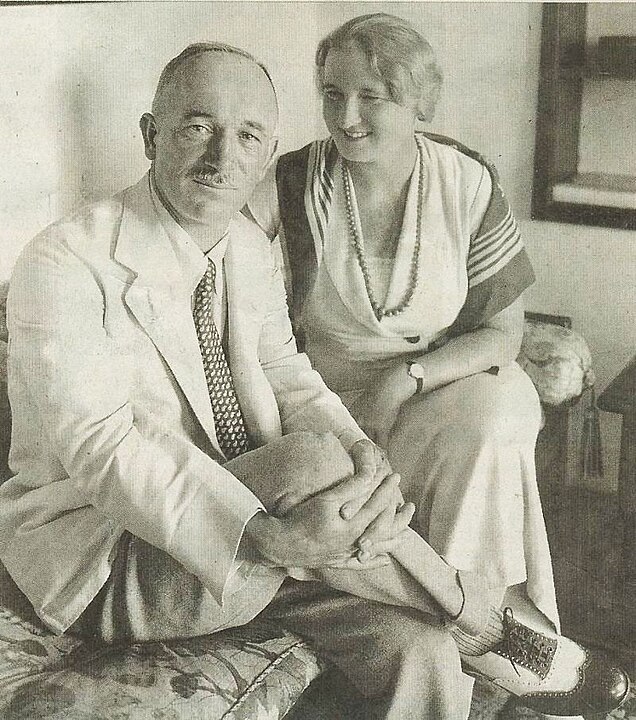
The Czechoslovak Communist Party, backed by the Soviet Union, orchestrated the Prague coup. The conflict started when the Minister of the Interior appointed Communist police commissioners. Edvard Beneš, president of Czechoslovakia, saw the unhappiness of the democratic ministers firsthand. Klement Gottwald, the government’s leader, reportedly warned Bene about the possibility of the ministers’ resignations. A political crisis and an actual Communist coup d’état ensued.
The president found himself confronted with the influence of the Communist Gottwald, who called on citizens to demonstrate en masse and support the Communists in government. Gottwald was helped by Rudolf Slánský, who mobilized the country’s labor militia. The two politicians put strong pressure on the President, who eventually announced that he would resign.
The coup then took on an almost legal form. Gottwald and Slansky were elected to govern the country in a single-list election. One of those responsible for the crisis was President Beneš, a friend of Stalin. Beneš had misjudged the situation, thinking that early elections would help democracy out of the crisis and the Communists would retreat. But the elections and the Communist takeover proved Beneš wrong.
How Did the Prague Coup Unfold?

On February 17, 1948, the Minister of the Interior appointed Communist police commissioners, setting off the crisis. Ministers who did not support the Communist Party voted against this and demanded that the order be overturned. The Czechoslovak Communist Party mobilized its supporters on February 19 in protest. On February 20 and 21, democratic ministers resigned in protest against Communist coercion. A weakened President Beneš was resting outside the city during these events. Pro-democracy activists were arrested on February 22 after the Minister of the Interior sent police to Prague to restore order.
On February 25th, after much prodding from Gottwald, Beneš decided to establish a new government, ending the situation. The Communists, who had Soviet support, ultimately won the crisis that the Democratic ministers’ defection caused. President Beneš was helpless in the face of the crisis. He capitulated before the Communists. On May 30, 1948, elections were conducted, and Gottwald was chosen as president. On September 5, 1948, President Beneš passed away. Despite his lifelong commitment to defending Czechoslovakia’s sovereignty, he was ultimately unsuccessful in doing so.
Foreign Minister Jan Masaryk was discovered dead in his window shortly after the Prague coup. Masaryk was an outspoken opponent of the Communist takeover and a staunch defender of Czechoslovakia’s sovereignty. Without a strong democratic foundation, Czechoslovakia fell under Soviet control. A breaking point was reached in relations with Western nations. For fear of a third global war, the West kept a careful eye on the problem. With the Soviet Union on edge after the Prague coup, the Cold War officially began.
Why the Prague Coup Was the Beginning of the Cold War
One of the few democratic and Western-oriented nations in Central Europe after World War II was Czechoslovakia, according to Western nations. The Prague coup worried all sides, who feared the outbreak of a third world war. They were worried about the division of Europe into Western and Russian-influenced countries.
The Americans perceived Czechoslovakia’s rejection of the Marshall Plan as a real threat. At the same time, the Soviet Union was taking an aggressive stance in Germany, trying to enter West Berlin and establish a land blockade. Eventually, relations between the Soviet Union and Western countries became strained and turned into the Cold War. The nuclear threat was at the center of the Cold War, which lasted until the late 1980s. With the events in Prague in February 1948, the division of Europe became a reality.
Results of the Prague Coup

After the Central Committee and the Politburo withdrew after the Prague coup, Czechoslovakia’s institutions were rebuilt. The departure of the Democrats from government allowed the Communists to seize control, cornering President Benes. A communist government took power after the collapse of the Third Republic. People’s Republic was the name officially given by the communist administration. Opponents of the new dictatorial rule were arrested and thrown in jail. After the brief period of democracy during the Prague Spring in the 1960s, socialism ruled the nation for the next four decades.
Confusion and panic spread across Western nations after the Prague coup and the rejection of the Marshall Plan by Czechoslovakia. The rise of Russian strength and influence alarmed Western nations. To confront the Soviet Union’s danger, a global military alliance was established. As a result, the Western allies united under NATO. On April 4, 1949, the treaty that established NATO was signed.
After the Prague coup, the Cold War began and dominated international political relations. The world entered an unsettling period of division in Europe and conflict between the Americans and the Russians. The Prague coup had a major impact on Czechoslovakia, which was to experience a long period of uncertainty. The effects of this crisis were also felt internationally, with the formation of new alliances and political enemies.