- Amunet, the Egyptian goddess, was the consort of the deity Amun.
- She was originally part of the Hermopolitan Ogdoad, representing the unknown.
- Amunet’s role as a goddess evolved and she had diverse aspects, including being associated with the sycamore tree and motherhood.
In ancient Egyptian religion, the Amunet goddess had a significant role.
She represented the feminine counterpart, or consort, of the male deity Amun. As members of the Hermopolitan Ogdoad, the pair stood for the hiddenness. These first members were paired up as such:
- Nun and Naunet, representing the chaos of the primordial waters.
- Kek (male) and Kauket (female), symbolizing darkness.
- Heh and Hehet, representing boundlessness.
- Niau and Niaunet, symbolizing air and wind.
The “Pyramid Texts,” particularly those from Huni’s pyramid (Fifth Dynasty), reference the gods Niau and Niaunet, who were eventually supplanted by Amun and Amunet. During the Middle Kingdom, Mut became a more popular deity than Amunet. Nonetheless, Amunet was still worshiped in various contexts.
Amunet Goddess: The Sacred and the Divine
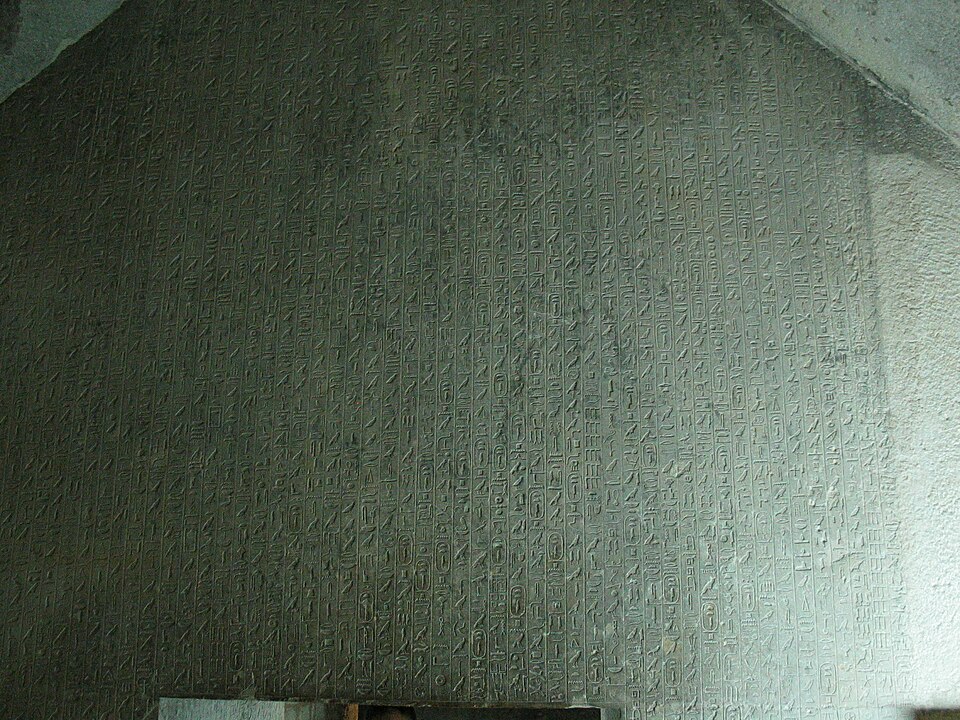
In addition to Amun, the name Amunet also appears often in the “Pyramid Texts,” and its meaning is “The Hidden One.” Amunet combined the meanings of “air and wind,” symbolizing the unfathomable currents and ferocious winds that blew across the primordial chaos before order was established in the universe.
Amunet, a goddess who first appeared in the Old Kingdom, is almost frequently referenced in the same breath as Amun.
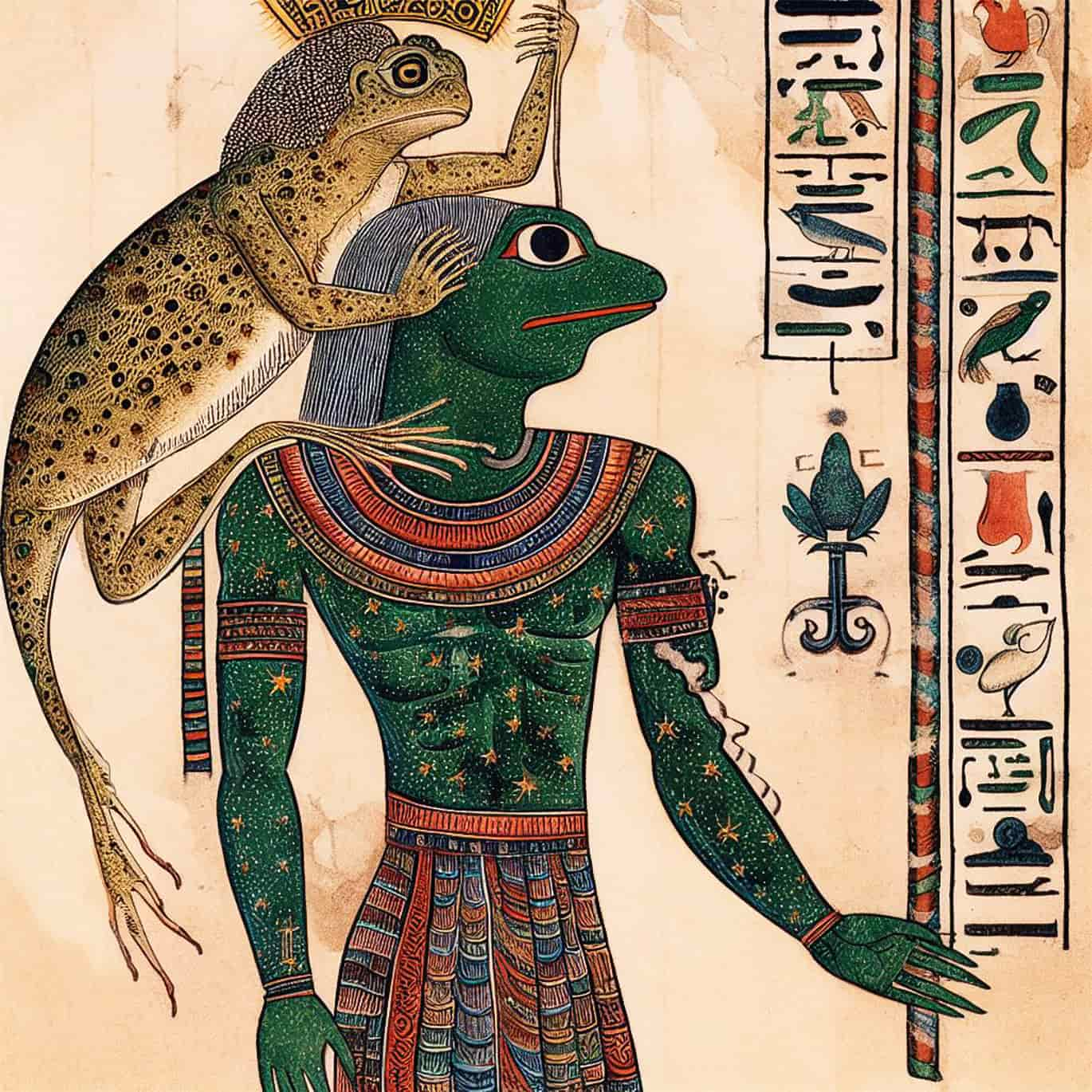
She has a female body and a cobra’s head, much as Amun has a male body and a frog’s head. The goddess, however, was also often represented with a cat’s head.
It was necessary for the New Kingdom’s most influential group, the Theban priesthood, to develop its own cosmology. They borrowed concepts from old teachings and reinterpreted Amun and Amunet as a couple of serpents to distance themselves from their Hermopolitan roots.
The most powerful clergy of the day determined what a deity was like and how he behaved. In Thebes, Amunet merely represented Amun’s feminine element, but in Karnak, she continued to serve as Amun’s wife. In fact, she was even more revered than Amun’s second wife, Mut, since, unlike Amunet, Mut bore him the son Khonsu.
High-ranking priests like the “prophets” were in charge of the Amunet worship, which was already widespread during the Eighteenth Dynasty. It lasted until at least the Twenty-sixth Dynasty, when the temple of Karnak made reference to Horakhbit, High Priest of Amun and Prophet of Amunet. Even throughout the Ptolemaic era, devotion to Amunet remained widespread.
Depiction of Amunet Goddess
Thutmose III included a statue of Amunet in the Hall of Annals of the Karnak temple. The statue is located on the temple’s VI pylon. One of the red granite columns has a papyrus design, representing Lower Egypt, while the other features a lotus flower design, representing Upper Egypt.
Two sculptures of Amun and Amunet stand between these columns. Amunet, in human form, wears the Nile Delta’s traditional crimson crown. Tutankhamun, who built a magnificent temple for the holy pair, is responsible for these sculptures. This statue captures the goddess’s likeness well.
- The goddess is shown in ornate relief decorations beside the pharaoh and other gods during the Sed festival (Jubilee Feast) in the Temple of Karnak’s third pylon, in the kiosk of Senusret I.
- On the east wall of the atrium in Luxor’s Temple, images depicting the pharaoh presenting Amun and Amunet with milk, fish, birds, and ointments are carved.
- Tutankhamun honored Amunet, the goddess Mut, and the deity Amun at the southern end of the colonnade in the Temple of Luxor.
- Amunet is shown as the head of the pantheon of gods celebrating the pharaoh’s jubilee on Thutmose III’s monument.
Amunet is often portrayed in art as a woman:
- Inscribed on a papyrus stem with the hieroglyph for life, it represents the unending rebirth of the souls of the virtuous.
- Having wings, as befits a primeval air goddess.
- ‘With an ostrich’s or falcon’s feather perched on her head.
In one illustration from Ippolito Rosellini’s “Monuments of Egypt and Nubia,” Seti I stands in front of Osiris, while Amunet, dressed in the hieroglyph for the west and with a falcon perched on her head, is shown standing behind him as the goddess of the west. She is shown with an ankh in one hand and the deity Osiris in the other, in the traditional embrace of Egyptian couples.
The West meant the place of the deceased in ancient Egyptian mythology.
Parallels to Amunet
Amunet’s identity was frequently muddled as she was combined with other mythical characters as the deity Amun gained prominence among the Egyptian priesthood. The identification method is further complicated by the fact that Egyptian, Greek, and modern names are sometimes interchangeable. Amunet is also known as Amenet, Amentet, Amentit, Amonia, Amonet, Imentet, Imenti, etc.
Note that Amunet has also been linked to the following for the sake of completeness:
- Imentet was the personification of the Egyptian goddess Amenti (or Ament, Amentet), whose name literally translates to “hidden land” (i.e., the afterlife). Symbolizing the west, the goddess Imentet was shown holding the ankh of life and the scepter of the goddesses (uadj).
- The hieroglyph representing the west is a semicircle balanced on two poles, the longer of which rests on Amunet’s head through a band. In this form, she was known as Imentet. Amunet is shown as Hathor in a tomb painting from Seti I’s tomb, although she is distinguished from Hathor by the presence of the hieroglyph for the west just over her head. Menna is seen in her tomb with a bird as a headdress. Beautiful wall reliefs represent Osiris, Maat, Renpet, Isis, Imentet, and Nephthys in the second hypostyle hall of Seti I’s temple at Abydos. Nefertari’s tomb also has an image of Amunet dressed as Imentet/Hathor in the entrance hall.
Amunet, the goddess, was equated with a number of other deities.
- Goddess Amentit (or Amentet, Imentit): She was the personification of Amenti, the realm of the virtuous and blameless spirits, and was known as the goddess Amentit (also spelled Amentet and Imentit). The Book of Amduat depicts Amenti, whose name means “he who is in the Duat (underworld).” There are twelve zones or hours in the Duat, and Amenti may be found on the fifth night. The departed gathered there before being transported. However, only the spirits of those who had lived righteously and were well-versed in the ceremonies of the sea were allowed on board.buy cialis super active online https://montgomeryanimal.com/wp-content/uploads/2025/03/jpg/cialis-super-active.html no prescription pharmacy
- Goddess Iusaaset: Iusaaset, whose name means “the shadow of Atum,” was worshiped as the Egyptian mother goddess and was also known as “the mother who is the father.”
- Goddess of the Sycamore Tree: Amunet, the goddess of the sycamore tree, was responsible for welcoming the dead and nurturing them so that they might return to life as part of the Underworld’s population. In this way, the sycamore tree became a symbol for her. She lived on a tree on the outskirts of the desert, with her back to the Underworld, and she welcomed all those who had to make the big voyage. Pharaoh Philip III Arrhidaeus (Philip III of Macedon), half-brother of Alexander the Great, was pictured as a celestial infant as she nursed him during the Ptolemaic era.
- Goddess Iusaas of Heliopolis: Iusaaset is the name of a goddess worshiped at Heliopolis. She is also known as “the hand of god,” as her name derives from the phrase “she comes with her power,” which refers to the annual Nile floods. This appellation also referred to the goddess as the Divine Wife of Amun, implying that she formed herself like the deity Atum. She, like Amunet, was the feminine manifestation of Atum and helped bring the world into being. The three female deities that appeared beside Atum were named Iusaaset, Nebethetepet, and Temet. She was worshiped as the patron goddess of Heliopolis and was often pictured with a scarab beetle on her head.
- Goddess Neith: Later on, Amunet became synonymous with Neith, albeit she still maintained her own identity.
- Goddess Taweret: Southern Taweret is dedicated to the goddess Taweret, a Theban hippopotamus.
Pharaohs would pray to Amunet goddess at the Sed festivals, and some eras in the pharaonic succession were named after her. Therefore, she represented the Egyptian pharaohs as the guardian goddess of the whole country.