Every late October across North America, Europe, and increasingly in global commercial capitals from Dubai to Kuala Lumpur, shop windows fill with orange pumpkins, skeleton masks, and bags of miniature chocolates. For Muslim families raising children in neighborhoods where trick-or-treating is a major childhood social event, October thirty-first brings up a recurring cultural and theological conversation: do Muslims celebrate Halloween? From an orthodox Islamic religious standpoint, the answer is not really—and for traditional scholars, a clear no—yet understanding why Islam passes on Halloween reveals fascinating insights into Islamic teachings on the unseen world, religious identity, and how Muslim communities celebrate their own joyous traditions of neighborhood generosity.
Religious Roots and the Principle of Distinct Identity
In classical Islamic jurisprudence (Fiqh), scholars evaluate non-Islamic holidays through two primary theological lenses: their historical origins and the preservation of strict monotheistic faith (Tawhid).
Historically, Halloween evolved from a blend of the ancient Celtic pagan festival of Samhain—which centered on lighting bonfires and wearing disguises to appease or ward off wandering spirits of the dead at the start of winter—and the medieval Christian liturgical vigil of All Hallows’ Eve (the night before All Saints’ Day). Mainstream Islamic scholars and fatwa councils generally advise Muslims against celebrating Halloween for three core reasons:
- Avoiding Pagan and Superstitious Origins (Shirk): In Islam, only God (Allah) has power over life, death, and the unseen realm (Al-Ghaib). Even when done in playful fun, rituals rooted in appeasing ghosts, consulting fortune-tellers, witches, or glorifying demonic and occult imagery conflict with Islamic teachings on avoiding superstition.
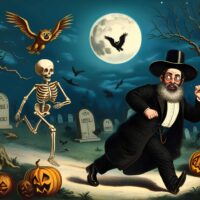
- Respect for the Dead: In Islamic ethics, death and the human body are treated with solemn dignity, prayer, and quiet reflection rather than turned into gruesome lawn decorations of fake tombstones, severed limbs, and skeletons.
- Preserving Distinct Religious Festivals: Based on authentic prophetic traditions (Hadith) encouraging believers not to imitate the religious festivals of other faiths, Islam centers its festive calendar around its two divinely appointed annual celebrations: Eid al-Fitr and Eid al-Adha.
How Muslim Families in the West Navigate October 31
While the theological ruling is straightforward, how do the millions of Muslim parents living in Western suburbs—where every classmate at school is talking about their superhero costume and neighbours are handing out candy on the porch—handle Halloween night in practice? Across diverse Muslim communities, families generally adopt one of three approaches:

- Polite Non-Participation and “Eid Upgrades”: Many observant families kindly explain to their children that just as their Christian neighbors don’t fast during Ramadan, Muslims don’t celebrate Halloween—and make sure that when Eid arrives twice a year, their home is decorated with twinkling lights, banners, massive piles of presents, and neighborhood candy bags so their kids never feel they are missing out on childhood magic.
- Mosque “Fall Festivals” and Harvest Nights: Across the United States, Canada, and the UK, hundreds of mosques and Islamic community centers organize alternative “Halal Fall Festivals” or “Trunk-or-Treat Harvest Nights” on the weekend of October thirty-first—where children dress up as historical heroes, astronauts, or animals (avoiding witches, devils, and gore), play carnival games, jump in bouncy castles, and collect bags of halal-certified candy in a safe community setting.
- Secular Neighborhood Participation With Halal Checks: Other more culturally secular Muslim families view modern American trick-or-treating purely as a harmless, non-religious civic neighborhood tradition like Thanksgiving—allowing young kids to dress up as a firefighter or cartoon character for an hour to greet neighbors, while parents carefully inspect the candy bowl afterward to remove gummies containing pork-based gelatin or candies made with alcohol extracts.
Hag Al Laila and Garangao: The Traditional Gulf “Trick-or-Treat”
Remarkably, if you visit the Arab states of the Persian Gulf—such as the United Arab Emirates, Qatar, Bahrain, Kuwait, and Oman—in the middle of the Islamic lunar month of Sha’ban or on the fourteenth night of Ramadan, you will witness an authentic, centuries-old cultural tradition that looks almost identical to the joyful candy-collecting part of Halloween: Hag Al Laila (in the UAE) or Garangao / Gergaoon!
Dressed in vibrant, gold-embroidered traditional garments and carrying woven cloth bags slung over their shoulders, children walk from house to house across their neighborhood after sunset singing traditional folk songs calling for treats—while beaming neighbors stand at their front gates pouring handfuls of sweets, chocolates, and nuts into the children’s bags to celebrate community warmth and prepare youngsters for the joy of Ramadan.