No one in world history has had more written about them. More than 90 separate biographies of Adolf Hitler have been published in German alone since 1945, not counting short profiles, translations, and right-wing tributes. The other literature on individual aspects of his rule over Germany is literally immeasurable.
Nevertheless, there are still aspects that remain relatively unexplored, such as his personal finances. It was carefully cultivated as part of Hitler’s propaganda image that he selflessly led the fate of Germany, lived a modest life, and had only the well-being of “his” people in mind. The reality was quite different.
In 1934, Hitler was sued by the Munich tax office for 405,494.40 Reichsmarks in unpaid taxes, plus interest and penalties. He tried to settle the case by offering 2,000 Reichsmarks, but the tax office rejected his offer. Hitler then used his newly acquired position as Führer to issue a decree that granted him immunity from taxation and retroactively canceled his tax debt.
Untaxed Profit from the Mein Kampf Book
While the “Völkische Beobachter” announced on its front page in bold letters on February 7, 1933, that “as the Reich Press Office of the NSDAP reports, the Führer, as Chancellor, does not receive a salary, since he earns his income as a writer, he has waived the Chancellor’s emoluments.” However, this demonstrative modesty didn’t last long because, from 1934, Hitler resumed receiving his salary as Chancellor and, since August 2, 1934, also that of Reich President following Paul von Hindenburg’s death. Such dual remuneration was, in principle, not permitted by German civil service regulations, but it posed no obstacle for Hitler.
A similarly unsavory and lesser-known secret revolves around Hitler’s honesty in paying taxes. Earning money is only half as enjoyable when a considerable portion of one’s income must be surrendered to the state. Hitler had encountered difficulties with tax authorities before his rise to power.
Hitler curtly responded, according to his tax file in the Munich State Archives, 18 days after receiving a request from the Munich East tax office on May 1, 1925, to report his income for the first quarter of 1925, along with a warning of a penalty of ten Reichsmark or one day in prison: “I had no income in I924 or in the first quarter of 1925.“
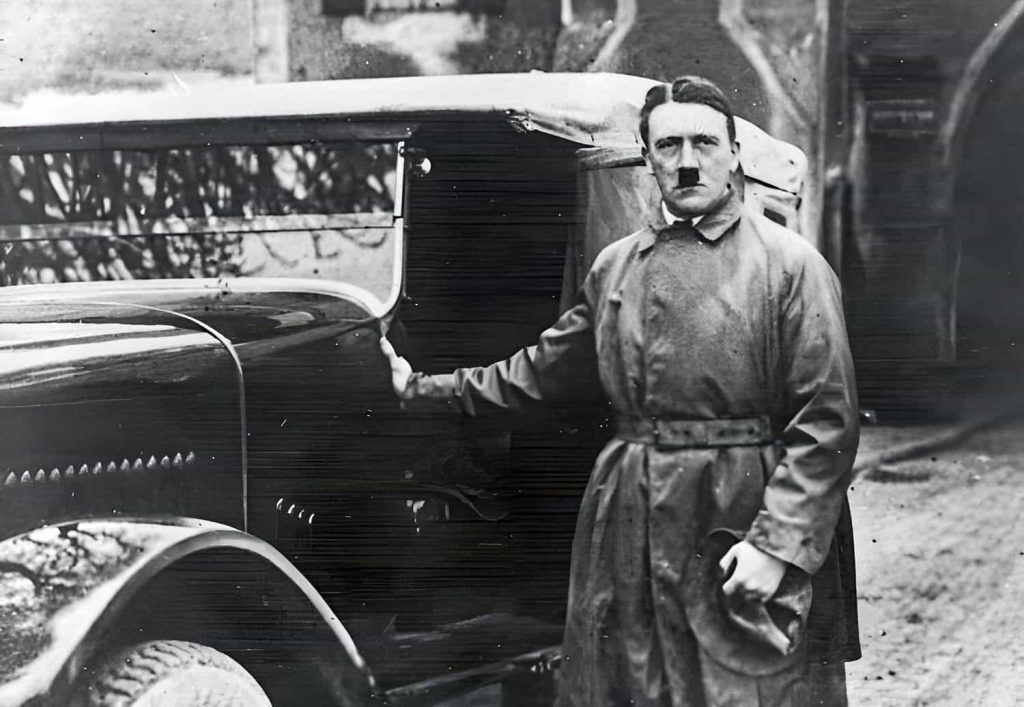
The tax office was not satisfied with Hitler’s response. On July 23, 1925, an official noted that the allegedly income-less taxpayer had purchased a car for 20,000 Reichsmarks. In early September, the announced penalty order was issued, which the NSDAP leader paid because he did not want to go to prison again.
He could not avoid a tax return for the third quarter of 1925 and submitted it, albeit belatedly. The tax officials were likely not pleased. Hitler admitted to a rather substantial quarterly income of 11,231 Reichsmark but also claimed advertising costs of 6,540 Reichsmark and paid credit interest of 2,245 Reichsmark.
Goebbels’ Envy of Hitler’s Money
In the following years, he engaged in a minor war with the tax authorities, regularly appealing against assessments and deferring tax debts. The Munich tax office treated the taxpayer Hitler leniently until 1932, but essentially lawfully.
The instruction in 1933 to be able to deduct half of his private income from “Mein Kampf” flatly and without verification as advertising costs was completely illegal. That’s exactly what happened. Of the 1,232,335 Reichsmark that Hitler reported as income from the sale of about a million copies of his book for the calendar year 1933, he deducted exactly 616,167 Reichsmark. Due to the progression, an income tax of 297,005 Reichsmark was due on the same amount to be taxed.
Hitler apparently did not pay. In any case, his tax file on October 20, 1934, indicated an outstanding balance of 272,190 Reichsmark in income tax for 1933, as well as an additional 24,383.20 Reichsmark in church tax, 14,315 Reichsmark in marriage assistance, and 23,776.70 Reichsmark in sales tax. The tax office demanded around 70,000 Reichsmark in advance payments for the third quarter of 1934; the Chancellor’s tax debt amounted to exactly 405,494.40 Reichsmark.
The Reich Finance Ministry and the President of the Munich Regional Tax Office arrived at a completely one-sided agreement that favored Hitler after some correspondence: the tax debt was entirely forgiven, the pending criminal proceedings were dropped, and Adolf Hitler disappeared from the view of the German tax administration on March 12, 1935. From then on, he paid no taxes at all. This information was, of course, not made public.
Hitler’s tax evasion was exposed after his death, when the Allies seized his financial records and documents. They estimated that he owed about 8 million Reichsmarks in taxes, plus interest and penalties, to the German treasury. They also discovered that he had stashed away millions of Reichsmarks in secret bank accounts and hidden assets.
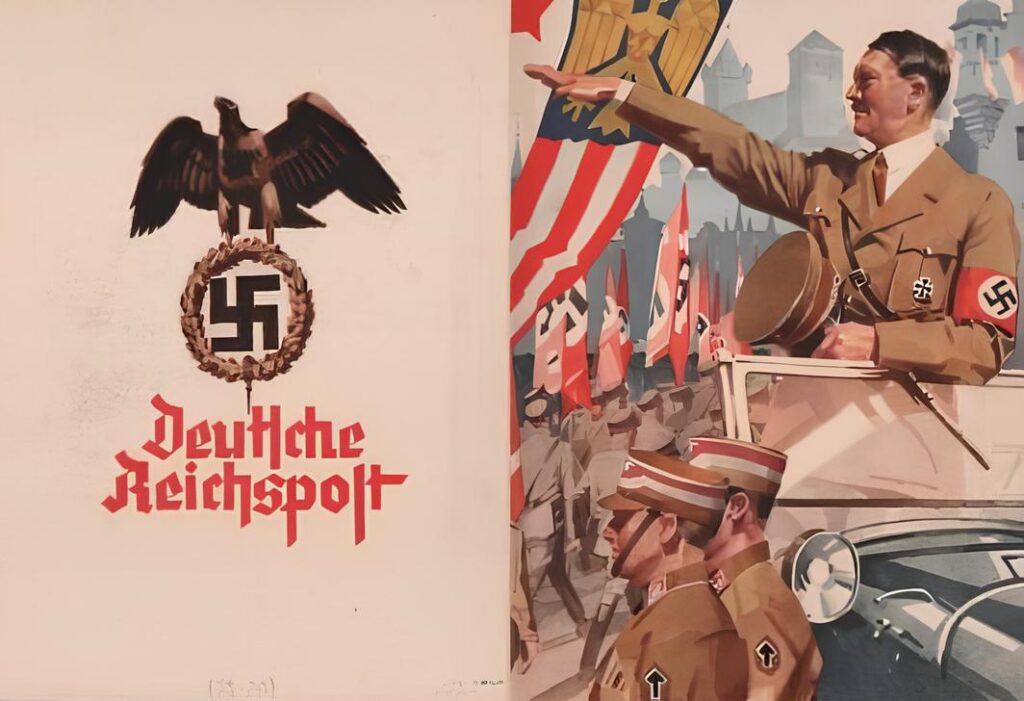
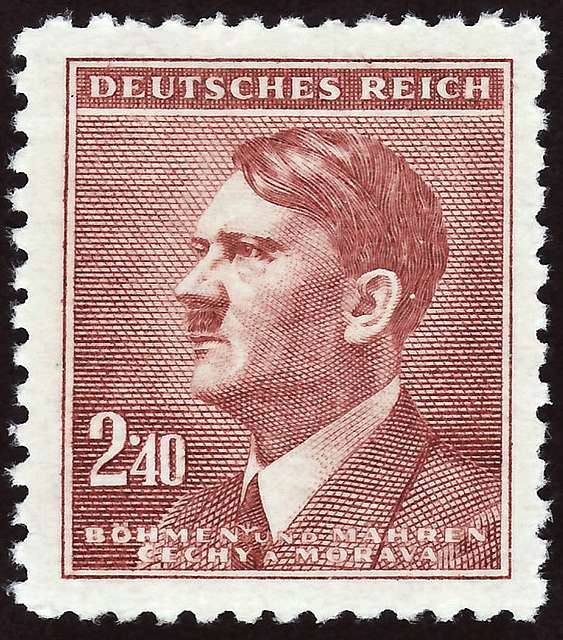
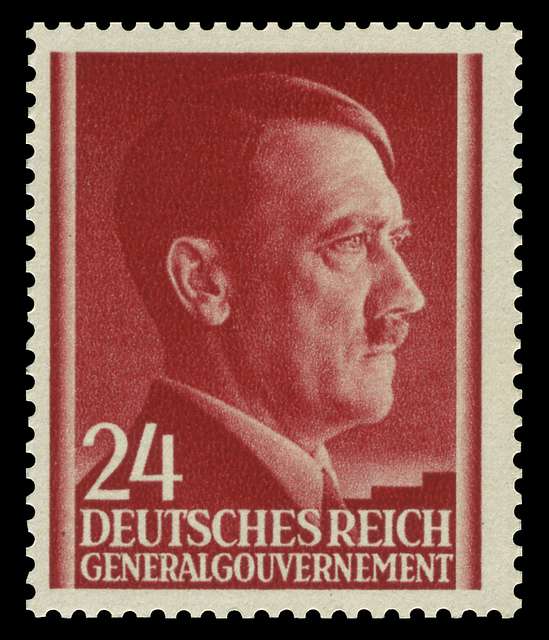
Until 1945, it was also strictly kept secret that Hitler received payments from the Reich Post for the use of his image on German stamps—for the use of his personality rights. Over the years, at least high double-digit, possibly even triple-digit, million amounts have accumulated here. Goebbels noted in his diary that this arrangement would bring Hitler “a lot of money.” The envy of the Reich Minister of Public Enlightenment and Propaganda, who was certainly not poorly off himself, was unmistakable.
References
- Hitler verdiente mit «Mein Kampf» Millionen – steuerfrei
- Hale, Oron James. “Adolf Hitler: Taxpayer.” The American Historical Review 60, no. 4 (1955): 830–42. https://doi.org/10.2307/1844922.
- The Secret Lives of the Nazis: How Hitler’s evil henchmen plundered Europe – Paul Roland – Google Books