Gullveig (gold drink, gold intoxication, power of gold) is a sorceress found exclusively in the Völuspá, a poem from Norse mythology likely composed in the 10th or 11th century. The Aesir kill her with spears and burn her three times in vain. This is believed to have triggered the first war in the world. Georges Dumézil identifies Gullveig as a Vanir, aligning with her name and essence: gold, which, like all forms of wealth, is under their patronage. Gullveig is considered by Dumézil to be a hypostasis of the goddess Freyja or the goddess herself.
Karl Viktor Müllenhoff interprets the violence against Gullveig as a mythological narrative of the birth of the technique of purifying precious ore. Georges Dumézil, on the other hand, sees a more moral significance in this episode: the Ases already possessed gold and knew how to work it. This gold allowed a life of harmony and joy, but with the appearance of the malevolent Gullveig, it is the bad gold that emerges—the kind that intoxicates, degrades, and is socially dangerous. Hence, the Aesir, just and vigorous gods, attempted, but in vain, to annihilate this harmful character.
Why Was Gullveig Burned Three Times?
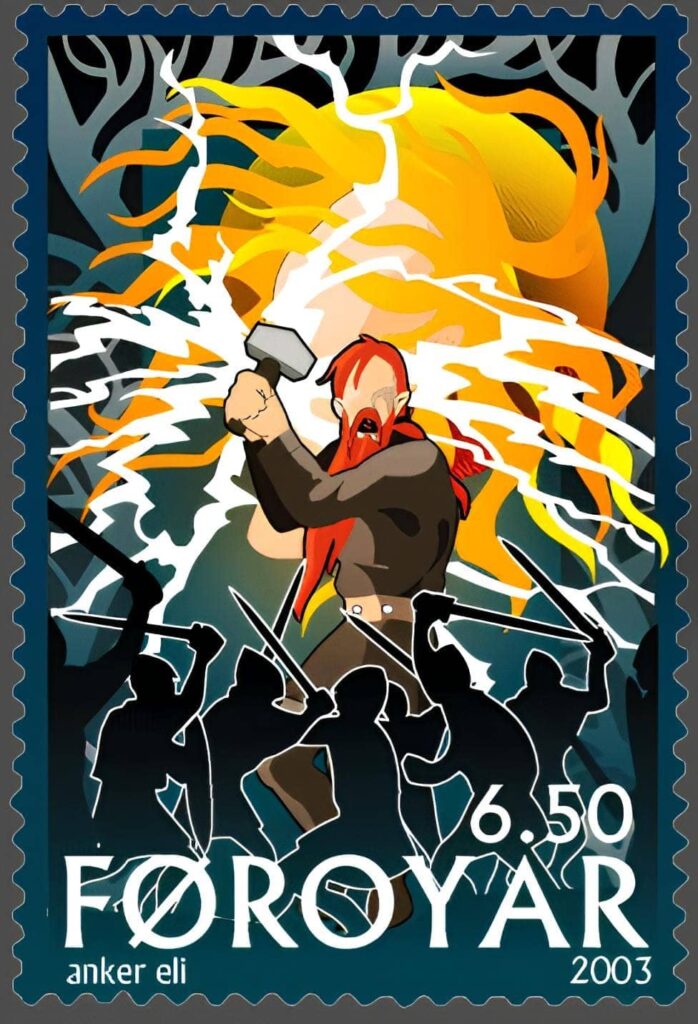
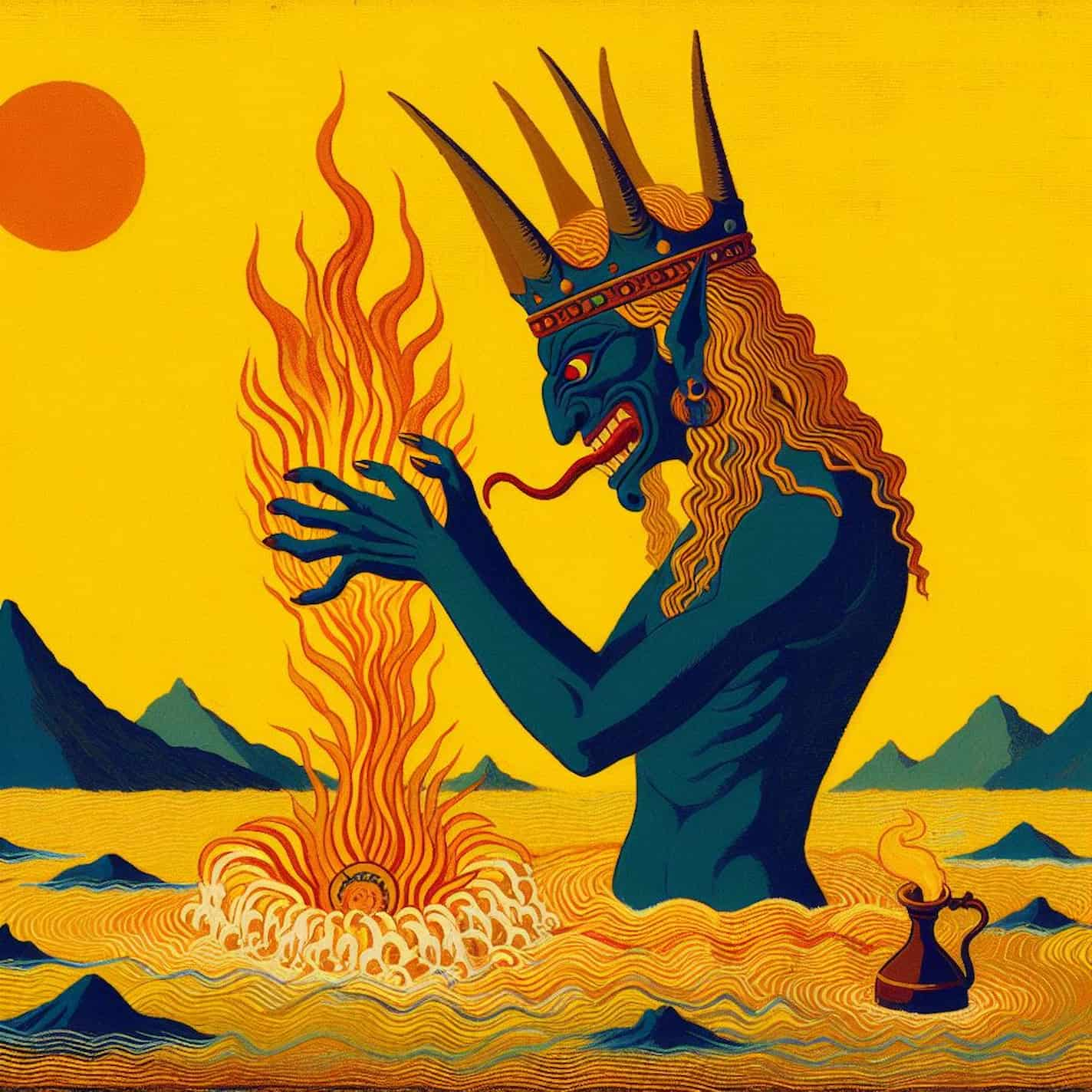
Gullveig’s responsibilities included guarding treasures and practicing the art of Seiðr, a form of magic. Consequently, she possessed prophetic abilities. Gullveig reached the Aesir and, through the gods, brought about a lust for gold. The gods demanded the secret—the origin of wealth—but Gullveig refused. As a result, the Aesir thrice burned her (Poetic Edda, Völuspa 21–22). Upon learning of her death, the Vanir were enraged, leading to a war between them: Æsir–Vanir War.
The war I remember, | the first in the world,
When the gods with spears | had smitten Gollveig,
And in the hall | of Hor had burned her,
Three times burned, | and three times born,
Oft and again, | yet ever she lives.
Heiðr (Heith) they named her | who sought their home, The wide-seeing witch, | in magic wise; Minds she bewitched | that were moved by her magic, To evil women | a joy she was.Poetic Edda, Völuspa 21-22 (H. A. Bellows translation – 1923)
Gullveig’s fate is tied to conflict and strife among the Aesir. The poem states that she was stabbed with spears and then burned three times, yet each time she revived. This implies a certain level of divine or supernatural resilience.
Theories
Given that Gullveig is so mysterious, various theories surround her. It is considered that Heith (Old Norse: Heiðr) is another name for Gullveig.

Vanir and Aesir are two groups of gods. Vanir represents fertility, wealth, and a peaceful life, while Aesir represents warfare. Gullveig is a typical representative of the Vanri. Georges Dumézil (1898–1986) argued that there is a parallel between the war of the Vani and Asi and the war of the Romans and Sabines.
Viktor Rydberg (1828–1895) proposed a connection between Gullveig and Loki, the god of fire. In the Short Voluspa (Old Norse: Völuspá hin skamma), it is said that Loki ate the heart of a woman and then gave birth to troll women. This concept signifies witches. However, it is unlikely that this heart belonged to Gullveig.
Rydberg believed that Thor ultimately killed Gullveig.
Gabriel Turville-Petre (1908–1988) considered Gullveig to be just another name for the goddess Freyja, who is associated with gold. She wept golden tears for her husband, Óðr.