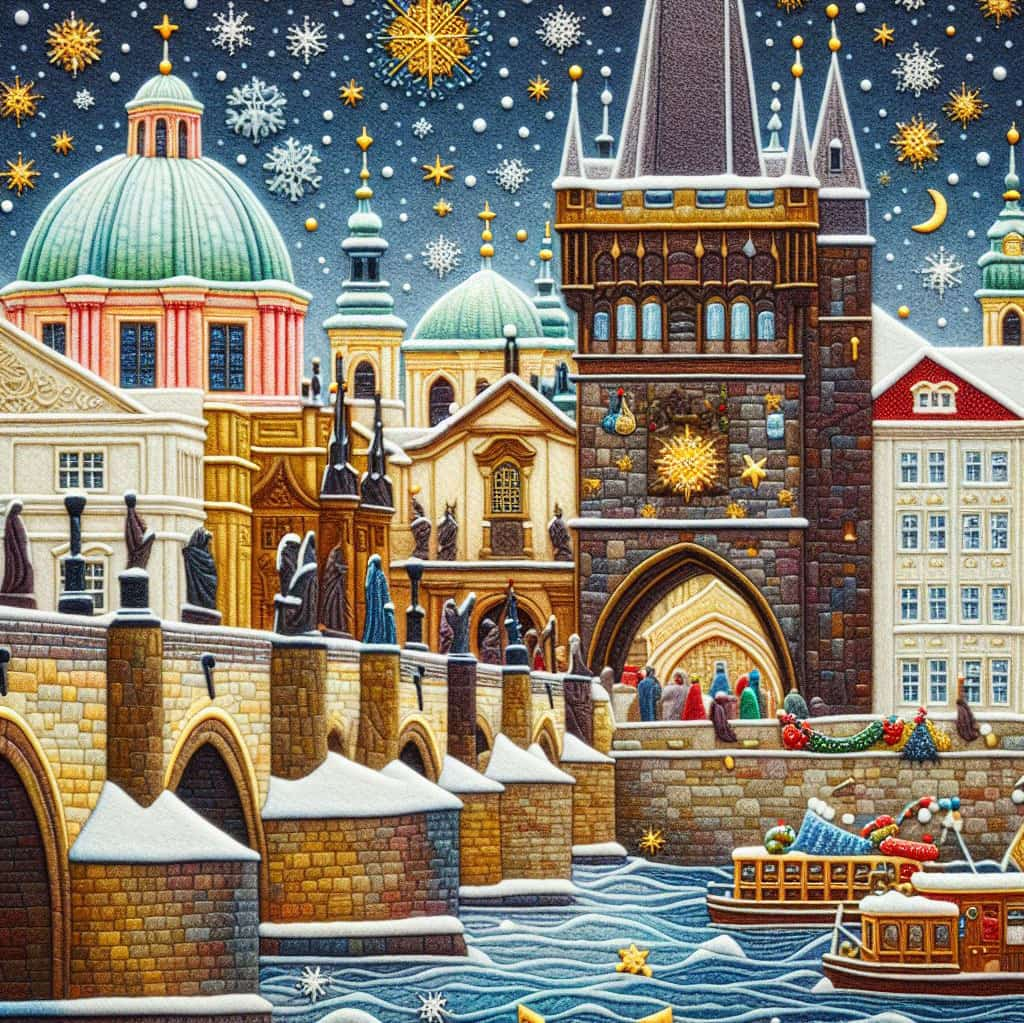
In the heart of Central Europe, where the Danube bisects the grand neo-Gothic parliament and thermal bathhouses of Budapest, Christmas in Hungary—known in Magyar as Karacsony—is a deeply atmospheric season rooted in centuries of Carpathian folk customs, Austro-Hungarian culinary elegance, and quiet family warmth. Rather than rushing into commercial decorations in October, Hungarians savor a structured four-week Advent buildup that separates the playful arrival of Saint Nicholas in early December from the magical evening of December twenty-fourth, when angelic messengers, glistening candy-draped fir trees, and walnut-stuffed pastries take center stage.
Mikulas on December Sixth and the Birch Switch of Krampusz
For Hungarian children, the festive excitement begins on the evening of December fifth, the eve of Saint Nicholas Day. Before going to bed, every child takes their sturdiest winter boots, scrubs off every speck of mud and snow until the leather shines, and sets them neatly on the windowsill. Overnight, Mikulas—the traditional Hungarian figure of Saint Nicholas, dressed in a long red bishop’s robe and mitre—visits the home to inspect the boots.
When children wake up on the morning of December sixth, well-behaved youngsters find their boots stuffed to the brim with mandarins, peanuts, apples, and red foil-wrapped hollow chocolate figures of Mikulas himself. Accompanying Mikulas in Hungarian folklore is Krampusz, a mischievous horned devil figure who carries a bundle of golden-painted birch twigs tied with a red ribbon, known as a virgacs. If a child has been unruly during the year, they may find a symbolic golden virgacs or a raw onion and potato tucked into their boot right alongside their chocolates as a playful reminder to behave before Christmas Eve arrives.
Szenteste, Little Jesus, and the Secret of Szaloncukor
One of the most charming traditions of a Hungarian Christmas is that the Christmas tree is never put up in early December. Throughout the four weeks of Advent, Hungarian homes are decorated only with an Advent wreath featuring three purple candles and one pink candle, while families visit the famous Vorosmarty Square and St. Stephen’s Basilica Christmas markets in Budapest to sip mulled wine and eat hot chimney cakes (kurtoskalacs) rolled in cinnamon and crushed walnuts.
The Christmas tree itself remains a closely guarded secret until the afternoon of December twenty-fourth, known as Szenteste (Holy Evening). According to Hungarian tradition, neither Santa Claus nor Mikulas brings the Christmas tree and presents on December twenty-fourth; instead, they are brought silently by Jezuska—Little Jesus, accompanied by angels. While one parent takes the younger children out for an afternoon walk or to visit grandparents, the other adults stay home behind locked living room doors to erect and decorate the fresh pine tree from scratch. Hanging from every branch of a Hungarian Christmas tree is a uniquely national confection called szaloncukor (“parlor candy”): bite-sized oblong fondants, marzipans, and fruit jellies coated in dark chocolate and wrapped individually in shiny, fringed metallic foil papers in gold, silver, red, and blue. Once the candles and sparklers are lit, a parent rings a small brass bell to announce that Jezuska and the angels have just flown out the window, inviting the wide-eyed children into the glowing parlor to see the tree for the very first time and sing Hungary’s most beloved traditional carol, Mennybol az angyal (Angel from Heaven).
Halaszle, Stuffed Cabbage, and the Battle Over Bejgli
Because December twenty-fourth was historically a Catholic fast day abstaining from red meat before Midnight Mass (Ejfeli mise), the traditional Hungarian Szenteste dinner centers on freshwater fish harvested from the Danube, the Tisza, and Lake Balaton. The undisputed star of the table is Halaszle, the fiery Hungarian Fisherman’s Soup. Simmered in a heavy pot over a base of pureed onions, fish bones, and generous spoonfuls of sweet and hot scarlet Hungarian paprika from Szeged or Kalocsa, the rich red broth holds thick steaks of mirror carp or catfish, followed by main courses of breaded, crisp-fried carp fillets served with cold mayonnaise potato salad.
On December twenty-fifth and twenty-sixth—both of which are official public holidays when families travel from house to house visiting extended relatives—the menu shifts to hearty winter comfort foods, most notably Toltott kaposzta: pickled sour cabbage leaves stuffed tightly with minced pork, rice, garlic, and smoked paprika, simmered slowly for hours with smoked ribs and served with a generous dollop of thick sour cream (tejfol) and fresh crusty white bread.
No Hungarian holiday table is considered complete without platters of Bejgli, a traditional spiral-rolled yeast pastry with a glossy, marble-cracked mahogany crust. Every bakery and grandmother in Hungary prepares Bejgli in two mandatory fillings: diós (sweet ground walnuts simmered in milk with raisins and lemon zest) and mákos (sweet ground blue poppy seeds spiced with vanilla and citrus peel). In Hungarian folk superstition, walnuts must be eaten at Christmas to protect the household from bad luck and predict health, while the thousands of tiny poppy seeds symbolize abundance, wealth, and fertility in the coming year.
Regoles and the Bethlehem Nativity Plays
In rural villages across Transdanubia and the Great Hungarian Plain, ancient winter solstice and Christian traditions survive between Christmas Day and New Year’s Day through two folkloric customs: Betlehemezes and Regoles. In Betlehemezes, groups of village youths and men dressed as shepherds (pásztorok), angels, and King Herod carry a miniature wooden church-shaped Nativity manger from house to house, performing a humorous and sacred folk play in the snow before being rewarded by the hosts with pastries and plum brandy (palinka).
Even older is Regoles, a custom with roots reaching back to pre-Christian Finno-Ugric and Magyar shamanic winter solstice songs. Beginning on December twenty-sixth (St. Stephen’s Day), singers called regosok walk through the village rattling chained sticks and spinning friction drums crafted from clay pots covered in pig bladder skin, chanting ancient verses containing the refrain “Haj rego rejtem” to cast spells of abundant harvests, thriving livestock, and happy marriages upon each family for the new year.