By using this site, you agree to the Privacy Policy.
Accept
MalevuzMalevuz
  • HISTORY
  • SCIENCE
  • BIOGRAPHY
MalevuzMalevuz
Search
  • HISTORY
  • SCIENCE
  • BIOGRAPHY
Follow US
Malevuz > History > Admete: The Princess Who Accompanied Heracles
History

Admete: The Princess Who Accompanied Heracles

Hrothsige Frithowulf
ByHrothsige Frithowulf
History Editor
Hrothsige is a history writer at Malevus. He has a bachelor's in history from the University of Exeter. Hrothsige's areas of historical interest encompass the ancient...
- History Editor
7 June 2025
Share
4 Min Read
SHARE

Admete (Ancient Greek: Ἀδμήτη) is a character in Greek mythology from the Argive cycle, the daughter of Eurystheus. She is mentioned in sources in connection with the ninth labor of Heracles (Hercules). According to one version of the myth, she was a priestess of Hera on Samos. A princess from Mycenae, Admete was a figure in Greek mythology.

Contents
  • Admete in Mythology
  • Admete in Astronomy
buy cytotec online https://buynoprescriptionrxonline.net/buy-cytotec.html no prescription pharmacy

From her parents, King Eurystheus and Antimache, she had six siblings: Alexander, Iphimedon, Eurybius, Mentor, Perimedes, and Eurypylus.

Admete in Mythology

Admete was the daughter of Eurystheus, who ruled in Argolis, from the lineage of the Perseids, and his wife Antimache. According to Pseudo-Apollodorus, the princess desired to obtain the girdle of the Amazon queen Hippolyta, once belonging to the war god Ares. To achieve this, her father sent the relative Heracles on a mission to retrieve the girdle.

buy ivermectin online https://medilaw.com/wp-content/uploads/2025/03/jpg/ivermectin.html no prescription pharmacy

Heracles successfully completed the task, thus accomplishing one of his labors.
buy levitra oral jelly online https://buynoprescriptionrxonline.net/buy-levitra-oral-jelly.html no prescription pharmacy

John Tzetzes writes that Admete accompanied Heracles on his quest for the girdle of Hippolyta on the Pontus Euxinus (Black Sea).
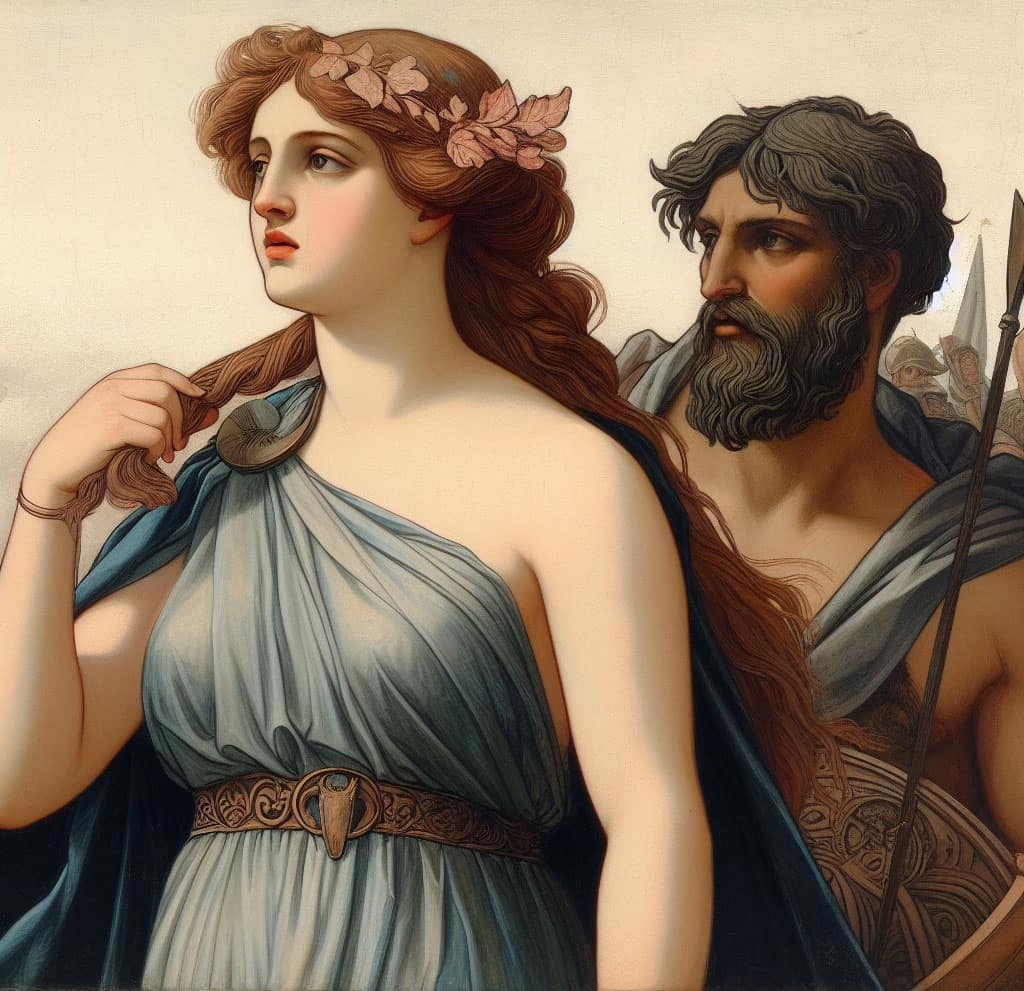
Admete and heracles
Admete and Heracles. ©Malevus

The reward for the various labors was to be Princess Admeta herself, as the hero’s bride.

Admete is also mentioned in “The Banquet of the Learned” by Athenaeus. According to this author, she was forced to flee from Argolis to Samos, where she became a priestess of the goddess Hera. The Argives hired Etruscan pirates to steal a wooden statue of Hera from the Samian temple.

It was planned that the locals would blame Admete for the disappearance of the statue and kill her. However, the pirates couldn’t sail away with the statue and abandoned it on the shore. Admete, after performing purification rituals, returned the statue to its place.
More Read

The Siege of Damietta
Fifth Crusade (1217-1221)
8 Myths About Medieval Hygiene
Mapuche People: The Last Conquered Native American Nation
Gerousia: The Spartan Equivalent of the Senate
buy azithromycin online https://buynoprescriptionrxonline.net/buy-azithromycin.html no prescription pharmacy

This event is connected by the Samians to the origin of the festival of Tonya, which existed in historical times.
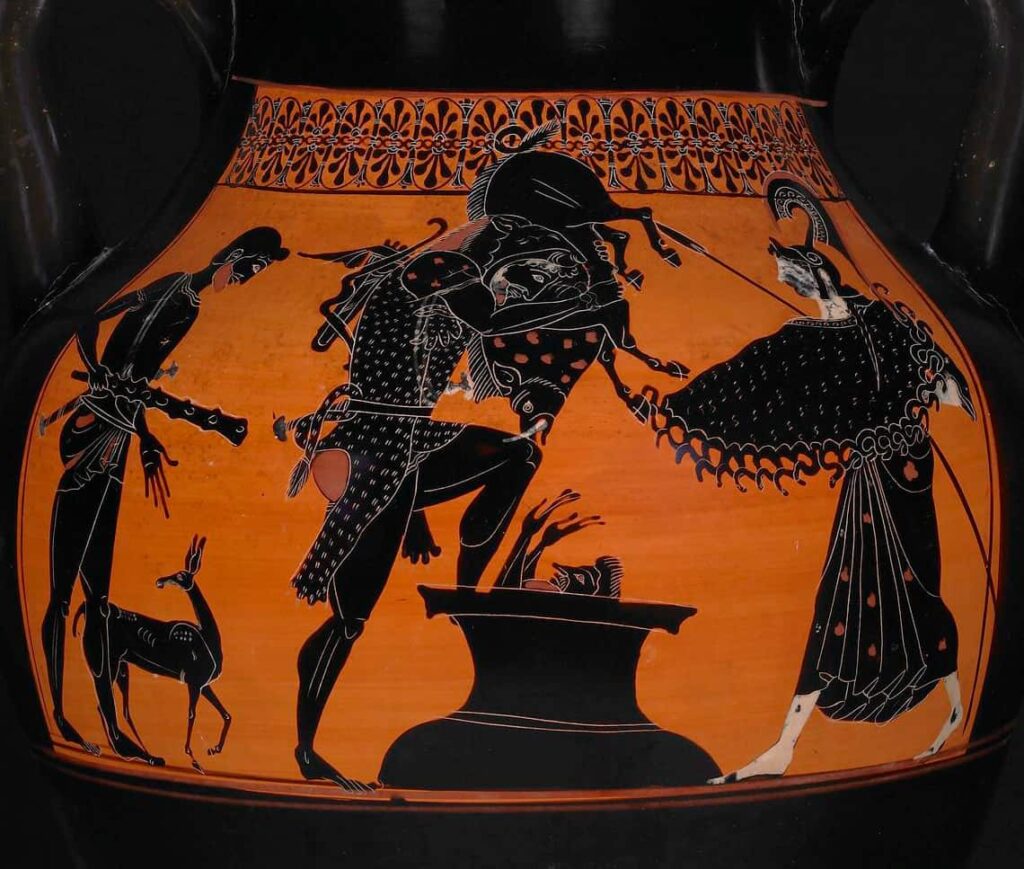
Hercules, Eurystheus and Erymanthian Boar.
Heracles, Eurystheus and Erymanthian Boar. (British Museum, CC BY-NC-SA 4.0)

An ancient vase with a black-figure painting has survived, depicting Admete present at the handover of the Erymanthian boar by Heracles to Eurystheus. According to the authors, another Admeta or Admete was also a nymph, precisely an oceanic one. Admete is also one of the many names given to Athena.

buy ampicillin online https://medilaw.com/wp-content/uploads/2025/03/jpg/ampicillin.html no prescription pharmacy

When Heracles succeeded, Eurystheus was happy to give the mythical girdle to his daughter, Admete.

Admete in Astronomy

Admete means “the unbroken, unwedded, untamed” in Ancient Greek and it is a feminine version of Admetus. Admete is one of the 136 Greek mythological figures behind asteroid names. In honor of Admete, an asteroid (398) Admete was named, discovered in 1894.


Share This Article
Email Copy Link Print
ByHrothsige Frithowulf
History Editor
Hrothsige is a history writer at Malevus. He has a bachelor's in history from the University of Exeter. Hrothsige's areas of historical interest encompass the ancient world and early Europe, along with the history of modern culture.
Previous Article Greek Mythology Figures Behind Asteroid Names 136 Greek Mythology Figures Behind Asteroid Names
Next Article evolution of ancient infantry Ancient Infantry: From 9000 BC to 200 AD

Latest News

985px Landing of Lieutenant James Cook at Botany Bay 29 April 1770 painting by E Phillips Fox

Top 10: The Greatest Knights in History

Knights were the medieval equivalent of elite soldiers, and many…

List
3 November 2026
Charles Rolls driving a Peugeot 1896
List

10 of the Craziest Laws in History

For more than 4,000 years, humans have devised new laws…

18 October 2026
Ikinci Meksika Imparatorlugu
History

Why Did the Second Mexican Empire Collapse?

The Second Mexican Empire did not collapse because of a…

14 April 2026
A painting depicting Aboriginal Tasmanians attacking John Allen’s Milton Farm near Great Swanport in 1833.
History

Colonialism in Tasmania

The colonization of Tasmania was not a simple story of…

14 April 2026

You Might Also Like

Ecumene
History

Ecumene: Meaning and Origin of the Ancient Greek Word

6 June 2025
Lock Martin
History

Lock Martin: At 7’7″, “The Tallest Man in the West”

15 November 2023
Checkmate painting by Moritz Retzsch
History

How to Have Fun in the Middle Ages

7 June 2025
Scaphism
History

Scaphism: The Gruesome Ancient Torture Method

27 October 2026
  • Privacy Policy
  • About us
  • Editorial Standards

© Malevuz. All Rights Reserved.

Welcome Back!

Sign in to your account

Username or Email Address
Password

Lost your password?