Christmas in Portugal begins on December 24 and continues until January 6. On Christmas Eve, the major Christmas event is a supper with family and friends, including Portuguese foods like bacalhau (salted fish). Desserts like rabanadas (akin to French toast), arroz doce (rice pudding), and Bolo Rei (a fruit and nut-filled cake) are also popular. After supper, Portuguese families gather to play games, socialize, and, at midnight, unwrap gifts. Midnight is the moment when local churches celebrate Missa do Galo, a mass for the devout. Another Christmas party is held on January 6 to round out the Christmas season.
-> See also: 48 Countries That Celebrate Christmas Widely
Christmas is Called “Natal” in Portugal
Christmas is called “natal” in Portugal. The word “natal” in Portuguese was once “nātālis” in Latin, derived from the verb “nāscor,” which means to be born. From the Latin “nātālis,” the words “natale” in Italian, “noël” in French, “nadal” in Catalan, and “natal” in Spanish evolved. The Spanish word “natal” was gradually replaced by “navidad” as the name for the religious day. On the other hand, the word “Christmas” in English evolved from “Christes maesse” (‘Christ’s mass’), which means the mass of Christ.
The Christmas Tree Tradition
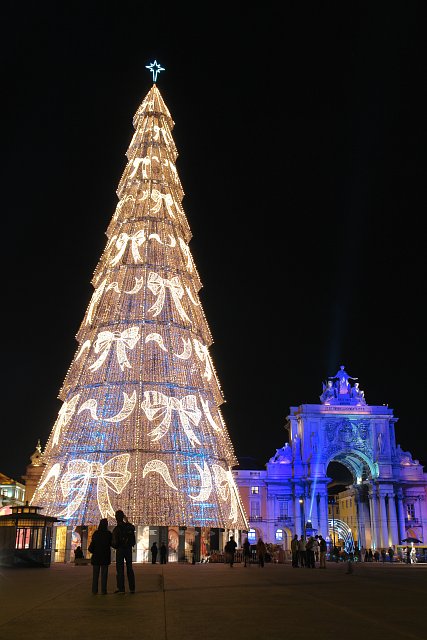
The day to set up Christmas decorations varies in each country. In Portugal, it is customary to set up the Christmas tree on December 8th, the day of Our Lady of the Conception (Nossa Senhora da Conceição), the patroness of the Porteguese. On January 6th, the Day of the Kings (Dia de Reis) is celebrated, marking the arrival of the Three Wise Men (Três Reis Magos) in Bethlehem and concluding the magic of Christmas. On this day, Christmas trees and other Christmas decorations are taken down in Portugal. One of the world’s largest Christmas trees is located in Praça do Comércio, Lisbon.
Christmas Traditions in Portugal
Below are Portugal’s most beloved and traditional Christmas customs and celebrations:
- Consoada (Christmas Eve): Boiling fish or octopus with potatoes and cabbage is a traditional Christmas Eve (Consoada) meal in Portugal. Families go to midnight mass after supper and then go home to set up their nativity scenes (presépios) with the infant Jesus.
- Dia de Natal (Christmas Day): Portuguese Christmas dishes, like Bolo Rei (King Cake), rabanadas, and roasted lamb or goat, are enjoyed by families once again on Christmas Day. Morning gift opening is also not uncommon.
- Christmas Decorations: Through mid-November, Portuguese cities are filled with Christmas markets selling artisan-made wares. Even though the country has one of the biggest Christmas trees in the world, displaying a Christmas tree is not typical in the country.
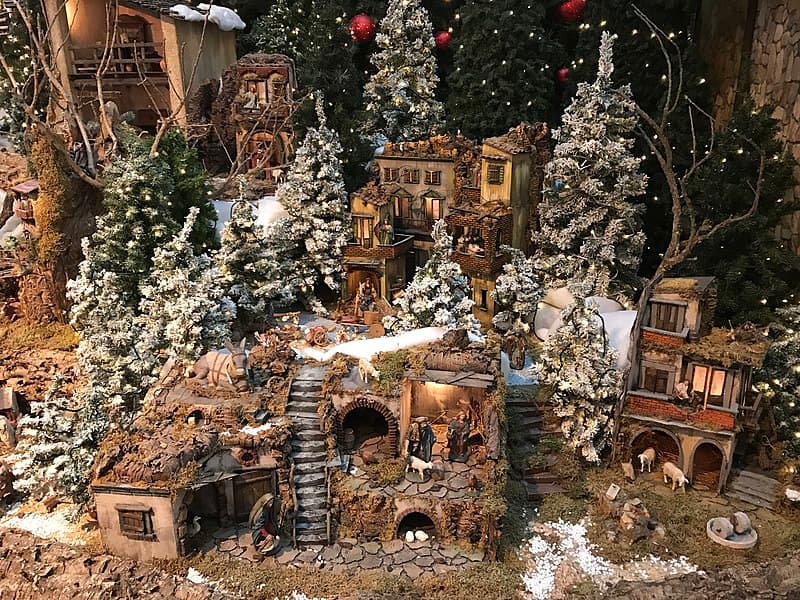
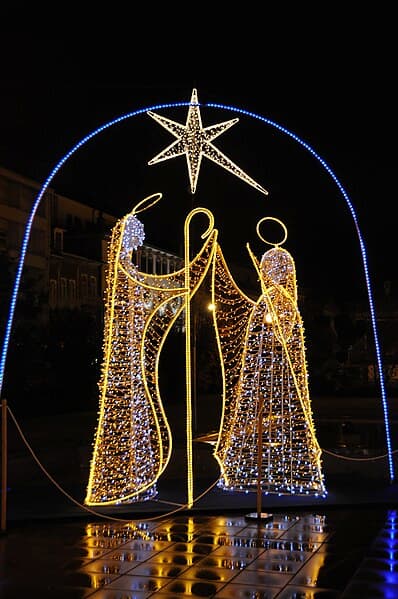
- Presépios (Nativity Scenes): This country is home to a long-standing custom of nativity scenes, or “presépios,” which include placing figurines of the Three Kings in a house. While the Nativity plays are not as popular, the live nativity scenes where some citizens dress up as real characters are quite common.
- Festive Fires: Lighting bonfires on Christmas Eve is a pagan ritual that continues in certain regions of Portugal as a way to greet the sun.
- Careto de Varge: On December 26th, Portugal has a one-of-a-kind local festival honoring Velha, a rich old lady who gave the locals chestnuts and wine in return for a Christmas prayer.
Pai Natal (Santa Claus) in Portugal
When children in Portugal think of Santa Claus, they think of “Pai Natal,” and they think he brings gifts to them on Christmas Eve instead of Christmas Day. The families put their gifts in shoes and leave them by the fireplace or beneath the Christmas tree. On the other hand, there are those who believe that the baby Jesus, and not Pai Natal, brings the gifts. The names of Pai Natal’s reindeers in Portugal are Rodolfo, Corredora, Dançarina, Empinadora, Raposa, Cometa, Cupido, Trovão, Relâmpago e Bernardo.
-> See also: All 15 Countries That Don’t Celebrate Christmas
Christmas Foods and Drinks in Portugal
Traditional Portuguese Christmas dinners are straightforward and include seafood and pork dishes that are prepared according to regional traditions. Here are the favorites from Portugal’s Christmas menu:
- Bacalhau: Salted codfish, potatoes, and vegetables make up this traditional Portuguese Christmas feast.
- Bacalhau com Todos: A meal that combines salted codfish with carrots, onions, potatoes, and other vegetables.
- Polvo Assado: Traditional Christmas fare in Northern Portugal, a combination of roasted octopus and potatoes.
- Roupa Velha: As a side dish, it is served with potatoes and veggies and is cooked using leftover codfish.
- Cabrito Assado no Forno: A traditional Christmas meal, Cabrito Assado no Forno consists of oven-roasted lamb with roast potatoes.
- Peru Recheado: Peru Recheado is a typical Portuguese Christmas meal that features pig and is accompanied by a fiery sauce.
- Rabanadas: Fried dough pastries called rabanadas are accompanied with sugar or honey.
- Lampreia de Ovos: It is a traditional Christmas dessert that has a fish-shaped egg-yolk cake.
- Filhós: Traditionally eaten with a glass of Port wine or a liqueur such as ginjinha (sour cherry liqueur), it is a traditional Portuguese Christmas bread.
- Arroz Doce: It is a sweet rice pudding that is cooked with sugar, cinnamon, almonds, and water.
- Bolo Rei: With a classic pattern baked into the cake, this fruit cake is offered throughout Christmas.
History of Christmas in Portugal
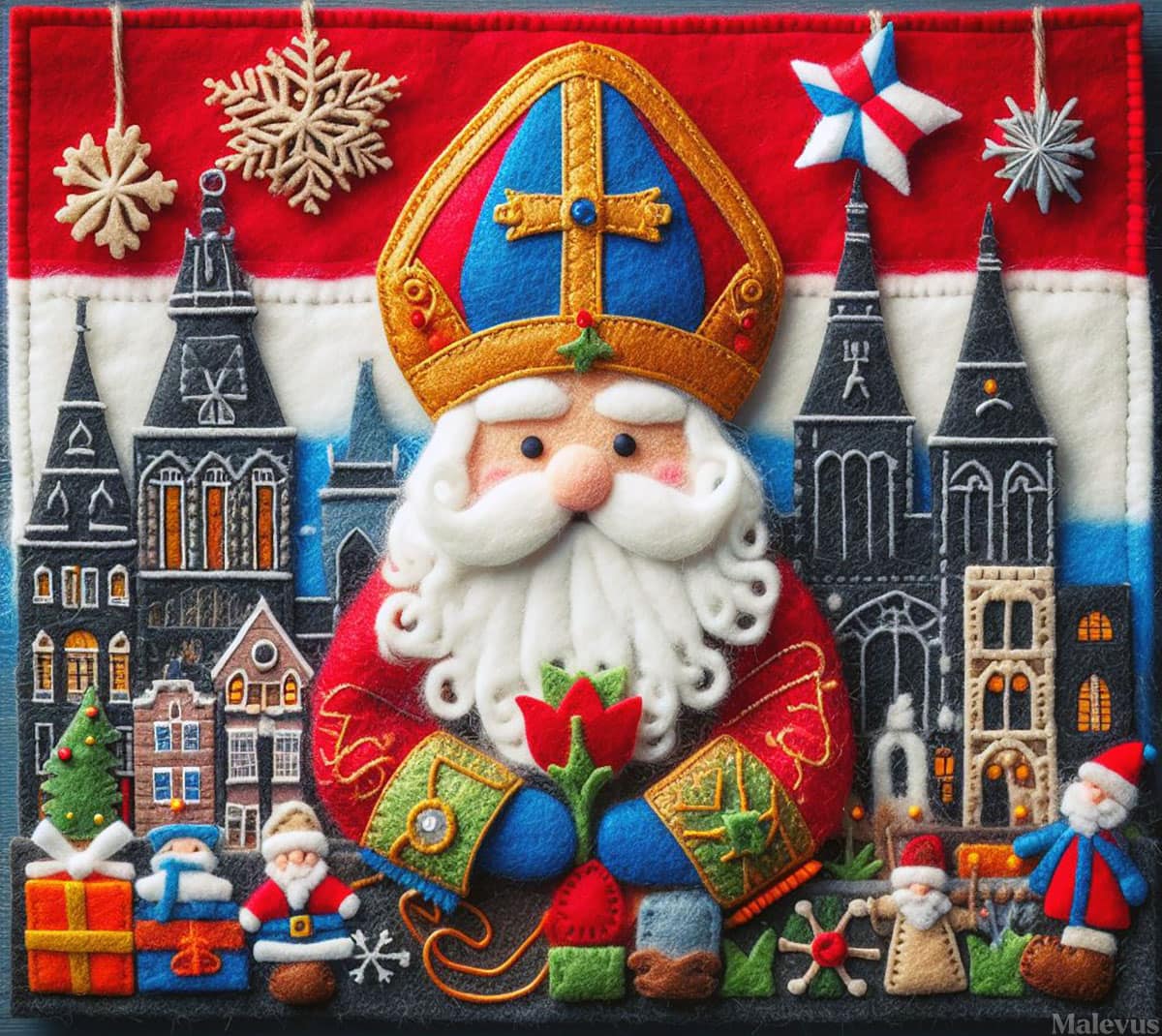
In the nineteenth century, King Fernando II of Portugal and Queen Consort agreed to decorate the palace with a Christmas tree and distribute presents to the children while disguised as Saint Nicholas. This is the first known mention of a Christmas tree in Portugal. His native Germany was the source of this custom. “Dia de Reis,” or “Day of the Kings,” has been traditionally celebrated on January 6 for a long time to mark the official conclusion of the Christmas season in Portugal; however, this is no longer a holiday for many Portuguese families.