When December arrives in Norway, the sun barely peeks above the southern horizon in Oslo before vanishing by mid-afternoon, while north of the Arctic Circle in cities like Tromso and Svalbard, the polar night plunges the snow-draped fjords and pine forests into twenty-four-hour twilight lit only by the dancing green curtains of the Aurora Borealis. It is precisely because winter is so dark and freezing that Norwegians celebrate Christmas—known since Viking antiquity as Jul—as a luminous festival of warmth, flickering beeswax candles, mischievous barn elves, and centuries-old culinary rituals designed to banish the winter gloom.
From Viking Midwinter Jol to Christian Jul
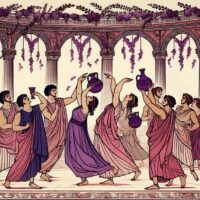
Long before Christianity reached the Scandinavian fjords around the tenth and eleventh centuries under kings like Olaf Tryggvason and Saint Olaf, Norse farmers and seafarers celebrated Jol (Midwinter)—a pagan solstice feast held in the dead of winter to honor the gods Odin, Thor, and Freyr. During Jol, every Viking farmstead was legally required to brew strong malt ale and sacrifice livestock, toasting “til ars ok fridar” (for a good harvest year and peace) to urge the sun to return to the sky.
When Norway converted to Christianity, King Haakon the Good wisely merged the calendar date of pagan Jol with the Christian celebration of the Nativity, keeping the ancient Old Norse name Jul forever. Even today, dozens of pre-Christian customs survive seamlessly inside a Norwegian Christmas: farmers and suburban homeowners alike still tie up a golden sheaf of oats called the julenek on a wooden pole or balcony outside before Christmas Eve so that wild winter birds can enjoy their own holiday banquet, believing that if the birds feast well on Christmas, the farm will enjoy good fortune all year.
Fjøsnissen in the Barn and the Seven Sorts of Cookies
Unlike the single towering American Santa Claus living at the North Pole, Norway’s traditional holiday mascot is the Julenisse (or Fjøsnisse)—a short, bearded gnome wearing grey woolen knickerbockers, heavy knitted stockings, and a bright red pointed woolen cap (topplue) who lives invisibly inside the family barn or farmstead loft all year round. Acting as the supernatural guardian of the livestock and buildings, the Nisse brings prosperity if treated with respect, but plays mischievous tricks if insulted or forgotten. To keep him happy, on Christmas Eve afternoon, Norwegian children carry a steaming ceramic bowl of risengrynsgrot—creamy white rice porridge topped with a pat of melting butter, sugar, and cinnamon, with a single blanched almond hidden inside—out to the barn or front porch step specifically for the Nisse.

Inside the kitchen, December is dominated by julebakst, governed by the unwritten national law of the Syv Slags Kaker—the requirement that a proper Norwegian host must bake at least “Seven Sorts” of traditional Christmas cookies and store them in decorative tin boxes. The classic seven include krumkaker (paper-thin, waffle-iron-pressed cones rolled while hot around a wooden cone), pepperkaker (spiced gingerbread cut into hearts and pigs), berlinerkranser (buttery egg-yolk wreaths topped with pearl sugar), fattigmann (diamond-shaped dough knots fried crisp in lard and spiked with cardamom and brandy), sandkaker, goro, and serinakaker.
Lille Julaften, Ribbe vs. Pinnekjøtt, and Walking Around the Tree
In Norway, the holiday officially clicks into high gear on the evening of December twenty-third, universally beloved as Lille Julaften (Little Christmas Eve). On this night, families finish decorating the tree with woven paper heart baskets (julekurver) and Norwegian flags, build gingerbread houses, eat rice porridge to see who finds the lucky hidden almond (winning a marzipan pig as the prize), and gather around the television at nine o’clock for a bizarrely cherished national ritual: watching Grevinne og hovmesteren (Dinner for One), a short 1963 British black-and-white comedy sketch that Norwegians have watched with religious devotion on December twenty-third for over forty years.
At five o’clock sharp on the afternoon of December twenty-fourth (Julaften), church bells ring out across every valley and town in Norway to “ring Christmas in” (ringe julen inn), and the streets fall completely silent as families sit down in their best clothes or traditional embroidered folk costumes (bunad) for the main Christmas Eve feast. Geographically, Norway is divided into three passionate culinary camps over what belongs on the Christmas Eve plate: in eastern and central Norway around Oslo, the undisputed king is Ribbe (slow-roasted pork belly with impossibly crispy crackling skin, served with sour cabbage, prunes, and lingonberry jam); along the western fjord coast around Bergen and in the north, roughly forty percent of the nation swears by Pinnekjott (salted, dried, and sometimes smoked lamb or mutton ribs steamed for hours over a lattice of peeled birch-wood twigs); while along the southern coast, families serve freshly boiled whole Atlantic cod (juletorsk), alongside traditional side servings of lutefisk (dried whitefish treated with lye) and fiery shots of caraway-spiced Norwegian Linie Aquavit that has been aged in oak sherry casks aboard ships crossing the Equator twice. After dinner, before the Julenisse knocks on the door in person to hand out gifts, the entire family joins hands in a large circle around the lit Christmas tree set right in the middle of the living room floor—walking around the tree in a circle while singing traditional carols like Deilig er jorden (Fairest Lord Jesus).
Romjul and Going Julebukk
While many countries pack away their decorations on December twenty-sixth, for Norwegians, the quiet days stretching between December twenty-fifth and New Year’s Eve form a cherished, peaceful week known as Romjul. During Romjul, the pace of life slows to a crawl: families cross-country ski through torch-lit forest trails, attend large extended-family cold-table buffets (julebord), and in coastal towns, children dress up in whimsical costumes and masks to go Julebukk (“Christmas Goat”)—walking from door to door like winter trick-or-treaters to sing Christmas songs on neighbors’ porches in exchange for clementines, cookies, and chocolates.