In the ancient Mediterranean world, before sterile obstetrics, antibiotics, or cesarean anesthesia existed, walking into the birthing chamber meant walking onto a battlefield where the lives of both mother and infant hung in the balance with every contraction. While men prayed to Ares and Athena when facing bronze spears in the phalanx, every woman across ancient Greece—from royal queens in Mycenaean palaces to humble farmers’ wives in Attica—called out in the dark hours of labor to one indispensable, ancient divinity: Eileithyia, the goddess of childbirth, midwifery, and the searing pangs of labor, whose open or crossed fingers decided whether a new human life entered the sunlight.
Older Than Olympus: The Amnisos Cave of Crete and Linear B
Although classical poets like Hesiod in the Theogony integrated Eileithyia neatly into the Olympian family tree as the daughter of Zeus and Hera (making her the full sister of Ares, Hebe, and Hephaestus), modern archaeology proved that worship of Eileithyia is far older than classical Greece—reaching back into the Bronze Age Minoan civilization of Crete around 2000–1400 BC.
In Book Nineteen of Homer’s Odyssey, Odysseus explicitly mentions sailing to Crete and anchoring near the “Cave of Eileithyia at Amnisos” (just east of the palace of Knossos). When modern archaeologists excavated the coastal cavern of Amnisos, they discovered a deep subterranean sanctuary centered around stalagmites shaped like a pregnant mother’s figure, surrounded by votive offerings spanning from the Neolithic era to Roman times. Even more remarkably, when linguists deciphered the fourteenth-century BC Mycenaean clay tablets written in Linear B excavated at Knossos, they found offerings of jars of pure honey dedicated directly to E-re-u-ti-ja (Eleuthia / Eileithyia)—confirming that mothers had been praying her exact name in that cave for more than a thousand years before Homer composed a single verse.
“Pain-Bringing Arrows” and the Myth of Crossed Knees and Fingers
In the Iliad, Homer sometimes spoke of a single goddess Eileithyia, and other times of multiple sister-spirits called the Eileithyiai, describing how they shot “sharp, piercing arrows of pain” into a mother’s womb to trigger the contractions of labor, yet simultaneously held the gentle power to ease the pain and bring the child safely into the light (reflected in her popular folk etymology from the Greek verb eleutho, meaning “She Who Comes to Bring Relief” or “She Who Causes the Child to Come”).
Because Eileithyia answered directly to her jealous mother Hera (the queen of marriage), two famous Greek myths revolved around Hera ordering Eileithyia to block the birth of Zeus’s illegitimate children by using sympathetic body-posture magic:
- 1. The Nine-Day Labor of Leto (Birth of Apollo and Artemis): When the Titaness Leto was pregnant by Zeus with the twins Apollo and Artemis on the floating island of Delos, a furious Hera kidnapped/detained Eileithyia up on Mount Olympus behind golden clouds so the babies could not be born! For nine agonizing days and nights, Leto writhed in labor beneath a palm tree on Delos until the other compassionate goddesses sent the rainbow-messenger Iris in secret to bribe Eileithyia with a magnificent nine-cubit necklace threaded with gold and amber. The instant Eileithyia set foot on the soil of Delos, Leto gave birth to Apollo and Artemis.
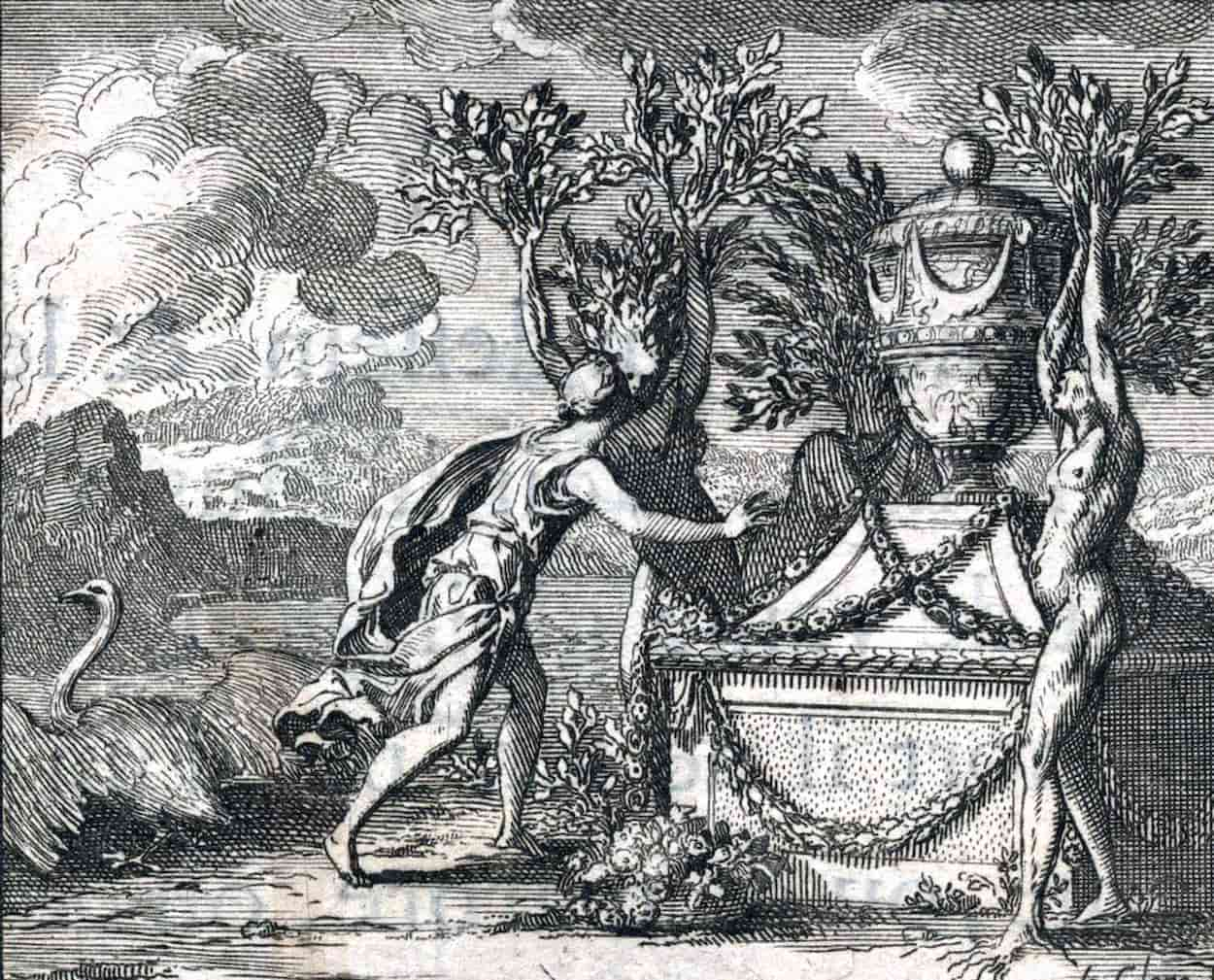
- 2. Crossed Knees at the Birth of Heracles (Galinthias the Weasel): When the mortal princess Alcmene went into labor in Thebes with Zeus’s son Heracles—whom Zeus had boasted would rule over Mycenae—Hera dispatched Eileithyia to sit outside Alcmene’s bedroom door with her legs crossed tightly at the knees and her fingers locked together in a knot over her knees. Through sympathetic magic, as long as the goddess kept her limbs and fingers knotted shut, Alcmene’s womb remained locked for seven days and nights! Seeing her mistress dying in agony, Alcmene’s clever red-haired servant maid, Galinthias, ran out into the hallway and shouted a brilliant lie: “Rejoice! By the grace of Zeus, Alcmene has just given birth to a baby boy!” Startled in shock, Eileithyia jumped up and **uncrossed her hands and knees**—instantly breaking the spell so Heracles slid safely into the world, though the angry goddess punished the clever maid Galinthias by turning her into a household weasel (or polecat)!
Torches, Loosened Knots, and Roman Lucina
In Greek art and inside her famous hillside sanctuary at Olympia (where a live serpent was tended inside her inner shrine) as well as her temples in Athens, Argos, and Delos, Eileithyia was depicted as a draped woman holding a blazing torch high in one hand—symbolizing the “coming into the light of day” of the newborn infant, as well as the burning pain of contractions—while holding her other hand out with open, spread fingers to gesture for an easy, unlocked delivery.
Because of Eileithyia’s myth, when a real woman went into labor in an ancient Greek or Roman home (where the Romans worshiped Eileithyia under the name Lucina or Juno Lucina, “She Who Brings Children into the Light”), midwives obeyed a strict rule: every single knot in the house had to be untied, every belt unbuckled, the mother’s hair unbraided, and nobody sitting in the house was allowed to cross their legs or interlace their fingers until the baby cried aloud and a grateful family hung a terracotta figurine or woven baby-garment inside Eileithyia’s temple.