The term “Hyakki Yagyo” in Japanese folklore refers to the phenomenon where a multitude of demons and supernatural creatures roam about during summer nights. Encountering the Hyakki Yagyo was feared, as it was believed to lead to death or abduction. This phenomenon is a recurring theme in Japanese literature and art, inspiring various works. This article will delve into the origin, legends, and artistic representations of the Hyakki Yagyo.
—> The Hyakki Yagyo includes a diverse array of supernatural creatures, such as Tengu (bird-like creatures), Kappa (water imps), Kitsune (fox spirits), Yurei (ghosts), and many others. Each creature has its own role and characteristics in the night parade.
Origin of the Hyakki Yagyo
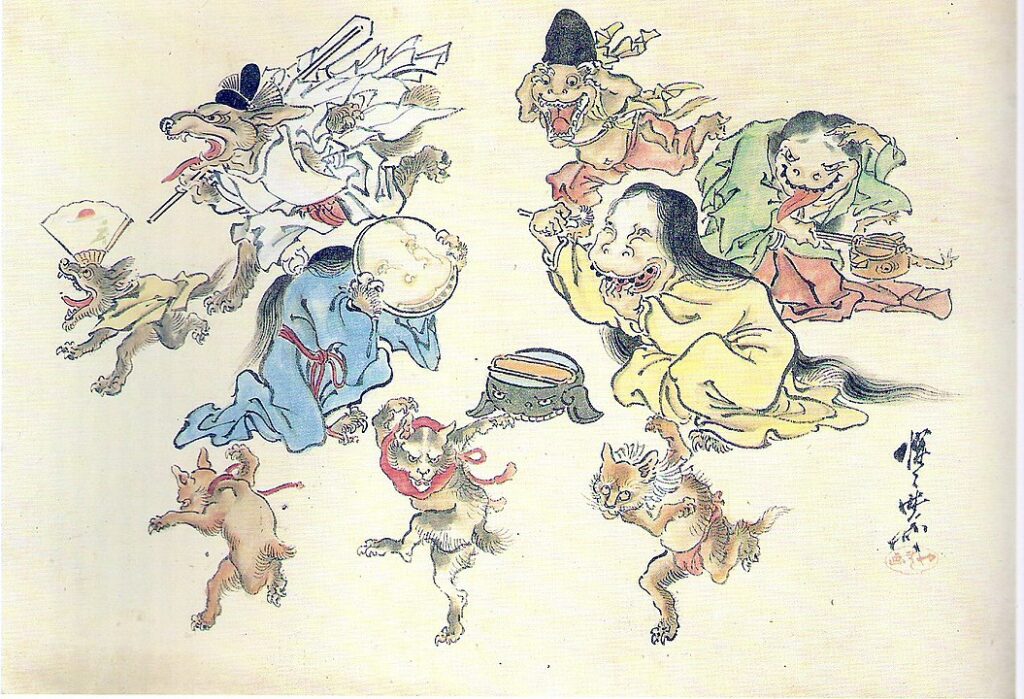
The origin of the Hyakki Yagyo is believed to stem from the story of “Bai Gui Ye Xing,” found in the ancient Chinese classic “Liezi.” According to this tale in “Liezi,” a person walking on a road at night encounters a procession of one hundred different kinds of demons. This narrative made its way to Japan, evolving into a term used to describe the wandering of demons and supernatural beings.
Furthermore, the Hyakki Yagyo is linked to the Japanese calendar. The twelve zodiac signs in Japan were used to determine specific days in each month. These days were referred to as “Night Parade of One Hundred Demons Days,” believed to be when the Hyakki Yagyo would occur. The following is a list of these days:
- January-February – Rat (Ne) days
- March-April – Horse (Uma) days
- May-June – Snake (Mi) days
- July-August – Dog (Inu) days
- September-October – Sheep (Hitsuji) days
- November-December – Dragon (Tatsu) days
On the Hyakki Yagyo, nobility and others refrained from nighttime outings and recited sutras to ward off the harm associated with the Hyakki Yagyo. One particularly well-known sutra was “Katashihaya, Ekasenikurini, Tamerusake, Teehi, Ashiehi, Wareshikonikeri,” signifying that the recipient is intoxicated with alcohol. Being intoxicated was considered distasteful to demons and supernatural beings.
The Legend of the Hyakki Yagyo
The legend of the Night Parade of One Hundred Demons is frequently described in Japanese folktales and collections. Here are representative accounts from various sources:
In the “Konjaku Monogatari” (Anthology of Tales from the Past), during the Jogan era (859–877), Fujiwara no Yoshisuke, the eldest son of the Right Minister, and Dainagon Sadaijin Fujiwara no Tsuneyuki, while on his way to his lover’s place, encountered a group of about a hundred demons walking from the direction of the Tohdai-ji Temple along the eastern road near Mifuku Gate. Wearing a garment stitched with the sacred Shingon Buddhist mantra (Sanskrit: Dharani) that Yoshisuke’s wet nurse had obtained from an ascetic, the demons noticed and fled.
The “Jiang Tanchao” recounts an incident when the poets Ono no Takamura and Fujiwara no Takayasu were traveling together. Takamura quickly perceived the presence of the Night Parade of One Hundred Demons. Though Takayasu himself was unaware, the Dharani was sewn into his attire. Anticipating this, Takamura deliberately led the group into the path of the demons. Takamura sarcastically remarked to Takayasu, “I have respectfully introduced you,” after the Dharani’s power drove back the Night Parade.
In the “Uji Shui Monogatari” (Tales of Uji Gathered), a certain ascetic encountered a group of a hundred supernatural beings near the Ryuusen-ji Temple in Settsu. By praying to Fudo Myoo, he escaped unharmed.
The “Kohon Setsuwa Shu” (Collection of Old Tales) narrates an event in the tenth year of Tenryaku (956), where Fujiwara no Morosuke encountered a procession of the deceased who held resentment against the Fujiwara clan, led by Soga no Iruka. Reciting the Shingon Buddhist mantra, Morosuke avoided harm.
In these tales, the protective power of the Shingon Buddhist mantra, particularly the Shingon Dharani, played a crucial role in averting danger during encounters with the Night Parade of One Hundred Demons.
—> The Hyakki Yagyo has been a popular theme in Japanese art and literature for centuries. It has been depicted in paintings, ukiyo-e prints, literature, and other forms of artistic expression, showcasing the creativity and imagination of Japanese artists.
Works of Hyakki Yagyo
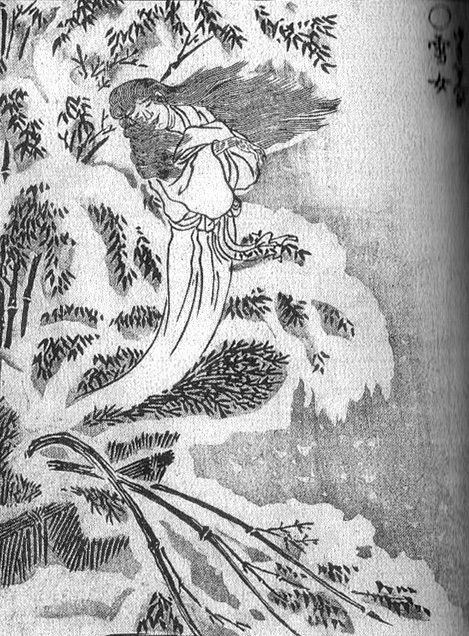
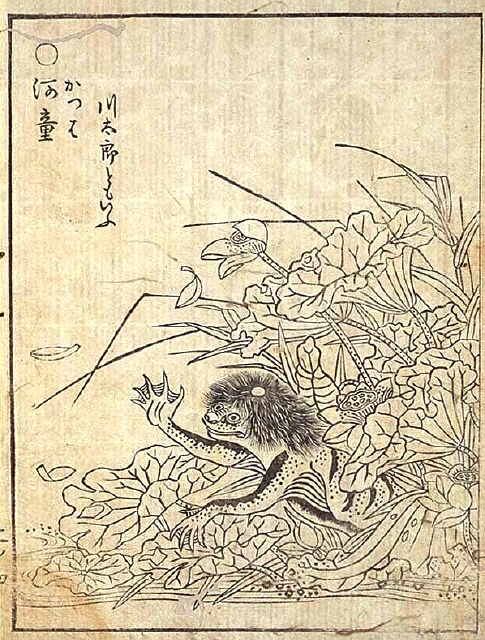
The Hyakki Yagyo is depicted in many works of Japanese art. The most ancient and famous example is the 16th-century handscroll painting called the “Hyakki Yagyō-zu,” mistakenly attributed to Tosa Mitsunobu. This scroll is housed in the Shajuan Collection at Daikoku-ji Temple. There are several other handscrolls known as “Hyakki Yagyō Emaki,” each depicting various yokai or supernatural creatures.
During the Edo period, Toriyama Sekien published a yokai illustration book titled “Gazu Hyakki Yagyō” (The Illustrated Night Parade of One Hundred Demons). Despite its title, the work individually introduces yokai without depicting them in a procession. Nevertheless, Sekien’s depictions had a significant influence on shaping the image of the Night Parade of One Hundred Demons.
The theme of the Hyakki Yagyo also appears in contemporary literature and manga. For instance, Natsuhiko Kyogoku’s novel series “Hyakki Yagyō Series” revolves around a detective solving cases related to the Night Parade of One Hundred Demons. Kazuko Inoue’s manga “Hyakki Yagyō Shō” portrays the daily lives of the leader of the Night Parade of One Hundred Demons, Nura Rikuo, and his companions. Yuki Midorikawa’s manga “Natsume’s Book of Friends” features the Hyakki Yagyo as well.
What Kind of Yokai Are There in Hyakki Yagyo?
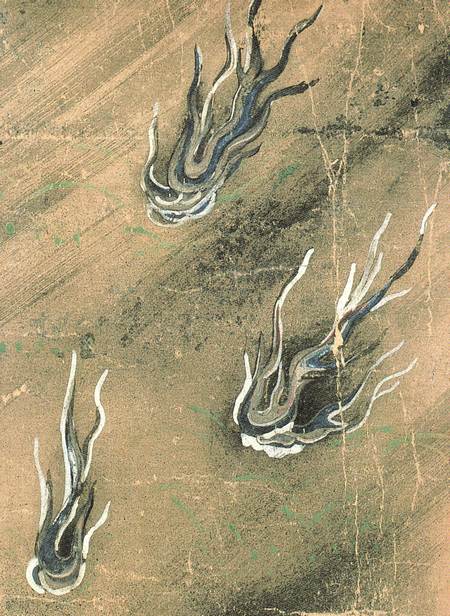
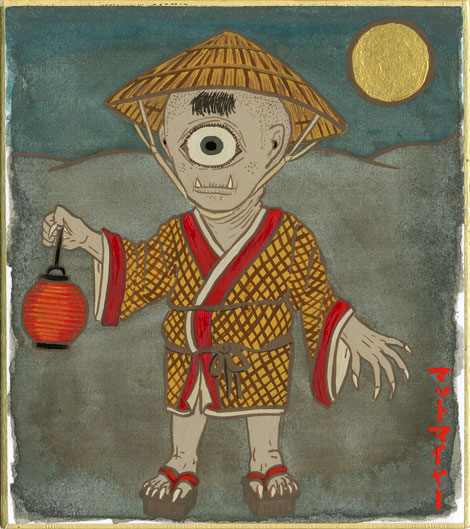
In the Hyakki Yagyo or the Night Parade of One Hundred Demons, various types of yokai, supernatural creatures in Japanese folklore, are said to participate. For example, the following yokai are believed to be part of the Night Parade:
- Tengu: A yokai that resides in the mountains, taking the form of a bird or a human. It is said to possess high abilities and knowledge.
- Kappa: A yokai with a turtle-like appearance that resides in rivers, with a dish on its head. It has a preference for water and may attack humans or animals.
- Nekomata: A yokai that is said to be a transformed cat that has lived for a long time, characterized by a forked tail. It can transform into a human, breathe fire, and exhibit other supernatural abilities.
- Kitsunebi: A yokai in the form of a fox’s transformed fireball, which deceives humans on night paths.
- Yuki-onna: A beautiful female yokai that appears in the snow, known for seducing or freezing human males.
- Nurarihyon: Considered the leader of yokai, it takes on the appearance of an elderly man. It is immortal and can transform into various other yokai.
- Hitotsume-kozō: A yokai with just one eye in the center of its face. It is said to have originated in China.
- Nuppeppō: A yokai with the appearance of an obese woman who appears in bathhouses and attacks humans.