Fragarach is a legendary sword from Irish mythology. The sword is known by many names such as “The Whisperer”, “The Answerer”, or “The Retaliator.” Legend has it that the gods crafted it for Nuada, the first high king. The sword was meant to be wielded atop the Lia Fail (“Stone of Destiny”), and as it was, the Fragarach whispered to the Lia Fail’s roars. Fragarach got its name “Answerer” since it was believed that with it at their neck, no one could move or lie. This sword could summon the wind at will and pierce through any man-made barrier, leaving injuries from which no man could ever fully heal.
-> See also: Carnwennan: King Arthur’s Dagger With a Special Power
| Fact | Description |
|---|---|
| Also Known As | The Whisperer, The Answerer, The Retaliator |
| Origin | Irish Mythology |
| Owner | Nuada, the first high king |
| Forged by | The gods |
| Powers | At its throat, no one could move or tell a lie. It could command the wind and cut through any shield or wall. Its wounds were always fatal. |
| Significance | It was meant to be wielded only by those who stood above the stone of destiny (the Lia Fail), which roared while the sword whispered in response. |
Fragarach in Mythology
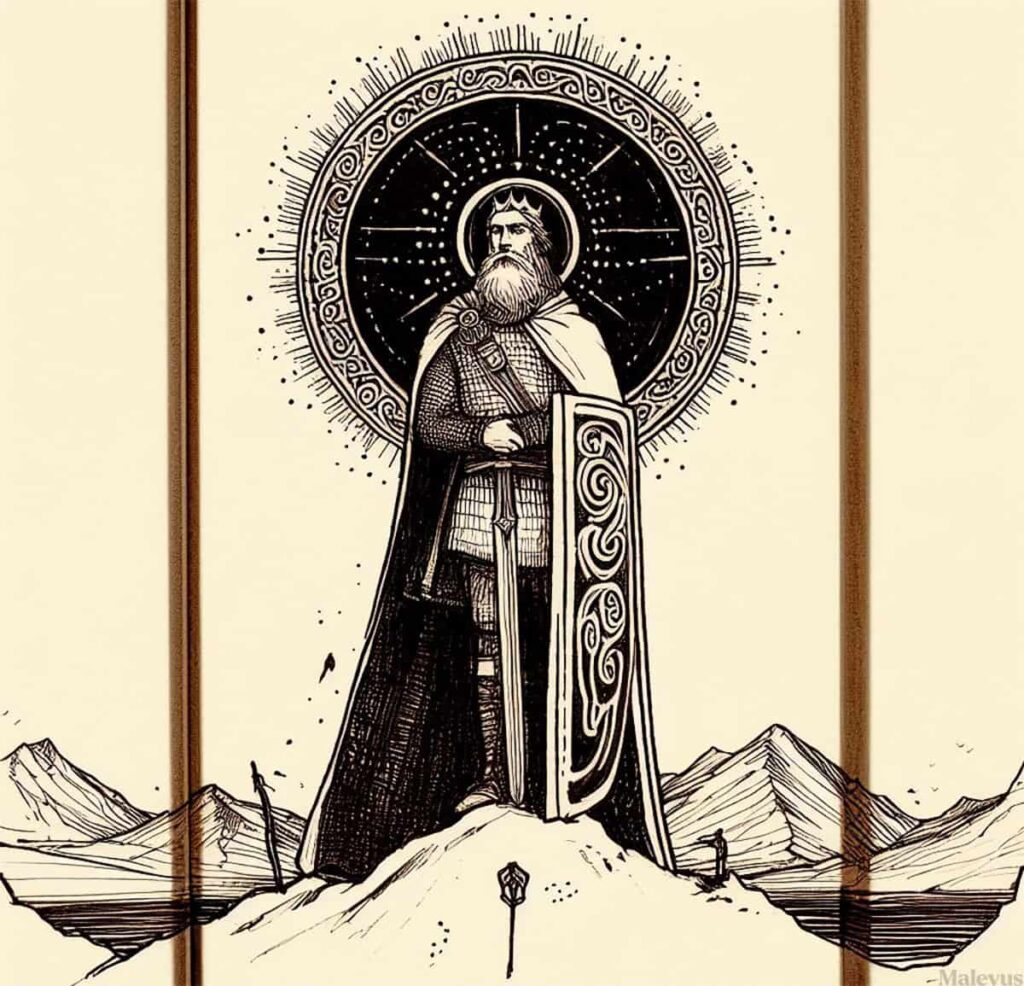
According to Irish mythology, Nuada was the Tuatha Dé Danann‘s—an Irish supernatural race—first king. His epithet Airgetlám meant “silver hand/arm”. The most famous story about Nuada is the one in which Dian Cécht—an Irish god of healing—mysteriously heals him after he loses an arm in battle, along with his kingdom.
When Nuada lost an arm in the First Battle of Mag Tuired, this rendered him unfit for the position of high king. Nuada appointed the skillful warrior Lugh, also a member of the Tuatha Dé Danann, as the de facto monarch in preparation for the Second Battle of Mag Tuired.
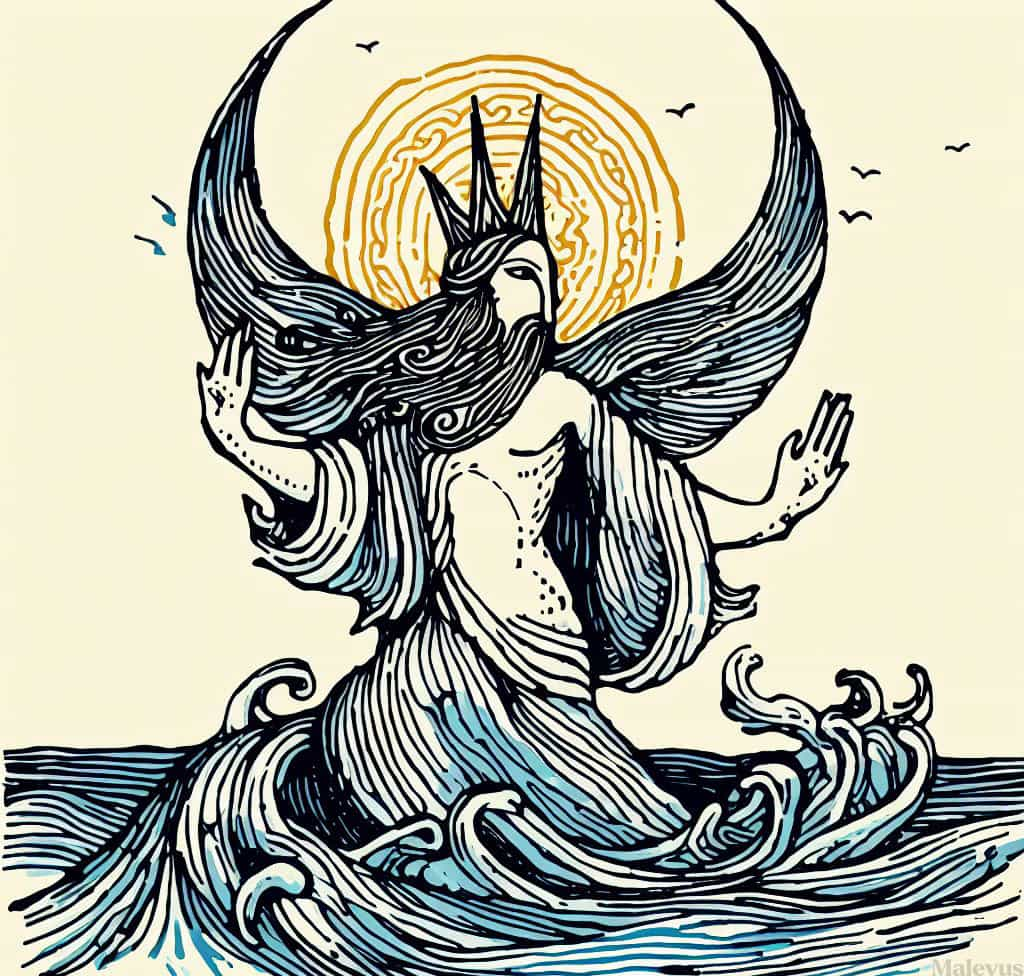
A warrior, deity, and king of the Otherworld in Irish mythology, the sea god Manannan Mac Lir gave Lugh a spear and a sling, which he used to vanquish the Fomorians and their ruler Balor. Depicted as sea raiders and giants, Fomorians were direct opponents to the Tuatha Dé Danann since they were also a supernatural race, although certain members of both species had children.
At some point during the fight, Nuada bestowed his sword Fragarach on Lugh. It is unclear from the poetry and the Lebor Gabála Érenn (a collection of Irish poems) whether Lugh used the Fragarach throughout the conflict. Lugh was allegedly the adoptive son of Manannan.
The Importance of the Fragarach
Forged by the gods, Fragarach was one of the Four Treasures of Ireland. They were supposedly transported to Ireland by Tuatha Dé Danann from the four island towns of Murias, Falias, Gorias, and Findias. These four treasures of the Tuatha Dé Danann are magical artifacts mentioned in the mythological cycle of early Irish literature.
The sword was eventually entrusted to the Ulster hero, Cú Chulainn, by Lugh himself. Later, it ends up in the hands of Conn of the Hundred Battles, the semi-legendary High King of Ireland. Among the mortals adored by the Irish, Cú Chulainn was a hero and a fighter whose stories (including the Fragarach) were revived by the Gaelic poet Sechan Torpeist in the seventh century.
Also known as the “Sun God,” Lugh possessed many magical items like Fragarach according to Middle Irish redactions of the Lebor Gabála. Along with the sword, the sea deity Manannán bestows upon him things like the horse Enbarr, the boat Scuabtuinne (“Wave-Sweeper”), his armor, and his helmet in the late narrative Fate of the Children of Tuireann.
According to one theory, looking at the way the name “Fragnarach” reads, it could potentially allude to the Norse apocalypse, Ragnarök.
What is Lia Fail?
The Fragarach was meant to be wielded atop the Lia Fail (“Stone of Destiny”), and as it was, the Lia Fail roared, and the sword whispered. Lia Fáil is a relic in Irish mythology, located in County Meath on the Hill of Tara. This stone was used to crown the King of Tara, who was also known as the High King of Ireland. When a monarch who was determined by fate sat upon the stone, it was said to sing or roar.
According to legend, the stone would howl with delight whenever the legitimate High King of Ireland placed his foot on it, confirming the stone’s magical properties. Up until Muirchertach mac Muiredaig, who reigned circa 500 AD, the stone was used to crown every king of Ireland. The ancient High Kings of Ireland’s coronation ceremony relied heavily on the stone.
Characteristics of Fragarach
The Fragarach is said to have several powers:
- Once drawn, it had the power to drain the strength of all those against whom it was raised, leaving them weak and vulnerable.
- When given a mental command, it moved from the scabbard to the user’s hand on its own.
- When pointed at someone’s throat, they would be compelled to speak the truth (hence the sword’s name “She Who Gives Answers”).
- Capable of penetrating any type of armor with a single blow.
- Fragarach has the ability to calm the winds according to the user’s desire.
- It also seems that the sword had a curse or poison that would cause its victims to die quickly after being even slightly injured.
Modern References to the Fragarach
In Literary
- In “The Riders of the Sidhe” by Kenneth C. Flint, Manannán Mac Lir wields the sword Fragarach, acknowledging with Lugh Lamhfada that he took it “on loan” and awaits its rightful owner faithfully.
- Fragarach is featured in the science fiction series “The Keltiad” by Patricia Kennealy Morrison, wielded by several main characters.
- In the visual novel “Fate/hollow ataraxia” and the manga “Fate/kaleid liner Prisma Illya,” the sword is wielded by the character Bazett Fraga McRemitz. If the opponent starts their attack, the sword turns back time, and the enemy is killed before the attack.
- In the novel “A Wizard Abroad” by Diane Duane (part of the Young Wizards series), Annie Callahan uses Fragarach during the reconstruction of the Second Battle of Magh Tuireadh. In addition to its common use, Fragarach can open gateways to alternate realities, where the Fomorians and the Tuatha De Danaan reside.
- The sword is also featured in “The Iron Druid Chronicles” series.
In Games
- In Dungeons and Dragons, specifically in the module “The Temple of Elemental Evil,” Fragarach appears as a sword that never misses any ranged attack and responds to each blow with a counter of its own. It reappears in the 4th edition as a sword crafted by Thrombolg, a powerful Fomorian lord, for the purpose of killing.
- In the game Mabinogi, Fragarach is a primary weapon used by Lugh Lamhfada and Morgant. It has three different perspectives.
- In the game Vindictus, a prequel to Mabinogi, the sword was initially wielded by Lugh Lamhfada, but the player acquires it after his death, occasionally appearing on the battlefield as a Deus ex machina.
- In the PS3 game Folklore (2007), a weapon named ‘Answerer’ can be obtained in the fourth altar, ‘Endless Corridor.’
In TV Shows and Movies
- In the manga Project ARMS, characters Keith Green and his genetic clone, Takashi Takatsuki/James Huang, use a spatial cutting technique called “Answerer.”
- In the Digimon series, Fragarach is a greatsword wielded by Slayerdramon, a Mega-level Dragon Man Digimon.