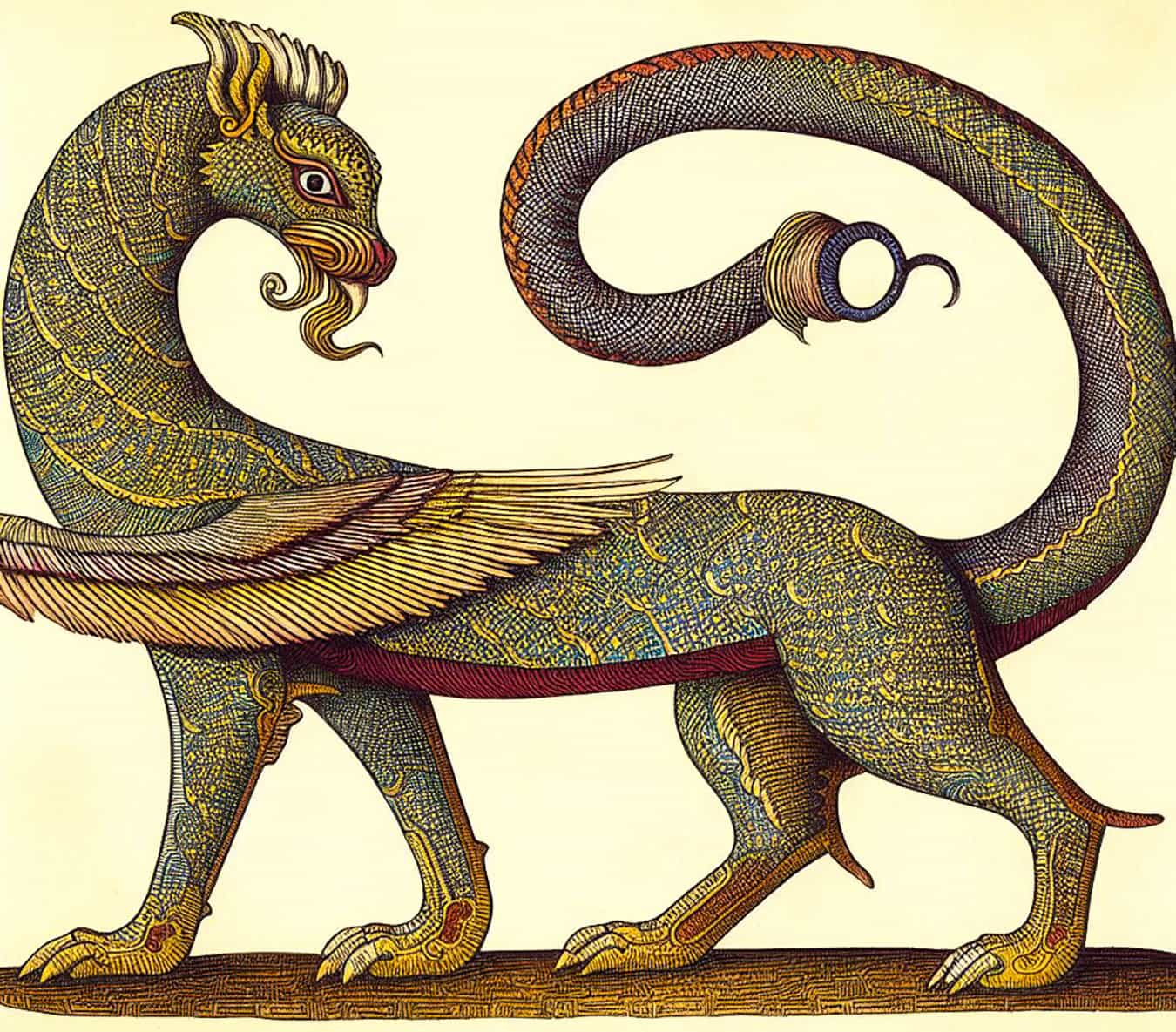
The first mentions of unicorn-like creatures can be found in the art of Mesopotamia, as well as in ancient myths of China and India.
In Greek literature, the earliest description dates back to the 5th century BCE. It was provided by Ctesias, who was captured in Persia and served as the personal physician to King Artaxerxes II. Ctesias wrote that wild donkeys the size of horses lived in India. They had white bodies, purple heads, blue eyes, and a long horn on their foreheads. People who drank from this horn believed they were protected from stomach illnesses, epilepsy, and poisoning. However, Ctesias had never been to India. He based his accounts on stories from visitors to the Persian court. Most likely, the “wild donkey” he described was actually an Indian rhinoceros.
Unicorns even made an appearance in the Bible — though this was likely due to a mistranslation. In the Old Testament, a strong and untamable creature called reem was mentioned, which was translated as a unicorn in one version. However, this likely referred to a wild ox, as modern translators tend to prefer that interpretation.
Why Unicorns Became Popular in the Middle Ages and the Renaissance
Over time, stories about the creature accumulated more details. The unicorn is mentioned in the Physiologus bestiary, which inspired medieval authors. They compiled collections of articles in which the characteristics of animals, plants, and minerals were given symbolic interpretations. The unicorn was described as a strong and fierce creature that could only be tamed by a virgin. Upon seeing her, the animal would leap into her lap, and she could feed it milk before taking it to the king’s palace. Based on this myth, the unicorn came to symbolize Christ, who entered the womb of the Virgin Mary.
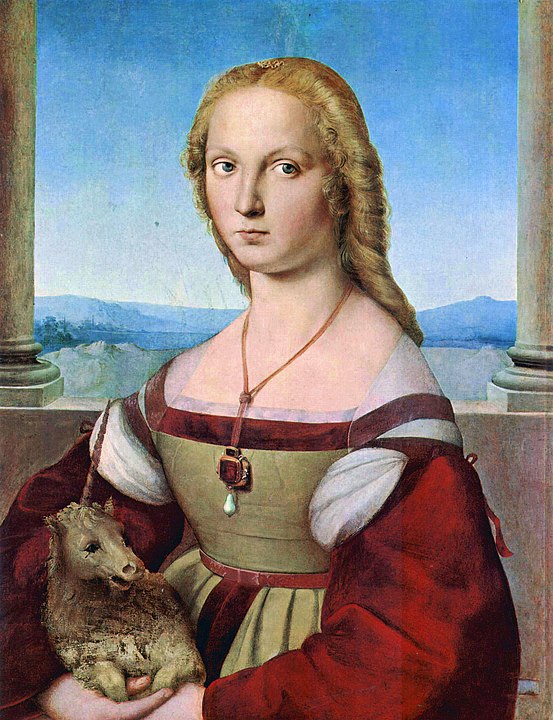
During the Renaissance, images of unicorns gained popularity. For example, a cute unicorn appears in Raphael Sanzio’s painting Young Woman with Unicorn, symbolizing purity. Another well-known work with the same theme is a series of 15th-century paintings. In five tapestries, the artist depicted the five senses — touch, taste, smell, hearing, and sight.
The meaning of the sixth, inscribed with “To My Only Desire,” remains a mystery. Some believe that the girl and the unicorn symbolize courtly love.
There was also an alternative interpretation of the unicorn’s image; for instance, Leonardo da Vinci suggested that the creature represented sexual desire. The great artist, unknowingly, anticipated the views of modern scholars, many of whom believe the unicorn’s origins are tied to pagan fertility cults, where it likely symbolized masculinity.
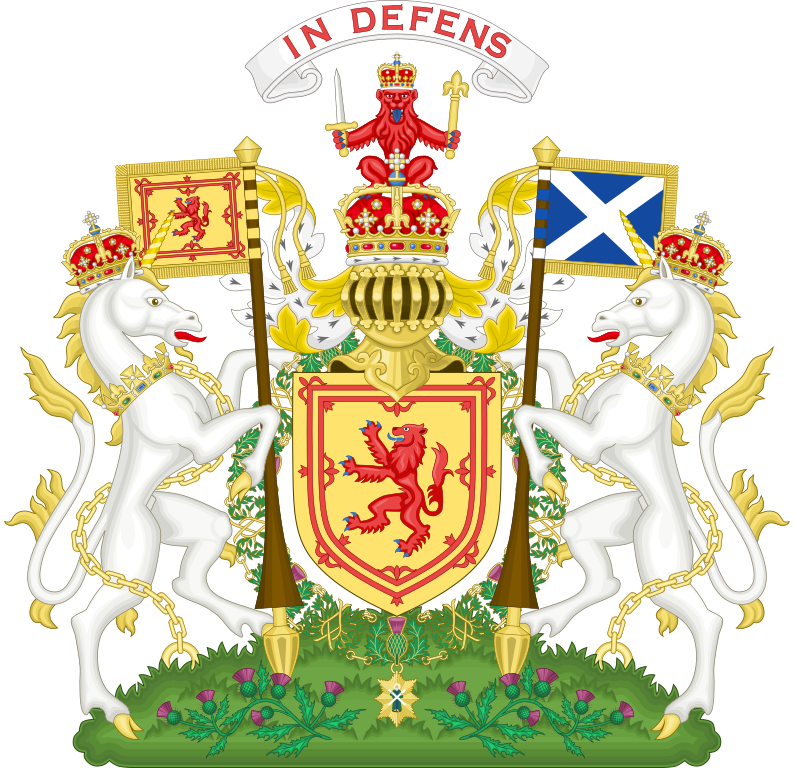
Additionally, the unicorn was popular in heraldry. For example, it can be seen on the royal coat of arms of Scotland. In the Middle Ages, unicorn horns were also traded — though in reality, they were narwhal tusks.
How Unicorns Became Established in Popular Culture
Over time, unicorns shed their religious symbolism and moved into secular literature. They can be found in works like The Tempest by William Shakespeare and Gargantua and Pantagruel by François Rabelais. As unicorns became a staple of children’s fairy tales, their fame grew exponentially. For instance, the mythical creature appears in The Brave Little Tailor by the Brothers Grimm, Alice in Wonderland by Lewis Carroll, and later in The Chronicles of Narnia, where C.S. Lewis retells biblical stories in the fantasy genre.
The world owes the image of cute unicorns to American entrepreneur Lisa Frank, who founded a company in 1979 that produced school supplies. Children began owning notebooks and pencil cases adorned with bright unicorns, pandas, and dolphins.
Unicorns have also appeared on television. A famous example is the Harry Potter film adaptations. In J.K. Rowling’s works, the unicorn is portrayed in its classic form: in one chapter, readers learn that only girls can approach unicorns in the wizarding world.
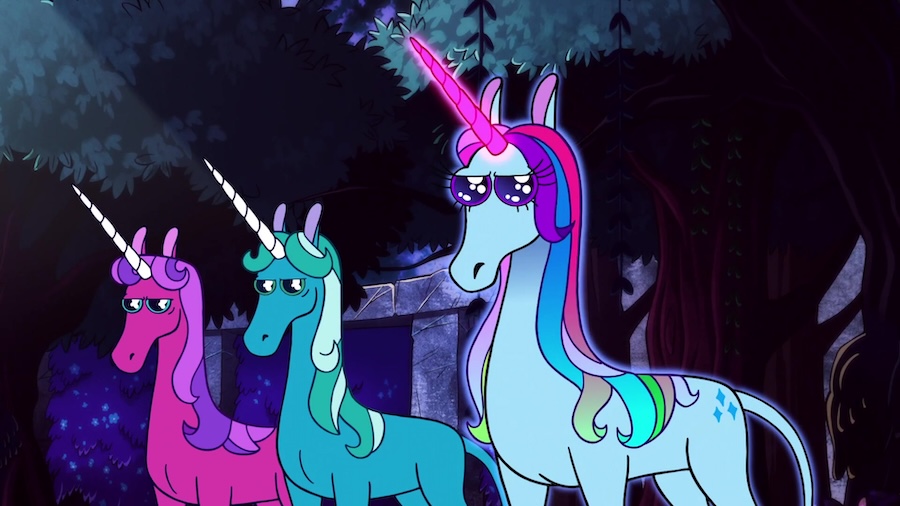
Unicorns also exist in the Gravity Falls universe. However, in this animated series, they are selfish and lie to people (despite looking cute). In this way, they resemble their predecessors from Leonardo da Vinci’s writings.
Social media and marketing have taken the unicorn phenomenon to new heights. The popularity of unicorns surged again in 2017 when Starbucks released the Unicorn Frappuccino. Photos of the pink and blue drink quickly flooded the internet. Toy brands now produce unicorns in all sizes and forms, including the Poopsie unicorn that comes with a potty and diapers. Moreover, Hasbro’s unicorn toys became the stars of the popular animated series My Little Pony: Friendship Is Magic.
Could Unicorns Have Existed in Reality?
Yes and no. Scientists have not found any evidence that horses with a horn existed in the past. There were, however, attempts at hoaxes. In the 17th century, a unicorn skeleton was allegedly found in Quedlinburg. But later it turned out that it was assembled from the bones of various animals.
As for horses, there are several breeds that have small bony protrusions on the front of their skulls, resembling a horn. For example, they can be found in Moyle, Datong, and Andalusian horses.
However, members of these breeds tend to have more muscular bodies than their counterparts and do not resemble the graceful unicorns of legend. Moreover, the bony protrusions are hardly comparable to a large spiral horn.
Horses simply do not need horns. When animals face a threat, they prefer to run away from danger. A heavy horn could slow them down. If escape is impossible, horses use other means of defense: they bite, rear up, and kick.
Other members of the odd-toed ungulate order, such as rhinos, do have horns. Surprisingly, despite their external differences, they are relatives of horses. It is likely that ancient authors were describing rhinos in their texts. In this sense, unicorns exist even today—they just don’t look the way we imagine them.