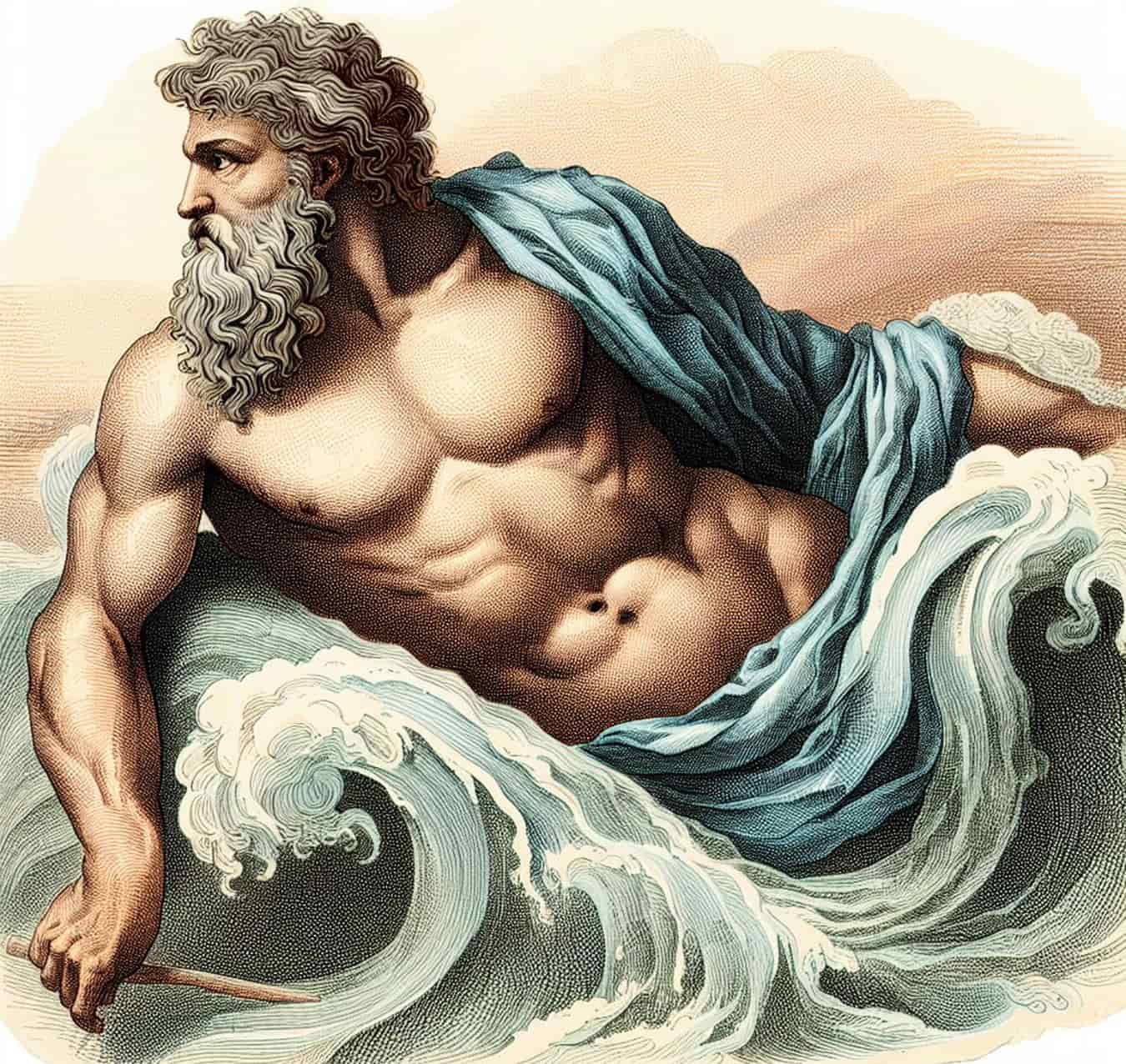
Greek mythology describes Borysthenes as a river god (of the present Dnipro River). He was a significant figure in the ancient Greek polis beside the Dnipro (Dnieper) River. The coinage of Olbia featured the likeness of Borysthenes. He was shown as a bearded guy, and a bow in a case and an axe were often seen on the other side of the coin.
On the island of Berezan, a colony called Berezanskaya (Borysthenes) was also given its name after the river goddess.
Since he was the Scythian god of the river Berezan, his grandson was another deity called Targitai, the progenitor of the Scythians. Thus, Targitai was linked with Borysthenes via a syncretization that was unique to the ancient Greeks and, to some degree, that age in general. According to the Greek view, Targitai was the son of a river naiad, Borysthenes’s daughter. A naiad was a female spirit presiding over water bodies.
Thoas’ father is also Borysthenes. Thoas was a king of the Taurians, a barbaric tribe in Crimea, in Greek mythology.
It was debated for a while which river Borysthenes was associated with (in addition to the Dnipro, other major rivers, most notably the Dniester, were taken into consideration). Contemporary knowledge clearly links the Dnipro with Borysthenes.

The first proof of this was that Herodotus referred to the Borysthenes as the second greatest of the “Scythian rivers” (the Istr-Danube being the largest river) in his “History.” Simultaneously, he refers to it as the second most valuable and prolific water resource globally, after the African Nile, and the most beneficial in this region.
Who Exactly Was Borysthenes?
The Scythians revered the river Borysthenes (Βορυσθένης), which is now likely the Dnipro, as a deity. Although his function as the father of the primordial Earth-and-Water Mother shows that he was more than just a river deity, he was also the father of the Earth-and-Water goddess Api.
The ancient Scythian form from which the name Borysthenes was believed to be derived was Baurastana, which translates to “yellow place.”
But the name Baurustana also means “place of beavers.” This name was associated with the beaver skins that the Iranian water goddess Anahita wore. Her epithet, ap (“water” in Avestan), was associated with the name of the earth-and-water goddess Api, who was the daughter of the deity Borysthenes. Their namesake was “water.”
On Pontic Olbia coins, the deity Borysthenes was shown with the characteristics of a typical Greek river god, complete with horns atop his head and a beard.
History of Borysthenes as a Geographic Place
Typically, one looks for the word’s origins in the Iranian languages, which included the Scythian and most likely the Cimmerian languages. According to one theory, the name comes from the Iranian “wide, broad, wide place.” Another theory on the Indo-Aryan hypothesis explaining the origin of the Maeotians and Taurians suggests that the Indo-Aryan “high place” might be where this term originated.
In the third-name origin theory, the term “northern strait” is derived from ancient Greek (Ionian or possibly older) and, the Hellespont (modern Dardanelles) is called Borysthenes by Hesychius and Stephanus of Byzantium.
The name might then have been changed to refer to the river, which the Greeks first mistook for a strait due to its breadth. Advocates of this hypothesis point to Bosporus Cimmerian as an example, which became the “namesake” of Bosporus, which was later referred to as Thracian to prevent confusion.
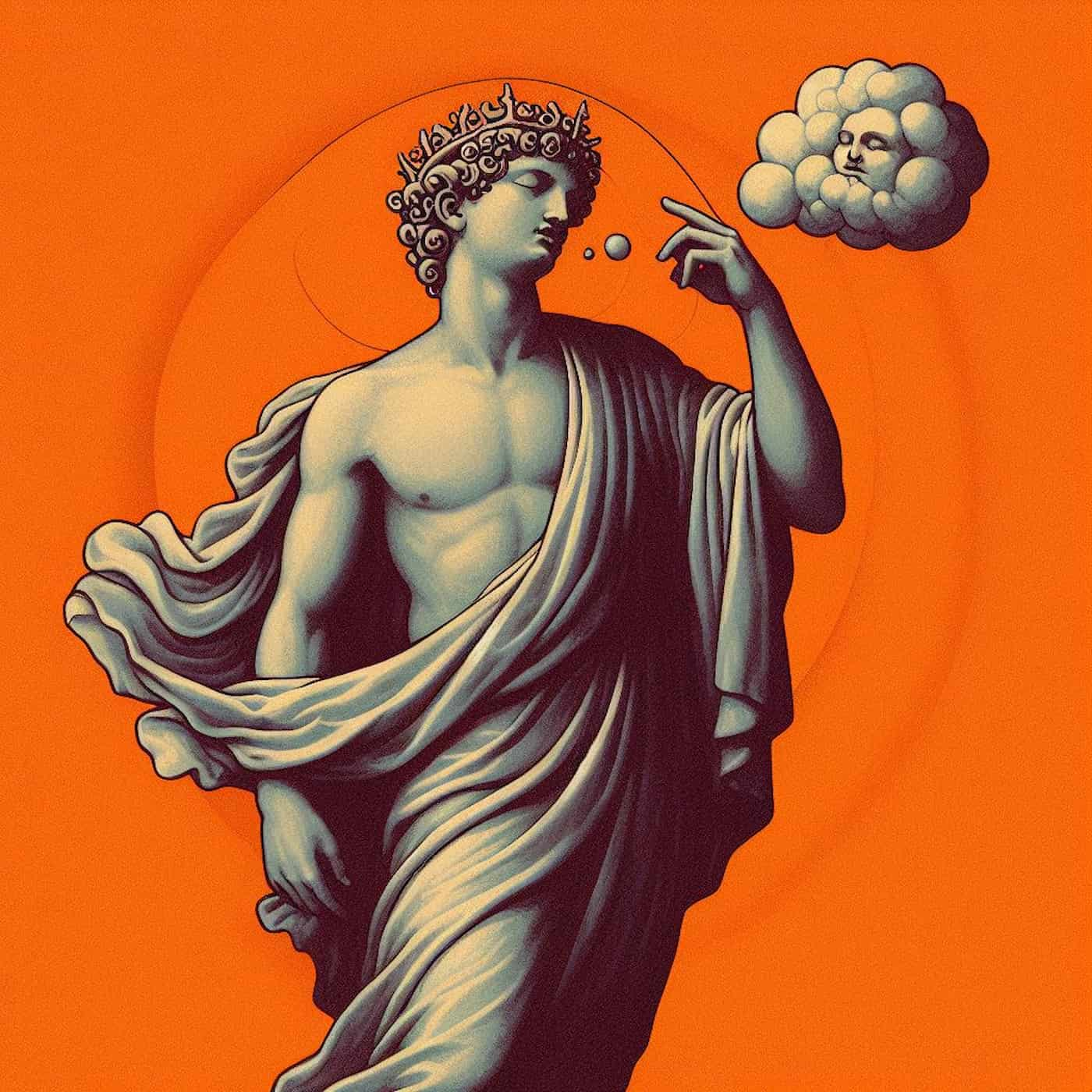
Apollo has Borysthenis as His Muse
Poet Eumelus of Corinth made reference to “Borysthenis”. She was identified by the classical interpretation as one of Borysthenes’ nymphs, or naiads.
It seems that accounts of Apollo’s journeys to the northern limits of the Ecumene (inhabited land) coincide with the emergence of this muse in Greek mythology. These in turn occur concurrently with the earliest Greek expeditions to the northern Black Sea coast.