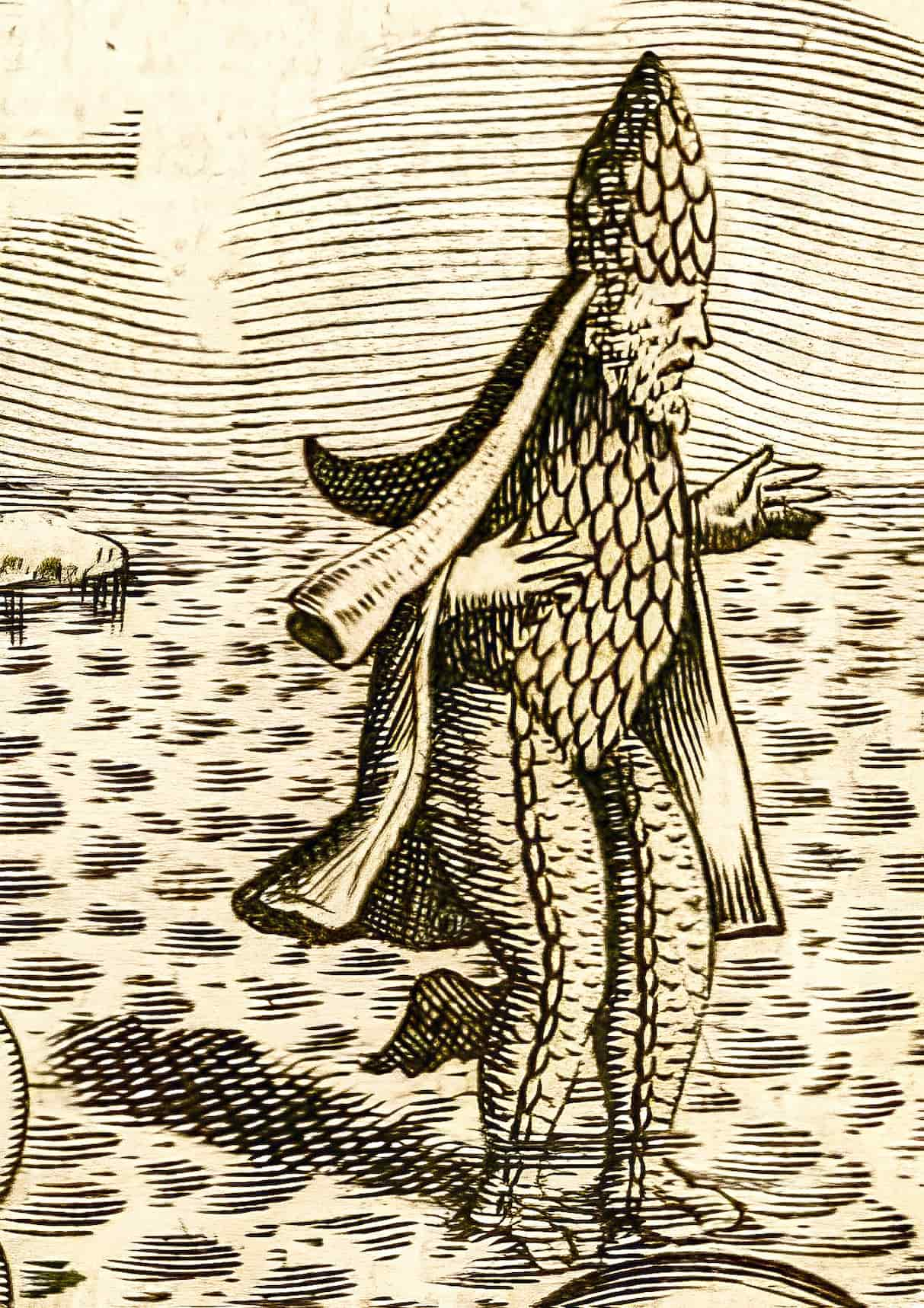
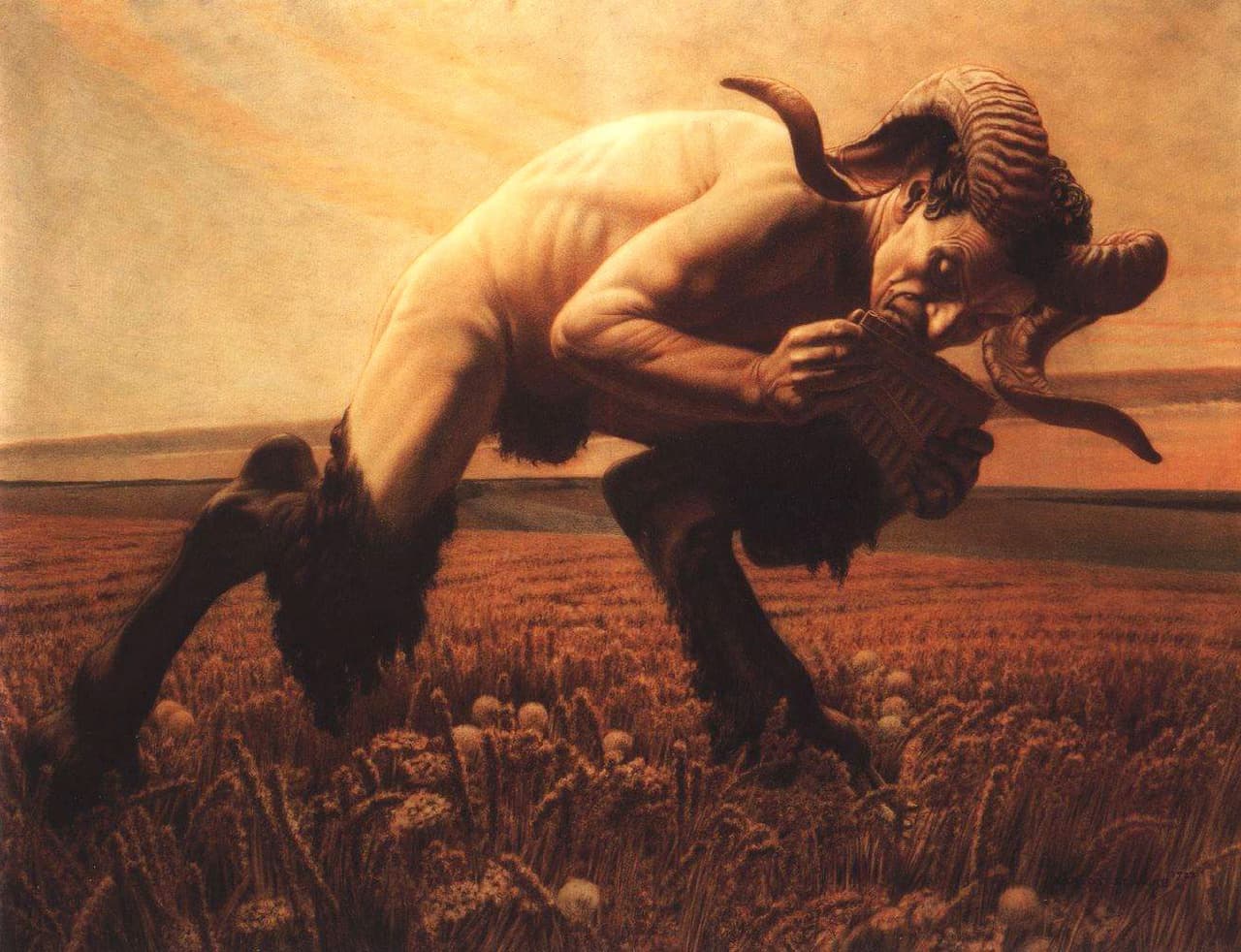
Grýla is a wicked witch in Icelandic folklore who has traditionally been used to scare children. As a troll, she is a child-eater, and Grýla’s main diet consists of disobedient children. At Christmastime, it is said that she comes down from the mountains where she resides to gather a food supply in large sacks. However, she only takes troublesome children; well-behaved ones are safe from her grasp. Therefore, Icelandic children must behave themselves during the Christmas preparations.
The Poems about Grýla and Her Family
There are numerous nursery rhymes, known as “Grýla poems” (Grýlukvæði), that focus on Grýla. A fragment of such a poem exists in the Sturlunga saga, but most were written down in the 19th century.
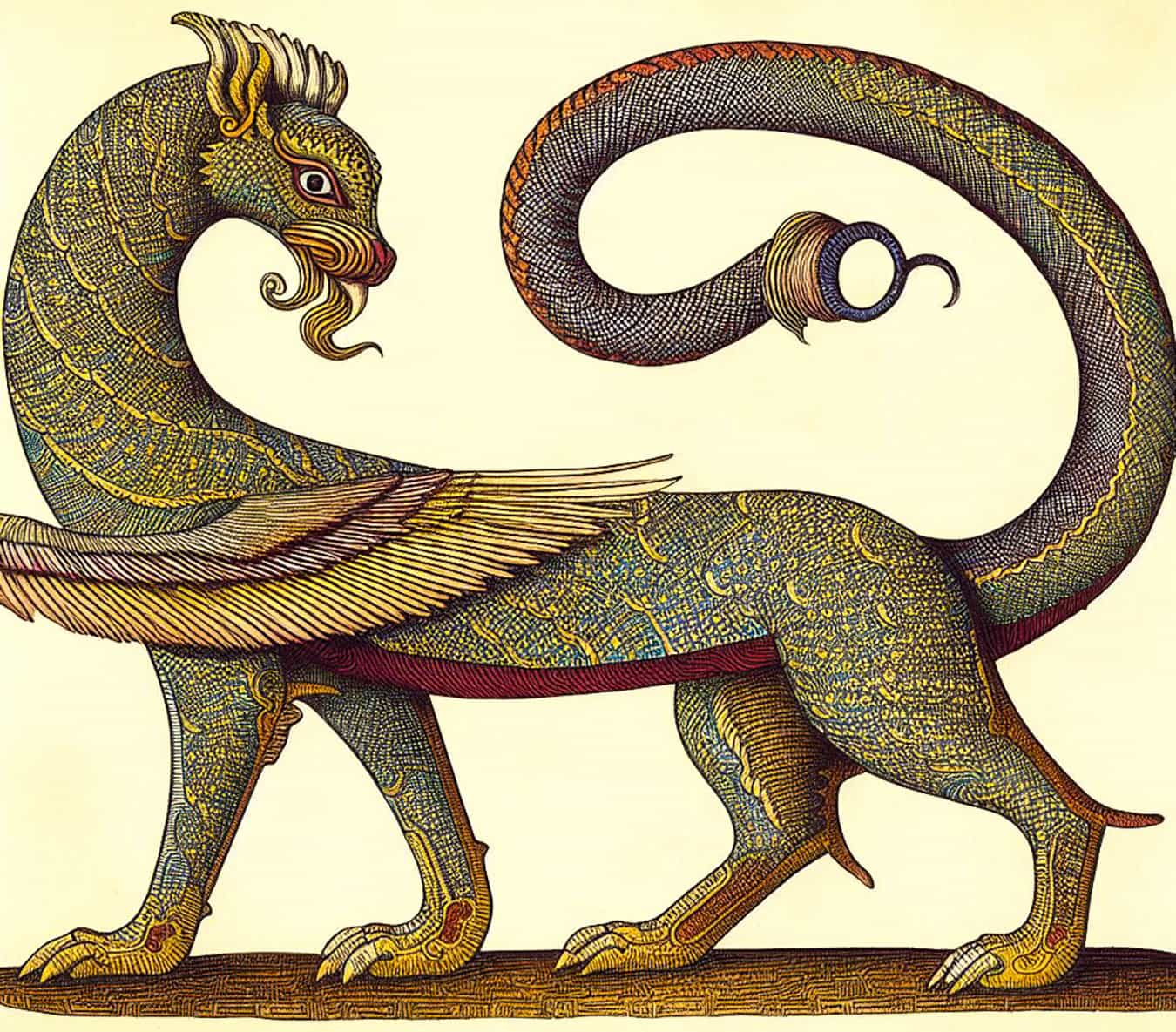
The poems do not provide a consistent description of her appearance – other than that she seems to be easily recognizable. She is said to have multiple heads and eyes both in front and behind. She is equipped with goat horns, a beard, hooves, and tails. Twice she is said to have been married, but when she grew tired of her husbands, she ate them. Her third and current husband is named Leppalúði. He is as wicked as she is but so lazy that he hardly causes any harm.
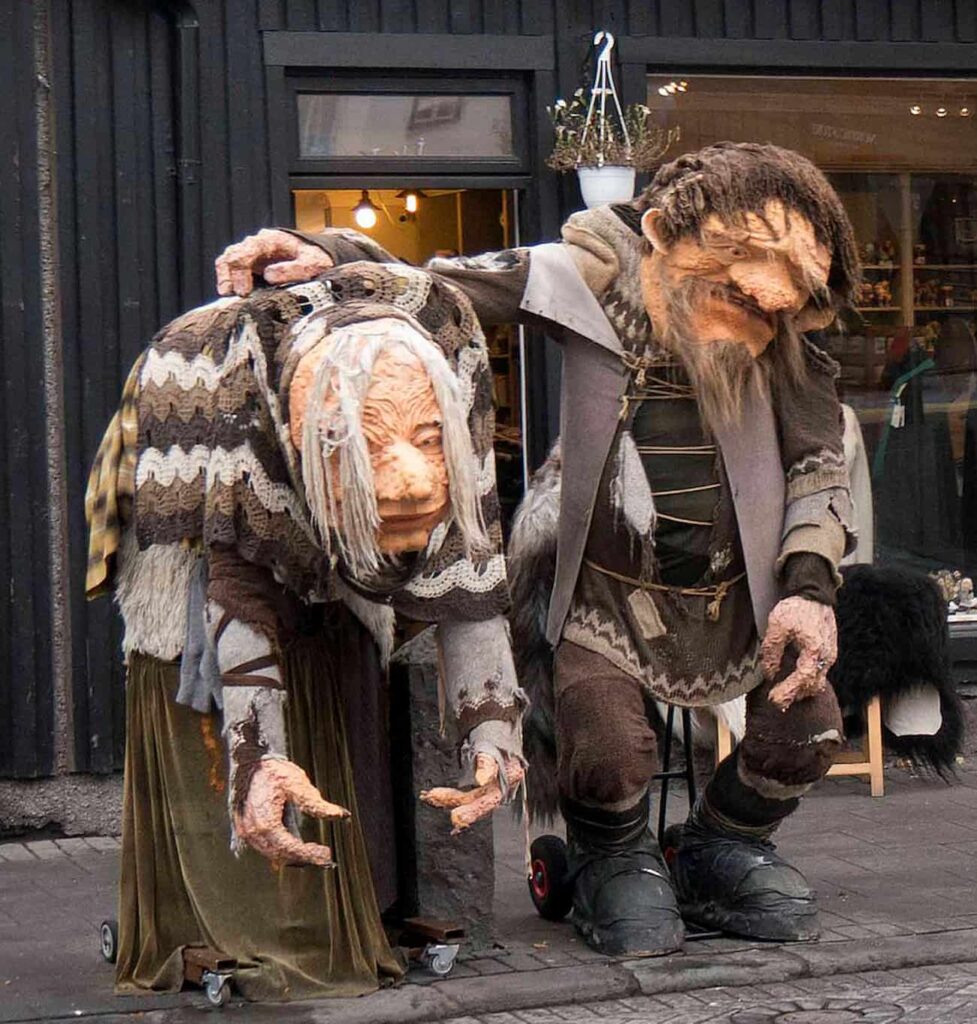
Grýla is said to have countless children. Several rhymes with names of these offspring are found in the poems.
The most famous of her sons are the so-called “Yule Lads” (jólasveinar), who participate in Icelandic Christmas celebrations. Their number has varied over time, but they are now thirteen – the same as the number of Christmas days – and thirteen days before Christmas, they usually start showing up, one for each day. Then they return only to disappear for good on Epiphany.
Grýla holds a prominent place in Icelandic Christmas celebrations, but she is no longer a figure of fear. Moreover, modern depictions show that she has lost all her heads except one. Her pets are said to be the human-eating Yule Cat (jólakötturinn).
There are a total of 72 children associated with Grýla, but from 1862, when the folk tales were published, the number remains at 13. According to some, there are only 9 children who can be attributed to her.
-> See also: 13 Yule Lads and Each of Their Stories
History
In the name-lists appended to Snorri’s Edda, Grýla is mentioned both as a troll woman and a fox, likely because both trolls and foxes have been used to scare children. Grýla is also mentioned in two stanzas in the Íslendinga saga included in the Sturlunga saga. The stanzas can be dated to the years 1221 and 1228, and the first of them contains the oldest description of Grýla:
Here comes Grýla
down to the farmyard
and fifteen tails
she has on herself.
In translation: “Here comes Grýla down to the farmyard, and she has fifteen tails.” This stanza is recited by the chieftain Loptr Pálsson as he rides down with a large following to attack the Breiðabólstaðir farm in 1221. The chieftain thus likens himself to a troll woman, but what is interesting is that he may simply be quoting a nursery rhyme well known to him. If so, the rhyme is preserved in several later records, but of course, we do not know if it looked the same in the 13th century. If it did, it may have had the following continuation:
on each tail she carries a hundred sacks,
and in each sack twenty children.
In a similar poem with a happy ending, however, the children are rescued by “little Valka” who cuts open the sacks with scissors.
Loptr Pálsson’s association with Grýla surely stems from one of his main opponents bearing the name Steingrímr Skinngrýluson – thus, he was the son of a Skinn-Grýla. Just the name “Skinn-Grýla” (which presumably was an epithet) can, according to folklorist Terry Gunnell, suggest a possible explanation for the Grýla figure. Perhaps remnants of pagan Christmas games or pranks persisted in Iceland in the 13th century, where disguised or masked individuals wearing horns and animal skins descended to the farms as grýla – or perhaps as a mounted retinue of grýlur reminiscent of the St. Stephen’s Day ride. The transformation of Grýla into a figure of fright for children, as well as the nursery rhymes (grýlukvæði), would then be a secondary phenomenon.
The Name
Grýla means “a scare,” that is, something that frightens, or is used or intended to scare someone. The word is related to Danish gru (as in grusom, meaning gruesome), as well as Middle High German grîuwel and Modern High German Greuel.
The word can also mean “a frightening (or awe-inspiring) omen.” In the first part of Sverre’s Saga, written by Karl Jónsson, the future king Sverre is depicted as chosen by higher powers.
Dreams foretell his coming power and show that both God and Saint Olaf stand behind him. In an almost supernatural manner, Sverre defeats natural forces and overwhelming enemies.
Therefore, this part is called Grýla – as stated in the prologue to Sverre’s Saga – because it tells of Sverre’s growing power and “foretells of greater things.”
Other
- There are around twenty places in Iceland named Grýla. One of the most famous is the geyser Grýla in Hveragerði in Árnessýsla, Suðurland. This one probably has nothing to do with this ogre woman.
In Popular Culture
- The legends of Grýla are reflected in many stories, poems and songs by Icelandic writers. Sometimes the giantess dies at the end of the story. For example, in the book Jólin Koma (Yule Is Coming, 1932) Jóhannes úr Kötlum says that Grýla grows up if the children misbehave, and thanks to obedient children, she can lose weight and starve to death.
- After the eruption of Iceland’s Eyjafjallajökull volcano in 2010, the satirical news service The Onion blamed Grýla for the disaster. In Iceland, there is a geyser called Grýla, which spews a steam-water mixture to a height of 15 meters about every 2 hours.
- Grilla is one of the antagonists of the video game God of War: Ragnarok.
- Grýla is also mentioned in the spin-off “Chilling Adventures of Sabrina” broadcast on Netflix and created by Roberto Aguirre-Sacasa. She is depicted as the Grýla of the mountains, mother of 13 Yule elves.