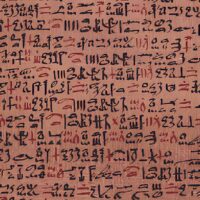
More than three thousand five hundred years ago, when a sick citizen of Thebes or Memphis visited a physician (swnw), they did not walk away with vague folkloric advice; they received a meticulously measured prescription written down on papyrus, specifying the exact plant, mineral, or animal ingredients, the method of compounding, and the route of administration. Preserved across a dozen major medical scrolls—led by the monumental Ebers Papyrus (circa 1550 BC), which contains over 877 distinct drug prescriptions using more than seven hundred raw ingredients—the pharmacopoeia of ancient Egypt was the most advanced pharmaceutical archive of the Bronze Age world, directly inspiring the later medical traditions of Hippocrates, Dioscorides, and Galen.
Precision Compounding: Liquid Vehicles and Dosage Forms
Unlike casual folk herbalism where a patient simplemente chews a handful of leaves, ancient Egyptian pharmacists—who worked inside specialized temple laboratories called the Per-Ankh (“House of Life”)—understood that the chemical solubility and bodily absorption of an active drug depend entirely on the liquid vehicle used to extract it.
Every Egyptian prescription Carefully matched its active botanical or mineral powder with a specific carrier base according to whether the compound was water-soluble, fat-soluble, or alcohol-soluble:
- Water, Milk, and Sweet Beer: Fermented barley beer—particularly a high-alcohol variety called “sweet beer”—was used across hundreds of prescriptions both to extract alcohol-soluble plant alkaloids and to mask the bitter taste of medicines for children.
- Wine and Vinegar: Used for astringent washes and dissolving resins like frankincense and myrrh.
- Fats, Oils, and Raw Honey: Goose fat, ox tallow, hippopotamus fat, castor oil, and pure Nile bee honey served as the base for topical ointments, burn salves, eye drops, and swallowable pills.
Furthermore, the Egyptians invented virtually every modern pharmaceutical delivery method: oral potions, molded honey-paste pills, gargles, therapeutic inhalations (throwing herbal resins onto red-hot stones and breathing the steam through a hollow reed tube!), eye drops applied with smooth wooden or hematite rods, skin poultices, vaginal pessaries, and medicated rectal suppositories and enemas.

Key Botanical Drugs Validated by Modern Pharmacology
While Egyptian papyri included sympathetic magic ingredients like lizard blood or fly specks alongside prayers to Isis and Thoth, modern pharmacognosists testing the core botanical staples of the Egyptian pharmacopoeia have confirmed that a remarkable percentage of their plants contained potent, clinically active molecules:
- Willow Bark and Leaves (Salix): Prescribed in the Ebers and Edwin Smith papyri as an anti-inflammatory poultice for aching joints and infected wounds. Willow bark is rich in salicin, which the human body metabolizes into salicylic acid—the direct natural chemical ancestor of modern aspirin!
- Pomegranate Root Bark (Punica granatum): Steeped in water and drunk by patients suffering from intestinal tapeworms. Modern chemistry confirmed that pomegranate bark contains high concentrations of the alkaloid pelletierine, which paralyzes the muscular suckers of tapeworms so they detach from the intestinal wall and are expelled.
- Senna Pods, Castor Oil, and Aloe Vera: Because Egyptian medical theory believed that internal diseases were caused by putrefying food residue (wekhedu) trapped in the lower bowel, physicians prescribed senna pods (containing sennosides, still sold in every modern pharmacy on Earth as a laxative) and pressed castor bean oil, while applying fresh Aloe vera gel to soothe skin burns and ulcers.
- Khella (Ammi visnaga) and Blue Lotus: Seeds of the Nile tooth-pick plant (Ammi visnaga) were brewed to relax painful kidney-stone spasms and asthma—leading twentieth-century pharmacologists in Cairo to isolate the active compound khellin, which served as the chemical blueprint for modern asthma inhalers (sodium cromoglycate) and the heart-rhythm drug amiodarone!
- Coriander, Cumin, Garlic, and Juniper Berries: Cloves of raw garlic (found preserved inside the tomb of Tutankhamun) were given daily to pyramid laborers to boost stamina and fight respiratory infections via antimicrobial allicin, while juniper berries and coriander calmed digestive gas and acted as diuretics.
Mineral Chemistry: Malachite Eye Paint That Prevented Blindness
Nowhere was Egyptian pharmaceutical chemistry more brilliant than in their signature green and black cosmetic eye paints (kohl and udju), worn by every man, woman, and child along the Nile. For centuries, historians assumed the heavy black galena (lead sulfide) and green malachite (copper carbonate) eyeliner was purely aesthetic or used to reduce sun glare.
In 2010, however, French analytical chemists at the Louvre Museum and CNRS analyzed residue inside fifty-two ancient Egyptian cosmetic pots and discovered that Egyptian pharmacists spent thirty days synthesizing rare lead-chloride compounds (laurionite and phosgenite) that do not even occur naturally in Egypt. When a tiny trace of these lead and copper salts touched the tear film of the human eye, it stimulated the eye’s immune cells to produce a 240-percent surge in nitric oxide—turbocharging the immune response to kill the bacteria carried by Nile floodwaters that caused blinding trachoma and conjunctivitis, turning everyday Egyptian makeup into a preventative public-health triumph.