The principle of double effect is a principle applied in bioethics to assess the moral dimension of an action with dual (positive and negative) effects.
General Characteristics
This principle is associated with the teachings of the Catholic Church, which profess moral absolutism, forbidding the commission of evil regardless of how much good the evil act might bring. Sometimes, however, an action produces both a good effect, intended by the actor, and an evil effect that is not desired.
Beauchamp and Childress, in their Principles of Biomedical Ethics, formulate the following conditions for the permissibility of the analyzed action:
- The action in question must be inherently good (Tadeusz Biesaga formulates this differently, stating that an action can be undertaken if its natural consequence is good, but it cannot be undertaken if it is bad).
- The intention of the actor committing the act must also be good; thus, the actor must directly desire the good outcome of the action, while he may only indirectly allow and tolerate the bad outcome, but he cannot intend to commit it.
- The bad effect cannot be the means of achieving the good.
- The good effect must at least outweigh the bad, or even surpass it; that is, the good and bad effects caused by the action must be proportional.
There is still one more condition:

- There are no other ways to achieve the good effect.
Biesaga also notes that according to this principle, the actor committing the act is responsible for its natural consequences, if known. However, regarding a consequence that was not known at the time of performing the action but was discovered by science later, the responsibility for its occurrence does not lie with the actor.
Abortion
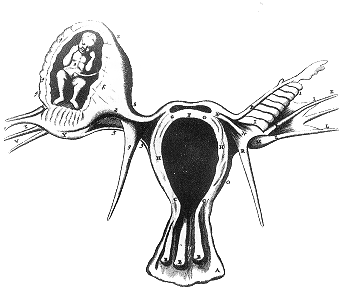
An example of applying moral absolutism to the issue of the permissibility of abortion is provided by Father Jacek Woroniecki. He writes in his Catholic Educational Ethics that in a situation where the life of a pregnant woman can only be saved by sacrificing the life of the fetus, it is not permissible to do so, even if the fetus is destined to die shortly afterward. In such a situation, both should be allowed to die.
On the other hand, the application of the principle of double effect allows for the termination of pregnancy under certain conditions. For example, it justifies a salpingectomy along with an ectopic pregnancy if the termination of the pregnancy is only a foreseeable but not desired outcome of the surgery. A debatable case is when, instead of salpingectomy, a small resection of the fallopian tube is performed, involving only the site of implantation, or when the embryo itself is removed (salpingostomy or salpingotomy). Here, the death of the embryo becomes, according to some, a means to achieve the desired outcome, while for others, it is an unavoidable but incidental effect of its removal. The proportionality of such actions and their necessity are also questioned, especially if a larger resection can be performed. A similar issue arises with the pharmacotherapy of ectopic pregnancy using methotrexate, often negatively evaluated from the perspective of the principle of double effect, although it is also subject to debate.
Another example of a situation where the unintended consequence of an action aimed at saving the mother’s life is the death of the child is the treatment of cancer with chemotherapy. Although such chemotherapy leads to the death of the fetus, its aim is to combat the tumor. Therefore, it is a permissible method of treating a pregnant woman with cancer. Some ethicists also accept the induction of labor at an early stage when the fetus cannot survive outside the mother’s body.
Analgesia
The relief of pain accompanying illness is approved by both medical and church authorities. It is the duty of medical personnel, and a patient can only waive this right through an informed decision. Typically, a pain ladder is used to combat pain, starting with non-steroidal anti-inflammatory drugs and ending with strong opioids if necessary. However, sometimes, especially in the case of terminally ill cancer patients, even the usually administered doses of strong opioids prove insufficient because the patient becomes accustomed to the medication, which gradually loses its effectiveness. As a result, pain relief is achieved only by administering lethal doses, i.e., doses that cause death in some patients and may also cause death in the patient.
Administering a lethal dose carries the risk of being accused of euthanasia, which is illegal in many countries. This accusation is refuted using the principle of double effect. The administration of a lethal dose of an analgesic allows for the fulfillment of the following conditions:
- Alleviating the patient’s suffering is inherently good and demonstrates concern for the patient. Refusing analgesia would result in immense suffering for the dying patient.
- The intention of administering the medication must be good – the person must intend to alleviate the patient’s suffering. They cannot desire the death of the patient, although they should be aware of the possibility.
- However, death cannot be the means. This means that actions aiming to eliminate pain by killing the patient (as in euthanasia) are not acceptable. Death cannot serve the desired outcome; it cannot lead to it.buy levitra super force online https://noprescriptionbuyonlinerxx.com/buy-levitra-super-force.html no prescription pharmacy
It can only be an unintended but tolerated or foreseeable consequence. - The desired effect, in the form of pain relief, must be proportional to the threat posed to the patient. In cancer, severe, all-encompassing pain often occurs, affecting not only physical but also spiritual and psychological suffering. Such pain has no moral value in itself and does not fulfill its biological function. Alleviating the patient’s suffering in such cases is considered a proportionate effect compared to the threat associated with their relief.
Such high doses of strong opioids are only used when weaker analgesics and smaller doses are ineffective.
This reasoning is subject to criticism. Firstly, it is difficult to distinguish between intended and foreseeable consequences.
However, in ethics, there is usually no certainty. Critics of the above argument point out that there is no moral difference between gradually increasing opioid doses to meet the last of the aforementioned conditions (ineffectiveness of smaller doses) and administering a one-time lethal dose, which is not approved by the principle of double effect.
Others argue that previous attempts to use smaller doses increase the patient’s suffering and that their treatment should immediately begin with effective opioid doses. However, a positive aspect of applying this principle to the analgesia of terminally ill patients is reducing the fear of medical personnel of being accused of euthanasia, which often leads to their administration of too small, ineffective opioid doses.
However, there are doubts about various laws. Some lawyers regard actions consistent with the principle of double effect as acts prohibited with eventual intent. Thus, the Penal Code of many countries would reject the principle of double effect. For instance, however, the Medical Code of Ethics, in Article 29, mandates the alleviation of a patient’s suffering until the end of their life in Poland. There is also a view that, in a situation of uncertainty regarding the threat to life, a doctor is exempt from liability for administering opioids, unlike the administration of a dose that will certainly cause the patient’s death. However, this view is based on erroneous premises, assuming that properly conducted analgesia does not include the administration of lethal doses. Such views reinforce, within the medical community, the fear of criminal liability for conducting effective analgesia and for inappropriate therapy of dying patients – with doses that do not affect them. Administering effective doses is defended here, invoking a state of higher necessity, the concept of primary legality of actions, and counter-type (in this case, extra-legal, but resulting from the Medical Code of Ethics, the Act on Healthcare Facilities, and the Act on the Profession of Physician and Dentist).
Transplantology
The principle of double effect is also sought to be applied in transplantology. The issue revolves around maintaining the dead donor rule in the case of donors with non-beating hearts.
The cessation of circulation is not a reliable predictor of brain death or, thus, of a person’s death.
Consequently, allowing such donors, motivated by the shortage of organs for transplantation, may lead to transforming the doctor-patient relationship into a doctor-source of organs relationship.
Veatch repels such a threat precisely through the principle of double effect. However, Szewczyk criticizes this approach, considering the last of the aforementioned criteria of the principle of double effect unmet, citing living donors and donors diagnosed with brain death.
However, even the retrieval of organs from a living donor, which indeed worsens their physical health, is justified by the principle of double effect, although the principle of totality is also applied here. The physical suffering of the donor caused by the procedure is offset by a spiritual benefit. Such an approach was supported by Pope Pius XII during his speech at the International Neuro-Pharmacological Colloquium.