The modern perception of standardized time is shared across the most distant lands. It combines knowledge of the astronomical calendar with state-of-the-art clockwork based on the movements of the stars and planets and is equipped with the latest technology to record and measure relatively short intervals of time.
- The Invention of Time and the Clock
- 2000 BC: First Calendars
- 1600 BC: Water Clock
- 1500 BC: First Solar Calendars
- 520 BC: Candle Time
- 800 BC: Hourglass
- 1088: Clock Tower of Su Song
- 13th Century: Weight-Driven Mechanical Clocks
- 1430: Spring-Driven Clocks
- 1656: Huygens’ Pendulum Clock
- 1759: Marine Chronometer
- 1927: Quartz Watch
- 1947: Atomic Clock
- 1967: Defining the Second
- The 1970s: Numerical Timekeeping
Humankind was probably aware of the passage of time at the dawn of reason, but it was only with the beginning of settled agriculture around 8000 BC that a proper understanding of the seasons and daily changes over the course of a year became important. Prehistoric monuments around the world, including Stonehenge in England, clearly show that the seasons could be tracked by the setting and rising of the sun.
The Invention of Time and the Clock
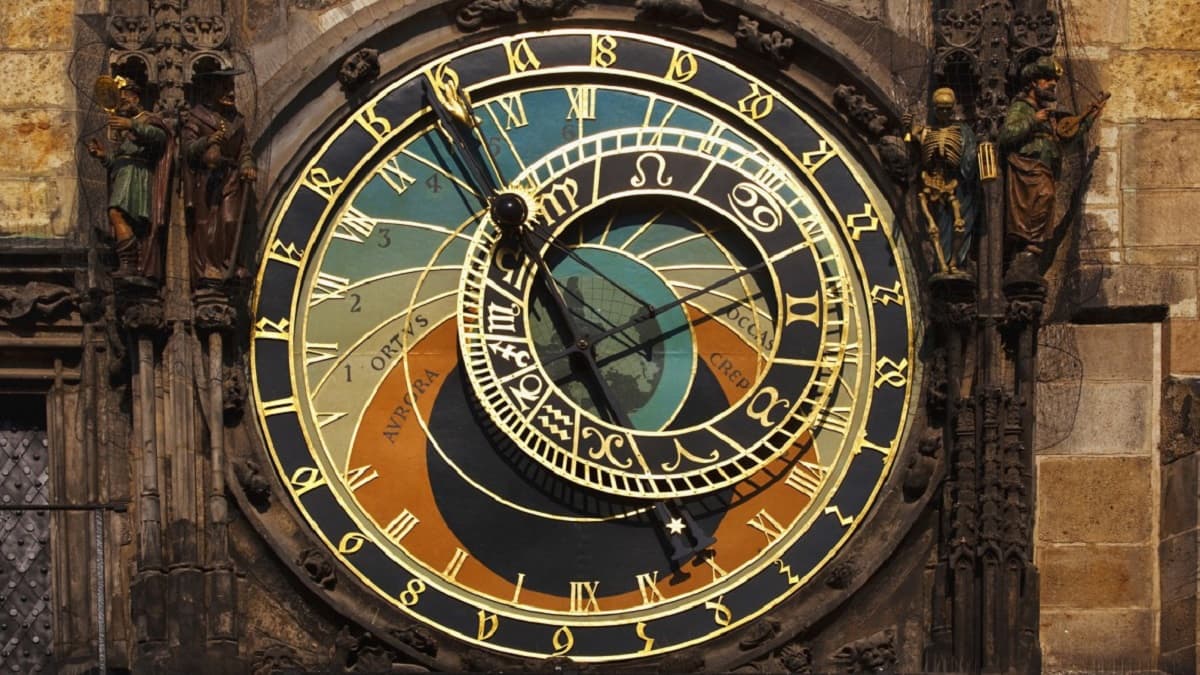
The need to measure small intervals of time only emerged in the advanced civilization of ancient Mesopotamia around 2000 BC, probably due to religious, ritual and administrative requirements. Sundials were used to keep track of roughly day time, while shorter time intervals were measured by following the drip of water or the flow of sand through a fine gap.
The earliest weight-driven mechanical clocks probably appeared in Europe in the 2nd millennium AD. A single clock mounted in a public structure, such as a church, is sufficient for an entire community. Mechanical clocks became portable after the discovery of spring powering around 1500, and their precision was greatly improved in the late 17th century. The Industrial Revolution, which led to faster travel and telegraphic communication, eventually made it imperative to keep a record of time across large areas.
2000 BC: First Calendars
The ancient Babylonian civilization developed the earliest known form of calendar. The year was divided into 12 months based on the lunar cycle, with an extra month added to align the lunar and solar cycles. Other civilizations developed similar calendars
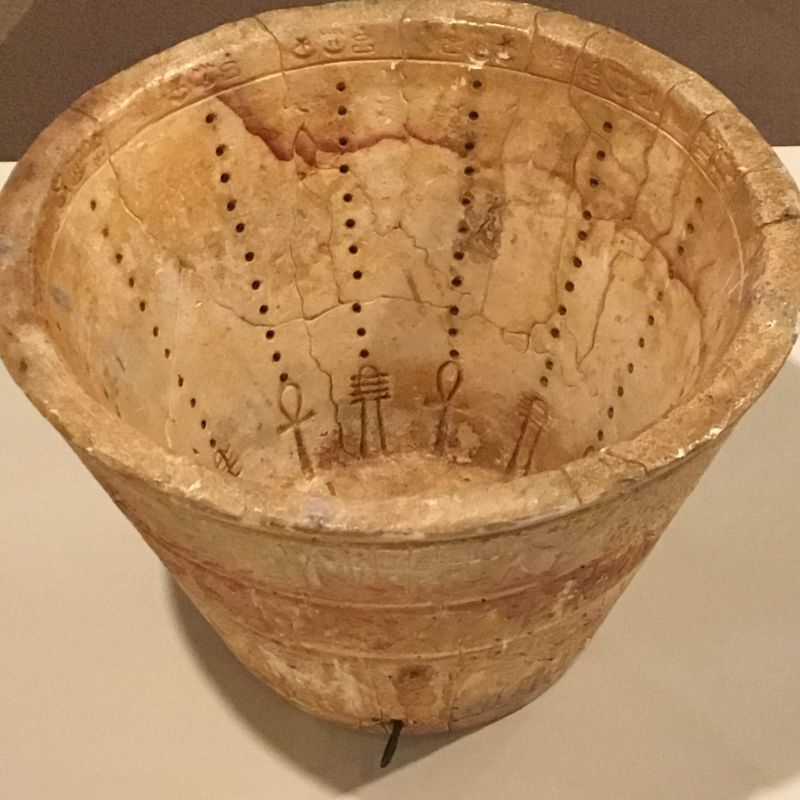
1600 BC: Water Clock
Although probably developed in Mesopotamia, water clocks (clepsydra) were popular in Greece and Rome. Graduated marks kept track of the level of water in a vessel with a small hole in the bottom.
1500 BC: First Solar Calendars
The first solar calendars, developed in Babylon and Egypt, tracked time by the shadow cast by an upright stick called a gnomon.
520 BC: Candle Time
As mentioned in a Chinese poem, the first candles, which roughly revealed the time even at night, were useful thanks to the slow burning of a candle or incense stick.
800 BC: Hourglass
The first mention of these sand-based clocks dates back to the 14th century, just like water clocks, but sand clocks were probably discovered in Europe as early as the 9th century, or at least introduced there.
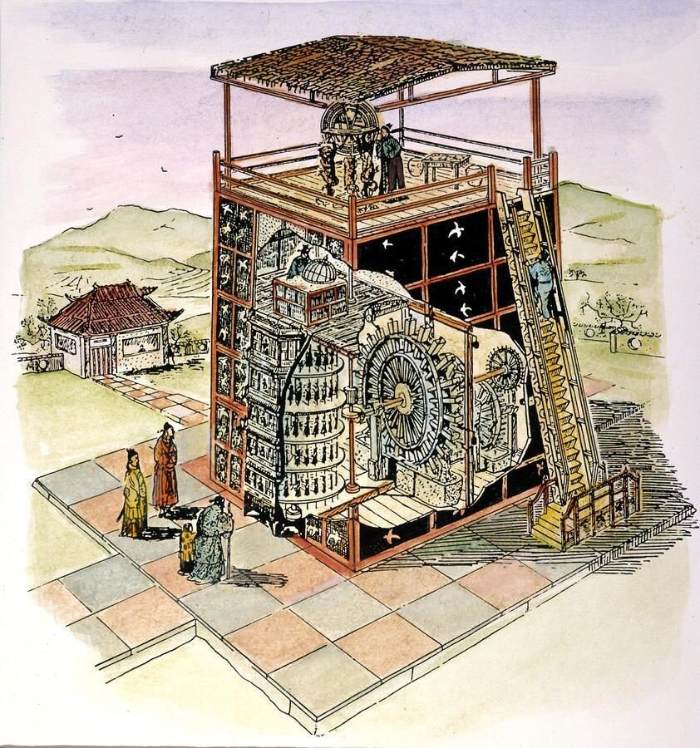
1088: Clock Tower of Su Song
The Chinese scholar Su Song built a clock tower that is believed to have advanced clockmaking in Europe, using a series of complex gears that track astronomical cycles.
13th Century: Weight-Driven Mechanical Clocks
The earliest known mechanical clocks, found in English cathedrals such as those in Salisbury and Norwich, used a falling weight on a chain to drive the rotation of gears set by an escapement and oscillating mechanism.
1430: Spring-Driven Clocks
Watches were powered by a discharged spring, which helped to reduce the size of the watches. Watchmaker Peter Henlein used this technique in his first pocket watch.
1656: Huygens’ Pendulum Clock
Dutch inventor Christiaan Huygens used the regular oscillations of a weighted pendulum to make a clock that kept time every day with an error of a few seconds.
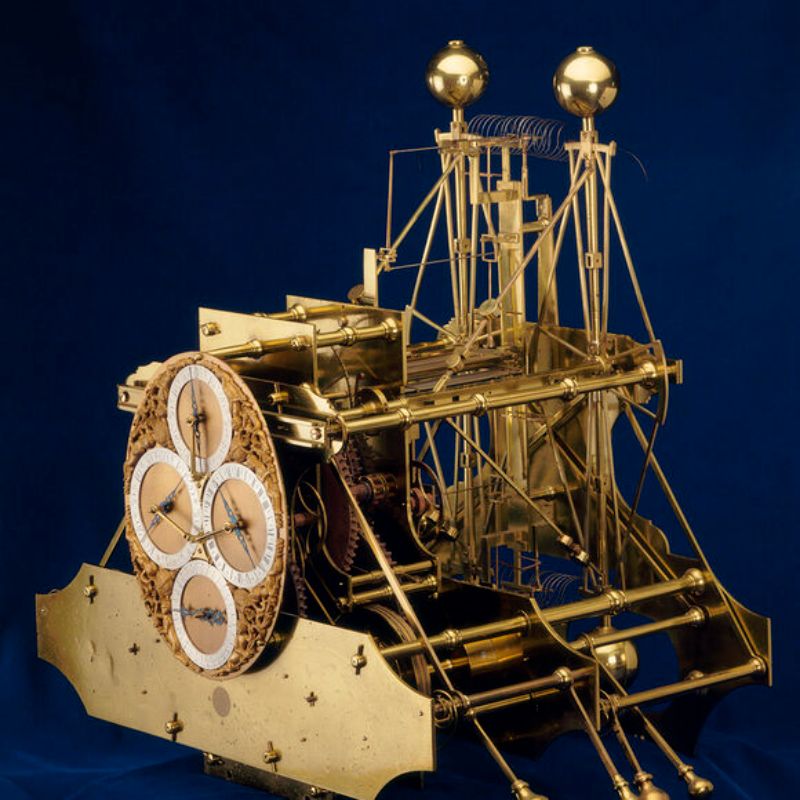
1759: Marine Chronometer
British watchmaker John Harrison perfects a spring-operated chronometer capable of keeping precise time for long periods at sea, allowing for the first time precise longitude calculations while on board a ship.
1927: Quartz Watch
The first electronic clock was made using natural electricity generated by the rapid oscillation of a quartz crystal. This clock could measure time to the precision of a fraction of a second per day.
1947: Atomic Clock
This device uses fast transitions in the internal structure of elements such as cesium to measure time with great precision.
1967: Defining the Second
One second was redefined as the time it takes a cesium atom to travel between two energy levels 9,192,631,770 times.
The 1970s: Numerical Timekeeping
The use of liquid crystals to show the change of digits in digital devices represented a revolution in time measurement.
Sources:
- Landes, David S. Revolution in Time: Clocks and the Making of the Modern World. Cambridge: Harvard University Press (1983).
- Landes, David S. Clocks & the Wealth of Nations, Daedalus Journal, Spring 2003.
- Lloyd, Alan H. “Mechanical Timekeepers”, A History of Technology, Vol. III. Edited by Charles Joseph Singer et al. Oxford: Clarendon Press (1957), pp. 648–675.