When the ancient Greek mathematician and philosopher Thales experimented with a piece of amber, known in Greek as an “electron”, he could not have known that his first observations would still be relevant in science more than 2,000 years later.
- The timeline of the discovery of electricity
- 600 BC – Amber
- 1600 – Gilbert’s De Magnete
- 1700 – 10 – Electrostatic generator
- 1745 – 46 – Leyden jar
- 1752 – Lightning rod
- 1799 – 1800 – The first electric battery
- 1820 – The electromagnet is discovered
- The 1820s – 30s – Faraday experiments
- 1825 – Electromagnet
- 1878 – 79 – Electric light bulb
- 1881 – The world’s first electric street lighting
- 1882 – Hydroelectric power
- 1883 – 84 – Tesla coil
- 1884 – Generation of electricity from steam
- The 1950s – Nuclear power
- Early 21st century – Sustainable electricity
What caught Thales’ attention was that when he rubbed a piece of amber against a fur coat, it attracted dust and hairs around it. Although he did not know it, he had encountered the phenomenon we know today as static energy. Over the following centuries, scientists around the world experimented with this form of electricity, as well as magnets and magnetism. Although the connection between electricity and magnets was not clearly known until the 19th century, the 17th and 18th centuries saw major breakthroughs in technology.
As the 1800s progressed, knowledge about electricity grew rapidly and innovations followed in rapid succession. By the time the 20th century was on the horizon, many technologies, such as batteries and light bulbs, had evolved over time to become what they are today. The challenge for science today is to find ways of generating electricity that do not pollute the environment.
The timeline of the discovery of electricity
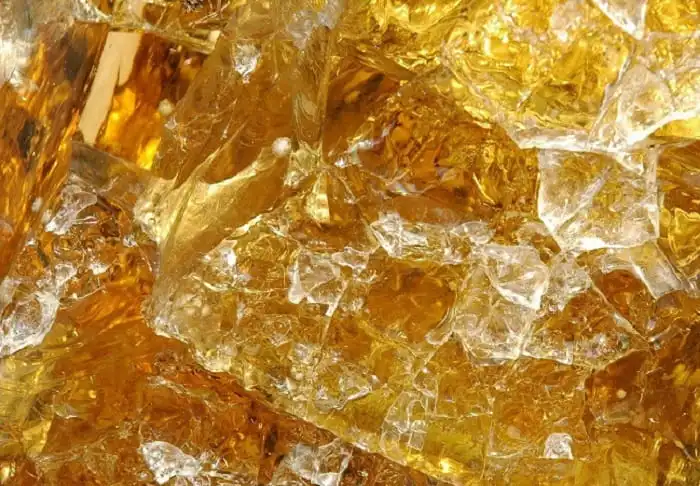
600 BC – Amber
Thales of Miletus noticed that a piece of amber rubbed against a fur coat attracted the surrounding hairs.

1600 – Gilbert’s De Magnete
English physician William Gilbert publishes his famous work on magnet attraction.
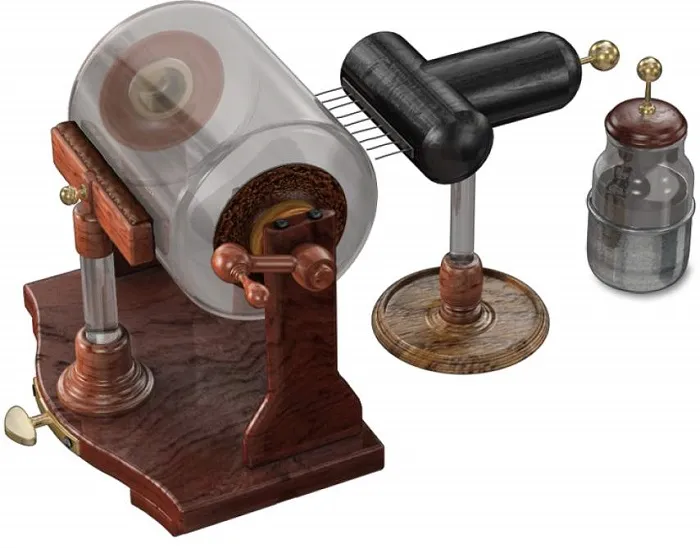
1700 – 10 – Electrostatic generator
British inventor Francis Hauksbee develops a device that can generate static energy using a glass sphere and a wool rope.
Pieter van Musschenbroe and Ewald Goerg von Kleist independently develop a device that stores static energy.
1745 – 46 – Leyden jar
Pieter van Musschenbroek and Ewald Georg von Kleist independently developed a device that stores static energy.

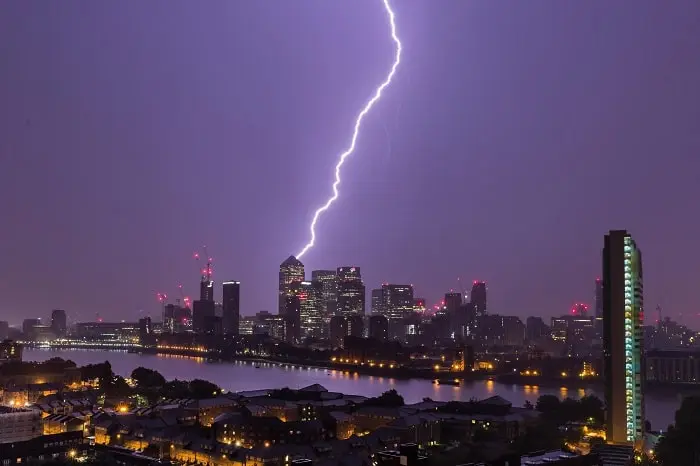
1752 – Lightning rod
US scientist Benjamin Franklin flies a kite with a key attached to its string in a thunderstorm and proves that lightning is a form of electricity.
1799 – 1800 – The first electric battery
Italian inventor Alessandro Volta creates the first battery, known as the Volta battery. The unit “volt” is later named after him.
1820 – The electromagnet is discovered
Danish physicist Hans Christian Ørsted discovered the relationship between magnets and electricity when he noticed that a magnet was affected by a nearby wire connected to a battery.
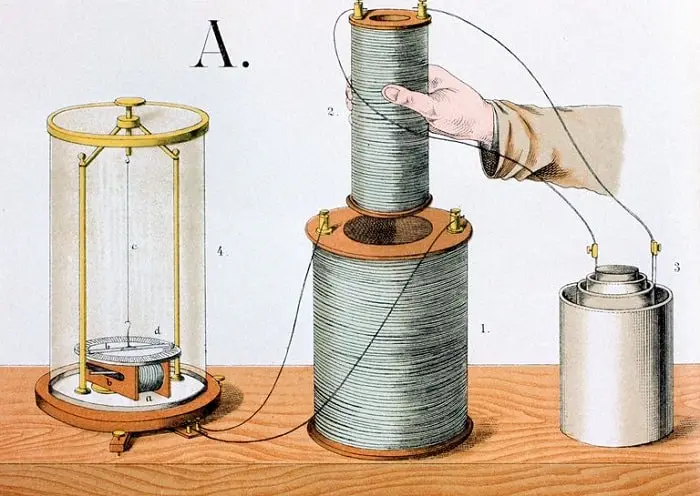
The 1820s – 30s – Faraday experiments
British scientist Michael Faraday demonstrates the relationship between electricity and the induction of a circular magnet.
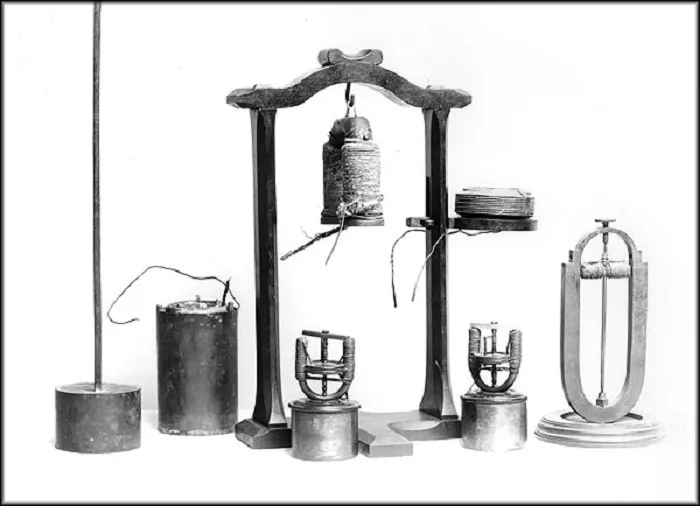
1825 – Electromagnet
Joseph Henry’s new device called electromagnet uses two metal plates placed in acid to form a voltaic battery.
1878 – 79 – Electric light bulb
British inventor Joseph Swan builds the incandescent “electric lamp”. The idea is further developed by US scientist Thomas Edison and the light bulb is invented.
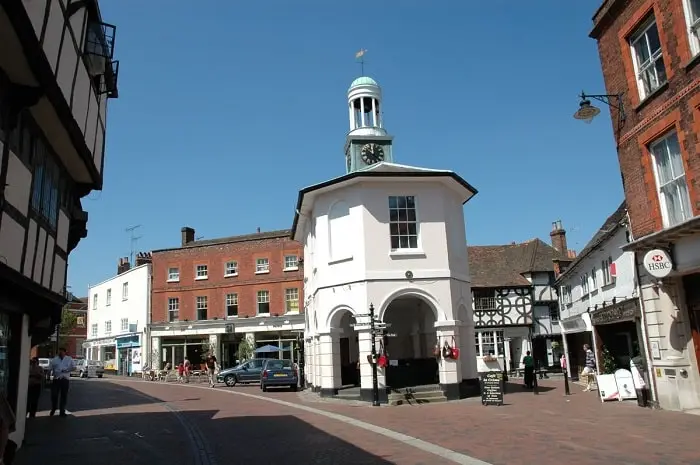
1881 – The world’s first electric street lighting
The English town of Godalming in Surrey ends the era of kerosene lamps by laying cables for electric street lighting.
1882 – Hydroelectric power
When scientists realize that water power can be used to generate electricity, they begin to build dams and hydroelectric power plants to harness this energy.
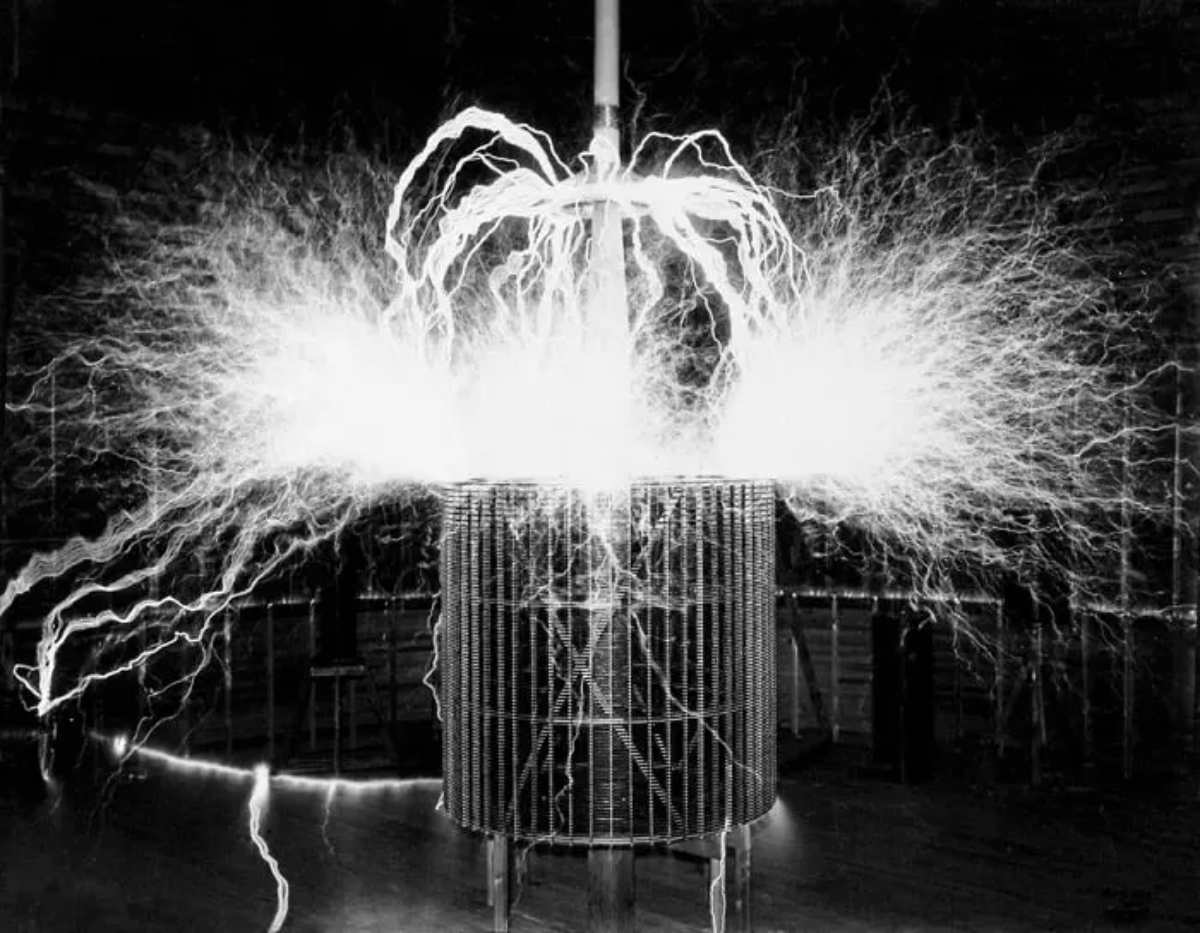
1883 – 84 – Tesla coil
Serbian-American inventor Nikola Tesla develops a coil that carries electricity over long distances. This was a crucial invention that helped spread electricity.
1884 – Generation of electricity from steam
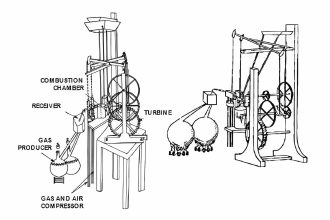
Like liquid water, steam is used to generate electricity through devices such as turbines built by Charles Parsons.
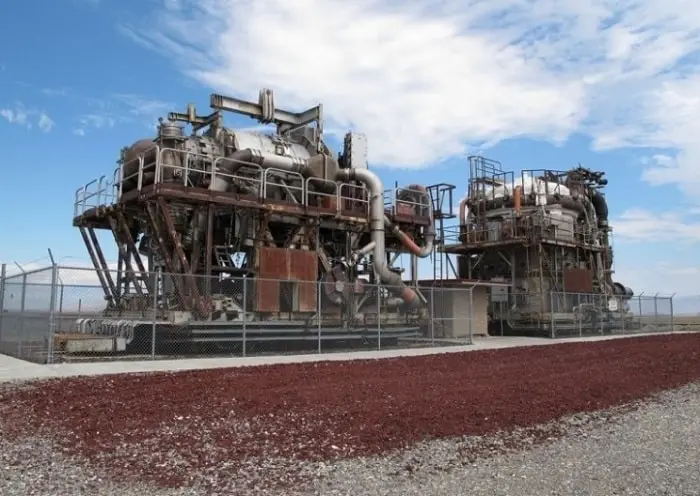
The 1950s – Nuclear power
Scientists discover that the atom can be used as an energy source to heat water – in controlled nuclear reactions – and thus generate electricity. In 1951, the first nuclear power station is built in Arco, Idaho, USA.
Early 21st century – Sustainable electricity
Concerns about pollution caused by old methods of energy production led to the development of “green” technologies such as wind turbines.