Let’s talk about the history of photography. About a thousand years ago, Arab scientist Ibn al-Haytham demonstrated how to create an image of the sun in a dark room. The light passed through the small hole in one wall, and the image was formed on the opposite wall. In the 1660s, portable “Camera Obscura” with lenses, paper screens, and even focusing mechanisms were designed. “Camera Obscura,” which means “Dark Room” in Latin, was a common phrase at that time used to see the Sun or to look at landscapes and streets. All the parts of modern cameras were presented in these tools, but there was no way to record the image they created yet. It had been more than 150 years since Joseph Niepce developed a method for capturing light; thus, real photography was born.
Capturing the light
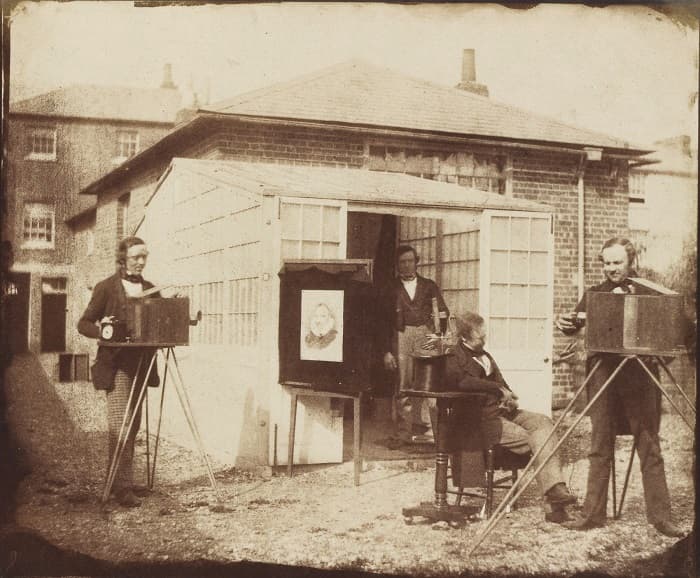
Practical photography was invented by William Fox Talbot and Loius Daguerre on almost the same dates. However, Daguerre’s method is not a method used today. Modern cameras use the method developed by Fox Talbot (1800-1877) in the 1830s. Talbot dipped the photographic paper in silver chloride, a chemical that darkened when exposed to light; he also had a negative image when he dropped the light on the paper. When he used the same method to duplicate the images from the negative, he obtained an unlimited number of positives.
Creating the image
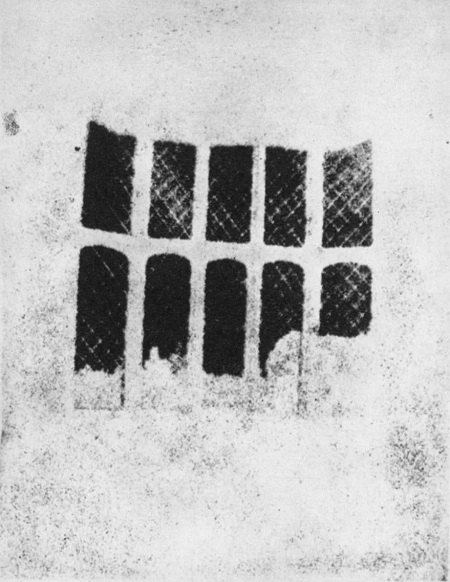
During his first attempts at photography, William Fox Talbot made a camera out of a large box. This was an experimental version of what he did in 1835 and had an inverted lens. Talbot dropped the light on the photosensitive paper he placed on the back of the box for over an hour. However, the result was disappointing. The amount of light falling on the paper was not sufficient, and only little detail appeared in the image. The following time, Talbot attempted to use a much smaller, slightly larger than 6 cm2 camera and placed the lenses very close to the paper to increase the intensity of the light falling on the paper. William Fox Talbot achieved the famous negative seen above with one of these tiny machines. The image shows the window of Talbot’s house.
The first permanent photograph
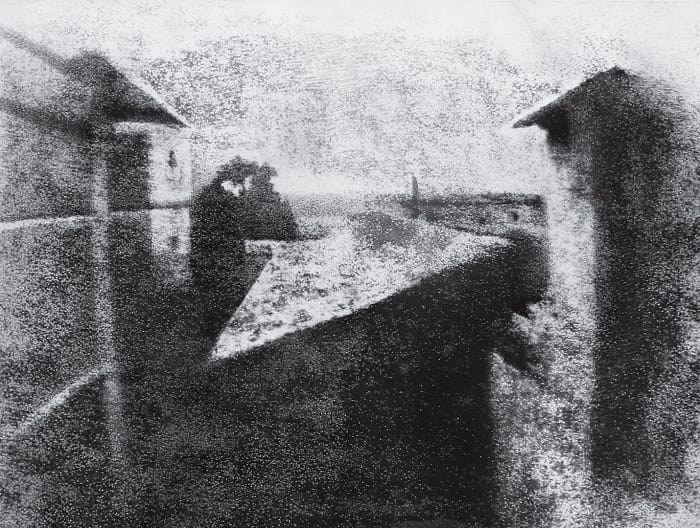
In 1822, Joseph Niepce (1765-1833) focused the image coming through his window on a tin-lead alloy sheet covered with photosensitive tar. Eight hours later, when he washed the sheet with oil, he saw that the tar was cleaned, except where the light fell. The remaining tarred area created a photograph.

Daguerreotype
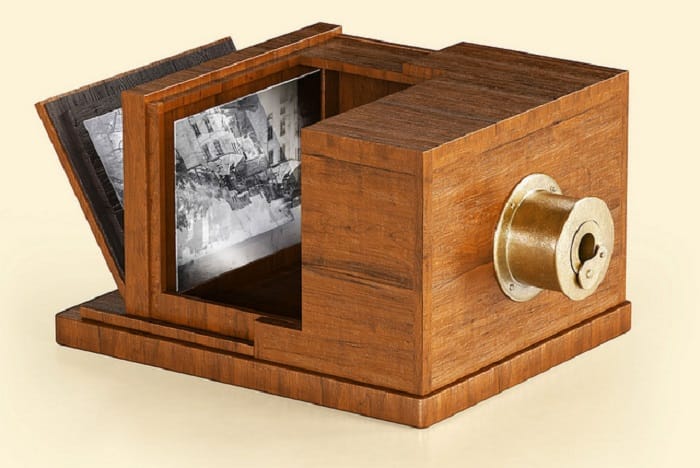
In the early 1830s, Loius Daguerre (1789-1851) worked with Joseph Niepce, who took the first photograph in history. Daguerre made experiments and tried to record the image on a copper plate. He covered the plates with silver and exposed them to iodine to make them sensitive to light. It didn’t work at first, but one day he discovered something by chance. The plate was able to create an image even when exposed to mercury vapor for as short as 15 minutes. Then he found out how to make the image permanent. For the image to be permanent, silver should no longer react to light. Thus the Daguerreotype was born, and it was the first camera to go on sale.
Mini cameras
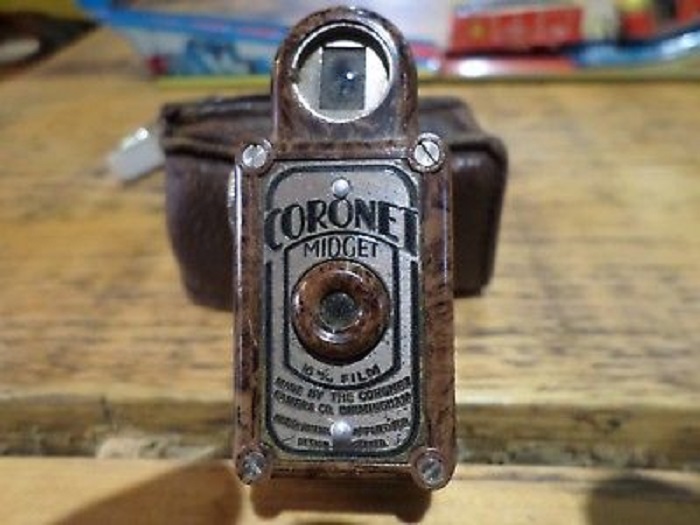
These tiny cameras were made in 1934 from bakelite, the first form of plastic. These machines, using tiny, rolled films, had fixed-focus lenses and separate visors and were slightly larger than a matchbox. The first cameras needed a lot of light, such that they had to be exposed to light for several minutes or even hours. If anything moved during this time, blurry, vague images appeared. There are no such problems today because modern cameras have much shorter “exposure times”.
Camera Obscura
Camera Obscura is an important milestone in the history of photography. It is known as one of the first pinhole cameras. The ancient Greeks discovered that if the light is allowed to enter a very small hole in a dark room, the upside-down view of the outside landscape is reflected on the white wall in the room. In the 9th century BC, Arab astronomers used this system to measure the position of the sun and to observe the solar system without damaging their eyes.
Later, the device was named “dark room,” or “camera obscura” in Latin, and depicted by Leonardo da Vinci in the 15th century. Da Vinci used the image he projected on the paper he stretched on the wall of a dark room to paint objects outside and said, “The shape is as if it had been drawn.” In the 16th century, the Italian Giambattista della Porta clarified the image by replacing the hole on the wall with a lens and turning the image right-side-up with a mirror.

The painters started to use portable dark rooms and reflected the image on the icy glass to start painting their subjects. In the 18th century, Canaletto used camera obscura for a dozen paintings he made in Venice. Many varieties of dark rooms are produced; some occupied the entire working room on the top floor of a tower, and some were small enough to be carried around. The first camera was born, but the most important part was still missing: a sensitive plate (photographic plate).
How did the camera become widespread?
The photography technique has had a deep influence on people’s hopes and dreams since its discovery. Scientists have considered photography as a very necessary tool to make precise observations. Social reformers said that the photographs will help strengthen family ties, which have been at risk of loosening because of the freedom of movement that steam transport has provided to people. From 1854, portraits placed on cardboard were offered for purchase.
The painters who became unemployed with the invention of the camera started working on retouching and coloring the photographs by hand. By 1860, approximately 30,000 people were working in the photography industry only in Paris, the capital of France. As innovations in technology make photography easier, it is still limited to those with a better income due to its cost but has been adopted as a hobby by an increasing number of amateurs. Photography could not go public until the cheap portable camera and roll film were developed. American George Eastman found both in the late 1880s.
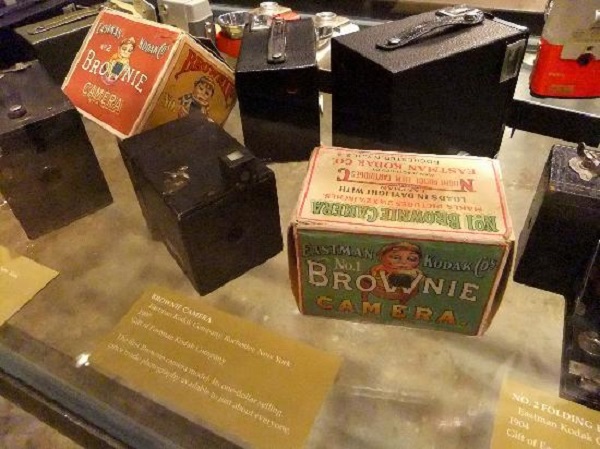
With his famous slogan, “You press the button. We do the rest,” Eastman helped to redefine photography. In 1888, he developed the first Kodak machine. He chose this name because he liked the sound of the letter K and wanted a word with K on both ends. The machine was the size of a cigar box. It could be held with one hand, and the price was $25. It came along with three instructions: “1. Pull the rope. 2. Turn the key. 3. Press the shutter button.” The diaphragm stretches with the spring and opens with the shutter. The key was turning the film. The reels of each film took 100 pictures and were bathed at the Kodak factory in Rochester, New York. George Eastman released the first “Brownie Box” camera in 1900. This machine was much cheaper than the first Kodak, and in its first year, 100,000 were already sold, more than half of them in Europe. Photography was made easier and cheaper for everyone.
How did the painters react?
Some painters believed that the camera posed a serious threat to their profession. Sir Edwin Landseer wrote “The enemy of graphic arts” next to a photo with giant live or dead animal pictures. Although only a few painters confessed that they were taking advantage of photography, most of them benefited from it to support their work. In the mid-19th century, painters started to create scenes with more people in them because it was easier to draw each person when the artist took a photograph of them in the studio.
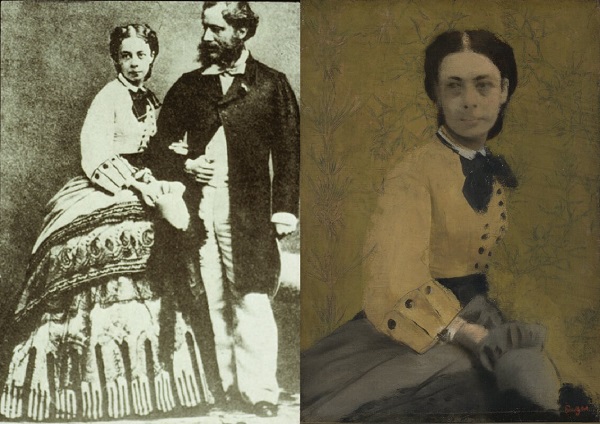
French painter Eugene Delacroix immediately understood the possibilities of this new invention and took photos of people in various poses. Edgar Degas did his ballerina paintings with the help of photographs. William Powell Frith used his camera for the crowds in the station or the hippodrome and did several paintings during the Victorian era in England. However, many people despised artists who were making paintings by looking at photographs.
When was the cinema invented?
The human eye holds an object’s image for a tenth of a second, and then it gets erased. This is called “resistance” in optics. Thus, static pictures sequenced at a speed of about 16 times per second can be used to create a sense of motion. This principle was used in 1826 in a toy named “Thaumatrope,” invented by a British doctor. A canary was drawn on one side of a cardboard disc, and a cage was drawn on the other side. When the disc rotated, the images blended and it appeared as if the bird was inside the cage. British photographer Eadweard Muybridge developed this concept in the 1870s and 1880s. He was asked to find out if a racehorse at full gallop was in midair at any moment in time. He took several pictures of the animal in a row, using 36 cameras.
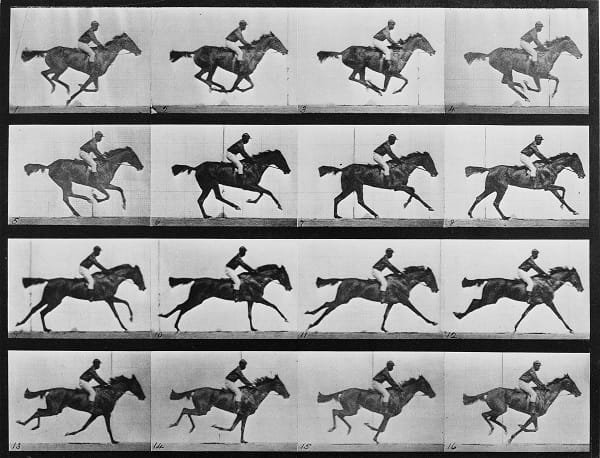
Eadweard Muybridge invented the zoopraxiscope in the late 1870s. It was a lamp that reflected a series of images onto a screen to give the impression of motion. Successive photographs of a figure in motion were drawn on a glass disc. When the disc was turned quickly, the reflected figure seemed to move. Muybridge’s invention was a pioneering initiative for cinema, but the story of actual cinema would begin with the development of movie cameras and projectors made by Thomas Edison, the Lumiere brothers, and others.
Firsts in Photography
We talked about the invention of photography. Now we can list the firsts in photography:
- 1838: Priest Joseph Reade photographed a person for the first time.
- 1839: Alphonse Giroux sold a camera in Paris for the first time.
- 1840: The first photography studio was opened in New York by Alexander Wolcott and John Johnson.
- 1844: The first photography book written by W.H. Fox Talbot was published under the name The Pencil of Nature.
- 1858: French photographer Gaspard Felix Tournachon, known under the name Nadar, took the first aerial photograph of Paris from a balloon above the suburbs.
- 1861: British Physicist James Maxwell took the first color photograph.