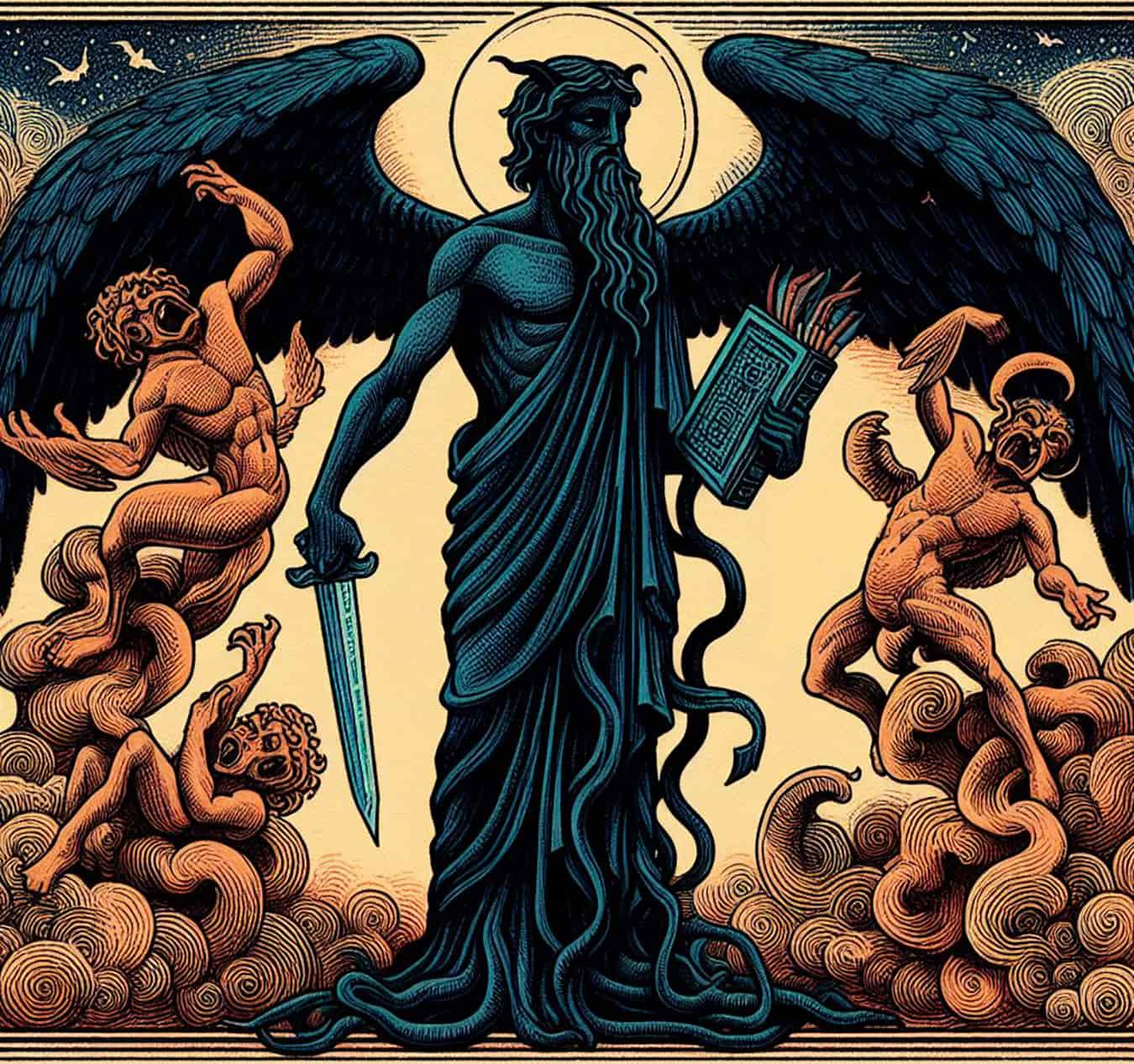
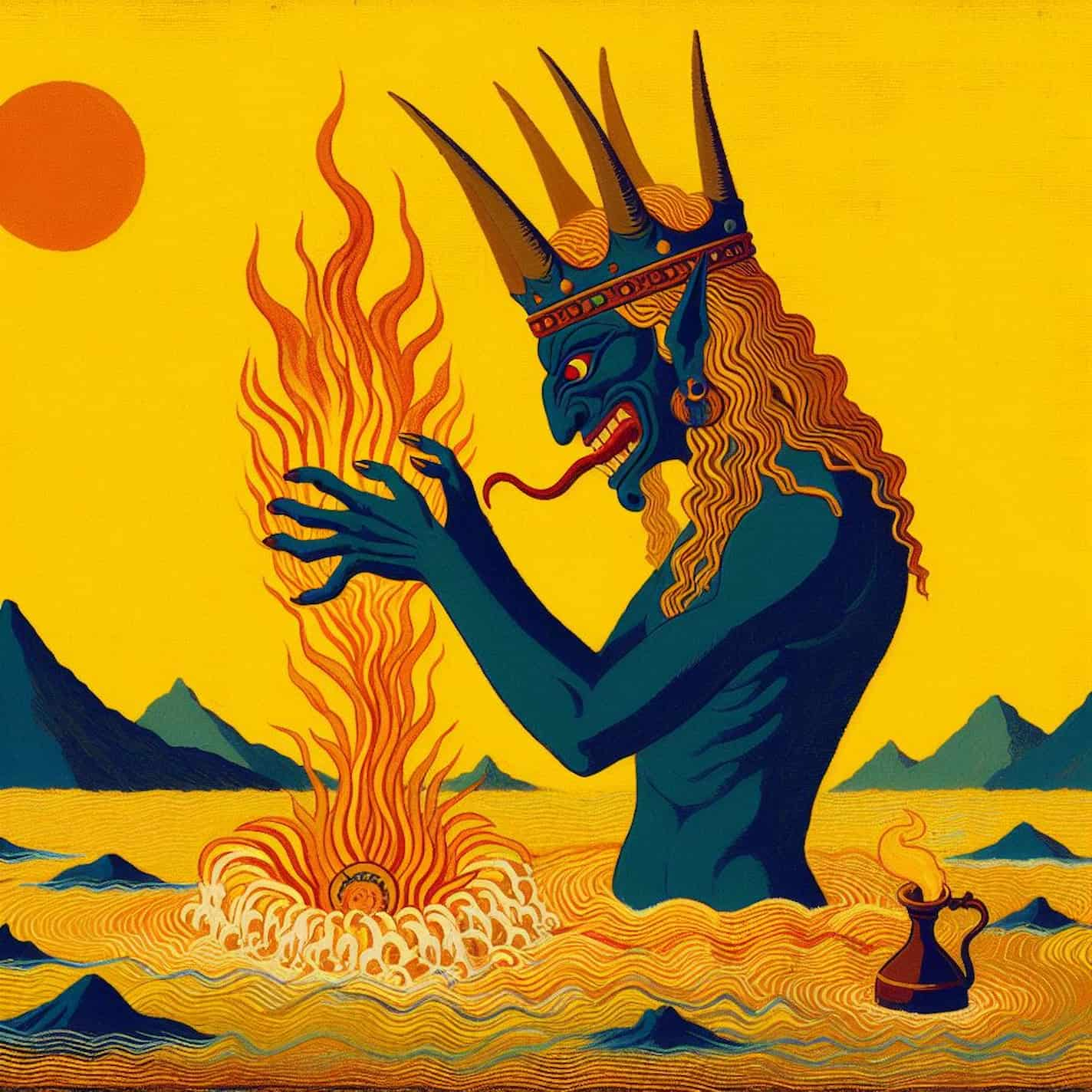
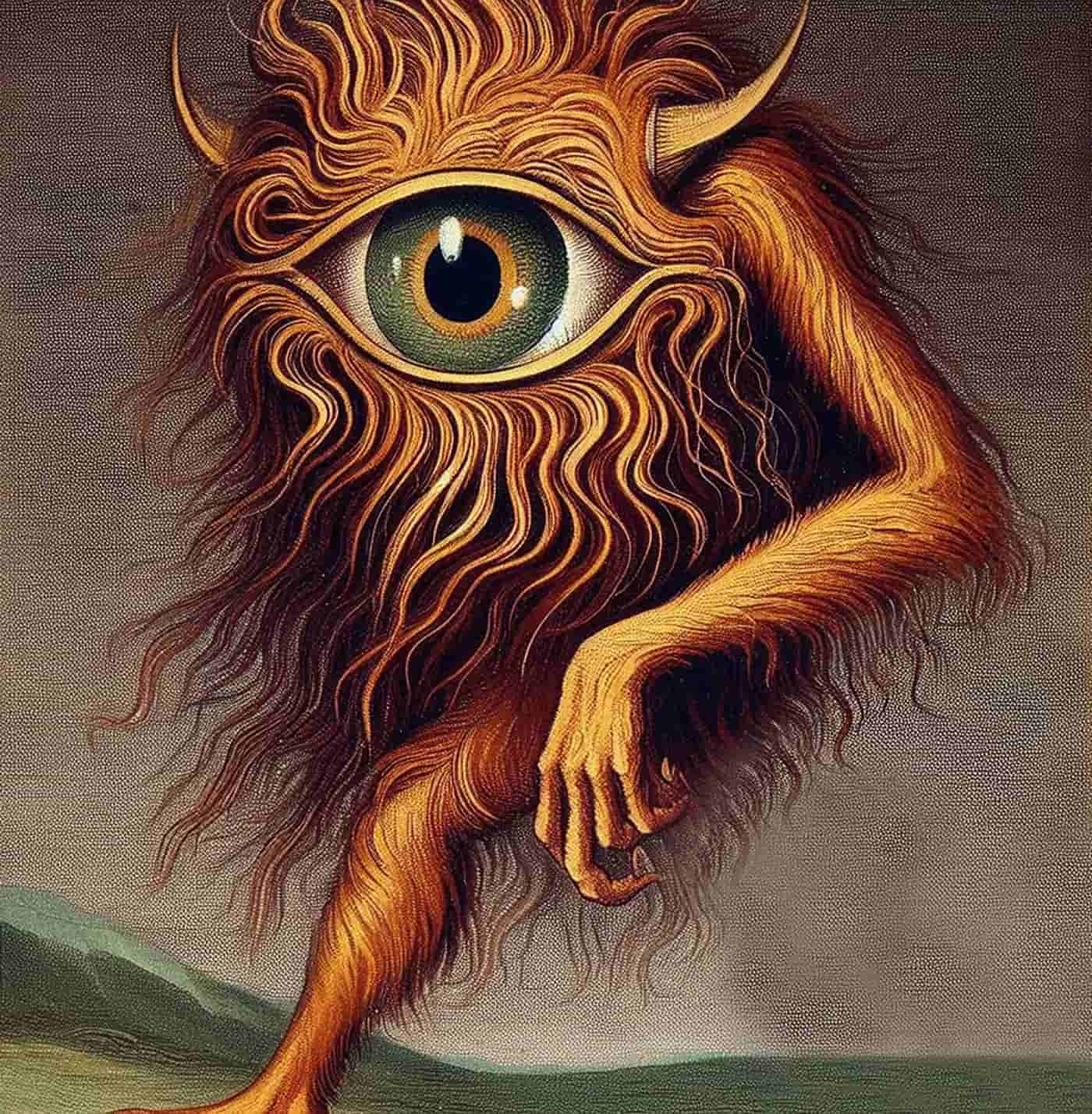
Achlys, in ancient Greek, is translated as “darkness” (Ἀχλύς / Achlús). Also known as Achlus, it represents “the spirit of mist and death, personification of sadness, misery, and poison” in Greek mythology. The poet Hesiod, in his poem “Shield of Heracles,” attributed this name to an entity in Greek mythology corresponding to the shadow of death, obscuring the vision of the dying on the battlefield. Additionally, Achlys can be considered the goddess of poisons, controlling the mist of death.
According to the Encyclopédie of D’Alembert and Diderot, Achlys was the first existing being before the appearance of the world, gods, and Chaos.
It is described as the only eternal being that gave birth to the gods, a notion supported by William Smith. Another interpretation suggests Achlys as the daughter of Nyx, born from Chaos.
According to some sources, she would have existed even before Chaos, while others consider her the daughter of Nyx and the twin of Momus. If we take the latter hypothesis to be true, then Achlys would be one of the Keres.
In Literature
In literature, Homeric works portray Achlys as the darkness that veils human eyes (Iliad, V, 696): “His (Sarpedon’s) breath left him: a mist [ἀχλύς] spread over his eyes.” This mist is also associated with the blindness induced by the gods, as seen when Poseidon “cast a mist over the eyes of Achilles” (Iliad XX, 324).
Hesiod depicts Achlys as the goddess of misery and sadness, represented on the Shield of Heracles with hideous features: pale, emaciated, teeth clashing, long nails, bloodied cheeks, and shoulders covered in dust.
“Beside them [Clotho, Lachesis, and Atropos (the Fates)] stood Sadness [Achlys], forlorn, dreadful, pale, withered, consumed by hunger, staggering on her thick knees. From her hands, elongated nails stretched; an impure emanation escaped from her nostrils, and blood flowed from her cheeks onto the ground. Standing, she gnashed her teeth with a terrible noise, and her shoulders were covered in swirls of tears’ moist dust.”
Ancient Rome
In ancient Rome, Achlys finds an equivalent in Caligo (“dense fog”), the Mother of Chaos and Nox in the cosmogonic myth, possibly of Greek origin, although not definitively known.
In the Orphic Argonautica, she is a servant of the Nyx, leading their team. The mythographer Hyginus, in his Roman equivalent Caligo, places Achlys at the beginning of the creation of the world. Caligo is the source of chaos, which is considered to be the origin of the world and the gods in the theogony of Hesiod and thus in the most common myth of the origin of the world in Greek mythology. A reference to the goddess of poisons is made in Nonnus’ Dionysiaca. There, Hera borrows deadly plants from Achlys and spreads poisons or magical ointments made from them over the heads of Dionysus’ guards.
References in Other Works
The grandfather of Panopoli, a Greek poet from the 5th century, mentions her in the fourth book of his Dionysiaca. In this text, she appears not as a goddess symbolizing misery but as a goddess of poison who lived in Thessalonica. In fact, Hera, with the aim of kidnapping the infant Dionysus, the illegitimate son of her husband Zeus and a mortal, Semele, obtained some sleep-inducing flowers from Achlys. She used these flowers to make the guardians of the newborn fall asleep, creating a potion that she distilled into their hair and an ointment that she spread on their faces. By doing this, the guards transformed into beings resembling Centaurs.