In Greek mythology, Hedone (Edoné, Ἡδονή) is a deity of extraordinary beauty, the daughter of Eros and Psyche, embodying pleasure. She can be classified among the divinities known as Abstractions. In Roman mythology, she is referred to as Volupta. Her birth was the trigger for her mother to be immortalized as a goddess. In Aristotelian philosophy, hedone is recognized as one of the components of pathe, which also includes lype or pain.
Who is Hedone?
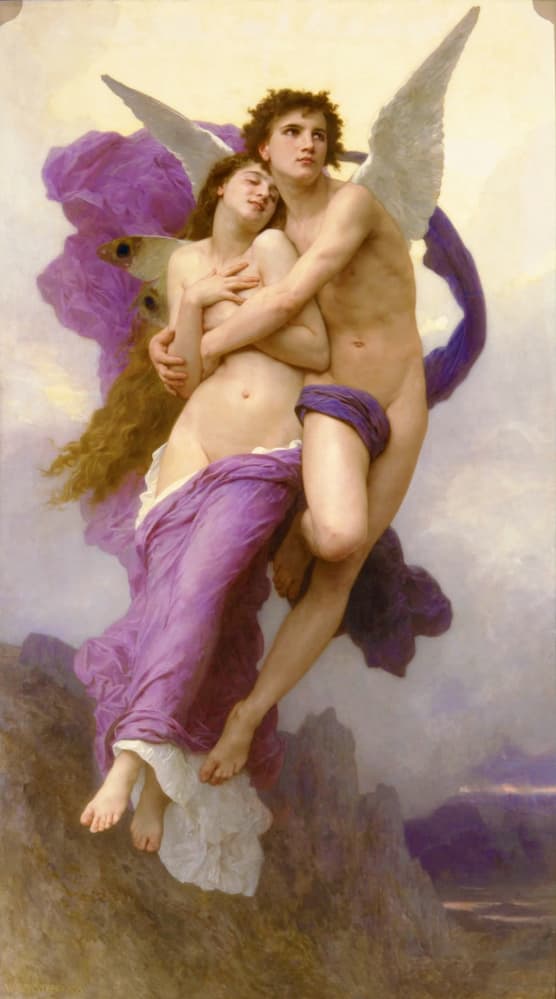
Hedone in Greek mythology, is the daemon or goddess of pleasure. Daughter of Eros and Psyche, she was born in Olympus after Hermes helped her mother return from Tartarus with the beauty of Persephone. Her birth was the trigger for her mother to be immortalized as a goddess.
She is classified as one of the Greek daemones because she directly affects the body-spirit connection of human beings. Endowed with lust and persuasion, she is depicted as a woman with butterfly wings.
Hedone never married or had children, but she admired and knew the story of her parents, a very beautiful and loving story, known to many people.
It is referred to in Epicurean philosophy because, like a daemon, it is the fruit of the union of passion with the soul. By means of an analogy, the term hedonism (cult of pleasure) was developed; Hedone being which is literally “pleasure” in archaic Greek. Its opposite is algea, the daemones of pain and feminine spirits who bring sorrow and tears to men.
The Myth of Psyche and the Birth of Hedone
Before Hedone
Aphrodite was jealous of the beauty of a mortal woman named Psyche (Ψυχή). She then asked Eros to use his golden arrows to make her fall in love with the ugliest man on earth. Eros agreed but ended up falling in love with Psyche himself (or accidentally pricking himself with one of his arrows).
Meanwhile, Psyche’s parents were anxious because they feared their daughter would be left without a husband. They consulted an oracle that told them Psyche was not destined for a mortal lover but for a monster living atop a certain mountain. Psyche resigned herself to her fate and climbed the mountain’s summit. There, Zephyr, the west wind, gently pushed her downward.
Psyche entered a cave on the mountain, surprised to find it filled with jewels and luxurious clothing. Eros visited her every night in the cave, and they had intimate relations. Eros only asked her never to light a lamp, as he did not want her to know who he was (having wings made him identifiable). Her two sisters, jealous of Psyche, convinced her to break this rule, and one night she lit a lamp, instantly recognizing Eros. A drop of hot oil fell on Eros’s chest, awakening him and causing him to flee.
When Psyche told her older sisters what had happened, they secretly rejoiced, and they each separately climbed the mountain to repeat how Psyche had entered the cave, hoping Eros would choose them. However, Zephyr did not lift them, and both sisters died, falling to the foot of the mountain.
Psyche went in search of her lover, wandering through Greece. Eventually, she arrived at a temple of Demeter, its floor covered with mixed heaps of grains.
Psyche began to sort the seeds by type, and when she finished, Demeter spoke to her, saying that the best way to find Eros was to seek out his mother, Aphrodite, and earn her blessing.
Psyche found a temple of Aphrodite and entered. Aphrodite assigned her a task similar to that of the temple of Demeter but also gave her an impossible deadline to complete it.
Eros intervened, still loving her, and had the ants arrange the seeds for her. Aphrodite, infuriated by the success, then sent Psyche to a meadow where golden sheep grazed to obtain golden fleece. Psyche went to the pasture and saw the sheep but was stopped by the river god she had to cross to enter the pasture. He told her that the sheep were wicked and dangerous and would kill her.
Still, if she waited until noon, the sheep would seek shade on the other side of the field to sleep, and Psyche could then gather the wool caught in the branches and on the tree bark. Psyche did so, and Aphrodite became even angrier at the averted danger and success.
Eventually, Aphrodite claimed that the stress of taking care of her son, who was depressed and sick due to Psyche’s infidelity, had caused her to lose some of her beauty. Psyche had to go to the Underworld and ask Persephone, the queen of the Underworld, for some of her beauty to put in a black box given to her by Aphrodite. Psyche went to a tower, deciding that the quickest way to reach the underworld was to die.
A voice stopped her at the last minute and revealed a path that would allow her to enter and return alive, also instructing her on how to navigate past Cerberus, Charon, and other perils on the journey. Psyche appeased Cerberus, the three-headed dog, with a honey cake and paid Charon an obol to ferry her into the Underworld. Along the way, she saw hands reaching out of the water. A voice told her to throw them a honey cake. Once there, Persephone said she would be happy to do a favor for Aphrodite. On the return journey, Psyche paid Charon again, threw honey into their hands, and gave more to Cerberus.
The Birth of Hedone
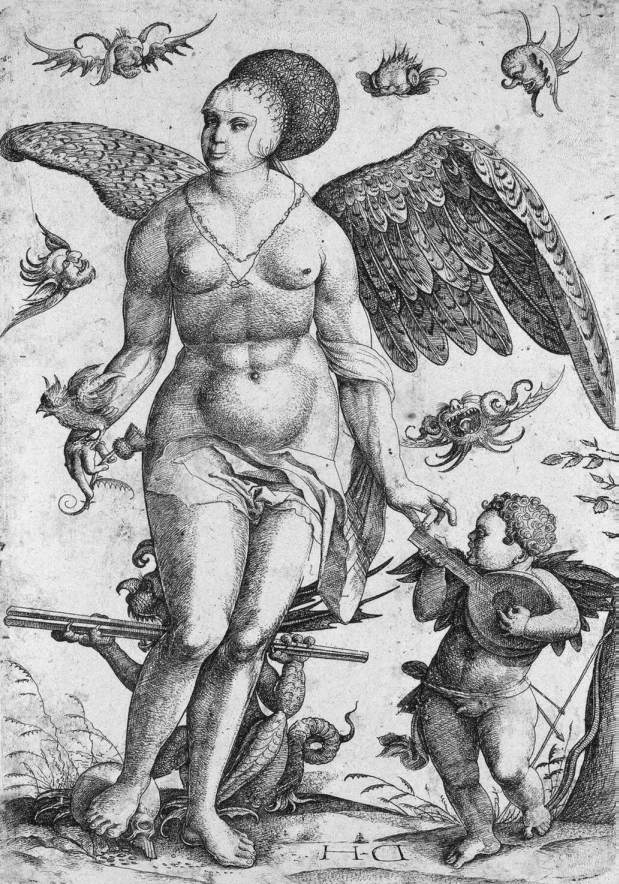
Psyche left the Underworld and decided to open the box and take for herself a small portion of beauty, believing that by doing so, Eros would surely love her. However, the box contained a “deathly sleep” that overcame her. Eros, having forgiven her, flew to Psyche and removed the sleep from her eyes, then implored Zeus and Aphrodite to give their consent to marry her. They agreed, and Zeus made her immortal. Aphrodite danced at the wedding of Eros and Psyche, and the two had a daughter named Edoné, or (in Roman mythology) Volupta.
Hedone in Philosophy
In Aristotelian philosophy, hedone is recognized as one of the components of pathe, which also includes lype or pain. Pathe, according to Aristotle, encompasses emotions that prompt changes in people’s judgments and are associated with feelings of pleasure or pain.
Within Aristotelian ethics, hedone plays a role in virtue, with pleasure (alongside pain) serving as a revealing factor for an individual’s character. Aristotle differentiates between virtuous pleasure and hedone, emphasizing that for a concept to be deemed good or true, it must align with nature, reason, or virtue. Despite acknowledging the potential harmony of hedone with these principles, Aristotle assigns it less value. Martin Heidegger’s interpretation suggests that pleasure, as per Aristotle, involves a soul movement leading to tranquility.
In the philosophy of Epicurus, hedone is characterized as a form of pleasure that may or may not stem from virtuous actions. In contrast, terpsis, another type of pleasure, is consistently considered virtuous. Epicurus specifically employs hedone to refer to physical pleasures.
On the Stoic front, there is a negative perspective on hedone, with the belief that it goes against the principles of nature and reason. Stoicism asserts that emotions, including excessive pleasure (hedone), exceed the boundaries of natural reason, resulting in irrationality and other detrimental outcomes.