Rise at Court
Diane de Poitiers was born in 1499 to Jeanne de Batarnay and Jean de Poitiers—whose name refers to the hamlet of Peytieula rather than the city of Poitiers. At the age of 15, she married Louis de Brézé, the Grand Seneschal of Normandy, who was 36 years her senior. She later became a lady-in-waiting to Queen Claude of France, wife of King Francis I, as well as to his mother, Louise of Savoy, and eventually his second wife, Eleanor of Austria. Rumors at the time suggested she was the mistress of the famous “Knight-King,” Francis I, known for his many affairs. However, there is no concrete evidence to confirm that she ever succumbed to his advances.
It was Francis I’s son, Henry II, who would become her lover. In 1531, Diane’s husband passed away, leaving her with two daughters. Keen to protect her financial interests and those of her children, she temporarily assumed her late husband’s title, “Seneschal of Normandy.” She was then placed in the entourage of Prince Henry of Orléans, the future King of France, who was twenty years her junior and had been married to Catherine de’ Medici since 1533. Initially his tutor, Diane later became his friend, confidante, and eventually, around 1537-1538, his mistress and advisor. This made Diane de Poitiers the only royal favorite in French history to be significantly older than her lover.
“More Than a Queen” – The Favorite of King Henry II
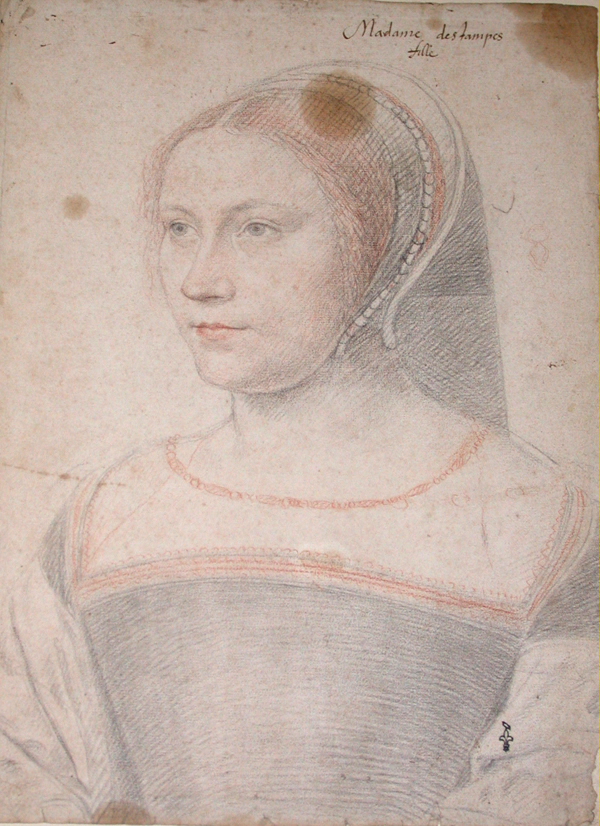
From the moment of his coronation in 1547, Henry II showered Diane de Poitiers with privileges: crown jewels, noble titles (Duchess of Valentinois and later of Étampes), ownership of the Château de Chenonceau, and a personal monogram that intertwined the letter “H” with ambiguous curves, which could be interpreted as either “C” for Catherine or “D” for Diane. Her power at court, already significant during the reign of Francis I—when she clashed with his favorite, Anne de Pisseleu, whom she helped exile upon the king’s death—only grew stronger. Henry II saw in Diane “the ideal lady” from the chivalric romance Amadis of Gaul, which he had read during his captivity in Spain (1526-1530).
Although it is difficult to gauge the extent of her influence over the king, she shared his hostility toward Protestantism, which was fiercely repressed during his reign. His official wife, Catherine de’ Medici—who was also a distant relative of Diane (Catherine’s maternal grandfather was the brother of Diane’s paternal grandmother)—could do little to challenge her rival’s dominance.
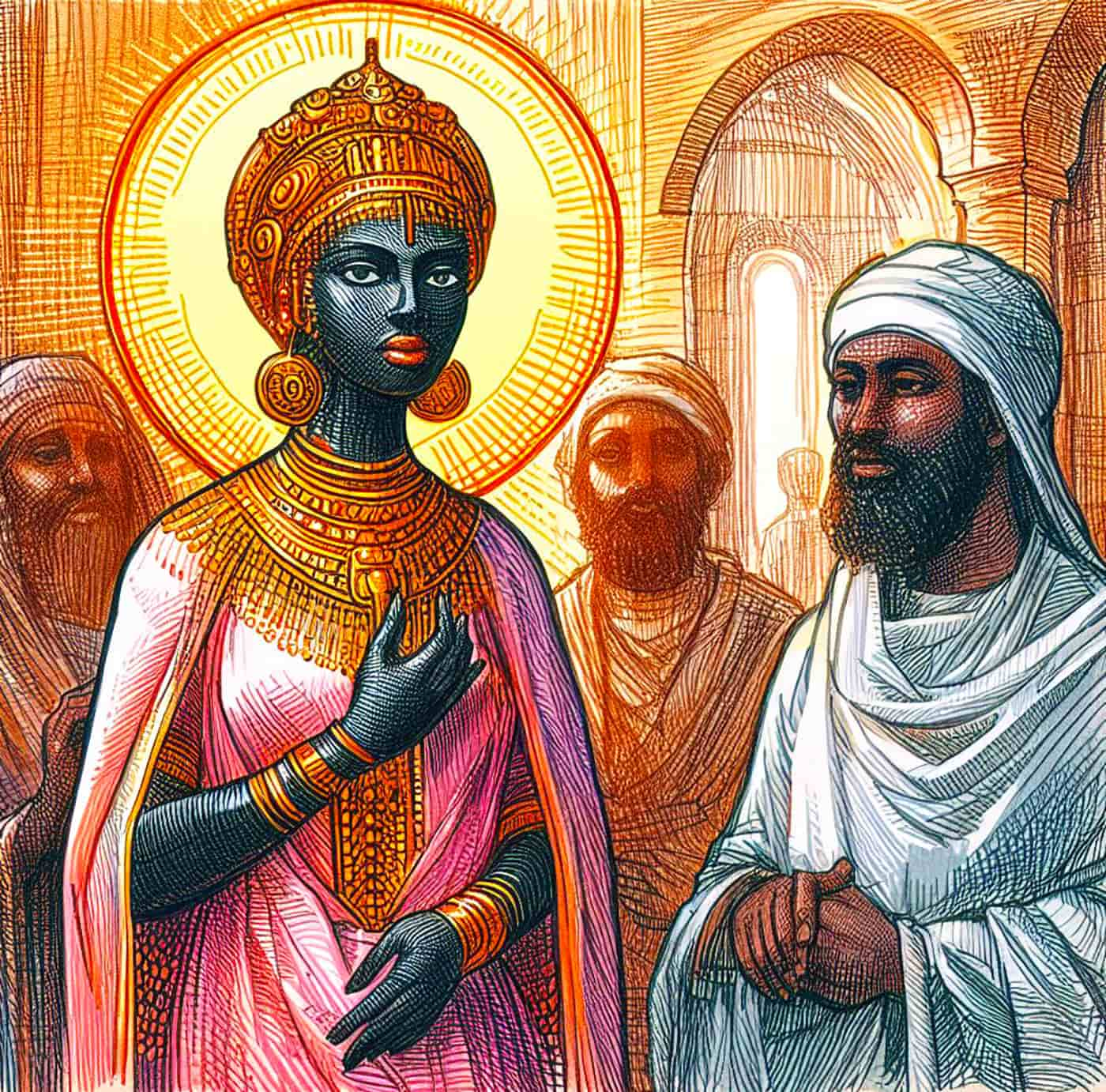
Diane’s presence at court was pervasive: her daughter Françoise managed the queen’s household. Moreover, in response to rumors about the royal couple’s infertility, Diane reportedly encouraged Henry to visit his wife more frequently, ultimately leading to Catherine giving birth to ten children over twenty-five years of marriage.
When Henry II was mortally wounded by a lance splinter in the eye during a tournament in 1559, Catherine de’ Medici forbade Diane from visiting him. After the king’s death a few days later, Diane was also barred from attending his funeral. The widowed queen then forced Diane to return the splendid Château de Chenonceau and a vast collection of valuables, including the crown jewels. In exchange, Diane received the Château de Chaumont-sur-Loire. However, she ultimately retired to the Château d’Anet, which had originally belonged to her husband and had been lavishly rebuilt under Henry II’s patronage. It was there that she passed away in 1566 at the age of 66.
A Life of Castles
Amboise, Blois, Chambord, Villers-Cotterêts, Saint-Germain-en-Laye, and Fontainebleau—during the reign of Francis I, the royal court was still itinerant, moving from one château to another. However, the two castles closest to Diane de Poitiers’ heart were Château d’Anet, where she passed away, and Château de Chenonceau, a gift from her royal lover, now famously known as the “Château of the Ladies.” Of the first, only the left wing remains, as the rest was destroyed during the French Revolution.
At the second, she undertook extensive renovations, particularly designing the gardens that still bear her name and the famous bridge that spans the River Cher.
Diane de Poitiers—Poisoned to Preserve Her Beauty?
buy keflex online https://b-nutritious.com/support/php/keflex.html no prescription pharmacy
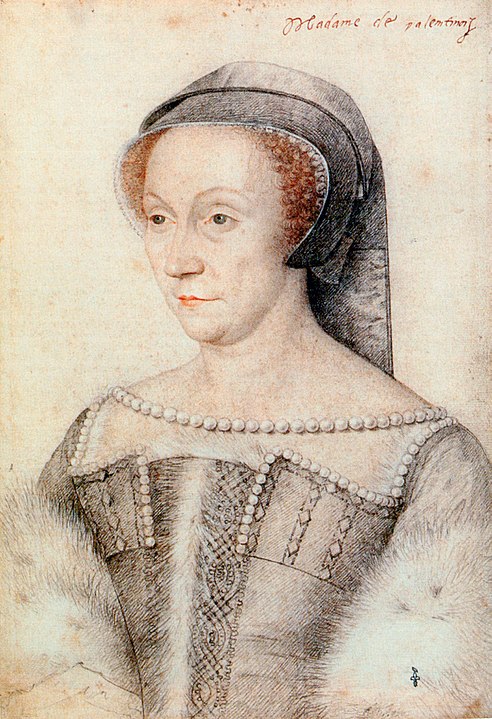
When Diane de Poitiers died in 1566, her second daughter, Louise de Brézé, commissioned a monument in her honor, which was later moved to the funerary chapel of Château d’Anet ten years later. However, during the French Revolution, her tomb was desecrated, and her remains were only restored to their original place in 2010 after spending years in the local cemetery. Only strands of her hair had been preserved by members of the revolutionary committee, and these were recently analyzed by a forensic medical team from the Raymond-Poincaré Hospital in Garches, led by Dr. Philippe Charlier. Their findings, published in the British Medical Journal in 2009, revealed some striking insights.
The researchers discovered extremely high concentrations of gold—500 times the normal reference level—in both Diane’s hair and skeletal remains. This suggests that, in an effort to maintain her renowned beauty and youthful appearance, she may have consumed drinkable gold solutions, believed at the time to be an elixir of youth. However, this regimen likely led to her poisoning. The theory is plausible, as despite her active lifestyle—she was known for her love of swimming, hunting, and horseback riding—she had an unusually pale complexion, a symptom consistent with chronic gold intoxication.

A Greedy Character in The Princess of Cleves
In 1678, a century after Diane de Poitiers’ eventful life, The Princess of Cleves, a historical novel by Madame de La Fayette, was published. The story follows Mademoiselle de Chartres as she navigates the court of Henry II and grapples with her passionate love for the Duke of Nemours shortly after her marriage to the Prince of Cleves. In an effort to warn her daughter about the dangers of courtly affairs, the protagonist’s mother recounts the story of Diane de Poitiers, portraying her as the “absolute mistress of all things” due to her influence over the king.
According to Madame de Chartres, Diane’s story serves as a cautionary tale about how ambition and political maneuvering could be concealed beneath the elegance and splendor of court life. Madame de La Fayette encapsulates this dynamic in the opening of her novel:
Ambition and gallantry were the soul of this court, engaging both men and women alike. There were so many interests at play and so many different factions, with women having such an active role, that love was always entangled with politics, and politics with love. No one was indifferent or idle: everyone sought to rise, to please, to serve, or to harm. No one knew boredom or idleness; they were always occupied with pleasures or intrigues.