The first submarine concepts date back to the 16th century. However, the first design ideas for underwater travel go even further. The initial challenges with the submarine design were all about how to operate the ship overall. Most efforts were made to improve underwater durability and performance. Now let’s learn more about the invention of the first submarine and the historical development of these underwater vehicles.
The invention of the submarine
The first real submarines did not appear until the 19th century. During the American Civil War, the Confederate forces developed the H.L. Hunley submarine and sank a Union ship, the Housatonic, which was launched in 1864. The first practical and modern submarines were invented after World War I.
The timeline below summarizes the entire design process of submarines, from manned battleships to today’s nuclear-powered solutions.
1578 – William Bourne
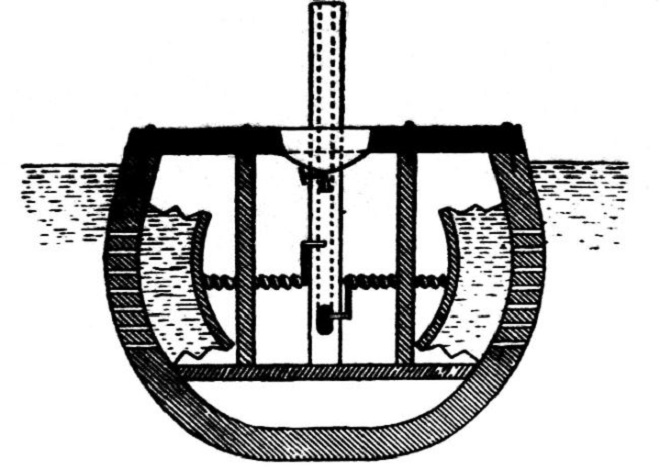
William Bourne created the first submarine design. He couldn’t, however, go beyond the planning stage. Bourne’s concept depended on ballast tanks, which are chambers filled with water to submerge the vehicle and then drain it to the surface.

When tried in the 1600s, this wooden-framed submarine was wrapped in waterproof leather but failed against the underwater dirt. Today’s submarines employ the ballast tank principle in their design.
1620 – Drebbel
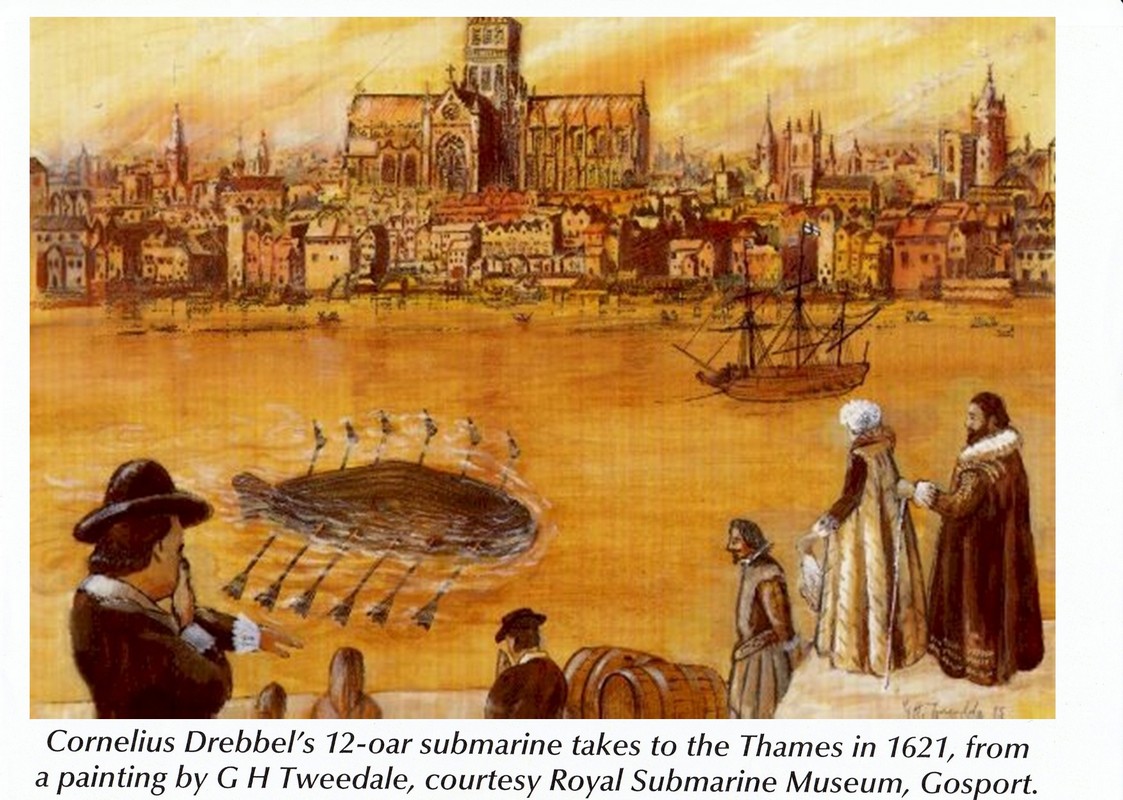
Cornelis Drebbel, a Dutchman, devised and constructed an underwater vehicle with oars. Drebbels’ idea handled the problem of air replenishment while the ship was underwater. By burning potassium nitrate, Drebbel created oxygen (saltpeter). King George, I employed the vehicle, which could dive up to 3.5 meters.
1776 – Turtle, the first military submarine
David Bushnell created the Turtle submarine, and only one person was in charge of it. With this machine, the Colonial Army attempted to sink the British battleship HMS Eagle. It was the first submarine to participate in a naval engagement.
A manually operated propeller moved the Turtle. The operator had to descend under the hostile ship and remove the mine bomb carried by the Turtle.

1798 – Nautilus
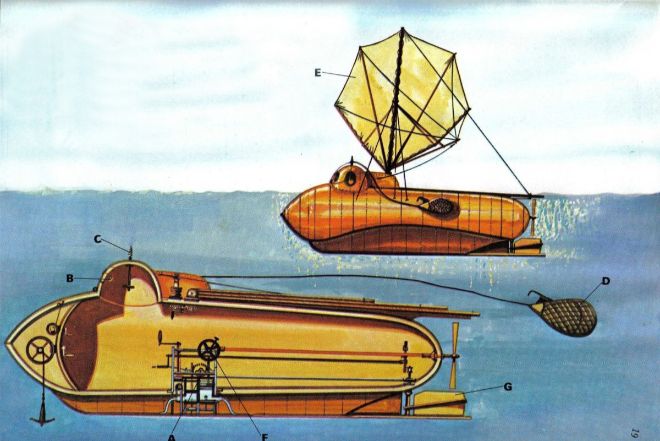
Robert Fulton built the Nautilus submarine, which used two different forces for propulsion. They were the sail when it was on the surface and the manually controlled propeller when submerged in the water. The sail is believed to be a mistake in the design.
1895 – Holland VIII, electric engine submarine
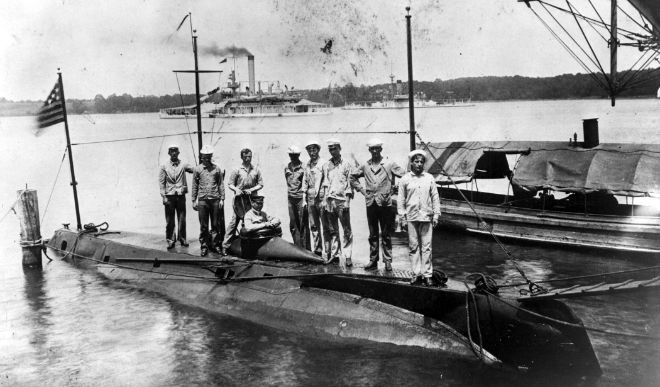
John P. Holland created the Holland VII submarine. Later, he designed the Holland VIII (1900). The most recent version had two engines: a petroleum engine on the surface and an electric engine below. Until 1914, all naval forces across the globe employed this design.
1904 – Aigrette
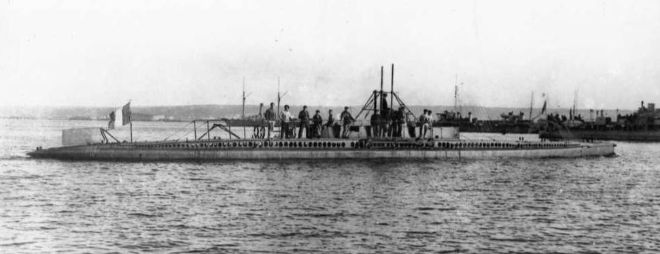
The Aigrette, a French submarine, was one of the first to deploy an electric engine. The primary motor, though, was crucial: a diesel engine for surface propulsion. Diesel engines have benefits in submarines. As a result, all models nowadays wear them. They do not directly operate the propellers but rather charge the electric engine’s batteries.
1943 – U-264
The German U-264’s snorkel mast was supplying air to the engine. This revolutionary technology-enabled German U-boats to operate in shallow waters for longer periods of time than had previously been possible. Recharging the batteries does this.
1944 – U-791
The German U-791 was the first submarine to use hydrogen peroxide as an alternative fuel source.
1954 – Nautilus, the first nuclear submarine
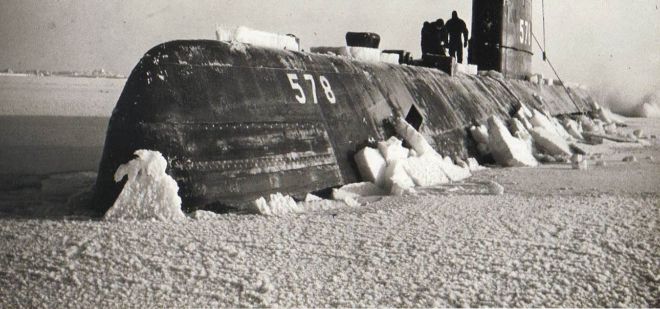
The USS Nautilus was the world’s first nuclear-powered submarine. Nuclear power has transformed submarines into true “submersibles.” This energy enabled them to stay underwater indefinitely.
1958 – Albacore
USS Albacore (AGSS-569) was a research submarine and had a hull design that had never been seen before. It is called a “teardrop,” which reduces underwater resistance to allow Albacore to operate faster. The USS Skipjack adopted this idea later.
1959 – USS George Washington
The USS George Washington was the first nuclear-powered submarine in the world equipped with ballistic missiles. This operational terror machine meant a huge advantage in the Cold War.