The high-pressure steam engines had their own distinct place in history compared to the regular steam engines. Those historical devices utilized steam energy in various ways. Richard Trevithick was the inventor of the first high-pressure steam engine and the first operational steam locomotive. During the 19th century, the railways revolutionized millions of people’s lives by making it easier to communicate and travel between places. The birth of the railways came after British engineer Richard Trevithick invented the high-pressure steam engine and also designed and built the first steam locomotive and one of the first cars.
Richard Trevithick and the first high-pressure steam engine
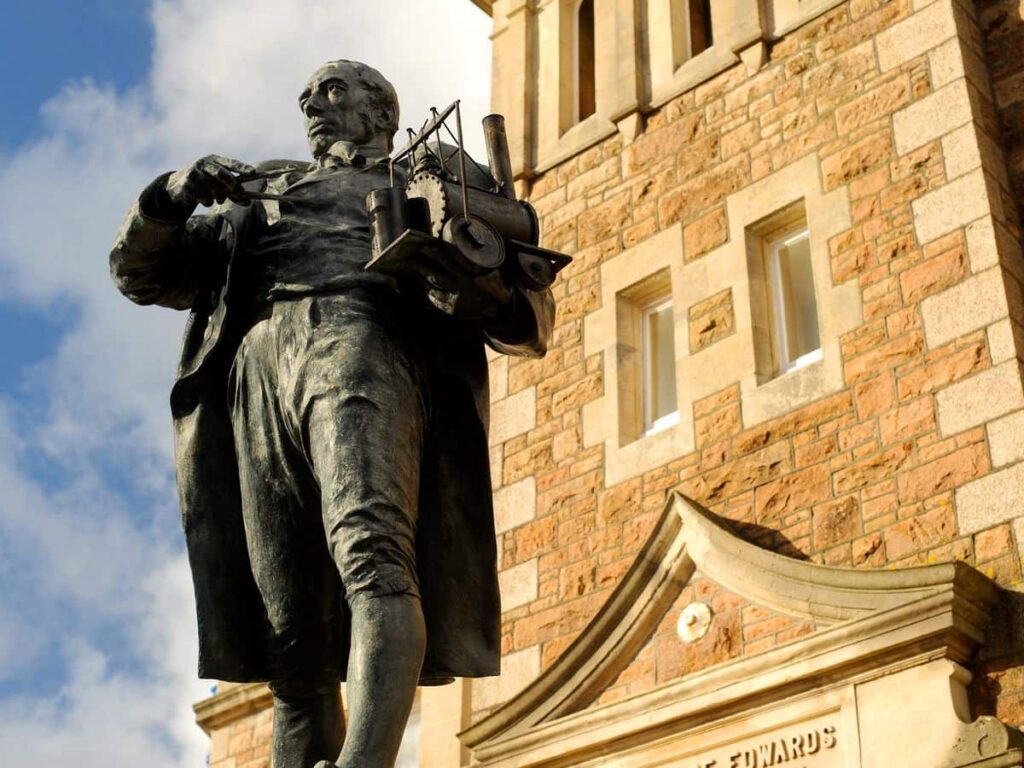
Richard Trevithick was born in Cornwall, England. Richard’s father was a manager of the mines in their area, and the young Richard spent much of his time learning about steam engines. Initially, he was not a successful student, but after becoming a mining engineer at the age of 19, he achieved great fame.
At that time, steam power was used only in construction equipment at atmospheric pressure or slightly higher pressure. Trevithick had foreseen that the high-pressure steam could allow smaller and more powerful machines. At that time, many scientists like James Watt feared the “powerful vapor” because of the chance of an explosion. Trevithick began experimenting with high-pressure steam in the 1790s. In 1794, he produced his first boiler made of heavy cast iron, resistant to high pressures.
The first locomotive on the rails
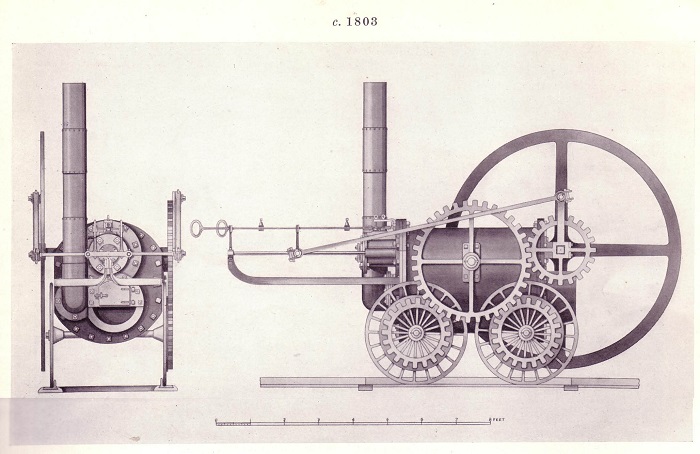
Richard Trevithick developed the first steam-powered car model in 1797. In 1801, he successfully propelled the life-size passenger car he called the “Puffing Devil.” After his car broke down in an accident, he decided to create a locomotive that moved on rails in 1802. At that time, horse-drawn cars were used on the railways. Coal was usually carried from the mines to ships by wagons. Richard Trevithick’s famous vehicle, made for the Coalbrookdale Ironworks Company, was probably the first locomotive to go on rails. However, everything about this locomotive is limited to one letter and a drawing.

In 1803, Trevithick built another steam car and demonstrated it in London. Although the car managed to attract a lot of attention, the project could not be continued due to its high production costs. The steam car was also noisy and troublesome compared to horse-drawn carriages. That same year, one of Trevithick’s boilers exploded in Greenwich, London. Trevithick’s work might have been interrupted, but he developed the “fusible plug” as a safety device. He decided not to get a patent for this safety invention to popularize high-pressure steam systems.
First steam locomotive to carry 70 passengers
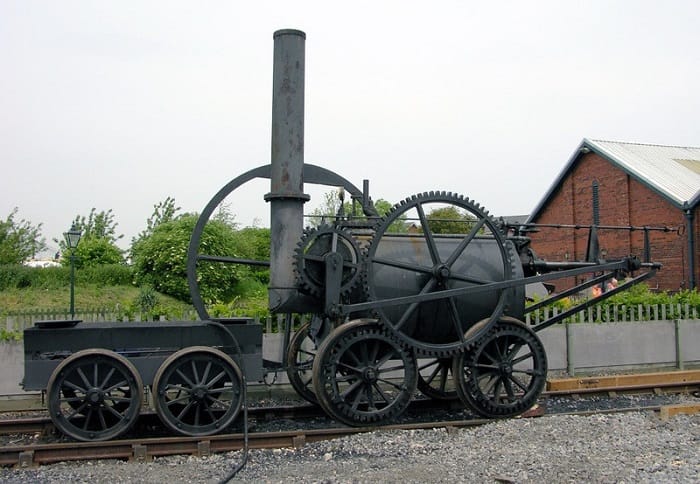
The world’s first steam train, or locomotive, consisting of the freight wagons it pulled, was invented as a result of a wager. The owner of the Pen-y-Darren foundry in Merthyr Tydfil, Wales, made a bet with the manager of a nearby factory that iron-filled wagons could be moved by steam locomotive all the way to a canal 10 miles (16 km) away.
At that time, the railroads were already open for operation, as the wagons were pulled by horses. The locomotive made by Richard Trevithick carried 10.2 tons of iron and 70 people in February 1804 to this exact distance. Although the rails were broken in some places by weight, the reality of the steam train was presented in concrete form. Trevithick manufactured a lighter locomotive for coal mining in Newcastle in 1805. Although the vehicle was running without issues, it was not put into service.
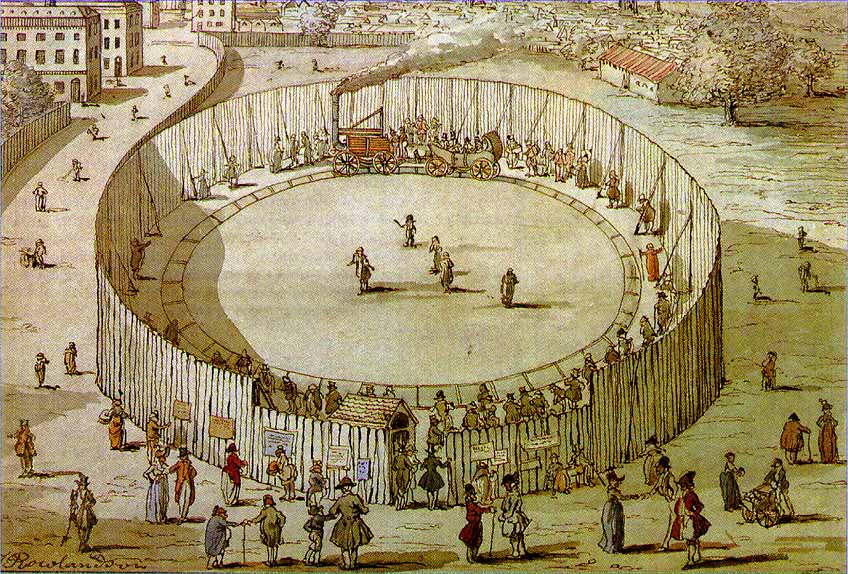
Trevithick built a circular railway line in Euston, London, in 1808 to better promote the idea of the steam locomotive. It was the world’s first passenger railway. From July to September of the same year, Trevithick’s locomotive, known as the Catch Me Who Can carried everyone on this railway who had paid five shillings. The locomotive could tow a single wagon at a speed of 12 miles (20 km).
Richard Trevithick’s steam engine inventions
The term “high-pressure steam engines” is very important in itself. Because Trevithick also built a steam-powered dredging machine, he floated a canal barge with one of the steam machines he invented, and in 1812 he developed a machine that separates the corn grains. Apart from these, he invented a propeller for use in steamships and a new device that could be used to heat homes. Trevithick also worked as an engineer on a tunnel to the River Thames and took part in various projects related to the silver mines in South America. Richard Trevithick’s most important contribution to history would be that he helped start the railroads.
Rainhill Trials
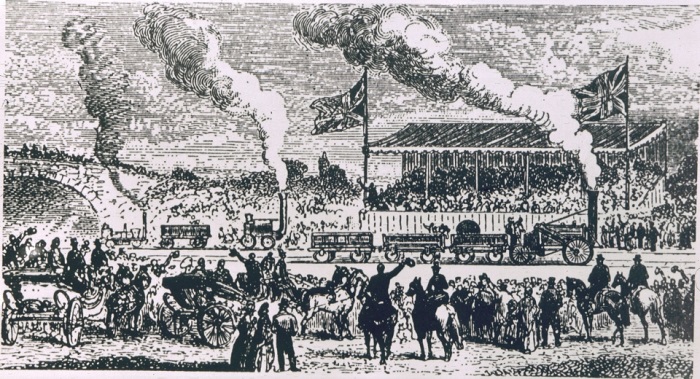
Richard Trevithick pioneered the adoption of the railways. However, until the 1820s, people did not see the steam locomotive as an alternative to horse-powered transportation. The first public railroad using steam power began operating between Darlington and Stockton in the north of England in 1825. Two of the railroad’s engineers and partners were father and son, George (1781–1848) and Robert Stephenson (1803–1859).
In 1829, Stephenson participated in the Rainhill Trials, a competition held to determine the locomotive to be selected for the planned Liverpool-Manchester railway road. The name of the candidate locomotive was “Rocket.” The many innovations brought by this vehicle set an example for all future steam locomotives. The “Rocket” was the only locomotive that could complete the envisaged 3-mile (5-kilometer) tour in the competition. The vehicle could speed up to 29 mph (47 km/h) without passengers.
Bibliography:
- Burton, Anthony (2000). Richard Trevithick: Giant of Steam. London: Aurum Press. ISBN 1-85410-878-6.
- Hodge, James (2003), Richard Trevithick (Lifelines; 6.) Princes Risborough, Buckinghamshire HP27 9AA: Shire Publications
- Kirby, Richard Shelton; Withington, S.; Darling, A. B.; Kilgour, F. G. (August 1990). Engineering in History. New York: Dover Publications Inc. ISBN 0-486-26412-2.
- Lowe, James W. (1975), British Steam Locomotive Builders. Cambridge: Goose ISBN 0-900404-21-3 (reissued in 1989 by Guild Publishing)