One of the greatest conquerors, Alexander the Great, has been the focus of considerable conjecture, and the question of whether or not he was gay remains one of the most contentious. According to several historians, Alexander had a great affinity for men; however, others believe that this is a result of a misreading of the historical record. Alexander’s close ties with men like Hephaestion and Bagoas have been interpreted by some as proof of his homosexuality, while others have argued that they were merely close companions. Another common argument against Alexander’s claimed homosexuality is that he was married many times to different women and had at least one child from them, Alexander IV. That is why whether Alexander the Great was gay or not is still an open question today.
Alexander the Great’s Relationships with Men
Alexander’s relationship with Hephaestion
Throughout his life, Alexander the Great is said to have had a number of close relationships with men. Hephaestion, Alexander’s closest friend and confidant, stood out among these friendships. It was said that Hephaestion and Alexander had been close since they were kids, almost like brothers. Alexander was so devastated by Hephaestion’s death that he advocated worshipping him as a god.
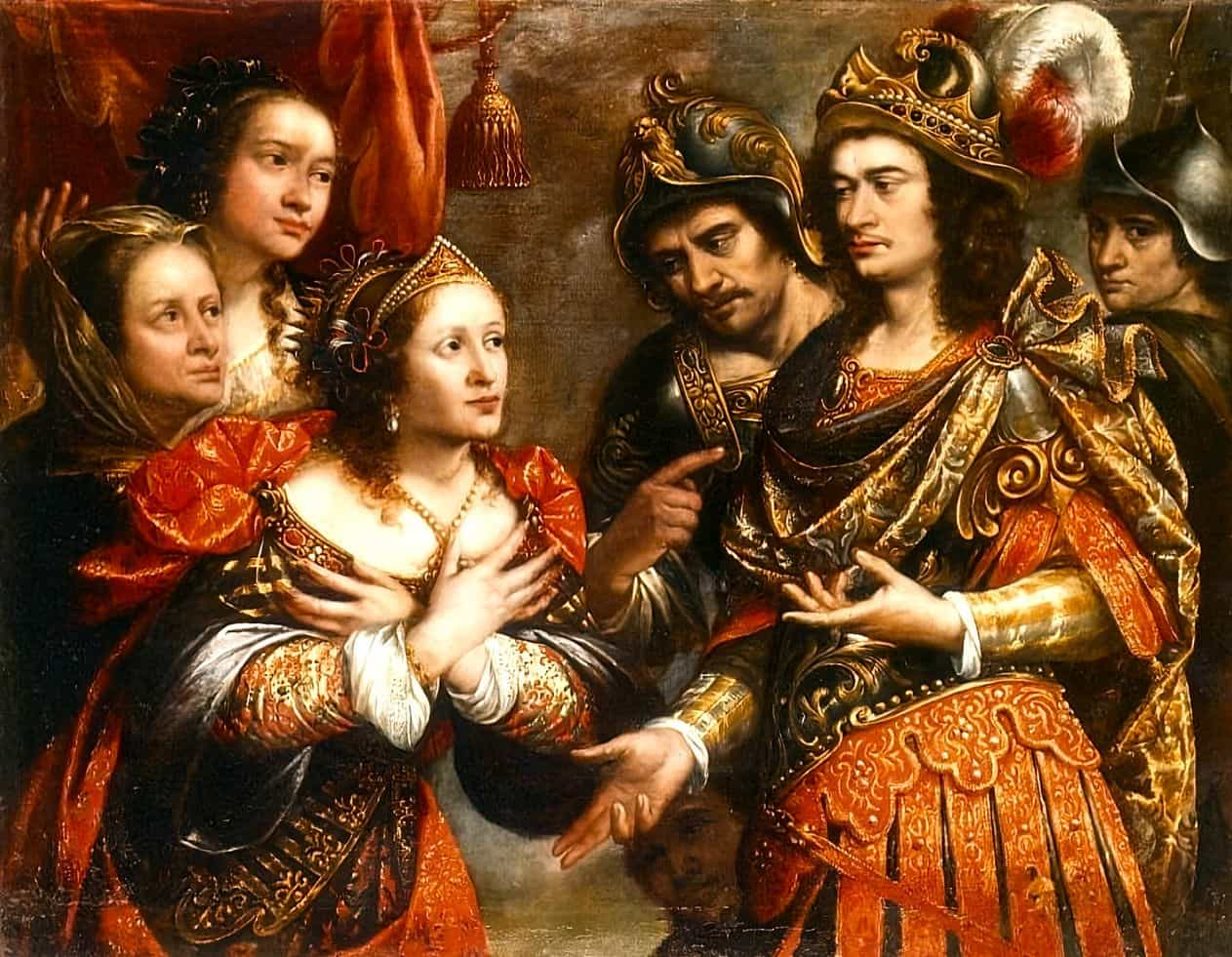
Before Plutarch and Arrian, the Roman historian Curtius authored The History of Alexander in the first century AD where he discussed Alexander and Hephaestion in his writings.
According to Curtius,
“Hephaestion was by far the dearest of the king’s [Alexander’s] friends; he had been brought up with Alexander and shared all his secrets. No other person was privileged to advise the king as candidly as he did, and yet he exercised that privilege in such a way that it seemed granted by Alexander rather than claimed by Hephaestion.”
Quintus Curtius Rufus, History of Alexander, 3.12.16.
Hephaestion is later compared to a young man called Euxenippus by Curtius in Book 7. Some researchers think he was the Persian eunuch that Alexander personally liked, Bagoas:
Therefore, he [Alexander] received the envoys of the Sacae courteously and gave them Euxenippus; to accompany them; he was still very young and a favorite of the king [Alexander] because of his youthful beauty, but although in handsome appearance he was equal to Hephaestion, he was not his match in a charm which was indeed not manly.
Quintus Curtius, History of Alexander, Volume II: Books 6-10, The University Of Michigan Libraries.
Curtius here appears to be making a reference to the possible sexual motivations for Alexander’s preference for Hephaestion over Euxenippus. And perhaps this could be why Alexander found Hephaestion’s death so devastating. Curtius was cautious in describing the nature of the connection between Alexander and Hephaestion. Perhaps it was because in the 4th century BC Greece, the concept of sexual intercourse between adult males was not commonly tolerated.
Diodorus Siculus, a historian from Sicily, lived between 90 and 30 BC. Despite living two centuries after Alexander, he is still one of the closest ancient historians to the time period of Alexander’s life. The Macedonian general Craterus was one of the most devoted and loyal friends of Alexander, but according to Diodorus, Craterus was merely “king-loving” (philbasileus), while Hephaestion was “Alexander-loving” (philalexandros).
Alexander threw himself into preparations for the burial of Hephaestion. He showed such zeal about the funeral that… it left no possibility for anything greater in later ages… …when one of the companions said that Craterus was loved no less than Hephaestion, Alexander had answered that Craterus was king-loving, but Hephaestion was Alexander-loving.
Diodorus. 17.114.(1-2)
After Hephaestion passed away at Ecbatana due to fever, it was a blow to Alexander, during which he refused to eat or drink and spent three days flat on the ground in sorrow.
The chroniclers of the past often sought to portray Alexander the Great in a positive light while overlooking any perceived “shortcomings” he may have had. This includes whether Alexander the Great was gay. It’s still worth noting that this is not concrete evidence to suggest that Alexander and Hephaestion had a romantic or homosexual relationship.
Alexander’s relationship with Bagoas
A eunuch and Persian, Bagoas the Younger was another individual Alexander had a close friendship with. Allegedly romantically involved, Bagoas worked as Alexander’s personal attendant and was designated a courtier. Following the victory, Bagoas the Younger was presented to Alexander the Great by King Darius III’s court of the Persian Achaemenid Empire. Typical of ancient Greek culture, Alexander had a liking for young boys, and Bagoas soon became his closest confidant.
According to Plutarch, the Macedonians once cheered to bade Alexander kiss Bagoas in a public event:
We are told, too, that he was once viewing some contests in singing and dancing, being well heated with wine, and that his favourite, Bagoas, won the prize for song and dance, and then, all in his festal array, passed through the theatre and took his seat by Alexander’s side; at sight of which the Macedonians clapped their hands and loudly bade the king kiss the victor, until at last he threw his arms about him and kissed him tenderly.
Plutarch – Life of Alexander (Part 7 of 7)
Alexander the Great’s Marriages and Children
As counterevidence to the claim that Alexander was gay, many point to his many marriages to women and the children he had with them. Over the course of his brief life, Alexander married Roxana, Stateira, and Parysatis. And it’s not 100% definite that all of them were committed partners of his. Alexander’s sole known child, Alexander IV, was born to his Bactrian wife, Roxana, after his death in 323 BC. Historians have speculated that Stateira could have been pregnant when she died.
Alexander’s Sexual Orientation Explained by the Cultural Aspect of Greeks
Males often had intimate, sexual connections with other men in ancient Greek society. Such pairings weren’t automatically seen as signs of gay or bisexual orientation, but rather as a natural part of life. Because of this, it’s crucial to think about how the ideas and customs of the period affected Alexander’s personal connections. These close friendships often characterized ancient Greek society, and that’s why there wasn’t always sexual tension between them.
Was Alexander the Great Gay or Straight?
Historical accounts indicate that Alexander had a voracious sexual appetite and a constant presence of women in his life. As he grew older, he reportedly indulged in the company of concubines every night. In conclusion, it is impossible to state with certainty whether or not Alexander the Great was gay or even bisexual, despite evidence suggesting he had intimate ties with men. Alexander’s sexuality is still a mystery and a hotly disputed issue among academics.