Biologists have estimated that there are at least 20 quadrillion ants in existence on Earth, or around 2.5 million ants for every human being. This means that the total dry biomass of all ants exceeds that of all birds and wild animals put together. The subtropical and tropical areas have the highest ant density, yet the ant world map still has a lot of blank spaces.
Ants are common in practically every environment, including forests, gardens, and cities. While scientists have documented and named over 15,700 different species of social insects, they suspect the number is really closer to 30,000. Ants are crucial in the breakdown of organic matter because they are aphid or fungus producers as well as a source of food for a wide variety of birds, arthropods, and mammals.
Ant Population Count
But how many ants exist on a global scale? So far, estimates of ant population size have been made only on a rough scale, using methods such as local sampling or the fact that ants account for just a fraction of the world’s insect population (1%). Estimates have varied greatly in the past because of the large number of unknown variables involving the frequency and variety of insects. As a result, the “census” of the world’s ant population was conducted in a novel way by a group headed by Patrick Schultheiss of the Universities of Hong Kong and Würzburg.
The scientists looked at information from 465 studies from all around the globe that counted ants by taking soil litter samples or by using ground traps. The second technique was examined independently from the former since it represents activity rather than absolute numbers of ants in a region. Also included were results from 24 research that sprayed whole tree canopies with pesticide to determine ant populations.
Worldwide, There Are Around 20 Quadrillion Ants
It is estimated that there are three quadrillion ants in the world’s ground litter. The ants in the litter are only a small sample of the whole ant population. The overall number of ants, including those in various environments, is estimated to be roughly 19.8 quadrillions (that makes 19,800,000,000,000,000). That means there are around 2.5 million ants for every human being on Earth.
Even though each ant weighs almost nothing, the total dry biomass of all ants adds up to around 12.3 megatons of carbon, according to the study’s authors. This represents almost 20% of the total human dry biomass and is comparable to the total dry biomass of all wild birds and animals.
Especially In the Tropics
Ants, however, are not uniformly dispersed throughout all temperate zones and ecological zones: Remarkably, just two biomes—tropical rainforests and tropical savannas—are home to more than half of the world’s ant population.
Results from the scatterplots show that the abundance of ants is two times as high in subtropical and tropical ecosystems as it is in temperate ones. Ant activity in tropical and subtropical regions could be three to four times greater than in temperate regions. This demonstrates how crucial tropical areas are to the worldwide quantity and biomass of ants.
Omnivorous Ant-Eaters From All Corners of the World
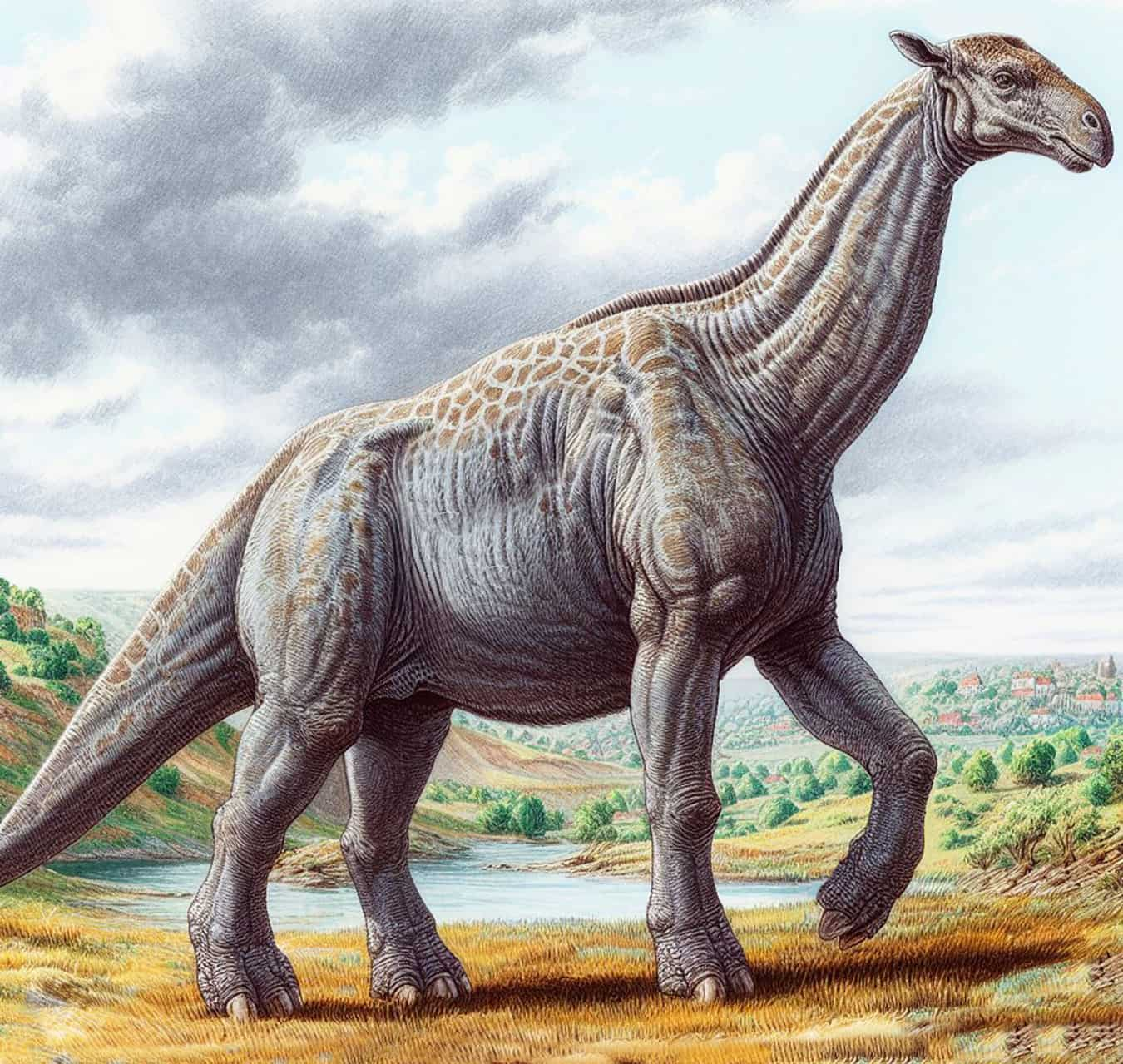
A large number of mammalian species, particularly in the tropics, have adapted to rely on ants as a primary food source. The anteaters of South America, the pangolins of Southeast Asia, and the aardvarks of Africa have all separately acquired specialized adaptations that allow them to dig up ant nests and gather the ants with their insensate, long tongues.
To escape being eaten by ants or to be able to feed on them directly, more arthropods copy ant behavior or morphology in the tropics since ants are more prevalent there and mimicry is thus more successful there.
The Real Figure Is Significantly Higher
Indeed, the new study has improved our understanding of the staggering magnitude of the ant population on Earth. However, the group emphasizes that these numbers represent a cautious assessment. The number of unreported instances is likely considerable since there are numerous habitats and biomes for which very little data is available. Examples of such biomes and habitats include subterranean habitats, mangroves, and boreal woods. There is also a lack of data from Africa and Central Asia.
For this reason, the estimated global ant population likely understates the genuine amount by a significant margin. To acquire a fuller understanding of ant diversity and patterns of global biodiversity, their causes, and their implications, there is so much more work to do.
Sources:
- How many ants are there on the planet? Their combined weight will surprise you. (2022, September 26). Mint.
- Grandoni, D. (2022, September 19). Scientists have calculated how many ants are on Earth. The number is so big it’s ‘unimaginable.’ Washington Post.