The most pivotal moment in human history occurred around 11,000 years ago, when agriculture was first developed. It made space for novel ways of thinking and doing things, as well as for a reorganization of society. For what reasons did modern Homo sapiens first begin farming? Actually, nobody can say for sure. The emergence of agriculture, however, was crucial to the subsequent growth of urban centers, literacy, and ultimately, civilization. Since the Neolithic Era forward, human sustenance has shifted away from hunting and gathering to agriculture and livestock raising. In the 10th millennium B.C., this shift began in the Near East and spread to other population hubs throughout the globe. Population expansion, attesting to a change in lifestyle that resulted in higher food demands, explains this phenomenon.
Improvements in farming
Several times during the 10th and 8th millennia B.C., people on all four continents “developed” agriculture on their own. The archaeological remnants of plants and animals are our only source of information, although their numbers were likely far larger in reality. Even before the first traces of agriculture, it’s likely that ancient hunter-gatherers had established a kind of proto-agricultural by dispersing seeds or tubers from the plants they had gathered from the wild to ensure that the plants would not be depleted.
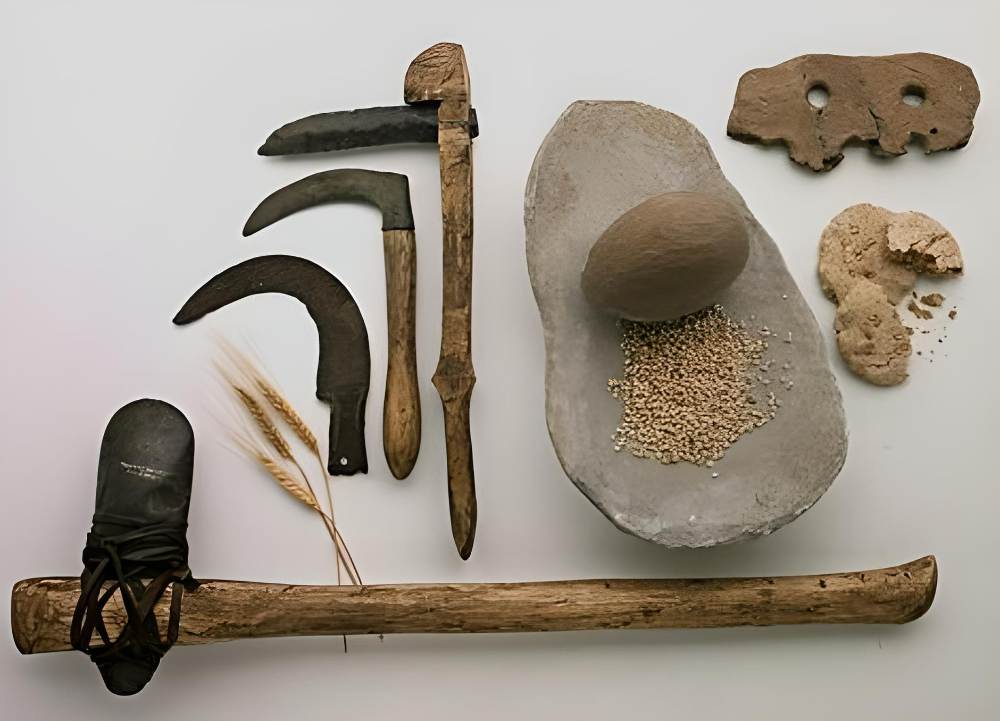
Recent hunter-gatherer cultures apparently still engaged in this method, as shown by anthropological research. Under the right circumstances, it has even developed into a full-fledged manufacturing sector. Tools like the millstone for grinding, the knife for harvesting, and the digging stick were all creations of the hunter-gatherers. There was no need to develop brand-new technologies to facilitate the emergence of agriculture.
While humans have been around for at least 300,000 years, agriculture as a subsistence economy didn’t emerge until around 11,000 years ago and it took centuries to become widespread. This means that fewer than 5% of human history, or around 500 generations, has been spent as “farmers.” Accordingly, natural selection has led to our species’ development, notably in our forager ancestry. Natural selection, however, benefited those who engaged in agriculture. The evidence may be found in the decipherment of the human genome.
For instance, lactase, an enzyme that allows newborns to digest lactose, a milk protein, has persisted in adults thanks to a genetic mutation in the DNA of Central European herders 6,000 years ago. After the age of four, most people lose the ability to digest lactose because this enzyme stops being produced. This mutation is now widespread throughout Europe but is rare or nonexistent in regions such as the Far East and South America, where milk production from domesticated animals is not commercially exploited.
Agriculture helps increase the population
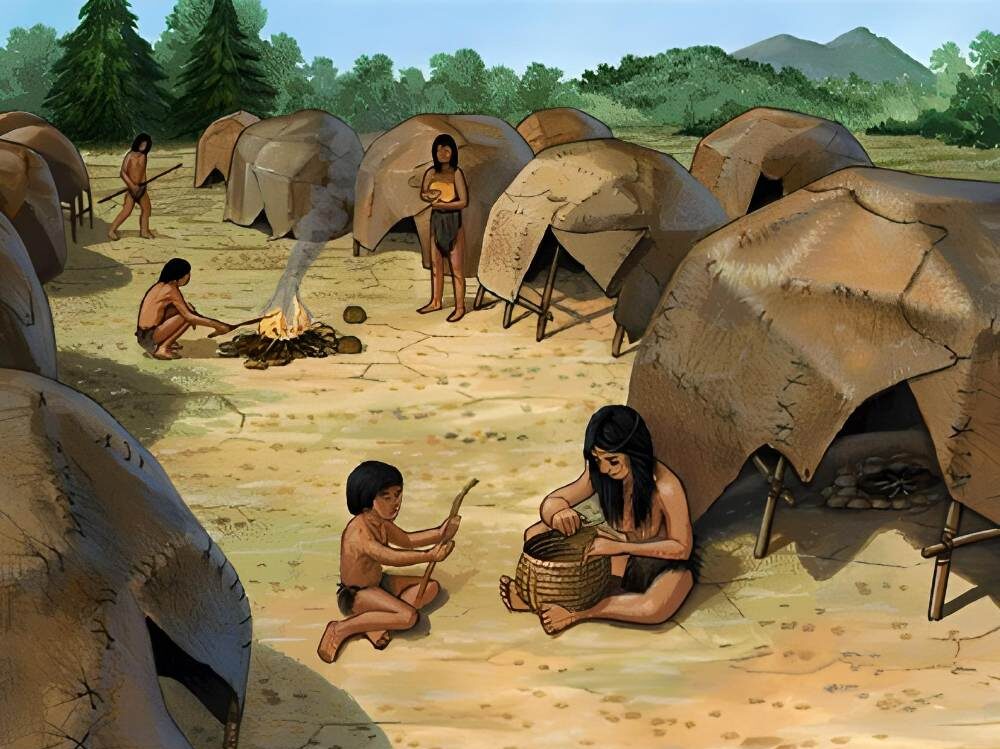
Thus, the descendants of settled farmers rose to prominence at the expense of their nomadic ancestors. Because of their low reproductive success, the latter were driven to the margins of the earth, if not eradicated altogether, while farmers came to rule the world. The number of Homo sapiens has increased from 2–5 million to 8 billion since the advent of agriculture. This agricultural production system has never ceased changing natural vegetation, with more alarming environmental repercussions, and this is directly responsible for the dramatic increase in the world’s population.
Despite the wide spread of agriculture, only a select few societies were able to develop under the influence of this economic model. To begin, have a look at South-West Asia. Due to the semi-arid environment, the ruins in this area are in remarkably good condition, making it one of the finest documented regions in the world by archaeologists. Cereals like wheat, barley, and rye, as well as legumes like peas, chickpeas, and lentils, grow wild in their native environment in the Fertile Crescent (seen on the map). The previous ice age occurred 23,000 years ago, and at that time, wheat and barley were already being cultivated.
About 14,000 years ago, in the southern Levant, people settled down thanks to the great yields and easy storage of these plants (Israel, Palestine, Jordan). Then, starting about 11,000 years ago, locals started growing and using grains commercially on a huge scale. Through Darwinian selection, the plants that were most suited to cultivation eventually became the dominant species, while their wild relatives were extinct over the course of the next millennium. Domestication (or cultivar improvement) began with natural selection and evolved into the intentional breeding used today.

Early stages of livestock breeding
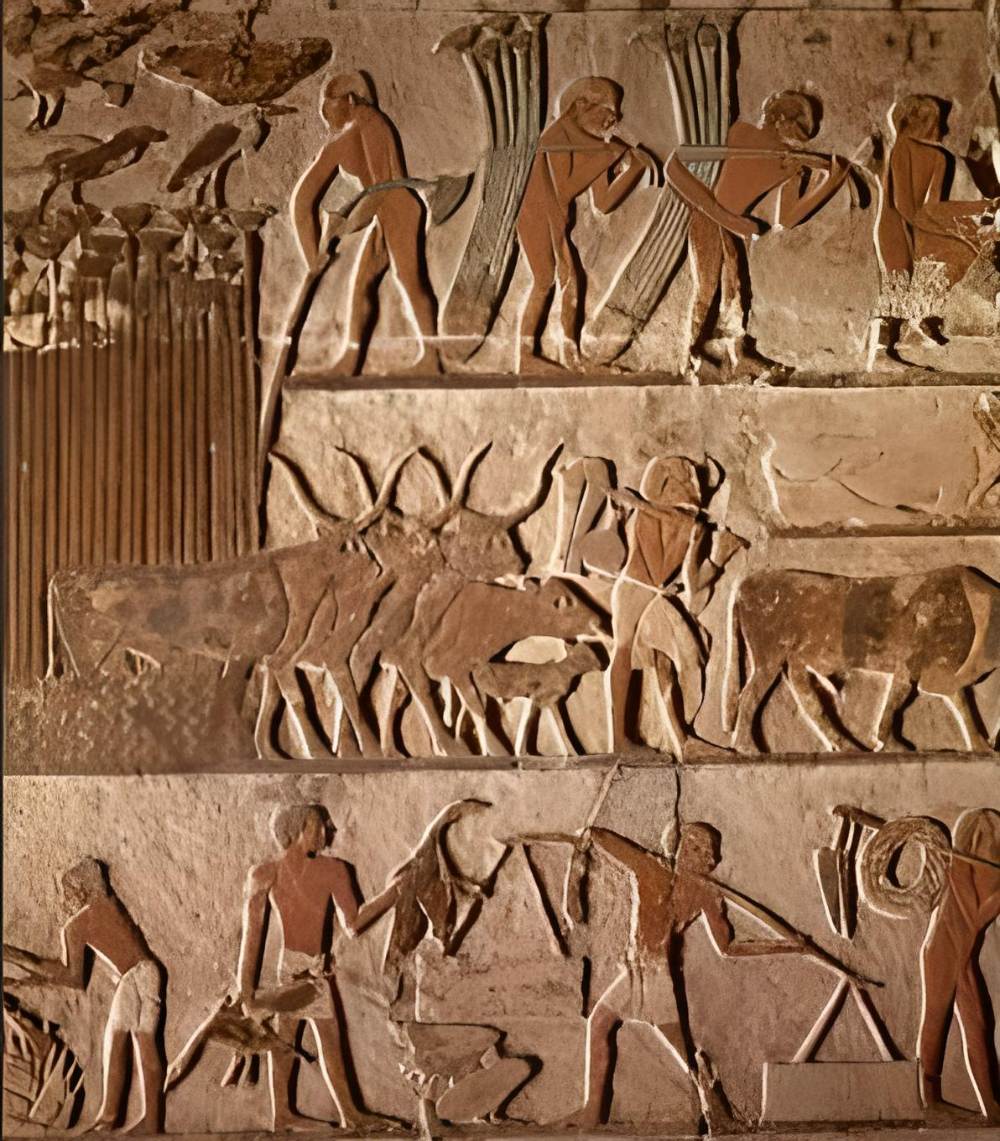
Animal husbandry, including the domestication of the cow, goat, sheep, and pig, also began in this period, around 10,500 years ago. Plants and animals provided the starch (a vast energy store!) that powered the subsequent flourishing of civilizations in Mesopotamia, Egypt, Greece, and Europe beginning in the 4th millennium B.C. This agricultural assemblage could adjust to many climates, allowing it to expand from northern Europe to the Americas, Africa, and even Australia. The urbanization, irrigation, animal traction, and literacy that followed the development of agriculture.
Further annual grain plants were domesticated elsewhere, giving birth to additional civilizations as well. These included rice and millet in China, maize in Central America, quinoa in South America, and millet and sorghum in Africa. In tropical regions like the Amazon and New Guinea, horticultural systems based on tubers have become the backbone of subsistence agriculture.
That begs the question: why did we develop agriculture? Scientists have long been intrigued by this subject, and they often discuss it by bringing up topics like population expansion, climate change, technical, mental, and social advancements, or the overexploitation of resources. However, it is common for us to mix the causes with the results. The habitat, climate, and civilization of each agricultural domestication site are distinct from one another. The “why” question has been replaced by a focus on the “how” and “by what procedures” of agriculture’s spread to new areas of the globe.
Bibliography
- Melinda Zeder (2011). “The Origins of Agriculture in the Near East”. Current Anthropology.
- Mercader, J. (2009). Mozambican Grass Seed Consumption During the Middle Stone Age – NASA/ADS.
- Molina, J.; Sikora, M.; and others. (2011). Molecular evidence for a single evolutionary origin of domesticated rice Proceedings of the National Academy of Sciences.
- Ainit Snir (2015). The Origin of Cultivation and Proto-Weeds, Long Before Neolithic Farming – PMC“.