One of the first known examples of the alphabet and the first full statement using the letters found in Israel by archaeologists. The text was discovered on an ivory comb in Tel Lachish that is around 3,700 years old. The inscription reveals new information on the origins of the alphabet and the language of the ancient Canaanites. The term also suggests that lice were traditionally treated with an ivory comb.
Our alphabet’s origins may be traced back to the Levant. Around 1,800 B.C., members of Semitic civilizations established the basis for alphabetic writing. They used abstract letters similar to our own today rather than pictorial-symbolic ones like the Egyptian hieroglyphs or syllabic sounds as the Sumerian cuneiform script did. The roots of the word “alphabet” may be traced back to the two initials of this script: Aleph and Bet. The Phoenicians played a pivotal role in the dissemination of the alphabet across the Mediterranean.
From the Canaanite city, an ivory comb
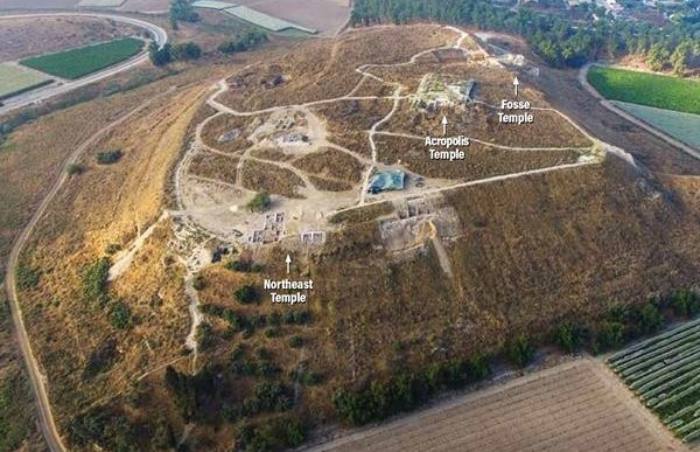
Pottery fragments and a bronze blade with individual words etched on it are the sole surviving evidence of the first stages of alphabet creation. The team of archaeologists led by Yosef Garfinkel of the Hebrew University of Jerusalem has found an inscription for the first time that has a full phrase written in the ancient alphabet. During excavations in Tel Lachish, Israel, the team uncovered the discovery. Tel Lachish was a major Canaanite city-state in the 2nd millennium BC. This location is widely recognized as a nexus of early written communication.
An ivory comb, estimated to be 3,700 years old, was discovered. The comb has two rows of tines, one with coarser tines and one with finer tines, and measures around 3.5 by 2.5 cm. For taming head and beard hair, the coarser side of the comb was likely put to use. Conversely, the smaller one was put to use as a nit and lice comb and is still in existence today. A fossilized louse nymph discovered in the crevice between the teeth of this comb supports this conclusion.
It is seven words long
Notably, 17 shallowly engraved letters are visible on the middle, smooth area of the comb, aligned in two rows of heads. Archaeologists say that the seven words formed by the one- to three-millimeter-high letters are consistent with an early variant of the Canaanite alphabet. The Canaanite inscription means, “May this comb remove lice from hair and beard.”
According to Garfinkel, “this is the earliest Canaanite sentence ever unearthed.” “The comb’s inscription provides the first hard proof of the alphabet’s practical use 3,700 years ago. An important step forward in the evolution of the written word.” Some of the letters, such as mem, tav, and shin, had the exact same shape as they do in modern Hebrew, while others are simplified versions of the letters that would eventually be utilized.
Several ways it sheds light on things
Scientists say this discovery proves the Canaanite city of Tel Lachish was instrumental in the creation of the alphabet. One of the earliest and longest examples of writing in this area is the statement on the ivory comb. At the same time, this is the earliest inscription ever discovered that explicitly states the object’s function (in this instance, getting rid of lice).
The fact that this particular lice comb was crafted from an elephant tusk provides further evidence that its previous owner belonged to the upper class. The only people who could afford imported luxury items like those were the wealthy. It looks like life was all the same after all.

Jerusalem Journal of Archaeology, 2022; doi: 10.52486/01.00002.4 (PDF)