Chemicals preserved in fossils provide insight into the diet of 550 million-year-old Ediacaran animals. For the first time, fossils dating back 550 million years show us what the first animals on Earth ate and how they processed their food. Molecular evidence found inside two multicellular Ediacaran worm-like animals suggests that they had an intestine and fed on algae that floated up from the ocean bottom. Unlike some of their contemporaries, these ancient creatures already used biochemical mechanisms comparable to those used by current invertebrates when digesting food.
The organisms of the Ediacaran period created a wide variety of designs, modes of living, and metabolic processes that we find baffling. The Dickinsonia was the first real mammal to exist on Earth; it stood at just 4.60 feet (1.40 m) and lacked a head, chest, or limbs. Other species from the Ediacaran could crawl and live in complex colonies, much like the ancestors of modern animal groupings.
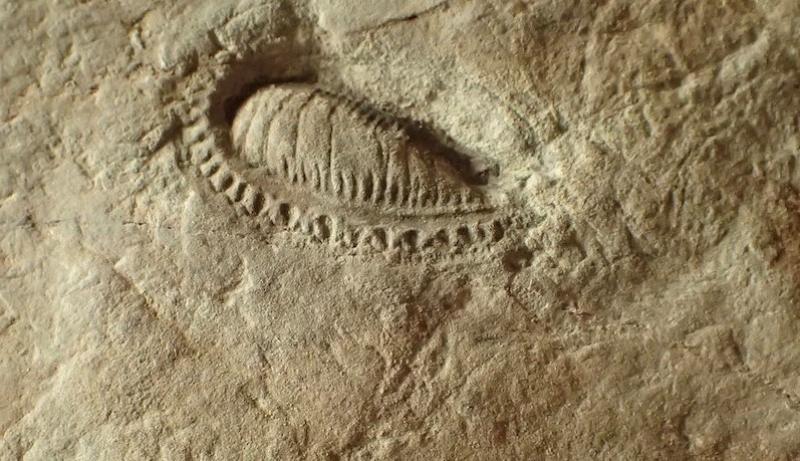
In a new study, a researcher named Ilya Bobrovskiy from Australia National University, explains that the Ediacaran biota is the first fossils that are already big enough to be seen by the human eye. All modern animals can trace their ancestry back to these creatures, making them our most obvious ancestors.
However, many questions remain, one of which is what exactly these creatures ate. Osmosis and other types of basic filtration are hypothesized to be the means by which many of them took in their nourishment.
Food intake deduced from sterol levels
There has been significant progress achieved by Bobrovskiy and his coworkers. The diet and digestive system of Ediacaran animals have been recreated for the first time. The 550 million-year-old fossils unearthed in the Russian Arctic White Sea cliffs provide the foundation for this theory. Among them are the tubeworm-like Dickinsonia and Calyptrina, and the pear-shaped, bilaterally symmetrical Kimberella, which crawled over the ocean bottom thanks to its developed muscles.
Scientists were able to deduce what Kimberella was consuming based on the sterol molecules found in the fossil and the surrounding rock. These ringed organic molecules with 27–29 carbon atoms are crucial building blocks of cellular membranes and tissues. One of them is cholesterol. The presence of these sterols and the products of their breakdown may provide light on where and how the sterols were broken down, as well as on the organism from which they came.
The fossil has a rare chemical cocktail
Analyses showed that Kimberella fossils contained sterols that were structurally and chemically distinct from those discovered in ancient microbial mats from the ocean bottom. In comparison to microbial mats, they have a drastically reduced concentration of C27 sterols. The sterol profile of these samples is unlike any other found in the White Sea.
Scientists have found no evidence that bacteria or fungi have a preference for one chain length over another when decomposing sterols. The digestive systems of invertebrates are the only known natural mechanisms that can selectively eliminate C27 sterols from a sterol mixture. As a consequence, C27 sterols like cholesterol are uncommon in the remnants of food in such animals’ intestines and feces. Kimberella, an Ediacaran organism, has a fully functional digestive system, say the scientists.
First solid evidence of digestion
Thus, the chemicals found in the Kimberella fossil provide the earliest proof of a meal consumed by animals and the existence of a digestive mechanism comparable to that used by modern animals. If Bobrovskiy and his colleagues are true in their assessment, the cholesterol metabolism seen in invertebrates today was also present in the first populations of animals on Earth.
This means that 550 million years ago, Kimberella and perhaps other members of the Ediacaran fauna already had a stomach and selective digestive processes. Kimberella fed on algae and bacteria from microbial mats on the ocean bottom, and this helped them digest their food. C27 sterol depletion was also seen in the digestive tract of the Calyptrina species. This tube-dwelling marine creature could have been using its filter-like tentacles to stir up its food before consuming it.
Remarkable mashup of exotics and trailblazers
Some Ediacaran species, meanwhile, lacked such sophistication. A lack of selective digestion was discovered in the 4.60-foot tall Dickinsonia. Dickinsonia was likely still nourished by osmosis despite its massive size. This information, as presented by Bobrovskiy, suggests that the Ediacaran fauna had the features of both foreign species like Dickinsonia and more advanced species like Kimberella, which possessed certain physiological traits of modern animals.
The group intends to apply its approach of analysis to future studies of Ediacaran fossils. This might help shed light on the question of what species ate when and how they did so.