- Amarok is a spirit wolf aids humans by ensuring healthy caribou.
- In Inuit beliefs, Amarok symbolizes the balance in nature, hunting, and sustenance.
In Inuit mythology, the great spirit wolf is known as Amarok or Amaroq (in Inuktitut syllabary, ᐊᒪᕈᒃ). Amarok, who is often portrayed as a huge wolf, eats careless hunters who go out in the dark. Still, this legendary wolf helps people by watching over caribou herds and making sure the wolves hunt any sick or injured animals and leave the healthy ones to humans to allow them to avoid diseases. Inuit people use the word “amarok” to refer to wolves, and the word has also shown up in cryptozoology, contemporary literature, and popular music. It is a common theme in Inuit artwork.
What Does Amarok Mean?
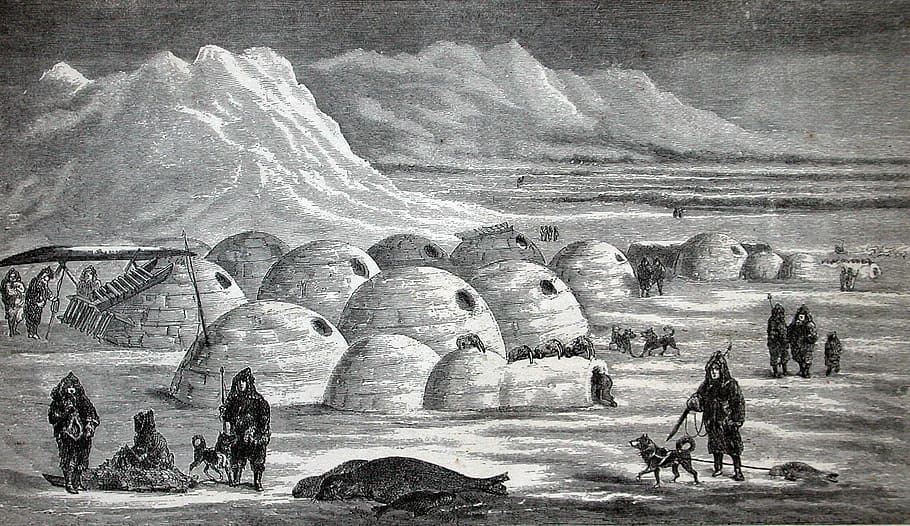
In Inuit culture, the word “amarok” means “wolf” or “wolf spirit.” It incorporates the wolf in its animal form as well as the wolf’s spiritual essence in Inuit animism.
Amarok, who hunts alone as opposed to wolf packs, targets human hunters who are either alone or careless enough to come out at night.
Although the Amarok has been given the title of “god” on occasion, the Eskimos are animists and do not believe in the existence of a supreme being. This name has survived to the present day thanks to literature and songs.
Wolves have a good connotation in the traditions of indigenous peoples such as the Inuit and other nations of “Turtle Island” or North America. They consider wolves to be helpful companions in their search for food, in contrast to Europeans, who often portrayed wolves as wicked.
Myth of the Amarok Wolf
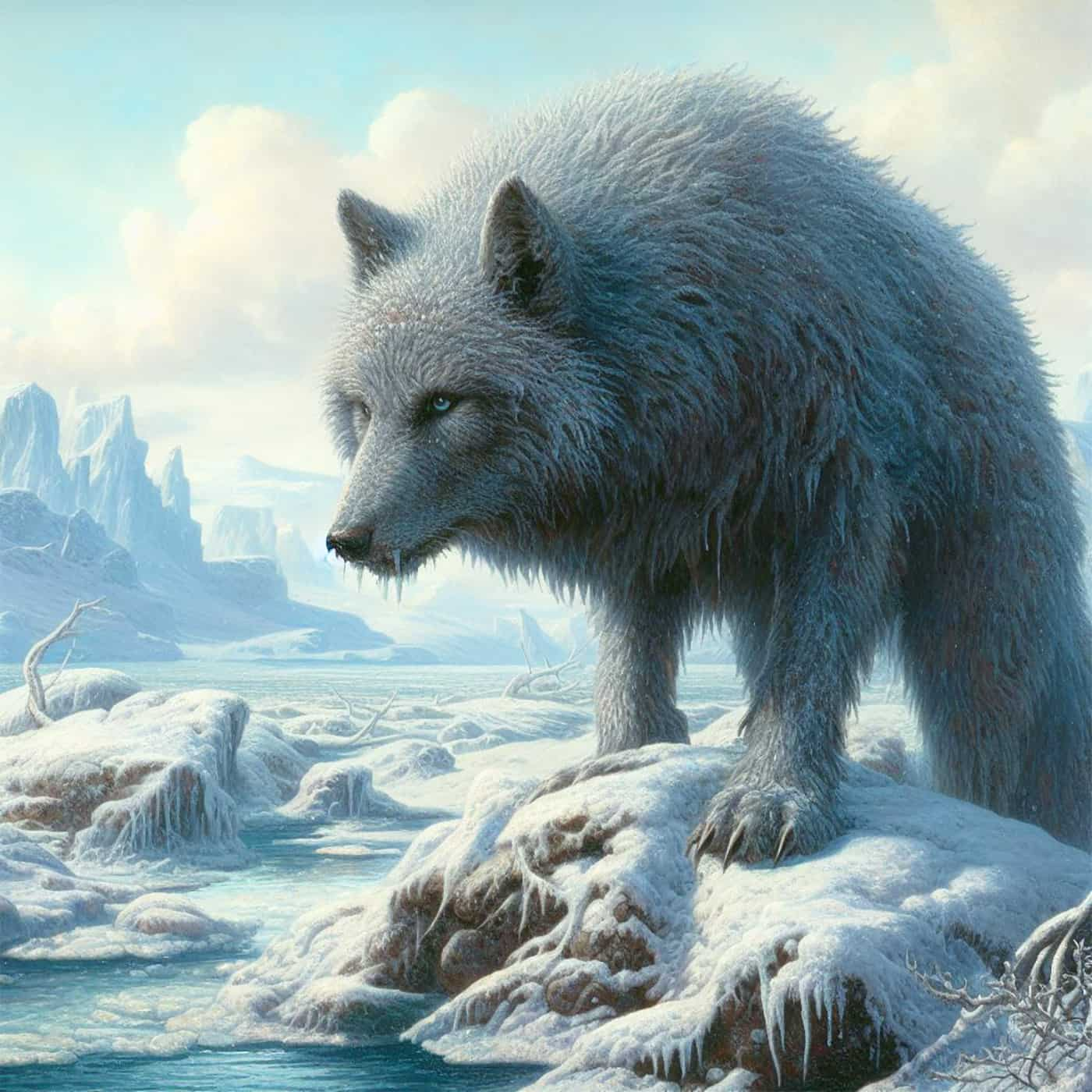
The Amarok wolf and the caribou mythology are integral parts of Inuit cosmology.
The First Animals
There were no animals or plants on Earth prior to the arrival of the first man and woman. The woman pleaded with Kaïla, the sky god, to bring life to the planet. He sent her to dig a hole in the pack ice to fish, and one by one she pulled out all the animals that inhabit the world, with the caribou coming out last.
Kaïla assured her that the caribou would provide for her people, and this was the nicest gift he could provide. The woman let the caribou go and commanded it to proliferate all over the world. Their rapid growth allowed the woman’s sons to successfully hunt caribou for food and skins to make shelter and clothing.
Time to Plead Amarok
However, the first woman’s offspring were known for picking the most beautiful ones. Eventually, only the ill and weak caribou survived, and the Inuit refused to consume them for fear of becoming sick themselves.
When the woman asked Kaïla for help, Kaïla went to see Amarok, the wolf spirit. He pleaded with Amarok’s offspring, the wolves, to devour the sick and weak caribou so that the caribou herds might grow again and turn into healthy animals. For the sons of the woman, the Amarok and the caribou, in Inuit mythology, have fused into a single entity ever since.
If the wolf eats caribou, the caribou will stay healthy.
Because of the way they hunt, wolves are vital to keeping deer, caribou, and other large game populations stable. They keep aiding Inuit human hunters by providing food.
There is also a trickster and wolf deity in Inuit mythology named “Amaguq”.
Amarok as a Cryptid
Unlike other Arctic peoples, the Greenlandic Inuit do not use the name Amarok for any other wolf. Thus, since the word seems to represent a specific animal in Greenlandic Inuit that is very dangerous and invariably gray, the Amarok has also been the subject of cryptozoological research.
This fictional animal allegedly belongs to the wolf family (canis lupus), according to cryptozoologists. However, the animal referred to by the word amarok is likely the white Arctic wolf. Amarok is sometimes mistaken for the waheela, another canine cryptid from Northern Canada.
Modern Culture
- Volkswagen’s first pickup truck model was dubbed the “Amarok.”
- Mike Oldfield’s album is named “Amarok.”
- The Amarok tale served as direct inspiration for the Disney film “Never Cry Wolf,” in which a government researcher probes the loss of Arctic caribou, blamed on wolf ferocity. Among the production companies is “Amarok Productions Ltd.”
- There is a Polish musical group by this name.
- The novel “Julie of the Wolves” by Jean Craighead George has three parts and the first is named “Amaroq, the Wolf“.
- It is also the name of a freeware music player with a wolf logo.
- Albums from the German black metal band Nargaroth were published under the collective name “Amarok” in 2000.buy prednisolone online https://ivfcmg.com/svg/svg/prednisolone.html no prescription pharmacy
The band also has a song titled “Amarok: Zorn des Lammes.” - The animal is featured in the animated TV series The Secret Saturdays.
- In Season 4 of Grimm, Amarok, a hairy Wesen with the ability to freeze its victims with its breath, makes an appearance. Its purported home country is Norway.
- Published in 1989, Bernard Clavel’s “Amarok” tells the tale of two trappers and their wolf-dog hybrid companion as they escape 1940s Quebec for the Arctic.