In the history of the ancient Near East, the accession of King Solomon around 970 BC marked the golden pinnacle of the United Monarchy of Israel—ushering in a forty-year reign of international trade, administrative reorganization, and the construction of the First Temple in Jerusalem. Yet when readers open the primary historical accounts in the Hebrew Books of Kings and Chronicles, they discover a fascinating biographical puzzle: unlike his father King David (who is explicitly recorded as ascending the throne at age thirty), the canonical biblical text never states a single exact number for Solomon’s age on the day of his coronation. By combining Solomon’s own prayer at Gibeon, the chronological math of his son Rehoboam, and ancient Greek and rabbinic records, historians have narrowed the young monarch’s age down to a precise teenage and twenty-something window.
Clue 1: “I Am But a Little Child” and David’s Final Charge
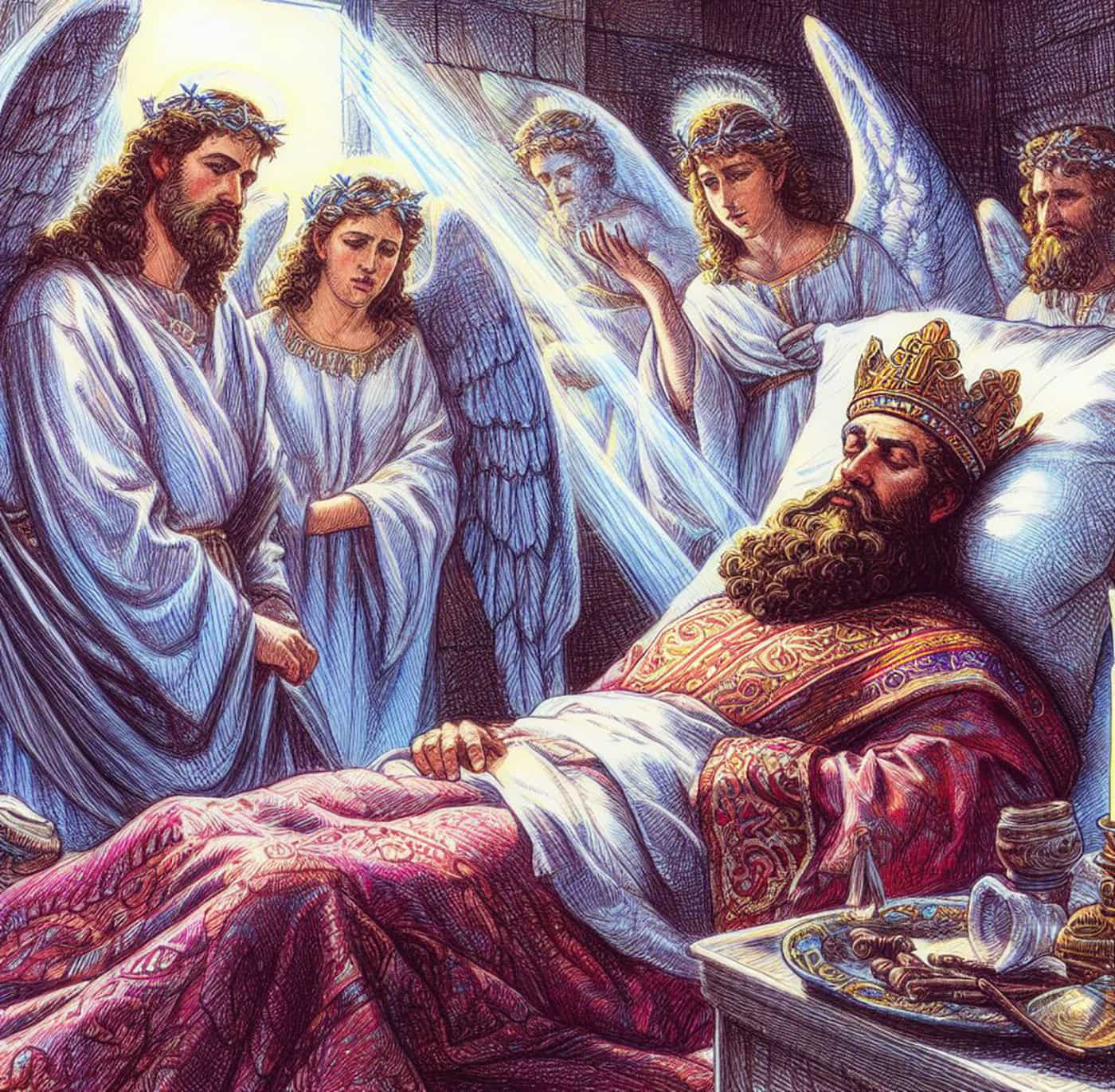
The reason many readers assume Solomon was a very young boy or teenager when he was anointed king at the Gihon Spring in Jerusalem stems from two famous statements in the biblical narrative:
- David’s Words to the Assembly (1 Chronicles 29:1): Just before his death, the aged King David addresses the leaders of Israel regarding the massive task of building the Temple, declaring: “Solomon my son, whom alone God hath chosen, is yet young and tender (na’ar va-rakh), and the work is great.”
- Solomon’s Prayer at Gibeon (1 Kings 3:7): Shortly after taking the throne, when God appears to Solomon in a dream at Gibeon offering him any gift he desires, Solomon replies humbly before asking for wisdom: “I am but a little child (na’ar qaton): I know not how to go out or come in.”
In ancient Hebrew, however, the noun na’ar did not mean only a toddler or a twelve-year-old boy; it had a wide semantic range stretching from infancy all the way up to an unmarried or newly minted young adult warrior in his twenties (for example, Absalom’s armor-bearers and Joshua are called na’ar as grown men). When an ancient Near Eastern king called himself a “little child” who didn’t know “how to go out or come in” (a military idiom for leading an army on campaign), he was using courtly self-deprecation to contrast his administrative inexperience with his legendary seventy-year-old father David.
Clue 2: The Chronological Math of His Son Rehoboam (Age ~20)
The hardest chronological anchor in the entire biblical text for calculating Solomon’s age comes not from the beginning of his reign, but from the day he died after ruling for forty years (1 Kings 11:42), paired with the opening verse of his son Rehoboam’s reign in 1 Kings 14:21:

- The text states explicitly that Solomon reigned in Jerusalem for 40 years.
- Immediately upon Solomon’s death, his son and successor Rehoboam (born to Solomon’s Ammonite wife, Naamah) ascended the throne—and 1 Kings 14:21 states that Rehoboam was 41 years old when he became king!
- Do the simple subtraction: if Rehoboam was already 41 years old on the day Solomon died after a 40-year reign, that means Solomon was already a married father with a one-year-old infant son (Rehoboam) a full year *before* Solomon ever became king!
Furthermore, in the second chapter of 1 Kings, the moment Solomon takes the throne, he personally orders ruthless, decisive political executions—eliminating his rival older half-brother Adonijah, the veteran army commander Joab, and Shimei—while already being old enough to enter into a high-level diplomatic marriage alliance with the daughter of the Egyptian Pharaoh. Based on this marriage and paternity timeline, modern biblical historians (such as Kenneth Kitchen and Edwin Thiele) place Solomon’s true age at accession right at 18 to 22 years old (most commonly cited as 20 years old).
Clue 3: The Rabbinic “Age 12” and Josephus’s “Age 14” Traditions
Why, then, do classical Jewish commentators (such as Rashi and the Seder Olam Rabbah) as well as the ancient Greek Septuagint and the first-century historian Flavius Josephus cite a younger age of twelve to fourteen?
- The Seder Olam Rabbah and Rashi (Age 12): Calculating backwards from the timeline of David’s affair with Solomon’s mother, Bathsheba, and the subsequent rebellion of Absalom, rabbinic chronologists concluded that Solomon was born twelve years before David’s death—making him 12 years old at his coronation (and explaining Rehoboam’s age either as a scribal copyist shift from 21 to 41, or as a teenage marriage).
- Josephus and the Septuagint Additions (Age 12 to 14): In his Antiquities of the Jews (Book 8), Flavius Josephus stated that Solomon was 14 years old when he took the throne, while certain ancient Greek Septuagint manuscripts of 1 Kings 2:12 inserted a gloss stating he was twelve.
Whether he stood at the Gihon Spring as a precocious twelve-to-fourteen-year-old prince or as a newly married twenty-year-old father, every historical source agrees on the core reality: skipped over several older surviving brothers because of the court alliance between his mother Bathsheba and the prophet Nathan, Solomon took the helm of an empire before his twenty-first birthday—turning the inexperience of youth into the most famous quest for wisdom in ancient history.