While Hollywood epics invariably focus on the short, double edged gladius sword as the signature weapon of the Roman legionary, the tactical reality of Roman battlefield supremacy rested equally upon the weapon the soldier hurled just seconds before drawing his blade: the pilum. Used continuously for over six hundred years from the early wars of the Republic to the height of the Pax Romana, this heavy, seven foot javelin was a masterpiece of ancient military metallurgy. Engineered with a slender two foot iron shank mounted atop a heavy wooden shaft, the pilum was specifically designed not merely to pierce enemy armor at thirty paces, but to disable an opponent’s shield and render them defenseless before hand to hand combat even began.
Origins and the Anatomy of Two-Part Engineering
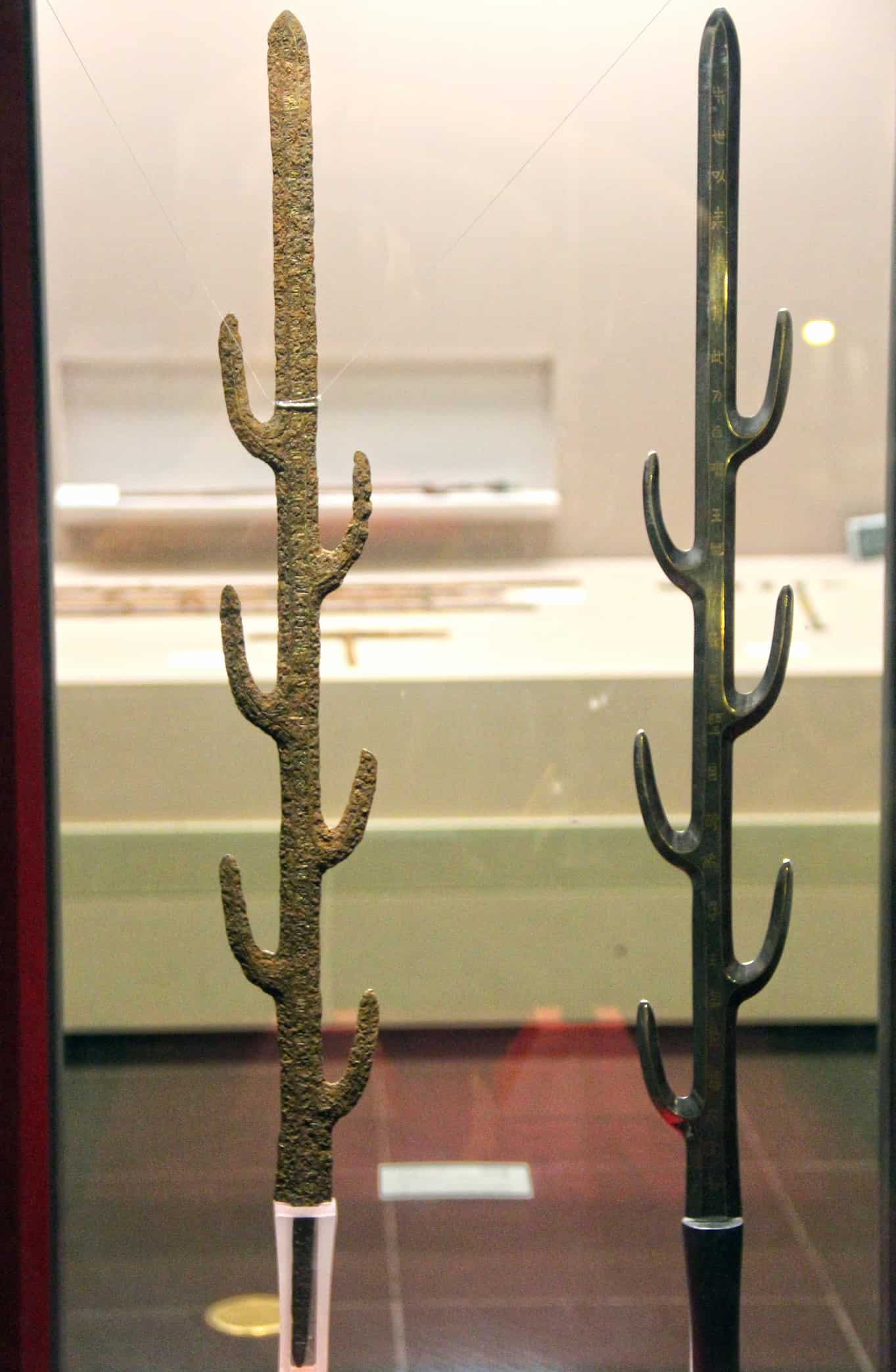
Although historians debate whether the Romans adapted the early pilum from their Samnite hill neighbors in southern Italy, from the Etruscans, or from the Iberian iron soliferrum javelins encountered in Spain during the third century BC, Roman armorers perfected the weapon into two distinct standardized battlefield variants documented by the Greek historian Polybius: the heavy pilum (pilum gravius) and the light pilum (pilum tenue). Measuring roughly two meters (six and a half to seven feet) in total length and weighing between four and nine pounds, the pilum looked completely different from an ordinary hunting or throwing spear.
Instead of mounting a broad leaf shaped spearhead directly onto the end of a wooden pole, the front two to two and a half feet of a Roman pilum consisted of a long, pencil thin iron shank only about seven millimeters thick, terminating in a tiny, hardened pyramidal steel point no bigger than an arrowhead. This long iron rod was attached to a thick ash or cornel wood shaft via either a hollow socket or a wide, flat tang secured by two heavy iron or wooden rivets, often reinforced with a lead weight bulb around the joint on later imperial versions to concentrate monumental forward kinetic momentum right behind the point.
The Genius of the Pyramidal Tip and the Bending Shank
Every millimeter of the pilum’s unusual shape solved a specific mechanical problem against enemy shield walls, such as those of the Celts, Germans, or Macedonian phalanxes. When a Roman legionary sprinted forward and unleashed his pilum from fifteen to thirty yards away, all five to seven pounds of the weapon’s mass was concentrated onto the microscopic surface area of the tiny pyramidal tip. Upon striking an enemy’s wooden shield or mail shirt, the small pyramid point punched clean through oak planks and iron rings with armor piercing force.
Because the two foot iron shank behind the pyramid point was narrower than the hole punched by the tip itself, the metal rod slid effortlessly through the enemy shield without getting stuck by wood friction, allowing the point to keep traveling inward to impale the warrior hiding behind the shield. Even if the enemy soldier managed to angle his shield aside so the tip missed his chest, the pilum had accomplished its primary tactical mission: the barbed pyramidal head was now locked inside the wood of the shield, and four pounds of wooden shaft hung dragging on the ground. According to Plutarch, in the late second century BC, the Roman general Gaius Marius introduced a clever modification by replacing one of the two iron rivets holding the shank to the wood with a weak wooden peg that snapped on impact, while later under Julius Caesar, armorers left the lower portion of the iron shank unhardened (soft wrought iron) while tempering only the sharp tip. Upon impact, the heavy wooden shaft caused the soft iron neck to bend at a sharp angle. Because the shank was bent or dangling at a right angle, the enemy could not pull the javelin out to throw it back at the Romans, nor could he hold up a shield weighed down by a dragging seven foot pole—forcing whole ranks of enemy warriors to throw away their own shields in frustration seconds before the Roman line slammed into them with drawn gladii.
Dual Use as an Anti-Cavalry Pike and Symbolic Meaning
Beyond its primary role as a mid range missile, the pilum was a remarkably versatile close combat weapon. When facing enemy cavalry charges—most famously when Julius Caesar‘s outnumbered legionaries confronted Pompey‘s aristocratic horsemen at the Battle of Pharsalus in 48 BC—Caesar ordered his cohorts not to throw their pila, but instead to hold them firmly in both hands like pikes and thrust the iron tips upward straight into the faces of the riders, routing the cavalry completely. On the march inside hostile territory, legionaries even used their heavy pila as improvised structural stakes along rampart ditches or clanged the iron shanks loud against their bronze rimmed scutum shields in unison to create a deafening metallic roar that terrified enemy horses.
Culturally and symbolically, the pilum stood as the defining emblem of Roman citizen manhood and sovereign authority. When Rome declared a formal, just war through the college of Fetial priests, the herald walked to the enemy border and hurled a fire hardened or iron tipped spear into hostile soil to claim legal jurisdiction. Carved onto triumphal arches, tombstone reliefs of fallen centurions, and minted onto imperial silver denarii, the distinctive silhouette of the pilum proclaimed across the Mediterranean that Roman engineering and discipline stood ready to pierce any barrier in its path.