On December 25th, Canadians celebrate one of the country’s most important holidays—Christmas. Canadian Christmas traditions are a blend of French, British, American, German, Norwegian, Ukrainian, and first nation (indigenous) customs. In homes, workplaces, and public locations, the Christmas tree and Nativity scenes are the major symbols of Christmas. Réveillon, gift-giving, and the exchange of Christmas cards are all popular Canadian traditions, along with British dessert staples like mincemeat tarts and Christmas plum puddings. Some Canadian cities also host festive markets and parades.
-> See Also: 48 Countries That Celebrate Christmas Widely
Cookie-Baking Parties
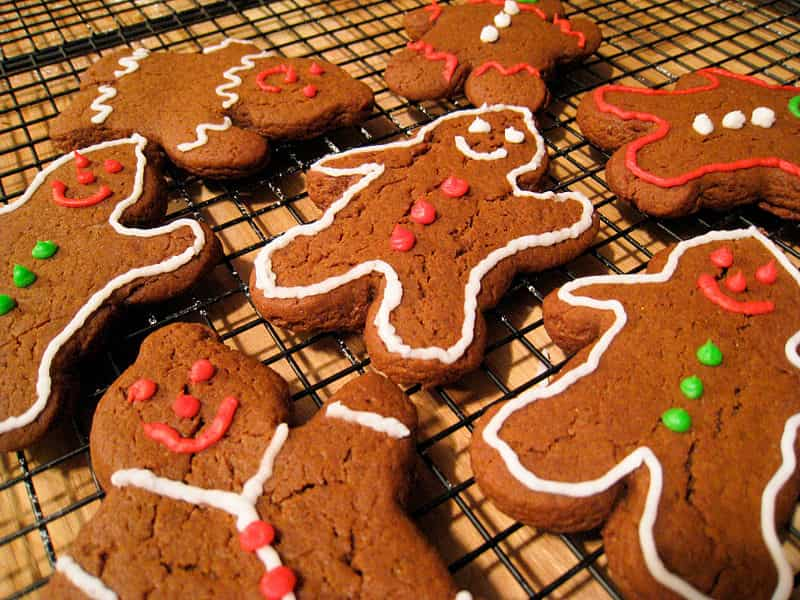
Families in Canada often get together to bake cookies for Christmas. For Christmas, every family makes cookies according to their own special recipe, which they then trade with one another. Cheese straws, gingerbread people and homes, and other similar treats are popular Christmas additions.
Santa Claus Parades
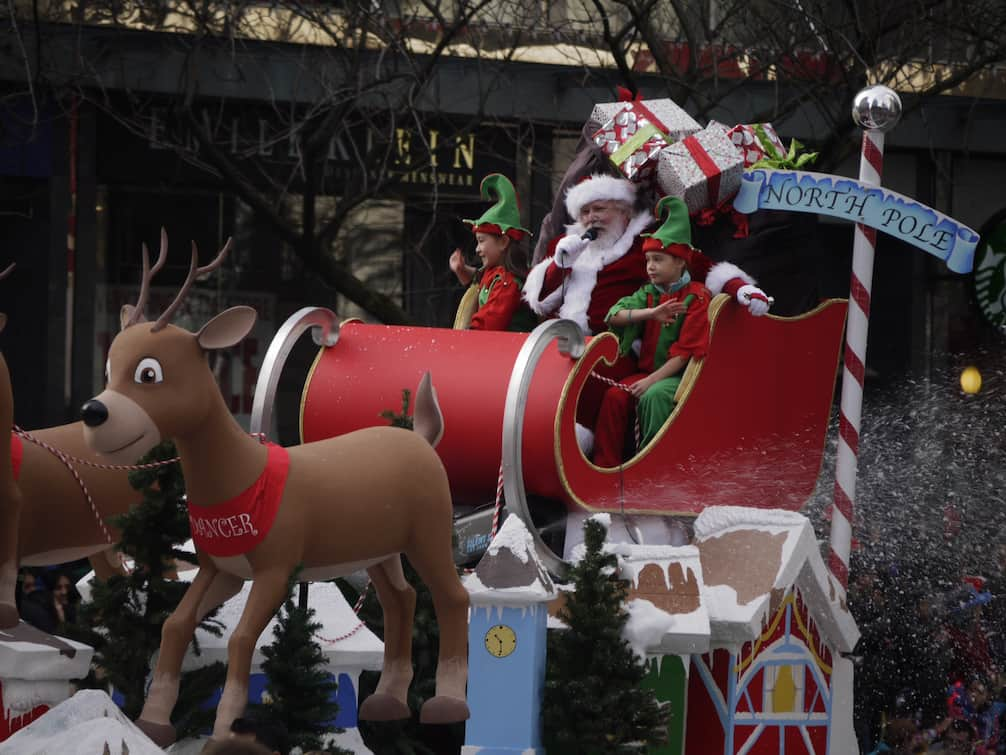
- Toronto Santa Claus Parade: With a history dating back to 1905, this procession is among the biggest of its kind in North America. Held annually on the third Sunday of November.
- Nighttime Santa Parade: When a daytime Santa Parade is not enough, you can enjoy the event again at night in Kingston, Ontario. Almost a 2-mile-long procession of floats makes its way down Princess Street in downtown Kingston.
- Reverse Santa Claus Parade: During Christmas in Old-Aylmer, floats line Principale Street in a twist on the traditional parade: floats will stay parked as cars drive by.
- Ontarian Rotary Annual Santa Claus Parade: In the midst of the season, this parade in Ontario unites towns and families and many Santa Clauses, together with some national acts and prominent bands, walk in this festival.
The Importance of Christmas in Canada
Christmas in Canada incorporates elements of American, British, and French traditions. It has grown into the country’s most important festival since the 1900s. For Canadians, many celebrations that occur on the winter solstice have more to do with the date that Christmas was selected than with the birth of Jesus himself. Even though 30% of Canadians are Catholics, Christmas is almost completely a secular day.

For instance, “Christmas holidays” are referred to as “winter festivals” in public schools, a manifestation of the growing secularization of the nation brought about by the inflow of non-Christians. While Christians and Jews are both legally permitted to take time off for religious holidays like Christmas and Easter, members of other faiths do not have the same level of official recognition.
-> See Also: Do Canadians Celebrate Halloween?
How Do Canadians Celebrate Christmas?
Along with the traditional Christmas celebrations, Canadians love participating in outdoor winter activities like skiing, skating, and tobogganing during Christmas, which is pretty unique.
- Presents and Christmas Tree: It’s the typical. Before Santa Claus arrives on Christmas Eve, kids fill their stockings with treats and hang them over the fireplace mantle, though not every house has a fireplace these days.
- A Festive Supper: Canada loves to cook a special dinner on Christmas. Roast turkey, seasonal veggies, mashed potatoes, and gravy are typical examples. Decadent fruit cakes are a beloved English Christmas treat.
- Crackers: Holiday crackers are tubes that include a paper hat, a toy, and a slip of paper with jokes and when you open the package, you’ll hear a popping sound.
- Boxing Day: It is observed on the 26th day following Christmas. Many Canadians, much like Americans on Black Friday, get out of bed early and face the cold to wait in huge lines at malls in search of discounts.
- Santa Parades: In November, you may see Santa Claus Parades in most big cities in Canada, including on his sleigh.
- Festivals of Lights: Light festivals in Canada at Christmas are more prevalent than in the majority of other countries. They include the Winter Festival of Lights at Niagara Falls, the Cavalcade of Lights in Toronto, the Festival of Lights in Vancouver at the Van Dusen Botanical Garden, and the Festival of Lights in Airdrie.
The Influence of Various Nations
Ukrainian
There are ~1.4 million Ukrainian Canadians, comprising ~4% of the total population.
There is a significant Ukrainian diaspora in Canada, and they are the largest Slavic group. Ukrainians brought the January 7th Christmas celebration to Canada, following their Julian calendar. However, they recently began to celebrate Christmas on December 25th to protest the Russian Orthodox Church. They also introduced traditional Ukrainian meals for Christmas, such as kutia pudding. They also display their Christmas music and dance.
Norwegian
There are ~465,000 Norwegian Canadians in the country.
Canadian Christmas festivities are now also called “Yuletide” to further secularize the festival, which comes from the Norse pagan celebration of Yule, which occurs in the winter. Canadians are also able to follow some Norwegian Christmas culinary customs due to immigrants from Norway.
French
Around 30% of Canada is French.
On the nights leading up to Christmas and New Year’s, a lengthy Christmas feast called a Réveillon is served. The term “réveil” (meaning “waking”) is used since guests remain up until midnight or later. The Christmas tree, or sapin de Noël, is the centerpiece of Christmas decorations. Canadians hear popular French songs like “Minuit, chrétiens,” “Guillo, Pran Ton Tamborin!”, and “Vive le vent” (“Jingle Bells”).
Canadians also call Santa Claus by his French name “Père Noël,” and traditional French-Canadian holiday foods include tourtière (a meat pie), ragoût de pattes de cochon (pork hock stew), bûche de Noël (Yule log cake) and tarte au sucre (sugar pie). The Midnight Mass, or Messe de Minuit, is also significant, and it is followed by the Réveillon mentioned above.
-> See Also: All 15 Countries That Don’t Celebrate Christmas
English
There are 6.3 million people with English origins in Canada.
The traditional roast Christmas dinner of turkey or chicken is an English custom, much like in the United States. This also includes the wrapped Christmas cracker tubes. The “Boxing Day” (Black Friday in Canada) originated in Great Britain. Decorating Christmas trees and exchanging gifts are also British customs but they are still called sapin de Noël. Christmas plum puddings and mincemeat tarts are also English, including the fruit cake.
Irish
There are 4,6 million Irish (~12% of the population) in Canada.
Irish immigrants have transferred their Christmas traditions to the country, including their hot whiskeys, spiced beefs, and the finest Irish cheese board (cashel blue, dubliner cheddar, and carrigaline).
Swimming on a cold Christmas day is also a big tradition in Ireland. “Polar Bear Swims” is used to describe the New Year’s Day traditions observed in many Canadian towns. Since its inception in 1920, the Polar Bear Swim Club in Vancouver, British Columbia, has hosted an annual event that attracts 1,000 to 2,000 swimmers; in 2000, a record ~2,130 people dove into English Bay.
Folk music in Canada has a lot to say about the Irish artists who lived in the provinces of New Brunswick, Ontario, Nova Scotia, and Newfoundland. Ireland is the birthplace of the custom of placing a holly ring on the door in Canada as a symbol of Christmas.
Scottish
There are around 4 million Scottish-Canadians in the country (~10% of the population).
Scottish homes are adorned with holy wreaths, lit candles, and tinsel and the Scots who emigrated to Canada carried with them this custom. Scottish fire festivals are popular, including events like Stonehaven’s Fireballs and Edinburgh’s Viking torchlight procession. It is possible to witness these customs in Canada.
Scottish folklore has it that if you want to keep the elves out of your home, kindle a fire in the fireplace. Many Canadians also believe that placing mistletoe sprigs on entrances and ceilings may ward off ghosts and other bad spirits.
German
There are ~3,5 million Germans in Canada (~9% of the population).
Immigrants from Germany helped make the custom of decorating a Christmas tree more popular in Canada in the 1800s. The German Christmas market is a German holiday tradition in Canada. The Germans also created the first tinsel and glass ornaments for Christmas trees.
Canadian Connection to Rudolph
There is a strong Canadian link to the renowned Christmas icon Rudolph the Red-Nosed Reindeer. Paul Soles of Toronto provided the voice for the Rankin/Bass (company) stop-motion work in its initial December 6, 1964 broadcast. In 1939, RCA recorded Canadian performers as Rudolph the Red-Nosed Reindeer’s initial vocals, while the narrative was penned by Robert May, a Jewish copywriter from Chicago. Canada has a long tradition of producing holiday-themed works, beginning with Rudolph and continuing with A Christmas Story and An American Christmas Carol.
Christmas Tree and Turkey Consumption in Canada
Every year, Canadians buy around 3 million whole turkeys for Christmas, accounting for 40% of total sales each year. Regarding Christmas tree farms, there are around 1900 to 2,000 farms in Canada that generate around $90 to $100 million for Christmas trees. Canada sells over 2 million fresh-cut Christmas trees worldwide, amounting to around $50 million every year.