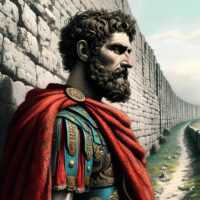
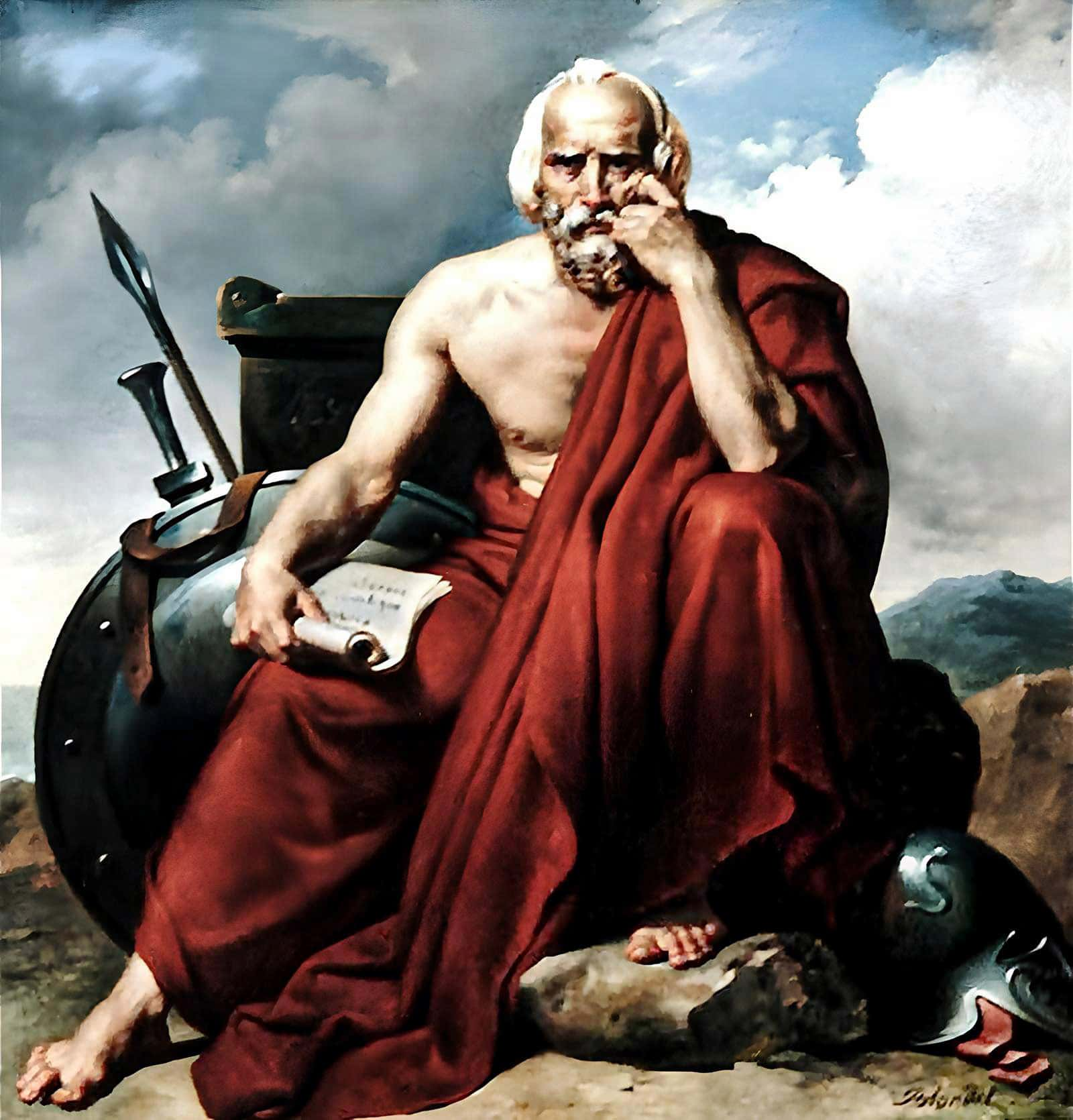
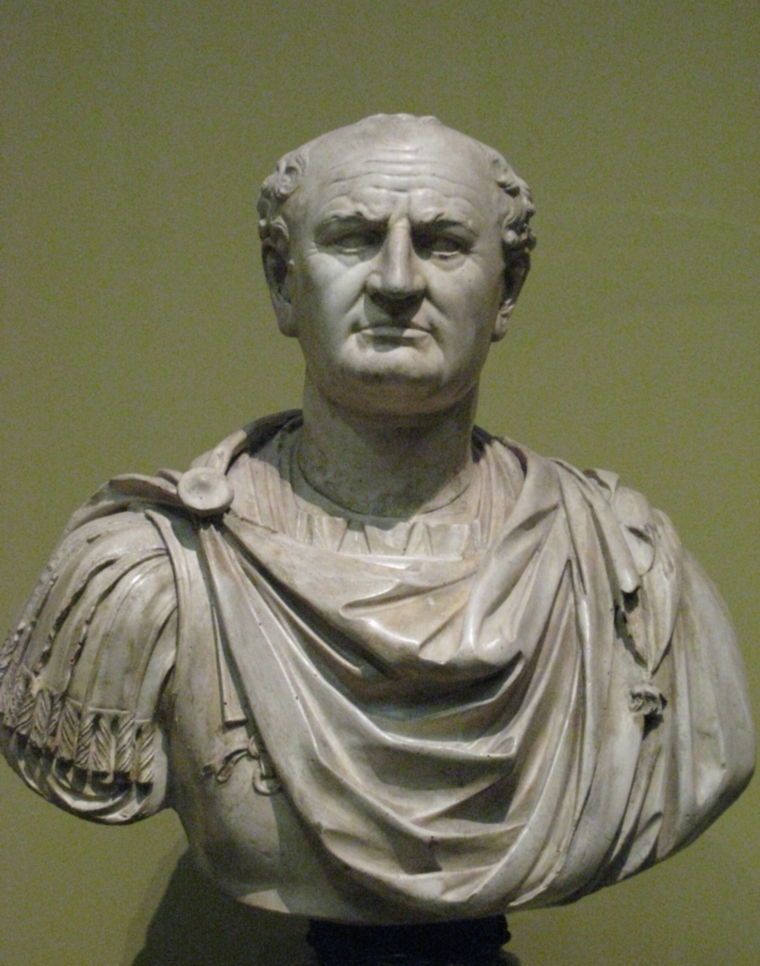
Vespasian (Titus Flavius Vespasianus) was a Roman general who ascended to the throne as emperor in 69. The tumultuous reign of his predecessor Nero concluded with a civil war in the Empire (Year of the Four Emperors), culminating in Vespasian’s victory over his rivals. While not as renowned as Augustus, Trajan, or Marcus Aurelius, he left a significant mark on the history of the Imperial Rome he governed for ten years.
His rule was characterized by a period of relative peace, during which he focused his policies on consolidating the Roman Empire by fortifying its borders, restructuring finances and the military, and erecting numerous public structures, including the Colosseum. Vespasian designated his two sons, Titus and Domitian, as his successors, thus establishing the Flavian dynasty.
—>During Vespasian’s reign, notable events included the construction of the Colosseum, the suppression of the Jewish revolt in Judea, and economic reforms to restore stability to the Roman Empire.
Year of the Four Emperors
The opposition to Nero became evident upon his return from a tour in Greece in 68. He confronted revolts in the western provinces of the Empire. The primary instigator was Gaius Julius Vindex, the imperial legate of Gaul Lyon, who sent letters to governors urging the overthrow of the emperor, accusing him of deviating from the imperial power (in essence, the “moderate” Augustan model).
However, Vindex did not want to bear the rebellion alone, calling on the Senate and the Roman people. Galba then took the lead, being acclaimed imperator by his legions in Tarraconaise (where he was the governor) in April 68. Galba, however, refused to be emperor, choosing instead the title “legate of the Senate and the Roman people.”
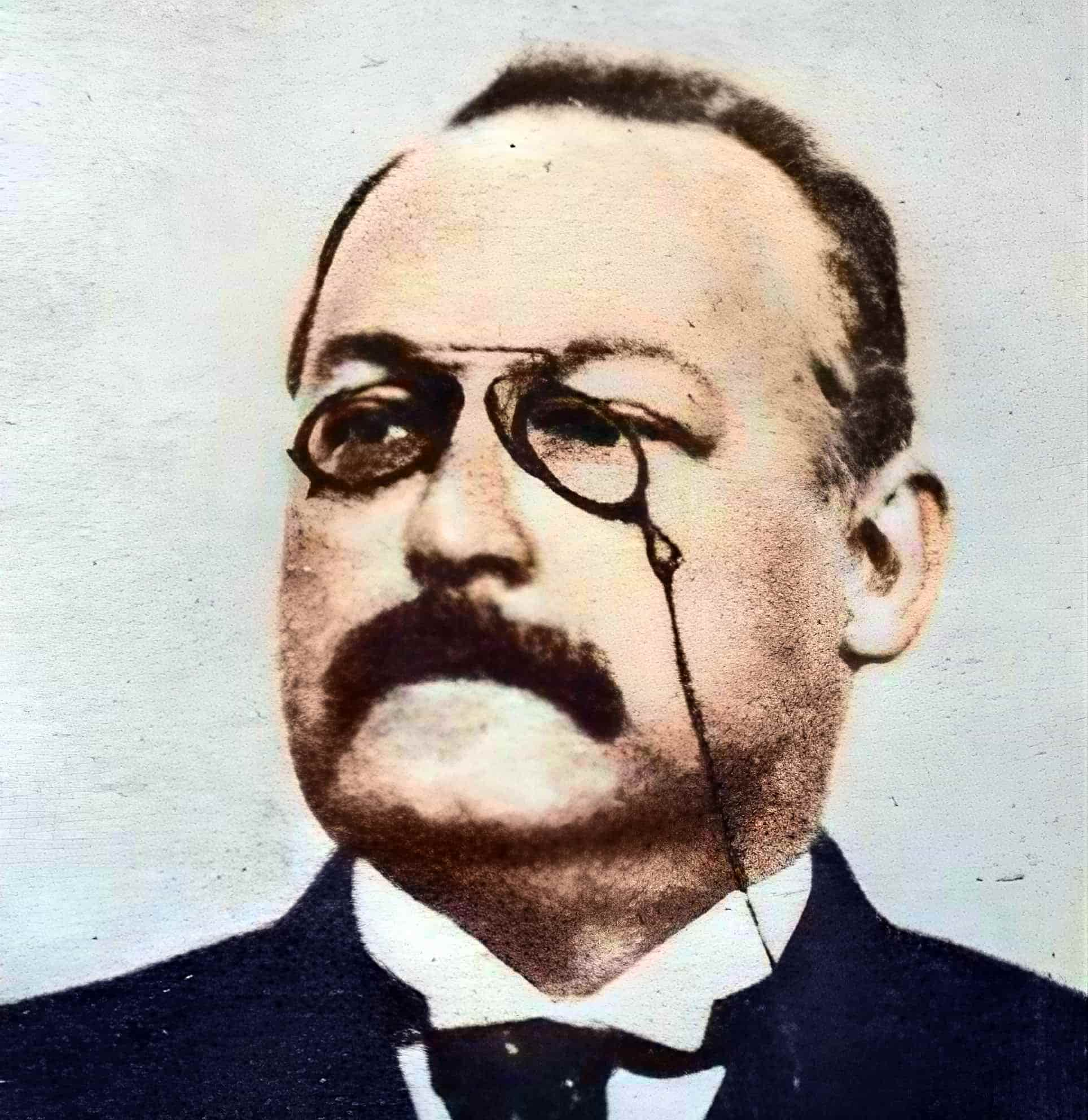
In Africa, legate Lucius Clodius Macer disrupted the wheat supply to Rome but was not an acclaimed imperator. Vindex was killed by the commander of the legions of Upper Germania, Verginius Rufus, while Nero, increasingly isolated, committed suicide in June. The Senate declared him a public enemy and recognized Galba. He entered Rome in October after dealing with Macer.
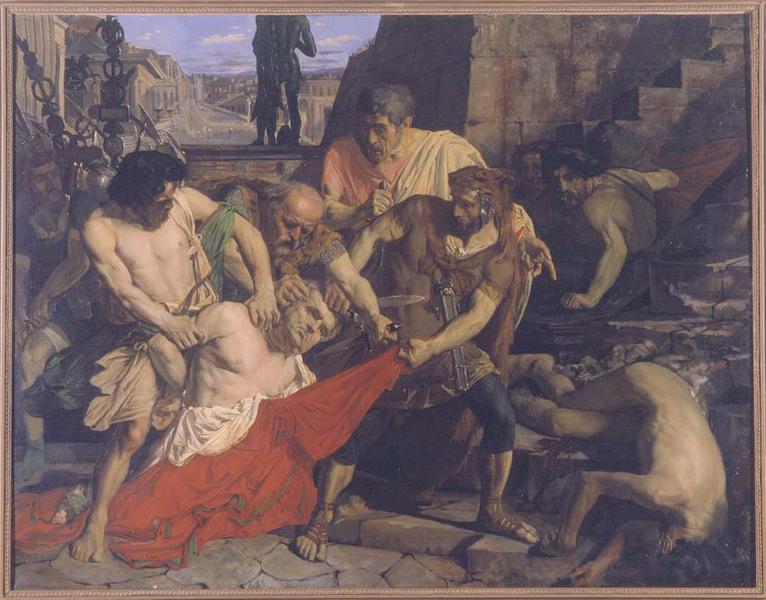
The new emperor struggled to establish his legitimacy, facing two opponents early in 69: Aulus Vitellius, acclaimed in Cologne, and Otho, a confidant of Galba, disappointed that Galba had chosen his son Piso as successor. Vitellius, the first of the three contenders, emerged victorious. Galba was killed, and Otho committed suicide after his defeat at Bedriacum. Vitellius was then recognized as emperor by the Senate.
Shortly after coming to power in July 69, Vitellius faced the rebellion of an Eastern legate, Titus Flavius Vespasianus, proclaimed emperor by the legions of the Near East.
Vespasian’s Rise to Power
Unlike his predecessors, Vespasian is not a patrician but a plebeian. His family consists of prominent individuals from Sabine. With a grandfather as a centurion and a father as a publican, he doesn’t fit the typical profile of a future Roman emperor. However, like others before him, he built his reputation and career in the military.
Due to his relatively humble origins, Vespasian is a “novus homo,” managing to become consul in 51 after a praetorship under Caligula. He distinguished himself militarily in Britain and, more significantly, in the Middle East, where Nero appointed him in 67 to suppress the Jewish revolt.
Despite entering the conflict for the imperial throne, Vespasian does not align himself with Nero; instead, he associates with Galba and, more significantly, Augustus. Vespasian initiated his revolt from Alexandria on July 1, 69. Subsequent acclamations occurred in Caesarea in Syria (backed by the legate Mucian) and then in Beirut. He also secures support in Rome itself, particularly from his son Domitian and his brother Flavius Sabinus, who holds the crucial position of prefect of the city.
Soon, the Danube provinces joined Vespasian’s cause, defeating Vitellius’s troops in October 69. The emperor announced his abdication on the forum on December 18, but contrary to the Romans’ wishes, Flavius Sabinus was assassinated. Capitol Hill was set ablaze. It wasn’t until the end of December, with the arrival of Mucian, that the disturbances ceased in Rome, and Vitellius was ultimately executed. Vespasian entered the city only in October 70, almost a year after his predecessor’s death.
Vespasian Emperor: Restoration
The new emperor, as observed, claims allegiance to Augustus, and similarities can be noted between his position and that of the first emperor after Actium (Battle of Actium).
Primarily, he seeks to restore legitimacy to imperial power and reorganize the Empire while ensuring Roman peace. With Mucianus’ assistance, order is restored along the Danube, in Germania, and the eastern part of Gaul, countering various revolts such as those of the Treveri and the Lingones.
Simultaneously, his other son, Titus, captures Jerusalem in September 70 and triumphantly returns to Rome the following year. Peace appears to have been reestablished throughout the Empire. The emperor then decided to renew the Senate and the equestrian order, incorporating a substantial number of Spaniards and Cisalpines.
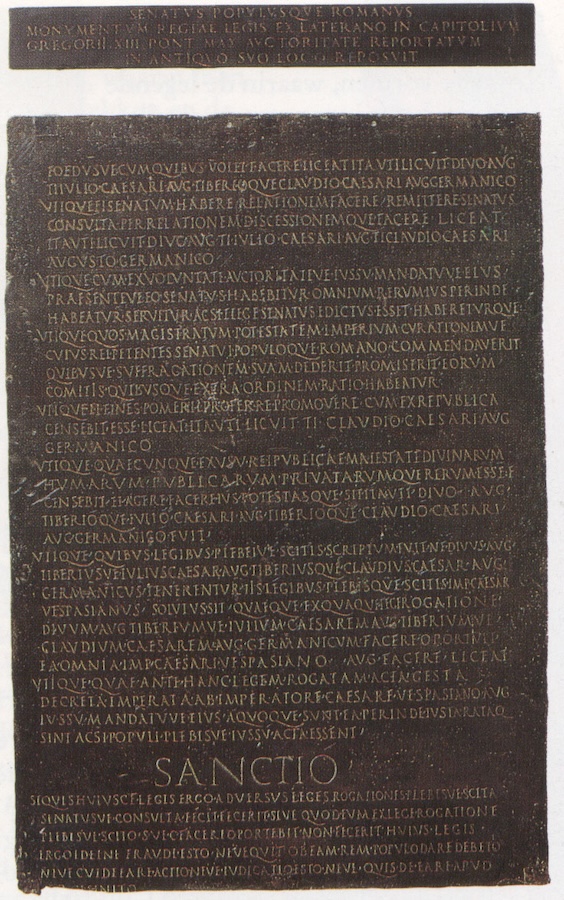
The Augustan nature of Vespasian’s power is exemplified in his law on imperium, or Lex de imperio Vespasiani, enacted at the beginning of the year 70. This law delineates imperial powers, including the right to conclude treaties and declare war, along with privileges vis-à-vis the Senate. Furthermore, Vespasian monopolized the consulship from 70 to 79. Despite this, he openly aligned himself with the emperors Augustus, Tiberius, and Claudius.
In line with this, the emperor developed an imperial ideology based on the circulation of coins emphasizing the rejection of Nero and the Augustan legacy, as well as a power exercised in collaboration with the Senate. However, the importance of the dynasty is also emphasized.
A New Dynasty: Flavians
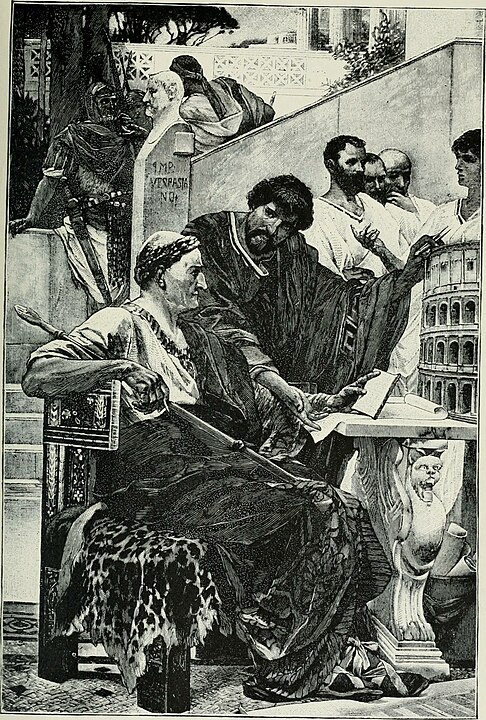
The desire to establish a new dynasty is intended to bring legitimacy and stability to imperial power, following the tumultuous reign of Nero and the Year of the Four Emperors. The Julio-Claudian thus give way to the Flavians.
The two sons of Vespasian, Titus, and Domitian, and their amicable relationships with one another help this transition. The emperor establishes the principate, which is conferred upon the designated successor, granting them tribunician power and the consulship. The choice falls on Titus, who had aided the Vespasian in his war against the Jews. Titus obtains tribunician power in 71 and becomes prefect of the Praetorian Guard. The succession occurred smoothly and without contention when Vespasian died in 79.
—>Vespasian is remembered as a capable and pragmatic emperor who brought stability to the Roman Empire after a period of turmoil. His economic reforms, infrastructure projects, and contributions to Roman military success left a lasting impact on the empire’s history.
Emperor Vespasian, notably recognized for initiating the construction of the Colosseum in 75 (although inaugurated by Titus), played a significant role in Rome’s history. He restored order after Nero’s reign and the Year of the Four Emperors, managing to bring peace to the borders while accomplishing an Augustan restoration in imperial institutions. His sons and successors, Titus and Domitian, experienced more mixed success.